

2026 Curator’s Guide: Luxury Outdoor Kitchen Essentials
What if the boundary between your refined interior and the open air simply vanished, leaving behind a culinary sanctuary that performs as beautifully in January as it does in June? Most homeowners recognize that a true luxury space requires more than a simple grill and a patio table. When deciding what to include in an outdoor kitchen, the challenge lies in balancing professional-grade performance with the resilience needed to withstand the elements year-round. It's natural to feel overwhelmed by the technical nuances of gas permits, ventilation standards, and appliance longevity.
We believe a well-appointed space is an investment in a more intentional way of living. This guide explores the essential elements that transform a standard patio into a high-performance sanctuary, focusing on the craftsmanship and heritage of brands like Bull, AOG, and Bromic. You'll learn how to navigate the 2026 shift toward "Real Kitchens Outdoors," where smart technology and environmental mastery create a space designed for connection. We provide the expert guidance needed to move from a broad vision to a cohesive design plan that ensures your investment remains a centerpiece of your home for years to come.
Key Takeaways
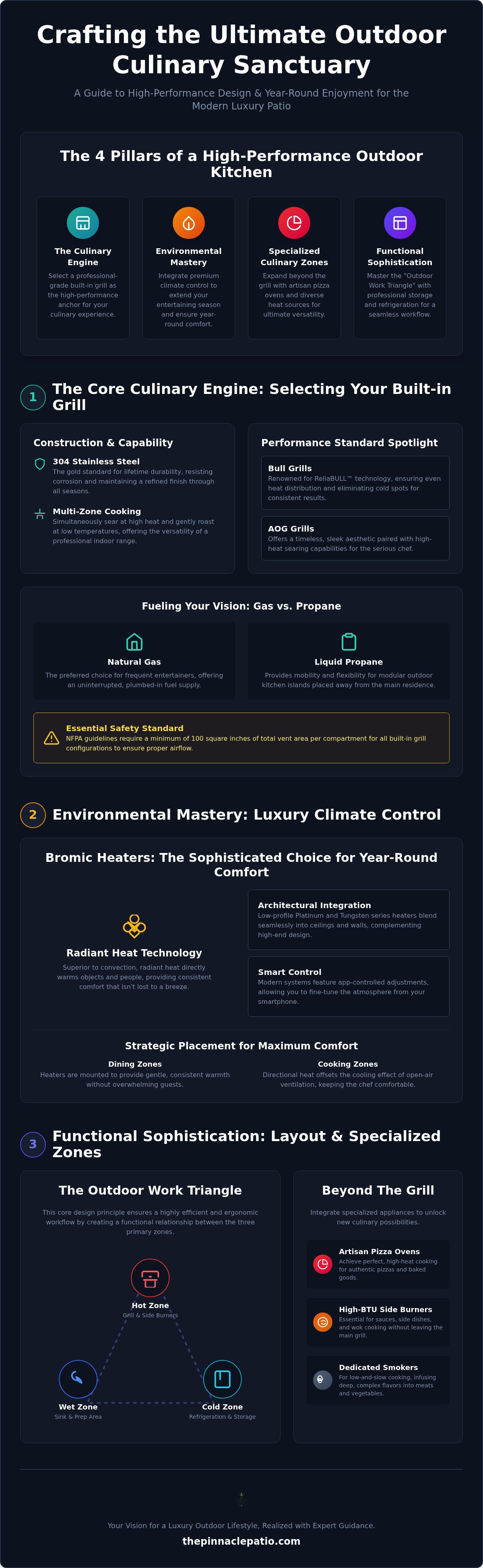
- Identify the professional-grade built-in grill that serves as the high-performance anchor for your entire outdoor culinary experience.
- Discover how to achieve environmental mastery through premium climate control solutions that extend your entertaining season year-round.
- Learn exactly what to include in an outdoor kitchen to create specialized culinary zones that accommodate artisan pizza ovens and diverse heat sources.
- Master the "Outdoor Work Triangle" to ensure your layout balances aesthetic beauty with the functional sophistication of professional storage and refrigeration.
The Core Culinary Engine: Selecting Your Built-in Grill
Every masterpiece has a heart. In a high-performance patio, that heart is the culinary engine. While the history of outdoor cooking began with simple open flames, the 2026 standard demands precision, permanence, and professional-grade performance. A built-in grill serves as the anchor of your entire space, dictating the flow and capability of your luxury outdoor kitchen island. When curating the list of what to include in an outdoor kitchen, the primary focus must always be the quality of this central component.
The modern culinary engine is defined by its construction. We emphasize the use of 304 stainless steel for lifetime durability. This heavy-duty material withstands the rigors of the elements, resisting corrosion and maintaining its refined finish through years of use. In 2026, the trend has shifted toward multi-zone cooking within a single professional head. This allows you to sear a prime cut of beef at intense temperatures on one side while gently roasting delicate vegetables on the other, providing the versatility of a professional indoor range in an open-air setting.
The Performance Standard: Bull and AOG Grills
Precision engineering separates a luxury appliance from a standard one. Bull grills are renowned for their ReliaBULL technology, which utilizes a specialized flame tamer design to ensure even heat distribution across the entire cooking surface. This eliminates the cold spots common in entry-level equipment. In contrast, AOG grills offer a timeless, sleek aesthetic paired with high-heat searing capabilities that cater to the serious chef. Both brands prioritize professional-grade BTUs, which are essential for maintaining consistent temperatures regardless of ambient wind or cold air.
Fueling Your Vision: Natural Gas vs. Liquid Propane
The choice of fuel is a foundational decision that impacts both convenience and layout flexibility. Plumbed natural gas is the preferred choice for frequent entertainers, offering an uninterrupted supply that eliminates the need for tank refills. If your vision involves a modular outdoor kitchen island placed further from the main residence, liquid propane provides the necessary mobility. Regardless of the fuel source, safety remains paramount. Industry standards and NFPA guidelines specify a minimum of 100 square inches of total vent area per compartment for built-in configurations. This ensures proper airflow and prevents gas buildup within the enclosed island structure.
Environmental Mastery: Including Luxury Heating and Climate Control
A luxury culinary space is only as effective as the comfort it provides. When planning what to include in an outdoor kitchen, many homeowners overlook the necessity of seasonal versatility. We call this "Environmental Mastery." It's a design philosophy that prioritizes year-round engagement with the outdoors. By integrating sophisticated climate control into the initial layout, you transform a fair-weather patio into a four-quarter sanctuary. This approach ensures your investment remains a vibrant center for hosting, regardless of a temperature drop or a sudden evening chill.
Bromic Luxury Heaters: The Sophisticated Choice
Bromic has redefined the market with a design-first approach that treats heating as an architectural element rather than an industrial necessity. Their Bromic Luxury Heaters utilize radiant technology, which differs fundamentally from traditional convection. While convection attempts to warm the air, only to see it swept away by a breeze, radiant heat warms objects and people directly. In line with 2026 smart-tech trends, many of these systems now feature app-controlled adjustments, allowing you to fine-tune the atmosphere from your smartphone. The Platinum and Tungsten series represent industry benchmarks for refinement. These units are designed to blend into ceilings or walls, offering a low-profile aesthetic that complements high-end finishes without dominating the visual landscape.
Strategic Placement for Maximum Comfort
Achieving true comfort requires more than selecting the right equipment; it demands expert placement. For dining zones, heaters should be mounted at specific heights to provide gentle, consistent warmth without overwhelming the guests. In contrast, cooking zones benefit from directional heat that offsets the cooling effect of open-air ventilation. Wind protection and overhead structures, such as pergolas, play a critical role in heat retention. These elements work in harmony with your heating system to create a micro-climate that feels both cozy and expansive.
The goal is a seamless blend of utility and design. When heating is integrated thoughtfully, it feels like an inherent part of the home's heritage rather than a later addition. Understanding exactly what to include in an outdoor kitchen to achieve this level of comfort is the difference between a project that's finished and one that's truly complete. If you're unsure how to balance these technical requirements with your aesthetic vision, you might consider how a personalized consultation can provide clarity on the ideal configuration for your specific layout.
Specialized Culinary Zones: Beyond the Standard Grill
The 2026 design philosophy transitions from a singular "BBQ area" to a sequence of specialized culinary zones. This shift reflects a deeper understanding of how we gather; hosting is a performance, a social theater where the preparation of food is as engaging as the meal itself. When deciding what to include in an outdoor kitchen, the most successful designs prioritize a variety of heat sources. By incorporating wood, charcoal, and gas, you provide your space with a versatile range of capabilities that elevate the hosting experience into a curated event. These additions are not merely appliances; they are investments in culinary artistry that define the character of your home.
Understanding what to include in an outdoor kitchen requires a vision that extends beyond the utility of a single burner. A multi-zone layout allows the host to navigate between different cooking techniques without compromise. It creates a flow that mirrors a professional indoor environment while maintaining the relaxed, airy atmosphere of the outdoors. This intentionality in design ensures that every element, from the primary grill to the specialized oven, has a dedicated purpose in your culinary narrative.
The Artisan Pizzeria: Built-in Pizza Ovens
Built-in pizza ovens have become a staple of high-end luxury outdoor kitchen islands. There is a tactile joy in high-heat stone baking that appeals to both the chef and the guest. To achieve authentic Neapolitan results, you need a stone surface that can maintain intense, consistent heat. Modern hosts often choose between the traditional romance of wood-fired units and the gas-assisted convenience of hybrid models. Both options offer the ability to sear at temperatures that a standard grill cannot reach, producing a crust and flavor profile that is impossible to replicate in a conventional oven.
Low and Slow: The Role of Smokers and Kamados
Traditional charcoal flavor has seen a significant resurgence in high-end design, with brands like Kokomo and Wildfire offering components that complement a sophisticated aesthetic. Dedicating space for a kamado-style grill alongside your primary gas unit allows for "low and slow" cooking sessions that invite guests to linger. This multi-appliance approach ensures that whether you're searing a quick steak or smoking a brisket for twelve hours, your equipment is perfectly suited for the task. For more insights on orchestrating these elements, you can explore our guide on Designing the Ultimate Outdoor Cooking Station.
Functional Sophistication: The Essentials of Storage and Refrigeration
"Functional Sophistication" represents the invisible backbone of a high-performance culinary sanctuary. It's the seamless blend of utility and aesthetic harmony that separates a simple BBQ area from a professional-grade environment. When homeowners reflect on what to include in an outdoor kitchen, the most common regret is under-planning for storage and refrigeration. A truly refined space requires an infrastructure that supports the chef without cluttering the visual landscape. The 2026 design movement leans heavily into "hidden" utility, where minimalist lines conceal high-performance systems. This ensures the space remains an elegant venue for social connection, reducing the need for constant trips back to the indoor kitchen and allowing the host to remain present with their guests.
Outdoor Refrigeration and Beverage Centers
True luxury demands equipment engineered specifically for the open air. It's a mistake to rely on "dorm fridges" or indoor conversions, as these units lack the powerful compressors and specialized insulation required to maintain safe temperatures during a mid-summer heatwave. Professional outdoor-rated refrigeration, such as the offerings from Bull or AOG, is built to perform in varying climates while resisting the corrosive nature of the elements. Beyond standard cooling, modern beverage centers promote guest autonomy by providing dedicated space for refreshments. Specialized cooling for fine wines and craft beers allows you to maintain the perfect serving temperature, ensuring that every element of the hosting experience is handled with the same level of care as the meal itself.
Sealed Storage and Access Solutions
The value of sealed dry storage is often realized only after the first rainy season. These units are designed to keep linens, spices, and prep tools patio-ready by preventing moisture and pests from compromising your supplies. When selecting access doors and drawers, prioritize components that match the finish and handle style of your built-in grills. This creates a cohesive, intentional look that suggests heritage and permanence. One essential guideline we advocate for is the "Trash Drawer" rule: every luxury kitchen needs a hidden waste solution. Incorporating a pull-out trash drawer keeps the prep area pristine and prevents unsightly bins from disrupting the refined atmosphere you've worked so hard to curate.
The Visionary Layout: Bringing the Elements Together
Bringing a luxury vision to life requires more than a collection of high-end appliances; it demands the orchestration of space. The visionary layout is the bridge between individual components and a living, breathing sanctuary. When finalising your plan for what to include in an outdoor kitchen, you must consider how the "Outdoor Work Triangle" adapts to an open-air environment. This concept, traditionally defined by the fluid path between prep, cooking, and cleaning zones, has expanded in 2026 to include social "Landing Zones." These are dedicated areas where guests can linger near the chef, glass in hand, without disrupting the culinary flow. Positioning these zones strategically ensures the host remains a participant in the gathering rather than a solitary figure behind the grill.
We view the purchase of high-performance components as a legacy investment. By selecting professional brands like Bull, AOG, and Kokomo, you are choosing equipment built around 304 stainless steel and heritage-grade craftsmanship. These pieces are designed to endure, serving as the foundation for a space that will host decades of connection. A visionary layout respects the permanence of these items, ensuring that the structural design is as timeless as the technology it houses. It is the final step in transforming a standard patio into a high-performance culinary sanctuary that reflects your personal aesthetic and lifestyle.
The Island Configuration: Prefab vs. Custom
The foundation of your layout often begins with the island structure itself. Premium prefabricated outdoor kitchen islands have gained significant favour for their precision engineering and speed of implementation. These modular systems are designed to fit specific professional heads, such as those from Kokomo or Bull, with exacting tolerances. This eliminates the guesswork often associated with custom masonry while providing a polished, high-end finish. For a deeper look at how these systems integrate into a broader design plan, explore our comprehensive Luxury Outdoor Kitchens: The 2026 Guide.
Expert Guidance and Consultation
The journey from a broad vision to a completed sanctuary is a transition from planning to curation. While the market offers endless choices, a refined space is defined by what you choose to exclude as much as what you include. The Pinnacle Patio provides the professional-grade tools and expert guidance needed to filter the market, but the ultimate vision remains yours. We invite you to move beyond the research phase and begin the process of intentional design.
Orchestrating Your Open-Air Legacy
Designing a luxury culinary sanctuary is an exercise in intentional curation. It's about more than simply selecting appliances; it's an investment in a lifestyle that prioritizes craftsmanship, connection, and the elevation of everyday moments. By focusing on a high-performance culinary engine and achieving environmental mastery through sophisticated heating, you'll ensure your patio remains a vibrant center for hosting across all four quarters. As you decide exactly what to include in an outdoor kitchen, remember that the longevity of 304-grade professional craftsmanship from brands like Bull, AOG, and Bromic creates a heritage that stands the test of time.
As an authorized retailer for the industry's most respected names, we offer the expert national guidance required to filter the market for your specific needs. Your vision deserves a layout that balances the technical precision of the outdoor work triangle with the warm invitation of social landing zones. It's time to move from the planning phase to the curation phase, transforming your outdoor space into a professional-grade retreat that reflects your personal aesthetic and commitment to quality.
We look forward to helping you bring your visionary layout to life, creating a space where memories are made and traditions are born in the open air.
Frequently Asked Questions
What is the most important thing to include in an outdoor kitchen?
The built-in grill is the most critical component because it serves as the high-performance anchor for the entire culinary experience. When deciding what to include in an outdoor kitchen, prioritize a professional-grade head made of 304 stainless steel. This choice ensures your space functions as a permanent sanctuary rather than a temporary setup. A well-chosen grill dictates the flow of your layout, influencing where you prep, cook, and gather with guests.
Do I really need outdoor-rated appliances, or can I use indoor ones?
You must use true outdoor-rated appliances to ensure safety and longevity in an open-air environment. Indoor units lack the powerful compressors and specialized insulation needed to handle direct sunlight or fluctuating temperatures. Brands like Bull and AOG engineer their refrigeration to resist corrosion and maintain consistent internal temperatures even during mid-summer heatwaves. Using indoor appliances outdoors typically voids warranties and creates significant electrical hazards.
What are the best brands for built-in grills in 2026?
Bull, AOG, and Kokomo remain the industry benchmarks for luxury built-in grills in 2026. Bull is favored for its ReliaBULL heat distribution technology, while AOG offers a sleek, timeless aesthetic with high-heat searing capabilities. Kokomo provides heavy-duty construction that appeals to those seeking professional-grade performance. These brands focus on 304-grade stainless steel, ensuring your investment withstands the elements while providing consistent, chef-quality results every time you cook.
How much storage space does an outdoor kitchen actually need?
Most homeowners require significantly more storage than they initially anticipate; it's the top regret in outdoor design. Aim for a mix of sealed dry storage for linens and spices alongside access doors for utility connections. A well-planned layout should include at least one dedicated trash drawer and enough cabinetry to store all your primary grilling tools. This prevents constant trips inside and maintains the functional sophistication of your hosting space.
Can I include a pizza oven and a grill in the same island?
You can absolutely integrate a pizza oven and a grill into the same island configuration to create specialized culinary zones. This layout enhances the social theater of your kitchen, allowing you to manage different cooking styles simultaneously for your guests. When planning what to include in an outdoor kitchen island, ensure there is adequate counter space between these heat sources. This provides necessary landing zones for hot trays and creates a safer, more efficient workflow.
How do I ensure my outdoor kitchen is usable in the winter?
Achieving winter usability requires a focus on environmental mastery through premium heating and overhead protection. Bromic luxury heaters are the gold standard for this, using radiant heat to warm people and objects directly rather than the air. Pairing these with wind protection, such as a pergola or strategic wall placement, helps retain warmth even in cold quarters. This approach extends your entertaining season, making the space a year-round destination for your family.
What is the difference between 304 and 443 stainless steel for grills?
The primary difference lies in the nickel content; 304 stainless steel contains more nickel, making it far more resistant to rust and corrosion. While 443 is a more affordable alternative, it lacks the lifelong durability required for high-end outdoor environments. We recommend 304-grade steel for all built-in components to ensure your kitchen maintains its refined finish. This material is the professional standard for longevity, especially in coastal or humid regions where salt air is a factor.
Should I choose natural gas or propane for my built-in BBQ?
Choose natural gas if you value the convenience of an uninterrupted fuel supply and have existing lines available. It's the preferred choice for frequent entertainers who don't want to manage tank refills during an event. Liquid propane offers more flexibility for modular island placements further from the main residence. Both options provide professional-grade BTUs, but natural gas typically requires a gas permit and professional plumbing to connect to your home's main supply.