

2026 Guide to Luxury Natural Gas Outdoor Grills
What if the most sophisticated component of your outdoor kitchen isn't the gleaming hood or the internal lighting, but the permanent fuel line hidden beneath the stone? For the serious host, the sudden loss of heat from an empty propane tank mid-sear is more than an inconvenience; it's a disruption of the entire culinary experience. You've likely felt the frustration of managing heavy tanks or the confusion of choosing between different grades of stainless steel. Investing in a built-in natural gas grill represents a commitment to a seamless, professional-grade lifestyle that eliminates these friction points while significantly increasing your property value.
We understand that a luxury outdoor kitchen is an investment in connection and craft. This guide will clarify the technical nuances of 304 stainless steel and help you avoid the common trap of over-sizing your equipment. You'll discover how to select a grill that matches your specific entertaining style, whether that requires a compact 30-inch model or a sprawling 42-inch centerpiece. We provide the expert guidance needed to transform your patio into a permanent culinary destination defined by reliability and refined performance.
Key Takeaways
- Learn how a permanent fuel connection eliminates the disruption of empty tanks while enhancing your home's long-term market value.
- Identify the structural benefits of 304 stainless steel over inferior grades to protect your investment against corrosion and wear.
- Determine the ideal footprint for your space by comparing the utility of 30-inch, 36-inch, and 42-inch grill configurations.
- Understand the essential infrastructure needs for a natural gas grill, focusing on line sizing and the role of licensed professionals.
- Explore the diverse technologies and features offered by various premium manufacturers to find the perfect match for your aesthetic and performance goals.
The Case for Natural Gas: The Foundation of Permanent Outdoor Kitchens
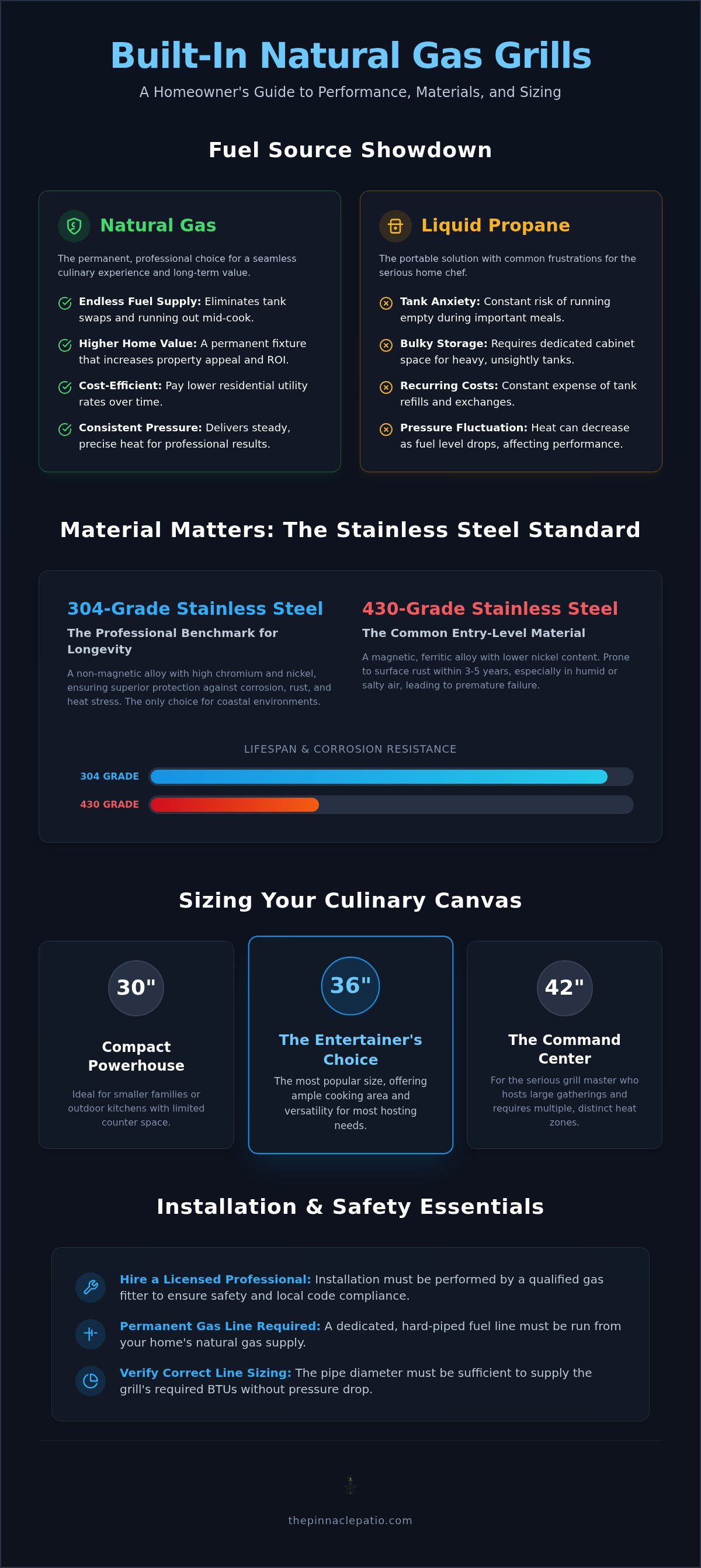
Choosing a permanent fuel source is the first step in evolving a simple patio into a high-performance culinary destination. Selecting natural gas represents a shift toward permanence; it signals that your outdoor space isn't just a seasonal convenience but a core extension of your home's living area. While portable setups offer flexibility, a natural gas grill provides the reliability required for true gourmet results. Beyond the immediate ease of use, integrating a natural gas line often yields a higher return on investment for homeowners. Appraisers and buyers recognize a built-in natural gas grill as a permanent fixture, similar to a high-end kitchen appliance, which anchors the value of your outdoor kitchen island.
Over time, natural gas proves more cost-efficient than the recurring expense of liquid propane exchanges. Because it's delivered via utility lines, you pay only for what you consume at residential rates. Environmentally, natural gas is a lighter hydrocarbon than propane. It burns cleaner, producing fewer greenhouse gas emissions and requiring significantly less industrial processing and transportation than bottled fuel alternatives. This combination of economic and ecological benefits makes it the preferred choice for the intentional homeowner.
Ending the Cycle of Propane Tank Exchanges
The most immediate luxury of a dedicated line is the end of tank anxiety. There's a specific peace of mind that comes with knowing your heat source won't fail during a dinner party or a slow-roast session. Removing the need for a propane tank also liberates your kitchen's design. You don't have to sacrifice cabinet space for bulky tank drawers, allowing for a more streamlined aesthetic or additional storage for professional-grade tools. Hard-piped connections, installed by a licensed professional, also offer a safety profile that portable hoses and regulators can't match.
Natural Gas vs. Propane: The Performance Reality
While propane contains more energy per cubic foot, professional grills designed for natural gas are engineered with larger orifices to deliver equivalent cooking power. Chefs prefer this setup because the pressure remains consistent throughout the cook. Unlike propane tanks, which can lose pressure as the fuel level drops or temperatures change, natural gas provides steady flow for precise heat zones. This consistency is vital for achieving high sear temperatures and rapid heat recovery times, ensuring your steaks develop a perfect crust even when the grill is fully loaded.
Engineering Longevity: 304 Stainless Steel and Burner Materials
A luxury outdoor kitchen is a permanent architectural addition to your home. The durability of your natural gas grill depends entirely on the metallurgical composition of its components. While many entry-level options claim to be "stainless steel," the distinction between grades determines whether your investment lasts five years or a lifetime. High-performance hardware must withstand extreme thermal stress, environmental moisture, and the corrosive acids found in food drippings.
The 304 Stainless Steel Standard
304-grade stainless steel is the non-negotiable benchmark for high-end installations. This non-magnetic alloy contains high levels of chromium and nickel, providing superior resistance to oxidation and corrosion. In contrast, 430-grade steel is a ferritic alloy that often develops surface rust within three to five years, especially in humid or coastal climates. Salt air acts as an accelerant for lower-grade metals; therefore, homeowners in coastal environments must prioritize 304 construction for the grill body, hood, and internal components to prevent structural failure.
Maintaining this professional-grade steel requires minimal but intentional care to preserve its aesthetic beauty:
- Routine cleaning with a specialized stainless steel cleaner and microfiber cloth.
- Grain-direction wiping to maintain the factory-polished finish and prevent micro-scratches.
- Annual deep cleans to remove carbonized grease and environmental debris from the firebox.
Burner Technology and Heat Management
The internal architecture of the grill is where culinary precision meets industrial endurance. Professional brands like Bull and AOG utilize cast stainless steel burners or heavy-gauge stainless tubes to ensure consistent heat distribution across the cooking surface. Cast burners are particularly valued for their density and their ability to withstand extreme temperature fluctuations without warping or thinning over time. The burner material serves as the single most critical predictor of a grill's lifespan as it must endure constant thermal stress and chemical exposure from food acids.
Beyond the burners, high-performance heat management relies on a curated system of components. Heat zone separators allow for simultaneous high-heat searing and low-heat roasting, while flame tamers vaporize drippings to create that signature smoky flavor. Heavy-duty cooking grates provide the thermal mass necessary for professional sear marks and efficient heat retention. Selecting the right configuration requires balancing your cooking style with the technical specifications of the hardware. If you're unsure which material grade fits your specific local climate, you can schedule a consultation with our expert guides for tailored selection support.
Sizing Your Culinary Canvas: 30-Inch to 42-Inch Configurations
Selecting the footprint of your natural gas grill is a decision that dictates the entire workflow of your outdoor kitchen island. It isn't merely about the surface area for food; it's about the balance between cooking capacity and vital preparation space. A grill that's too large can starve your island of counter room, while one that's too small may limit your ability to host larger gatherings. Your choice should reflect a harmony between your architectural constraints and your culinary ambitions.
| Grill Size | Ideal For | Primary Benefit |
|---|---|---|
| 30-Inch | Families and intimate gatherings | Preserves maximum counter space |
| 36-Inch | Standard entertaining and rotisserie | Balanced capacity and heat management |
| 42-Inch | Professional hosting and large groups | Multiple simultaneous heat zones |
Matching Grill Size to Entertaining Style
When calculating your needs, look beyond simple burger capacity and consider the quality of the heat delivery. You can explore our curated built-in grills to find the specific chassis width that aligns with your vision. A professional 3-burner 30-inch grill from a brand like Bull or Kokomo often outperforms a cheap 5-burner big-box model because the BTU output and heat retention are significantly higher. Focus on the usable square inches of the primary cooking surface rather than the total count of burners; high-quality burners are built for more efficient and consistent heat distribution across the grates.
Heat Zones and Culinary Versatility
A larger chassis provides the physical space required for true culinary versatility. Premium 36-inch and 42-inch models often feature integrated rear infrared rotisserie burners, adding a layer of professional capability to your outdoor repertoire. These wider configurations allow for distinct heat zones, which are essential for complex menus that require different cooking speeds. Many homeowners regret choosing a smaller size once they realize how a larger grill acts as a comprehensive culinary station. Planning for the 42-inch powerhouse ensures your outdoor kitchen remains a functional destination as your hosting style evolves over time.
Infrastructure and Safety: Planning Your Natural Gas Installation
The transition to a permanent outdoor culinary space requires a foundation of rigorous technical planning. While the aesthetic appeal of a natural gas grill is undeniable, its performance and safety depend on the infrastructure hidden behind the masonry. Homeowners must coordinate with a licensed gas plumber early in the design process to ensure the utility connections meet both local codes and the specific demands of professional-grade hardware. This isn't a task for DIY enthusiasts; professional oversight ensures that your investment remains a safe haven for your guests and your home.
The Gas Line Blueprint
Successful installation begins with the proper sizing of your supply lines. High-performance grills often require 100,000 BTUs or more when factoring in main burners, rotisserie systems, and side burners. Choosing between a 1/2-inch and a 3/4-inch gas line depends on the distance from your home's meter and the total BTU requirements of all outdoor appliances. If the line is too small, you'll experience a pressure drop that prevents the burners from reaching their intended temperatures. For a deeper look at coordinating these utilities during the build phase, you can read our guide on sculpting your sanctuary.
Non-Combustible Construction Standards
Safety protocols extend to the materials surrounding your cooking station. If your island utilizes wood framing or other combustible materials, an insulated jacket is mandatory to prevent heat transfer to the structure. This stainless steel sleeve acts as a thermal barrier, allowing the grill to sit safely within the cut-out dimensions. Precision is vital here; luxury installations require exact measurements to achieve a seamless, flush-mount appearance that aligns with the surrounding stone or cabinetry.
Proper ventilation is equally critical. You must install vent panels in your island to prevent gas from pooling in the event of a leak. Since natural gas is lighter than air, these vents are typically placed near the top of the island structure to allow for safe dissipation. Please note that while The Pinnacle Patio provides the professional-grade hardware and expert selection guidance, we don't offer installation services. We recommend partnering with a local licensed professional to handle all on-site gas work and utility connections for your new natural gas grill.
Curating Your Destination: Selecting the Right Professional Brand
Selecting the centerpiece of your outdoor kitchen requires moving beyond the overwhelming, unvetted inventory of mass-market retailers. A professional-grade natural gas grill is a legacy investment; its brand should reflect your personal hosting philosophy and architectural style. We have refined our collection to include only manufacturers that meet the highest standards of metallurgical integrity and thermal performance. This curated approach ensures that every component, from the valves to the hood, is designed for decades of service rather than a single season.
Bull Grills has earned its reputation as an industry standard through its patented ReliaBULL technology. This system utilizes specific flame tamer designs to eliminate cold spots, ensuring that the entire cooking surface provides consistent, predictable heat for every guest. For the design-conscious homeowner, AOG (American Outdoor Grill) offers a blend of timeless aesthetics and professional performance. Their units are built with a sleek, minimalist design language that complements modern architectural styles perfectly. Kokomo Grills focuses on raw power and industrial-grade construction, delivering high BTU output for those who demand the heat recovery times of a commercial kitchen.
Brand Comparisons: Bull vs. AOG vs. Kokomo
Each manufacturer offers a unique design language and technical profile. Bull provides a rugged, professional look that feels at home in a traditional stone island. AOG units often feature a more polished, contemporary finish for a sophisticated look. Kokomo is the definitive choice for those who prioritize heavy-duty components and sheer thermal mass. Beyond aesthetics, these established luxury brands offer superior parts availability and comprehensive support. This infrastructure ensures your kitchen remains operational for years to come. You can explore these options within our full collection of Pinnacle Outdoor Kitchens.
Final Steps: Designing Your Culinary Sanctuary
A true culinary destination extends beyond the natural gas grill itself. To create a space that invites connection throughout the year, consider integrating climate control solutions like Bromic heaters. These additions transform a seasonal patio into a year-round sanctuary. Configuring a multi-appliance island involves complex decisions regarding utility placement, heat clearances, and workflow. Expert guidance is essential when aligning your grill choice with side burners, refrigerators, and pizza ovens. To ensure your utilities and hardware are perfectly synchronized, you should schedule a complimentary consultation with our design team.
Investing in a Permanent Culinary Legacy
Choosing a high-performance natural gas grill is more than a utility upgrade; it's a commitment to a lifestyle of effortless hosting and architectural permanence. By prioritizing 304 stainless steel and professional-grade burner technology, you ensure your outdoor kitchen remains a functional centerpiece for decades to come. Whether you select the compact precision of a 30-inch model or the expansive versatility of a 42-inch powerhouse, the foundation of your sanctuary rests on quality hardware and precise infrastructure planning.
As authorized retailers for premier brands like Bull, AOG, and Kokomo, we specialize in durable configurations that thrive in any environment. Our role is to act as your visionary guide, translating complex technical specifications into tangible benefits for your home and your guests. We've done the hard work of filtering the market so you can focus on the connection and refinement that a true culinary destination provides. We look forward to helping you curate an outdoor space that elevates every gathering into an extraordinary event.
Frequently Asked Questions
Can I convert a propane grill to natural gas later?
Most professional-grade grills can be converted using manufacturer-specific kits. Brands like Bull and AOG provide these components to ensure the valves and regulators handle the lower pressure of natural gas correctly. You shouldn't attempt a DIY conversion with generic parts. It's always more efficient to select your fuel type during the initial design phase to avoid the additional cost of a licensed plumber's return visit.
What size gas line do I need for a high-performance built-in grill?
The required diameter depends on the total BTU output of your appliances and the distance from your home's meter. A standard 1/2-inch line often suffices for runs under 20 feet. However, high-performance units exceeding 100,000 BTUs frequently require a 3/4-inch line to maintain consistent pressure. You'll need to coordinate with a licensed gas professional to calculate the specific load requirements for your custom outdoor kitchen island.
Is natural gas hotter than propane for searing steaks?
While liquid propane contains more energy per cubic foot, a professionally engineered natural gas grill delivers equivalent searing temperatures through larger burner orifices. The primary advantage isn't the raw heat potential but the consistency of the delivery. Natural gas provides a steady, uninterrupted flow that doesn't fluctuate as a tank empties. This allows your cast stainless steel burners to maintain the extreme temperatures necessary for restaurant-quality crusts.
Do I need a professional to install my natural gas grill?
You must hire a licensed gas plumber to handle the utility connections and leak testing. While we provide the professional-grade hardware, the installation of a natural gas grill involves strict local building codes and safety regulations. A professional ensures the pressure is regulated correctly and that all hard-piped connections are secure. This protects your investment and ensures your outdoor kitchen island operates safely within its structural clearances.
What are the ventilation requirements for a built-in natural gas grill?
Proper ventilation requires installing vent panels at the highest point of your kitchen island's cabinetry. Since natural gas is lighter than air, it rises and can pool under the countertop if a leak occurs. You should install at least two vents to create cross-ventilation, allowing gas to dissipate safely into the atmosphere. This is a critical safety requirement for all built-in configurations to prevent the risk of combustion.
Does a natural gas grill increase my home's resale value?
A built-in grill is considered a permanent fixture that anchors the value of an outdoor living space. Unlike portable units, these appliances are integrated into the home's infrastructure, making them attractive to high-end buyers who value turn-key luxury. A well-designed kitchen featuring 304 stainless steel hardware suggests a level of craftsmanship and permanence that translates into a higher appraisal. It transforms a simple patio into a sophisticated culinary destination.
How do I maintain 304 stainless steel in a coastal environment?
Even high-grade 304 stainless steel requires regular maintenance in salt-air environments to prevent surface tea-staining. You should wipe down the exterior surfaces weekly using a specialized stainless steel cleaner and a microfiber cloth. Always wipe in the direction of the metal's grain to avoid micro-scratches. For coastal properties, applying a thin layer of protective oil or a dedicated stainless steel polish helps create a barrier against corrosive environmental elements.
What is the average lifespan of a professional-grade natural gas grill?
A professional-grade unit constructed from 304 stainless steel can last 20 years or more with proper care. The lifespan is dictated by the quality of the burners and the thickness of the chassis. Brands like Bull and AOG use heavy-duty materials that resist the warping and rust that typically destroy mass-market models within five years. Investing in professional hardware ensures your outdoor kitchen remains a functional part of your home's heritage.