

304 vs. 316 Stainless Steel: Choosing the Right Grade for Your Outdoor Grill
The more corrosion-resistant stainless steel isn’t automatically the right choice for every grill. When comparing 304 vs 316 stainless steel for outdoor grills, consider your grill’s exposure to salt and other corrosive elements. The two grades look alike, but they respond differently to chloride exposure.
It’s reasonable to want strong protection for a major outdoor kitchen investment, especially if your home is near the coast. The key difference is molybdenum, an alloying element in 316 that improves resistance to chlorides. That added protection can make 316 a smart choice where salt air and spray are persistent, while 304 remains a widely used standard for many inland settings.
This guide explains the material difference, weighs 316’s benefits against its higher cost, and outlines which grade may fit coastal, inland, desert, or mountain conditions. You’ll also learn why neither grade is stain-proof and how regular care helps preserve your grill’s finish and function.
Key Takeaways
- Learn what “austenitic” means and why stainless steel can still show surface staining or corrosion.
- Understand how chromium, nickel, and molybdenum contribute to the differences in 304 vs 316 stainless steel for outdoor grills.
- Use your exposure to salt air, pool chemicals, and other chlorides to guide your choice of grill grade.
- Identify care practices that help preserve your grill’s appearance and function over time.
- Learn how to check material information when comparing Bull, AOG, and Kokomo grills for your outdoor kitchen.
Understanding Stainless Steel Grades in Outdoor Kitchen Design
A built-in grill faces a more demanding setting than an indoor appliance. It encounters rain, humidity, airborne salt, grease, cleaning products, and repeated heating and cooling. When choosing stainless steel for an outdoor kitchen, look beyond its polished appearance and consider how the alloy handles the conditions around your home.
Many premium grills use austenitic stainless steel, a family of alloys valued for corrosion resistance and formability. The overview of stainless steel grades explains how these alloys differ. For a homeowner, the practical point is that “stainless” means resistant to corrosion, not immune to it. Stainless steel relies on a thin, chromium-rich surface layer for protection. Salt, grime, and neglected maintenance can compromise that protection and contribute to staining or corrosion.
The Anatomy of an Outdoor Investment
Consider material choice early in your kitchen planning. A built-in grill is a lasting part of the space, not a portable accessory. The grade can affect how well exposed surfaces resist corrosion, but construction details also matter to overall durability. A particular steel grade alone can’t guarantee decades of service. Care, design, and the conditions at your home all play a role.
Good corrosion resistance helps preserve the clean finish that makes stainless steel a natural fit for an outdoor kitchen. That matters in everyday use, from preparing a weeknight meal to gathering around the grill with guests. Compare material information alongside fit, function, and the rest of your kitchen plan. The Pinnacle Patio’s built-in grill collection offers a starting point. Check the specifications for each model rather than assuming every grill uses the same grade.
Beyond the Surface: Why Grades Matter
Stainless steel grades differ in composition and properties. Broadly, ferritic stainless steels are magnetic, while austenitic grades are generally non-magnetic in their annealed state. Processing can affect magnetic response, so a magnet test isn’t a dependable way to identify a grill’s exact grade.
Within the 300 series, 304 and 316 are common choices for higher-performance outdoor applications. They can look identical, yet respond differently to corrosive exposure. That’s why the 304 vs 316 stainless steel for outdoor grills decision should start with your environment, not appearance or strength alone. The next step is understanding what distinguishes their composition and why that difference matters on your patio.
The Technical Composition: 304 vs 316 Stainless Steel for Outdoor Grills
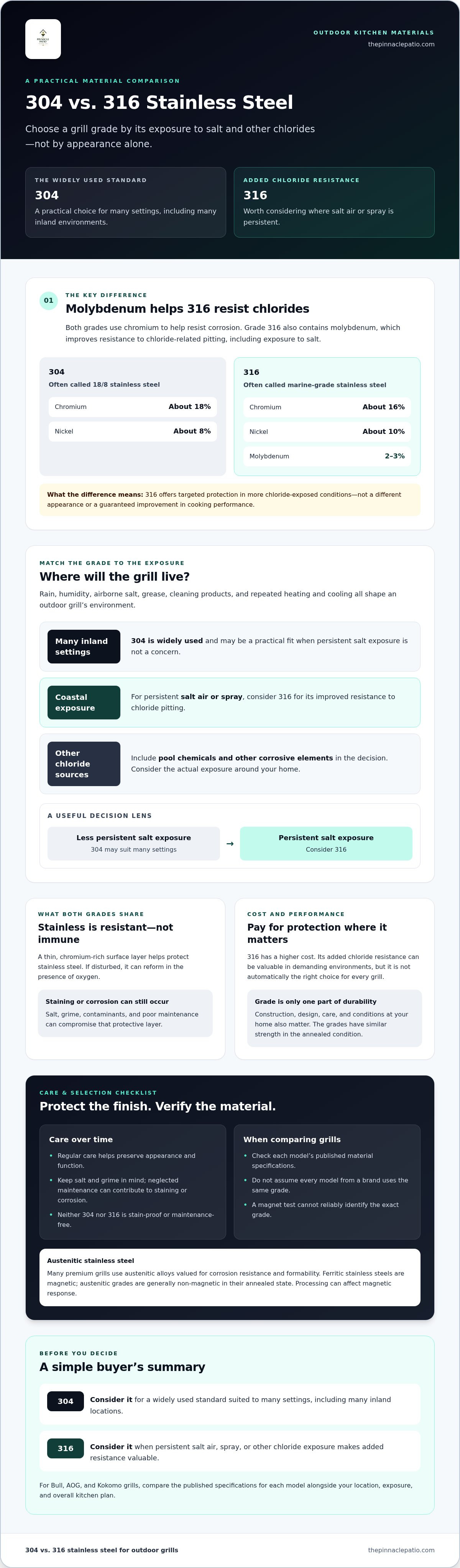
The essential distinction between these grades is chemical, not visual. Both rely on chromium to resist corrosion, while 316 contains molybdenum, which improves resistance to chlorides such as salt. Understanding that difference helps clarify what you’re paying for: added protection in demanding environments, not a different-looking grill or a guaranteed improvement in cooking performance.
Grade 304: The Industry Standard for Excellence
Often called 18/8 stainless steel, 304 typically contains about 18% chromium and 8% nickel. Chromium helps form a thin, protective chromium-oxide film on the surface. If that film is disturbed, it can reform in the presence of oxygen, but contaminants and poor maintenance can still lead to staining or corrosion.
304 is widely used in premium outdoor appliances because it offers a practical balance of corrosion resistance and performance for many settings. Its grade alone doesn’t determine how a grill performs during searing or rotisserie cooking. Heat retention and resistance to warping depend on the appliance’s design and construction. The available information indicates that 304 and 316 have similar strength in the annealed condition. Explore the Bull Grills selection, and check each model’s published material specifications rather than assuming a grade.
Grade 316: The Marine-Grade Difference
316 typically contains about 16% chromium, 10% nickel, and 2–3% molybdenum. Molybdenum improves resistance to pitting corrosion caused by chlorides, making 316 worth considering for grills exposed to persistent salt air or spray. It’s commonly called marine-grade stainless steel, but that label doesn’t mean it’s immune to corrosion or maintenance needs. Langley Alloys explains how composition informs corrosion comparisons, including the Pitting Resistance Equivalent Number.
For the 304 vs 316 stainless steel for outdoor grills decision, think of 316 as targeted protection rather than an automatic upgrade for every home. Its higher material cost may be justified where chloride exposure is constant. In less corrosive environments, 304 may be suitable. Neither grade guarantees a particular grill’s service life, so weigh local conditions alongside the specific model’s construction and care guidance. If you’re comparing options for a permanent outdoor kitchen, you can discuss your grill selection with The Pinnacle Patio.
Environmental Factors: When Does Marine-Grade 316 Become Essential?
There’s no reliable mileage cutoff that separates a “coastal” grill location from an inland one. Salt exposure depends on more than distance from the shoreline. Prevailing winds, terrain, weather, and how sheltered the patio is all affect how much salt reaches the appliance. Rather than relying on a rule such as “within a certain number of miles,” assess what actually settles on surfaces around your home.
Coastal Living and Chloride Stress
Salt spray and airborne chlorides can collect on a grill’s hood, seams, and other exposed surfaces. If the protective surface film is disrupted, chloride exposure can encourage pitting corrosion, small, localized cavities in the metal that may deepen over time. Regular cleaning helps remove deposits, but it doesn’t make either grade immune to corrosion.
Consider two patios: one directly exposed to ocean spray, and another farther inland but shielded by buildings and landscaping. The first is more likely to benefit from 316’s added chloride resistance. The second may be well served by 304. This is a practical comparison, not a guarantee of performance. A coastal address alone doesn’t reveal a grill’s exact exposure, and salt can travel inland in some conditions without following a universal distance.
Humidity can keep deposits on steel longer, while industrial pollutants may add other corrosive contaminants. For the 304 vs 316 stainless steel for outdoor grills decision, consider the combined microclimate: visible salt residue, frequent dampness, wind exposure, and the degree of shelter around the kitchen. 316 is a strong candidate for persistent salt spray. 304 remains a suitable standard for many inland, desert, and mountain settings.
Poolside Placement and Chemical Resilience
A pool can create a chloride-exposure zone even far from the coast. Splash, dried residue, and improper handling of pool chemicals may expose nearby surfaces to corrosive substances. A saltwater pool isn’t free of salt-related exposure, either. If the grill sits close to the water or chemical storage, consider how often residue may reach it and whether the area is exposed or sheltered.
Material is only one part of the decision. Positioning the grill away from routine splash and keeping surfaces clean can help reduce exposure, while the island layout should preserve practical access for use and care. Explore outdoor kitchen options as you plan placement, and check each grill’s stated material rather than assuming its grade. If chloride exposure is frequent and unavoidable, 316 may justify its added cost. For a sheltered inland patio with routine care, 304 is often the more proportionate choice.
Durability and Maintenance: Protecting Your Culinary Investment
No stainless steel grill is maintenance-free. Grade 316 resists chloride corrosion better than 304, but both can stain or corrode if salt, grease, pool residue, or moisture is left on the surface. That added resistance may make 316 more forgiving in harsh conditions, but it isn’t a reason to clean less often. With either grade, regular care protects the finish and supports a more relaxed outdoor routine.
The Art of Stainless Steel Care
Follow the grill manufacturer’s care instructions first. For routine cleaning, use a soft cloth or non-abrasive sponge with a mild cleaner approved for the appliance. Wipe with the grain to help avoid visible scratches, then rinse away residue and dry the surface. Avoid steel wool and cleaners containing chlorine unless the manufacturer specifically approves them. They can damage the finish or leave contaminants behind.
On 304 steel, regular rinsing is especially useful in areas exposed to salt or pool splash. It removes deposits that can contribute to “tea staining,” the brown discoloration sometimes seen on stainless surfaces. A suitable stainless cleaner can help remove surface grime, but don’t assume it creates a permanent protective coating. The chromium-oxide film forms naturally on stainless steel. Keeping the surface clean helps it do its job.
Passivation and Seasonal Care
Passivation describes the formation or restoration of stainless steel’s protective surface condition after contaminants are removed. Light surface rust may come from deposited iron or other contamination rather than deep damage to the underlying steel. Clean the area only as directed by the grill manufacturer. If discoloration persists, avoid aggressive scrubbing or chemical treatments and consult the manufacturer’s care guidance.
Build maintenance into the way you use the kitchen: wipe spills after cooking, rinse off salt or pool residue, and inspect exposed surfaces and seams seasonally. Before using a cover, let the grill cool and follow the manufacturer’s instructions. A cover should protect from the elements without trapping moisture against a dirty surface. Review the care guidance for your model as you compare built-in gas grills.
The best maintenance routine depends on the grill’s location and its manufacturer’s guidance, not just whether it’s 304 or 316. For help evaluating a grill for your outdoor kitchen, schedule a consultation.
Selecting Your High-Performance Grill: The Pinnacle Patio Curation
The right grill is a considered part of a permanent outdoor kitchen, and material is one factor in a sound selection. The Pinnacle Patio curates built-in grills from trusted brands including Bull and AOG, but material specifications can vary by model. Check the product details for the exact grade and components rather than assuming every grill from a brand uses the same stainless steel.
Compare Brands by the Details That Matter
Bull and AOG each offer options to explore, but a brand name alone doesn’t confirm a grill’s steel grade or its suitability for a specific climate. Compare model-level specifications, care instructions, and warranty terms. A warranty can clarify what the manufacturer covers and what maintenance is expected. It doesn’t replace verification of the materials or guarantee that a grill will be corrosion-proof.
Use the environment as your first filter. For a sheltered inland patio, 304 may provide the corrosion resistance you need with routine care. For a grill exposed to persistent coastal salt spray or other chloride sources, look for a model whose published specifications confirm 316 where that added resistance matters. This makes the 304 vs 316 stainless steel for outdoor grills choice practical: match the grade to exposure, then compare the grill’s features and care requirements.
Plan the Grill Around the Kitchen
Material isn’t the only decision that shapes everyday use. A 30-inch, 36-inch, or 42-inch grill can suit different cooking needs and available layouts, but confirm the model’s actual dimensions and required clearances before planning the island. Consider how much cooking space you’ll use, how the grill fits alongside other appliances, and whether the layout leaves room for comfortable preparation and movement.
Warranty coverage deserves a careful read before purchase. Review what the terms say about coverage, exclusions, and maintenance responsibilities, and keep the product documentation for reference. Then compare that information with the material grade and your patio’s exposure. No warranty should be treated as a substitute for regular cleaning or a promise against environmental corrosion.
For a simple rule of thumb, think 304 for many inland patios and 316 for sustained chloride exposure, not “one grade is always best.” Explore outdoor kitchen islands as you plan the full space, and confirm the grill’s material and fit against its model specifications.
Choose the Grade That Fits Your Outdoor Life
The right choice in 304 vs 316 stainless steel for outdoor grills depends on the conditions your grill will face. For many sheltered inland patios, 304 offers a practical balance of corrosion resistance and performance. Where salt spray or other chloride exposure is persistent, 316’s added resistance may be worth prioritizing. Neither grade is maintenance-free, so regular cleaning remains part of protecting your investment.
As you compare Bull, AOG, and Kokomo grills, confirm each model’s material specifications and warranty terms rather than relying on the brand name alone. Then consider how the grill’s size and features will work within your outdoor kitchen. The Pinnacle Patio brings together these brands and offers guidance for homeowners planning an outdoor space.
With the right grade for your environment and a care routine suited to your grill, you can plan your outdoor kitchen with greater confidence and look forward to meals outside.
Frequently Asked Questions
Is 316 stainless steel worth the extra cost for an inland grill?
Usually, 316’s added corrosion resistance is most valuable where chloride exposure is persistent, such as near salt spray or in certain pool environments. For a sheltered inland grill with routine care, 304 is often a proportionate choice. Consider your actual exposure, not just your address, and compare the specific grill’s material specifications. The 304 vs 316 stainless steel for outdoor grills decision is about corrosion conditions, not a guaranteed difference in cooking performance.
Can 304 stainless steel rust if left outdoors?
Yes. Stainless steel resists corrosion, but it isn’t rust-proof. Salt, moisture, grease, pool chemicals, and other contaminants can interfere with the protective surface film and contribute to staining or corrosion if left in place. Rinse away deposits, clean the grill according to its manufacturer’s instructions, and dry surfaces where practical. A cover may help shield a grill from the elements, but follow the manufacturer’s guidance and avoid covering a wet or dirty surface.
What is the easiest way to tell the difference between 304 and 316 steel?
You generally can’t distinguish 304 from 316 by appearance. They look alike, and a magnet test isn’t a reliable grade check. Look for the material specification in the grill’s product documentation or ask the manufacturer or seller to confirm the grade for the exact model and component. If documentation is unavailable, verifying the alloy requires appropriate material testing. Don’t assume that a polished finish or “marine-grade” marketing phrase confirms a particular alloy.
Does 316 stainless steel require less maintenance than 304?
No. 316 offers better resistance to chloride-related corrosion, but it still needs regular care. Salt deposits, pool chemicals, grease, and moisture can affect either grade. Rinse contaminants promptly, use non-abrasive cleaning materials, and follow the grill manufacturer’s care instructions. In harsh environments, 316 may offer added protection, but it isn’t maintenance-free and shouldn’t be left dirty on the assumption that its grade will prevent staining.
Is 316 stainless steel better for high-heat grilling than 304?
Not inherently. The main advantage of 316 over 304 is improved resistance to chloride corrosion, not superior grilling performance. In the annealed condition, their tensile and yield strengths are identical. Heat distribution, cooking response, and resistance to warping depend on the grill’s design and construction, so compare model specifications and features rather than choosing 316 solely for high-heat cooking.
What happens to 304 stainless steel in a coastal environment?
Salt carried in air or spray can collect on 304 and increase the risk of tea staining or localized pitting corrosion, especially if deposits remain on the surface. The outcome depends on the grill’s specific exposure, shelter, and maintenance. Coastal placement doesn’t mean damage is inevitable. Rinse away salt regularly and consider 316 if the grill faces persistent salt spray. Neither grade is immune to corrosion or a substitute for care.
Do brands like Bull or AOG offer 316 stainless steel options?
Material can vary by model and component, so don’t assume that Bull or AOG grills use 316, or that every model uses the same grade. The Pinnacle Patio’s catalog includes Bull and AOG grills, but check the exact model’s product specifications or request confirmation from the seller or manufacturer before making a purchase decision based on alloy grade.
How often should I clean my stainless steel grill to prevent tea staining?
There isn’t one schedule that suits every grill and environment. Remove salt, pool residue, grease, and spills promptly, and clean the grill after use when residue is present. In coastal or poolside settings, inspect exposed surfaces more often and rinse deposits before they dry or accumulate. Follow the manufacturer’s instructions for cleaners and care. Wiping with the grain using a soft, non-abrasive cloth can help preserve the finish.