

Average Cost of a Modular Outdoor Kitchen: The 2026 Investment Guide
Why does a seemingly complete outdoor kitchen kit from a big-box retailer often cost less than a single professional-grade grill from a heritage brand? This price disparity creates understandable confusion for homeowners who seek a sophisticated culinary retreat but fear the pitfalls of mass-market systems. You likely recognize that a true outdoor sanctuary is an investment in your lifestyle, yet the average cost of a modular outdoor kitchen remains shrouded in variables like utility extensions and shipping logistics. It's natural to feel uncertain about where to allocate funds when balancing high-performance cabinetry with the visceral power of a premium grill.
This 2026 investment guide provides the clarity you need to move forward with confidence. We will define the primary quality tiers and component variables that shape the financial landscape of a high-end modular space. By exploring the distinction between mass-produced kits and curated systems from brands like Bull and AOG, you'll gain a framework for effective budget allocation. From understanding the nuances of professional appliances to anticipating the logistical requirements of a seamless installation, this guide ensures your vision is built on a foundation of expert guidance and lasting value.
Key Takeaways
- Understand the average cost of a modular outdoor kitchen by categorizing your project into tiers, ranging from functional professional setups to bespoke luxury retreats.
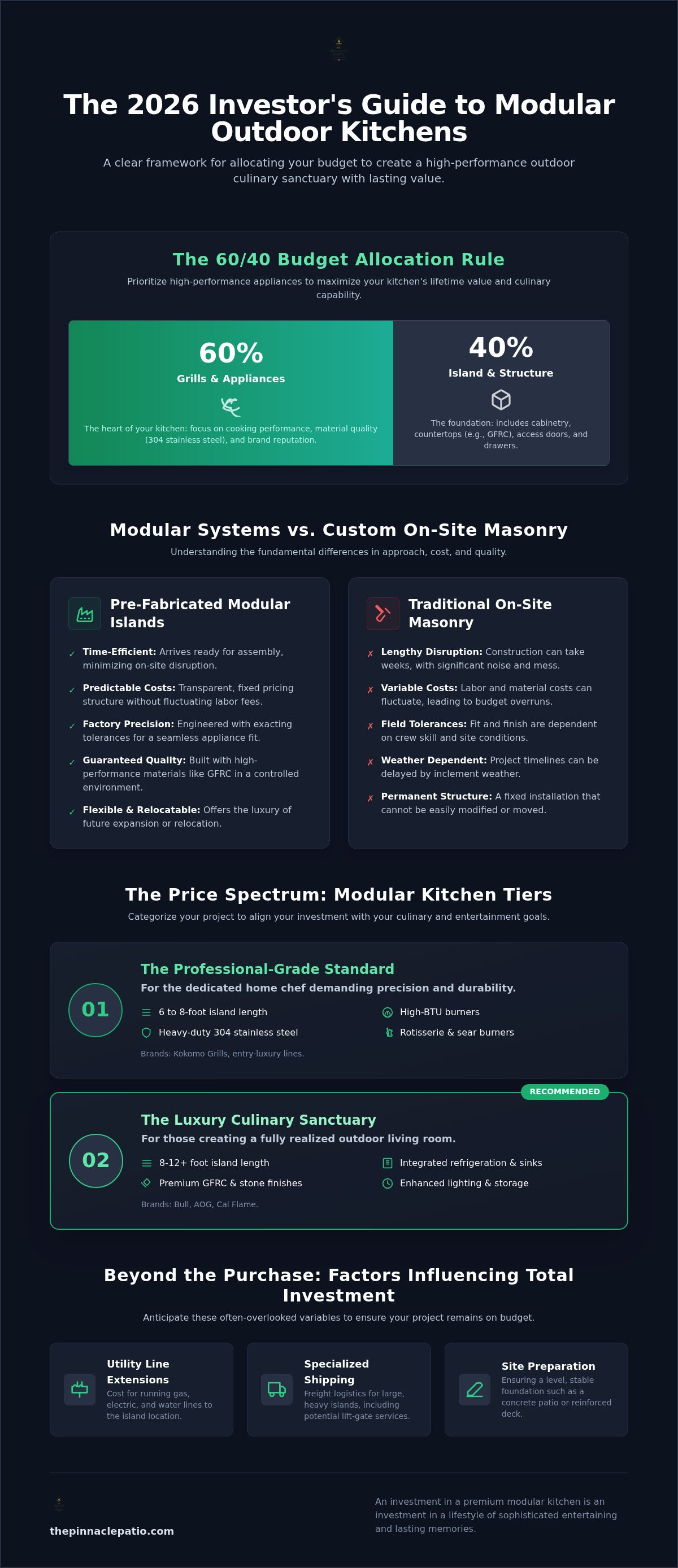
- Master the 60/40 Rule of budget allocation, which prioritizes high-performance grills and appliances as the primary drivers of your kitchen's lifetime value.
- Discover why premium engineering from brands like Bull and AOG prevents the premature failure seen in mass-market kits, ensuring your investment lasts for decades.
- Identify often-overlooked variables like utility line extensions and specialized shipping to ensure your final project remains within your planned financial framework.
- Learn how pre-fabricated modular islands provide a more refined and time-efficient alternative to the lengthy disruption of traditional on-site masonry.
Defining the Investment: Understanding Modular Outdoor Kitchen Costs
A modular outdoor kitchen is a pre-engineered system of cabinets and appliances designed for rapid, high-end assembly. These sophisticated systems represent a refined middle ground between basic standalone grills and the permanence of custom masonry. While many homeowners initially seek the average cost of a modular outdoor kitchen, they quickly discover that the financial landscape is defined by intentionality and material choice. Unlike traditional construction, modular units offer a transparent pricing structure that simplifies the path to a completed culinary sanctuary. This predictability allows you to focus on the elements that truly matter: the performance of the cooking surface and the aesthetic harmony of the cabinetry. It's an approach built around curated quality rather than the guesswork of on-site labor.
Modular vs. Custom Masonry: A Cost Comparison
Traditional stone and mortar builds often involve weeks of on-site disruption and fluctuating labor costs. Modular systems, by contrast, arrive with a level of finish quality that is difficult to replicate in the field. Looking back at the history of outdoor cooking, we've moved from simple open fires to sophisticated environments where precision is paramount. Choosing a modular outdoor kitchen island reduces on-site labor hours significantly; there's no need for a masonry crew to spend days cutting stone. This efficiency doesn't just save time. It ensures a more controlled investment where the quality is guaranteed by factory standards rather than weather-dependent field work. These systems also offer the unique luxury of flexibility, allowing for future expansion or even relocation if your lifestyle evolves.
The Value of Pre-Fabricated Precision
Factory-built islands are engineered to eliminate the hidden variables that often plague on-site builds. When you select a premium island, you're investing in a structure designed with exacting tolerances for specific built-in grills from brands like Bull or AOG. This ensures a seamless fit where every drawer slides perfectly and every appliance sits flush. High-performance materials like Glass Fiber Reinforced Concrete (GFRC) provide a level of longevity that exceeds standard wood-frame kits. These materials are tactile, durable, and resistant to the elements, serving as a permanent canvas for your culinary gatherings. By choosing pre-fabricated excellence, you bypass the uncertainty of custom hardscaping while securing a professional-grade environment built to endure for decades.
The Price Spectrum: Categorizing Modular Kitchen Tiers
Defining the scope of your outdoor project requires moving beyond a single, static number. While the average cost of a modular outdoor kitchen serves as a helpful baseline for initial planning, true value is discovered by identifying which quality tier aligns with your hosting aspirations. These investments generally fall into three categories: Standard, Professional, and Luxury Bespoke. A Standard project focuses on functional durability, utilizing entry-luxury components that far outperform the temporary "big box" kits found at hardware stores. For those who view their patio as a refined extension of their home's interior, the Professional and Luxury tiers offer a significant leap in material integrity and culinary capability.
The Professional-Grade Standard
This tier is designed for the dedicated home chef who demands precision. Choosing brands like Kokomo Grills introduces professional engineering into your sanctuary, featuring high-BTU burners and heavy-duty 304 stainless steel construction that resists the elements. At this level, islands typically span six to eight feet, providing the necessary footprint for essential upgrades like rotisseries, infrared sear burners, and integrated LED lighting for evening ambiance. According to the latest Cost vs. Value Report, high-quality outdoor additions consistently provide strong returns by expanding a home's usable square footage. These aren't just cooking stations; they're engineered hubs built for the alchemy of social gathering and high-performance cooking.
The Luxury Culinary Sanctuary
When the goal is a fully realized outdoor living room, the project enters the Luxury Bespoke category. Here, the focus shifts to a curated selection of heritage brands like AOG (American Outdoor Grill) and the intentional integration of "lifestyle layers." This might include built-in pizza ovens, professional-grade refrigeration, and Bromic climate control systems to ensure comfort in every season. The average cost of a modular outdoor kitchen in this tier reflects the use of oversized islands and premium finishes that transform a simple patio into a private resort. If you're ready to define the specific elements of your vision, you might schedule a consultation with an expert guide to explore these high-performance possibilities.
Anatomy of an Island: Where the Budget is Allocated
To master your investment, you must understand the "60/40 Rule." This professional principle suggests that 60% of your budget should be reserved for high-performance appliances, while the remaining 40% supports the island's structure and aesthetic finishes. When calculating the average cost of a modular outdoor kitchen, many homeowners mistakenly prioritize the exterior facade. In reality, the cabinetry and countertops serve as the essential frame, but the appliances define the lifetime value and functional success of the space. While a clean stucco finish offers an elegant, minimalist aesthetic, upgrading to premium stone or designer tile adds a layer of tactile luxury that elevates the entire patio. You can explore our curated collection of outdoor kitchens to see how these structural and functional elements harmonize into a single, cohesive vision.
High-Performance Built-In Grills
The grill is the undisputed centerpiece of any culinary sanctuary. Investing in engineering excellence here is non-negotiable for longevity. Professional-grade built-in grills from heritage brands like Bull or Wildfire utilize cast stainless steel burners rather than the standard tube burners found in entry-level models. Cast burners are significantly heavier, hold heat with greater consistency, and resist the corrosive effects of outdoor environments for much longer. This superior craftsmanship is why premium brands offer robust warranties that protect your investment for decades. A high-performance cooking surface doesn't just cook food; it ensures predictable results, turning every evening meal into a refined and effortless experience.
Essential Accessories and Storage
Beyond the primary grill, a truly functional kitchen requires thoughtful storage and specialized accessories. High-quality stainless steel access doors and drawers are non-negotiable; they should feel substantial and operate with a satisfying, quiet precision. Adding side burners or power burners increases your culinary range, allowing you to prepare delicate sauces or large-scale boils without ever leaving the social circle. To truly extend your hosting season into the cooler months, consider integrating climate control with luxury patio heaters. These additions ensure your outdoor space remains a welcoming destination regardless of the forecast. This holistic approach to budget allocation ensures every dollar contributes to a more permanent and meaningful way of life.
Beyond the Purchase: Factors Influencing Total Investment
Homeowners often encounter a discrepancy between the initial price tag of a system and the final investment required to bring their sanctuary to life. This gap doesn't stem from hidden fees, but from the essential logistical and infrastructural requirements of a professional-grade installation. When evaluating the average cost of a modular outdoor kitchen, you must account for the logistics of luxury. Shipping oversized islands requires specialized freight services, often involving lift-gate delivery or white-glove placement to ensure your investment arrives in pristine condition. These heavy-duty structures, often finished in GFRC or premium stone, demand a level foundation that can support significant weight without shifting over time. Whether you're utilizing a reinforced concrete pad or an existing deck, the integrity of the surface is the first step in creating a permanent outdoor destination.
Utility Infrastructure and Permitting
A seamless outdoor experience relies on invisible but critical infrastructure. Running dedicated lines for natural gas, electricity, and water is a foundational step that varies based on your island's distance from the main residence. While propane-fed systems offer initial simplicity, natural gas provides a permanent, uninterrupted fuel source that many high-end homeowners prefer for their Bull or AOG grills. Your electrical needs will scale with your ambition; rotisseries, integrated LED lighting, and outdoor refrigeration all require professional wiring. It's also vital to consider local building permits. These government fees typically range between $200 and $800 depending on your municipality's requirements for utility hookups and structural safety. Planning for these elements early ensures your project remains a relaxed progression rather than a series of logistical hurdles.
Site Preparation and Final Assembly
The Pinnacle Patio focuses on product excellence and expert curation, providing high-performance components while you coordinate with local professionals for the final assembly. This division of labor ensures that while your island is factory-built to exacting standards, the on-site utility connections are handled by licensed experts who understand your local codes. A professional team can typically set and hook up a modular island in a fraction of the time required for custom masonry, often completing the physical placement in a single afternoon. For a deeper look at how these systems compare to other options, read more about prefabricated bbq island kits and their role in modern landscape design.
Curating Excellence: Why Premium Brands Define the Value
The allure of a "bargain" outdoor kitchen often fades within two or three seasons as inferior materials succumb to the elements. While the initial average cost of a modular outdoor kitchen might seem attractive in a mass-market flyer, these kits often utilize low-grade steel and composite materials that aren't designed for the long term. A true culinary sanctuary requires components that withstand the test of time and temperature. By selecting heritage brands like Bull and AOG, you're choosing engineering standards that prioritize performance over price points. These manufacturers focus on heavy-gauge construction and internal components that don't rust or fail when you need them most. Investing in excellence isn't just about the cooking experience; it's about ensuring your outdoor space remains a permanent asset to your home and lifestyle.
The ROI of High-Performance Materials
304-grade stainless steel remains the undisputed gold standard for outdoor longevity, especially in coastal environments or regions with harsh winters. This high-chromium, high-nickel alloy provides exceptional corrosion resistance, maintaining its polished appearance for decades. Beyond the tactile pleasure of using professional-grade equipment, a "name-brand" kitchen significantly impacts your home's resale value. Unlike generic DIY builds that may look dated or worn within a few years, a curated modular system is viewed as a high-end structural improvement. Research indicates that a well-executed outdoor kitchen can offer a return on investment between 55% and 200%. To explore how these high-performance elements harmonize into a complete entertaining space, read our Luxury Outdoor Kitchens: The 2026 Guide.
Your Vision, Our Expertise
Moving from the research phase to a physical reality requires a partner who understands the nuances of outdoor aesthetics and mechanical requirements. The Pinnacle Patio acts as a visionary guide, filtering the vast market to present only the most reliable and evocative components. We don't just sell products; we curate experiences built around connection and refinement. A professional consultation helps you navigate the average cost of a modular outdoor kitchen by identifying where to invest for maximum impact and where to find efficiencies. Our commitment to concierge-style service ensures your journey is as steady and relaxed as the lifestyle you're creating. When you're ready to define the specific elements of your culinary destination, our experts are here to provide the clarity and confidence you deserve.
Transforming Your Vision into a Permanent Heritage
Investing in a modular outdoor kitchen is a commitment to a more refined way of living. By choosing pre-engineered islands over the uncertainty of on-site masonry, you secure a level of craftsmanship that only rigorous factory standards can provide. Understanding the average cost of a modular outdoor kitchen is the essential first step toward curating a sanctuary that reflects your standards of excellence. You've discovered how the "60/40 Rule" ensures your budget prioritizes the high-performance grills that define the culinary experience, while heritage brands like Bull, AOG, and Kokomo provide the permanence your property deserves.
As an authorized retailer specializing in luxury curation, we offer national shipping on all premium islands to bring this vision directly to your doorstep. Our experts are ready to guide you through every nuance of product selection, from high-BTU burners to climate-controlled comfort. It's time to move beyond research and begin the journey toward your own culinary sanctuary. We look forward to helping you elevate your everyday moments into something extraordinary.
Frequently Asked Questions
Is a modular outdoor kitchen cheaper than a custom-built one?
Modular systems often represent a more efficient investment than traditional custom masonry. While material costs for high-end components are comparable, modular units eliminate the extensive on-site labor hours required for stone and mortar construction. This predictability helps manage the average cost of a modular outdoor kitchen; factory-built islands arrive with finished surfaces, reducing the need for multiple specialized trades to spend weeks at your home.
What is the most expensive part of a modular outdoor kitchen?
The primary built-in grill is almost always the most significant financial allocation in a modular setup. High-performance models from heritage brands like Bull or AOG are engineered with heavy-duty cast stainless steel and advanced heating systems that command a premium. Following the 60/40 rule, these professional appliances serve as the heart of your sanctuary, defining both the culinary capability and the lifetime value of the space.
How long does a modular outdoor kitchen typically last?
A premium modular kitchen built with 304-grade stainless steel and GFRC (Glass Fiber Reinforced Concrete) is designed to last 20 years or more. Unlike mass-market kits that may corrode within a few seasons, heritage brands focus on material integrity and weather resistance. Regular maintenance and using high-quality covers will further extend this lifespan, ensuring your outdoor living area remains a permanent destination for social connection and refined dining.
Can I install a modular outdoor kitchen myself to save on costs?
You can manage the physical placement of the modular island, but licensed professionals should always handle utility connections. While the "dry" assembly of factory-built cabinets is straightforward, running gas lines and electrical circuits requires specialized expertise to ensure safety and code compliance. Coordinating with local contractors for the final hookups allows you to maintain control over the project while ensuring your sanctuary is built on a foundation of professional security.
Does an outdoor kitchen increase home value?
An outdoor kitchen is a strategic investment that measurably enhances property value by expanding your home's usable square footage. High-quality additions often see a return on investment between 55% and 200% depending on the region and the quality of the appliances chosen. Beyond the financial metrics, a sophisticated culinary space creates an aspirational lifestyle feature that distinguishes your property in the eyes of future discerning buyers.
What utilities are required for a modular outdoor kitchen island?
Most professional modular islands require dedicated gas and electrical lines to function as a complete culinary hub. Natural gas or propane powers the primary grill and side burners, while electricity is essential for rotisserie motors, integrated LED lighting, and refrigeration. If your design includes a sink, you'll also need to account for water supply and drainage lines. Planning these runs early is a key factor in managing the average cost of a modular outdoor kitchen.
Should I choose natural gas or propane for my built-in grill?
Natural gas is the preferred choice for permanent luxury installations because it provides an uninterrupted fuel source without the need for tank refills. It's a "set and forget" solution that aligns with a relaxed outdoor lifestyle. Propane remains an excellent alternative for satellite kitchens or locations where extending a gas line is cost-prohibitive. Both options deliver high-performance results when paired with the precision engineering found in Bull or Kokomo grills.