

Best Outdoor Fireplaces 2026: Luxury Heating Guide
Why settle for a flickering fire pit when your estate deserves an architectural anchor that transforms the entire landscape? You likely recognize that a true outdoor sanctuary requires more than a temporary heat source. It demands a centerpiece that commands attention while offering sophisticated protection from the wind. Selecting the best outdoor fireplaces involves more than just picking a style; it's about investing in a permanent heritage piece that masters smoke management and thermal efficiency.
We understand the confusion that arises when comparing permanent masonry structures against high-end prefabricated units. This guide provides expert clarity on fuel type performance and the structural nuances of leading brands like HPC Fire Inspired, Kokomo Grills, and The Outdoor Plus. You'll discover how to navigate permit requirements and setback distances while choosing a system designed for longevity. We've curated the essential insights you need to transition from a simple patio to a refined, four-season retreat. By focusing on superior craftsmanship and intentional design, you can ensure your investment serves as the sophisticated heart of your home for years to come.
Key Takeaways
- Understand why the structural permanence of an architectural fireplace provides superior wind protection and a lasting heritage for your estate.
- Evaluate the nuances of natural gas, liquid propane, and wood fuels alongside the longevity of Glass Fiber Reinforced Concrete (GFRC).
- Discover the best outdoor fireplaces for 2026 within our curated collection of industry-leading designs from HPC Fire Inspired and The Outdoor Plus.
- Plan your installation with confidence by mastering scale, safety clearances, and the logistical requirements of national delivery for luxury units.
Defining the Architectural Centerpiece: Fireplace vs. Fire Pit
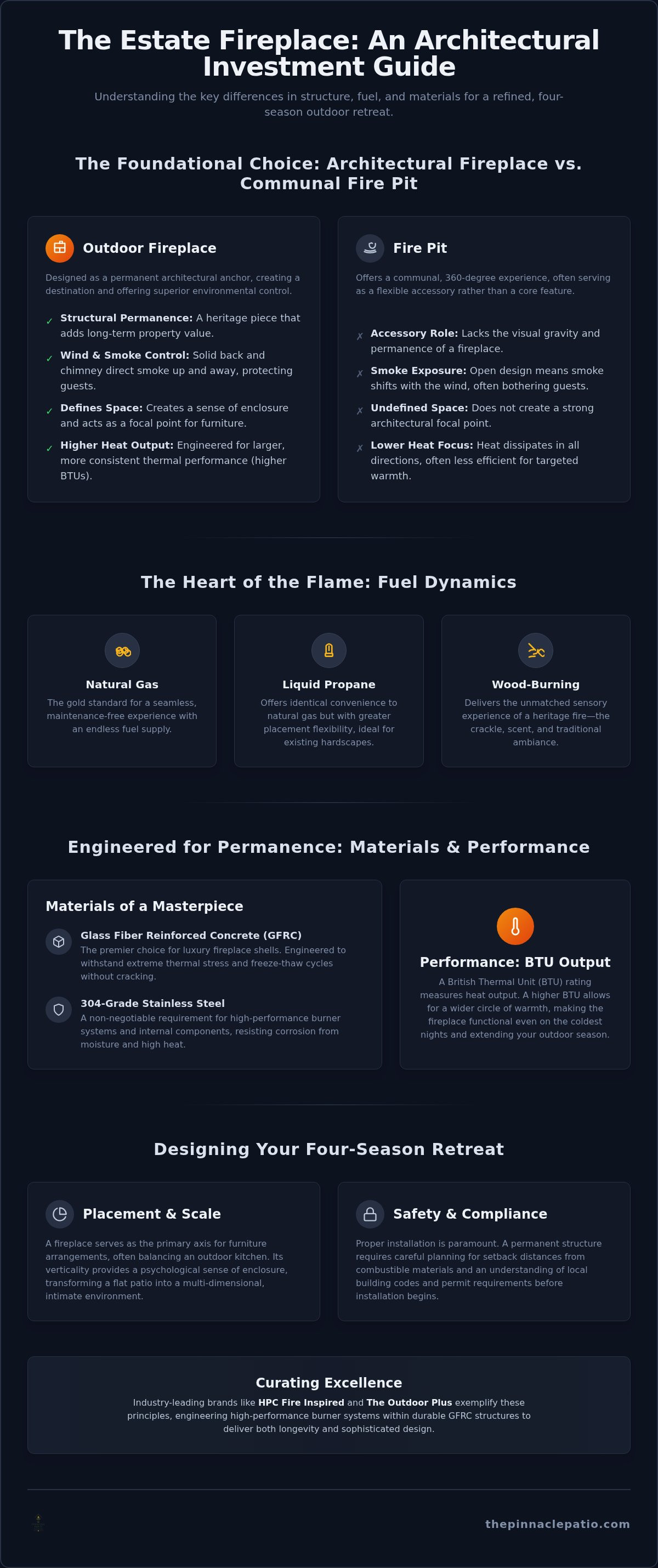
Choosing between a fire pit and a fireplace is often the first decision a homeowner makes when designing a high-end patio. While fire pits offer a communal, 360-degree experience, they lack the visual gravity of a permanent structure. A true outdoor fireplace overview reveals that these units are designed as architectural anchors rather than mere accessories. They provide a sense of heritage and permanence that a portable bowl simply cannot replicate. For those seeking the best outdoor fireplaces, the focus shifts from a temporary flame to a structural masterpiece that defines the property's aesthetic value for decades.
The social advantage of a fireplace lies in its ability to control the environment. Because these units feature a solid back wall and a dedicated chimney, they offer superior wind protection. You won't find yourself constantly shifting chairs to avoid shifting smoke. The chimney draws exhaust upward, ensuring your guests enjoy the warmth without the irritation of stray embers or haze. This makes them the ideal choice for estate-style patios where comfort is non-negotiable and seasonal use is extended into the cooler months.
The Role of the Fireplace in Luxury Landscapes
A fireplace creates a distinct destination within your landscape. Its verticality provides a psychological sense of enclosure and security, much like an indoor living room. It serves as the primary axis for furniture arrangements, often sitting opposite an outdoor kitchen to balance the layout. Whether you're hosting a formal evening or a quiet night by the fire, the structure acts as a visionary guide for the entire space's flow. It transforms a flat patio into a multi-dimensional environment that feels both expansive and intimate.
Performance Advantages of Permanent Units
Permanent units typically offer significantly higher BTU outputs than their portable counterparts. Brands like HPC Fire Inspired and The Outdoor Plus engineer burner systems that deliver consistent, high-performance heat even in colder climates. These systems are often built around Glass Fiber Reinforced Concrete (GFRC) or professional-grade stainless steel; materials chosen for their extreme durability and resistance to the elements. By integrating these units directly with your home's natural gas lines, you eliminate the need for unsightly propane tanks. It's a seamless experience that prioritizes both function and elegance, ensuring your investment remains a centerpiece of the home.
Evaluating the Essentials: Fuel Types, Materials, and Performance
Selecting the best outdoor fireplaces requires an understanding of the technical foundation that supports the aesthetic vision. It's not just about the flame. It's about how that flame is sustained and housed. High-end units are investments in permanence, requiring a synergy between fuel efficiency and material integrity to ensure they remain the heart of your patio for decades.
Fuel Dynamics: Convenience vs. Tradition
Natural gas remains the gold standard for homeowners seeking a maintenance-free experience. It provides an endless fuel supply for high-performance burner systems, such as those engineered by HPC Fire Inspired. Liquid propane offers nearly identical convenience while granting flexibility in placement, particularly in estates where trenching new gas lines might disrupt existing hardscaping. While gas dominates for ease of use, traditional wood-burning units shouldn't be overlooked. They deliver the evocative scent and rhythmic crackle that define a heritage fire, offering a sensory experience that modern technology strives to replicate.
Craftsmanship and Material Integrity
Longevity in outdoor heating is dictated by material science. Glass Fiber Reinforced Concrete (GFRC) has emerged as the premier choice for luxury fireplace shells. This material is specifically designed to withstand extreme thermal stress and freeze-thaw cycles without the cracking associated with traditional masonry. Inside the structure, 304-grade stainless steel is a non-negotiable requirement for burner systems and internal components. This grade of steel resists the corrosive effects of moisture and high heat, ensuring the internal mechanics remain as pristine as the exterior finish.
Performance is often measured by BTU (British Thermal Unit) output, which determines the effective heating radius of the unit. A higher BTU rating allows for a wider circle of warmth, making the fireplace functional even on the coldest nights. For instance, the Kokomo Entertainer fireplace utilizes a gas burner insert designed for consistent, high-output performance. To refine the atmosphere, you can select from various decorative media:
- Lava Rocks: These provide a rugged, organic texture that mimics a natural volcanic hearth.
- Fire Glass: Available in numerous hues, this media offers a modern, reflective shimmer that enhances the flame's glow.
- Ceramic Log Sets: Hand-painted to replicate specific wood species, these provide the visual warmth of a traditional fire without the ash.
Every element, from the ignition system to the handcrafted finish, should align with your lifestyle. If you're unsure which fuel configuration or material best suits your patio's specific layout, you may wish to speak with a design specialist to refine your selection.
Designing for Atmosphere: Placement and Scale in Outdoor Living
Scale is the silent architect of atmosphere. When selecting from the best outdoor fireplaces, you must consider the visual weight of the unit relative to your patio's square footage. A massive GFRC structure on a small terrace feels claustrophobic; a slender model may disappear on a sprawling estate. The goal is to create a 'fireplace room' where the structure acts as a primary wall, anchoring furniture layouts and encouraging intimate connection. Position your seating approximately four to six feet from the hearth to balance warmth with conversational space.
Safety mandates also dictate placement. National standards typically require a minimum setback of 15 to 25 feet from any structure, with the national average sitting at approximately 23 feet. This is vital when positioning your unit near an outdoor kitchen island or a combustible fence. In California, regulations require at least a 10-foot clearance from structures for wood-burning units. Always consider prevailing wind patterns to ensure smoke is carried away from seating areas and scenic views remain unobstructed.
Integrating Fire with Culinary Spaces
A sophisticated patio design often utilizes a 'fire and food' synergy. Placing your fireplace within visual range of built-in grills creates a cohesive entertainment zone. If you're installing a unit near a pergola or pavilion, ensure the chimney height exceeds the roofline to facilitate proper ventilation. For larger estates, a single fireplace might not be enough to combat the evening chill. You can balance your heat sources by pairing the central hearth with Bromic luxury heaters mounted in the rafters, providing consistent overhead warmth that complements the fireplace's radiant heat.
Aesthetic Harmony and Silhouette
The silhouette of your fireplace should mirror the architectural language of your home. Sleek, linear designs with smooth finishes suit modern estates, while tiered, textured units provide a timeless look for traditional landscapes. You can further refine this harmony by customizing the interior. Select decorative fire media that matches your patio's color palette, such as amber fire glass to complement warm stone or black lava rocks for a high-contrast, contemporary feel. This attention to detail ensures the fireplace feels like an intentional extension of the property's heritage rather than a secondary addition.
Curating Excellence: Standout Fireplace Designs for 2026
Curation is the cornerstone of a refined patio. Identifying the best outdoor fireplaces for 2026 requires looking beyond the surface to the engineering and artistry hidden within the structure. The Pinnacle Elite Fireplace Collection represents a rigorous selection of 11 elite models, incorporating the latest 2026 product updates from industry leaders. Brands like HPC Fire Inspired lead the industry with engineering-led burner technology. Their electronic ignition systems often feature Bluetooth app control, allowing you to master the atmosphere from your smartphone. In contrast, The Outdoor Plus focuses on the tactile experience, offering handcrafted finishes and artistic silhouettes that turn a functional heater into a gallery-worthy installation.
When selecting the best outdoor fireplaces for a modern estate, consider the visual flow of your property. See-through models are exceptional for dividing a lounge from a dining area without sacrificing light or connectivity. These units allow the flame to be enjoyed from multiple angles, doubling the atmospheric impact. Single-sided units, however, provide a powerful focal point that anchors a space and protects against prevailing winds, making them ideal for exposed coastal or hillside patios.
The Modern Minimalist: Linear and Sleek Designs
Modern architecture demands a certain restraint in form. Low-profile linear units are designed to preserve panoramic views while delivering high-performance heat. These sleek silhouettes integrate effortlessly with modular outdoor kitchens, creating a streamlined aesthetic that feels both spacious and intentional. High-performance electronic ignition ensures your fire starts instantly, even in challenging weather, maintaining the effortless luxury your home deserves.
The Traditional Estate: Grand and Imposing Silhouettes
For traditional landscapes, grand silhouettes provide a sense of heritage and weight. Oversized units act as primary architectural walls, creating an outdoor sanctuary that feels like a natural extension of the house. Materials like Glass Fiber Reinforced Concrete (GFRC) can be finished with handcrafted textures resembling travertine or weathered stone. These units don't just provide warmth. They create a year-round resort-style atmosphere that invites connection and relaxation, regardless of the season. By choosing a unit with a significant structural presence, you're investing in a piece that will age gracefully alongside your property.
The Path to Permanence: Planning Your Luxury Fire Installation
Transitioning from a vision to a reality requires a methodical approach to site preparation. Installing one of the best outdoor fireplaces is a commitment to your property's heritage. These aren't lightweight accessories. They're substantial architectural structures. A typical Glass Fiber Reinforced Concrete (GFRC) unit carries significant weight, often requiring a reinforced concrete pad to ensure stability. You must verify that your patio's foundation can support the concentrated load before the delivery arrives.
Navigating the logistics of national delivery is a critical part of the journey. Our estate-sized units are shipped via professional freight carriers. You should prepare for curbside delivery and have a plan for moving the unit to its final location. It's often wise to have a mechanical lift or a small team on-site for the off-loading process. Once the unit is placed, the integration of gas and electrical lines must be performed by licensed professionals. This ensures your high-performance burner, like those from HPC Fire Inspired, operates at peak efficiency while adhering to safety standards.
Maintenance preserves the artistic merit of your investment. While GFRC is designed for longevity, it benefits from periodic cleaning with a soft brush and water. Ensure drainage holes remain clear to prevent water from pooling near the burner. For units featuring 304-grade stainless steel, a specialized cleaner will prevent surface oxidation and maintain the metal's polished luster. These small rituals ensure your fireplace remains a pristine centerpiece for decades.
Pre-Purchase Checklist for Homeowners
Before you commit, it's essential to consult local building codes. Approximately 20 states require specific permits for permanent outdoor fire features. You'll also need to coordinate with your contractor to place gas and electrical stubs with precision. Measuring for heat distribution is equally vital. Ensure the unit is placed at least 15 to 25 feet from structures, following the national average of 23 feet, to maintain a safe and comfortable social flow. This prevents technical hurdles and ensures your installation meets all regulatory requirements.
Finalizing Your Sanctuary
Your journey toward a four-season retreat shouldn't feel overwhelming. Selecting the right protective covers will safeguard your fireplace during the off-season, preventing debris from entering the burner assembly. If you're uncertain about the technical requirements of your specific landscape, a consultation with an outdoor living expert is the best first step. We act as your visionary guide, ensuring every detail aligns with your lifestyle.
Explore the Pinnacle Elite Fireplace Collection to find your centerpiece.
Elevating Your Outdoor Legacy
Investing in an architectural fireplace is about more than just warmth; it's about defining the permanent character of your estate. By selecting from the best outdoor fireplaces, you transition from a temporary fire pit to a structural centerpiece that offers superior wind protection and sophisticated smoke management. Whether you prefer the engineering-led burner systems of HPC Fire Inspired or the handcrafted artistry of The Outdoor Plus, you're securing a heritage piece built for longevity. These units don't just heat a space; they create a destination that anchors your entire landscape design.
We provide the expert guidance needed for these high-end outdoor investments, offering a curated selection of 11+ luxury models. Our national delivery of premium architectural centerpieces ensures that your vision for a four-season sanctuary is within reach regardless of your location. Your patio deserves a heart that reflects your impeccable taste and facilitates deep connection for years to come. We're here to help you refine that vision into a reality that elevates every evening spent under the stars.
The right fireplace transforms a simple backyard into a refined sanctuary. We look forward to helping you select the architectural anchor that will serve as the sophisticated heart of your home.
Expert Guidance: Frequently Asked Questions
What is the difference between an outdoor fireplace and a fire pit?
An outdoor fireplace is a permanent architectural structure featuring a back wall and a dedicated chimney designed to divert smoke upward and away from guests. In contrast, fire pits offer a 360-degree open flame but lack the wind protection and structural gravity of a fireplace. Selecting one of the best outdoor fireplaces provides a sophisticated anchor for your patio, whereas fire pits are better suited for casual gatherings where smoke management is less of a priority.
Do I need a permit to install a permanent outdoor fireplace?
Most jurisdictions require a building permit for permanent, built-in outdoor fireplaces to ensure safety and code compliance. Approximately 20 US states mandate these permits, and failure to obtain one can void your homeowner's insurance. National standards typically suggest a minimum setback of 15 to 25 feet from any structure, with the national average sitting at 23 feet. You should always verify specific municipal regulations before beginning your project to ensure you're choosing the best outdoor fireplaces for your local area.
Which fuel type is best for an outdoor fireplace: natural gas or wood?
Natural gas is the premier choice for maintenance-free luxury, offering an endless fuel supply and instant ignition through systems like those from HPC Fire Inspired. Wood-burning units appeal to those who value the traditional scent and crackle of a heritage fire, though they require more active management and ash removal. While gas is increasingly popular due to local burn bans, wood remains a timeless option for estates where the sensory experience of a real flame is the primary goal.
Can I install an outdoor fireplace on a wooden deck?
Permanent outdoor fireplaces are typically too heavy for standard wooden decks due to the weight of materials like Glass Fiber Reinforced Concrete (GFRC). Most luxury units require a reinforced concrete pad or a non-combustible foundation to prevent structural failure or fire hazards. If you intend to place a heat source on a deck, you must consult a structural engineer and use protective heat shields or specialized fire-rated pads to protect the wood from potential thermal damage.
How many BTUs do I need for my outdoor fireplace to be effective?
Effective heating depends on your climate and the square footage of your seating area, but most luxury fireplaces range from 50,000 to over 100,000 BTUs. High-performance burner systems from brands like Kokomo Grills ensure that the heat radius is wide enough to keep guests comfortable even on cold evenings. For larger estate-sized patios, you may need a unit with a higher output to maintain a consistent thermal envelope against prevailing winds and ambient temperature drops.
What is GFRC and why is it used in luxury fireplaces?
Glass Fiber Reinforced Concrete (GFRC) is a high-performance composite material that combines cement with high-strength glass fibers. It is prized in luxury fireplace construction because it offers the aesthetic weight of traditional stone while being lighter and significantly more durable. GFRC is specifically engineered to resist cracking from extreme thermal stress and freeze-thaw cycles, making it the ideal material for a permanent architectural centerpiece that must withstand the elements throughout every season.
Are outdoor fireplaces safe to use under a covered patio or pergola?
Outdoor fireplaces can be used under pavilions or pergolas if the installation meets specific clearance and ventilation requirements. The chimney must extend beyond the roofline to ensure smoke is properly exhausted away from the covered area. It's vital to maintain safe distances from combustible materials like wood rafters. Integrating Bromic luxury heaters into the structure can provide additional overhead warmth, creating a comprehensive climate-controlled environment within your covered sanctuary that feels both open and protected.
How do I maintain the finish of a handcrafted outdoor fireplace?
Maintaining a handcrafted finish involves simple but consistent care to preserve the unit's longevity and aesthetic beauty. You should clean the GFRC shell periodically with a soft brush and water to remove dust or debris. For units featuring 304-grade stainless steel components, use a specialized metal cleaner to prevent surface oxidation. Keeping drainage holes clear and using protective covers during the off-season will protect the internal burner mechanics and ensure your fireplace remains a pristine focal point for years.