

Built-In vs. Freestanding Grills: A 2026 Guide to Curating Your Outdoor Sanctuary
The most expensive design mistake in an outdoor kitchen isn't choosing the wrong stone; it's selecting a grill that fights against your lifestyle rather than elevating it. When weighing the merits of a built in vs freestanding grill, you're likely seeking a space that feels intentional, where every gathering is refined and the atmosphere is as sophisticated as the menu. It's natural to feel hesitation when facing the technicalities of gas line permits or the permanence of a custom island. You want to ensure your choice adds genuine property value without becoming a maintenance burden in a few years.
This 2026 guide clarifies that choice, helping you discover which path aligns with your vision for a professional-grade sanctuary. We'll examine how the architectural elegance of a permanent culinary anchor from brands like Bull or AOG compares to the flexible mobility of a premium cart. You'll learn how to prioritize 304 stainless steel for twenty years of performance and how to curate an entertaining experience that feels both effortless and extraordinary. Whether you require a mobile workhorse or a fixed centerpiece, the right decision will transform your patio into a lasting heritage space.
Key Takeaways
- Define the choice between a built in vs freestanding grill as a commitment to either a permanent culinary destination or a versatile mobile workhorse.
- Learn why natural gas infrastructure is the premier choice for integrated kitchens, providing a seamless and uninterrupted fuel source for the modern host.
- Recognize how a thoughtfully designed grill island serves as a social magnet, increasing the functional square footage and financial value of your home.
- Distinguish between the temporary nature of mass-market carts and the enduring legacy of professional-grade 304 stainless steel equipment.
- Gain expert guidance on selecting heritage brands like Bull and AOG that harmonize sophisticated design with professional-level performance.
Understanding the Fundamental Divide: Built-In vs. Freestanding Grills
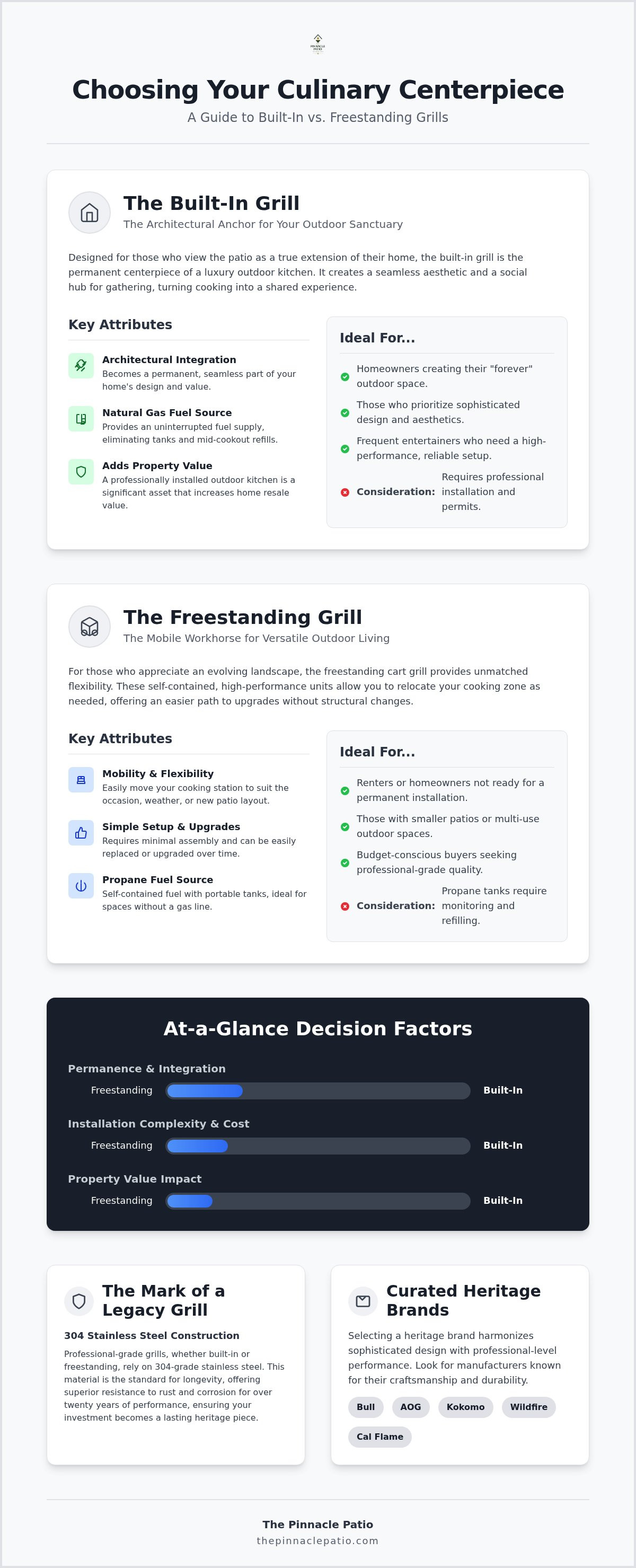
Design begins with a single, pivotal choice that dictates the rhythm of your outdoor life for years to come. The debate over a built in vs freestanding grill is less about the mechanics of fire and more about how you intend to inhabit your space. A freestanding unit offers the freedom of movement, while a built-in head represents a commitment to architectural permanence. This decision serves as the foundational step in curating a bespoke culinary environment that reflects your taste for refinement and your approach to hosting.
At its core, a barbecue grill is a tool for transformation, but the delivery of that experience varies significantly between these two formats. We view this choice as the divide between a temporary cooking station and a permanent heritage feature. It's a question of whether you value the ability to pivot your layout as your lifestyle evolves or the desire to anchor your home with a professional-grade installation that increases property value. Framing this choice early allows you to build a cohesive vision where the equipment doesn't just sit on the patio but belongs there.
The Freestanding Cart: Mobility and Versatility
For those who appreciate an evolving landscape, the freestanding cart provides unmatched flexibility. These units are self-contained, high-performance machines mounted on mobile bases, allowing you to relocate your cooking zone as the sun shifts or your guest list grows. They're ideal for patios where the usage changes over time, offering an easier path to replacement or upgrades without altering the physical structure of your home. Choosing a professional cart from a brand like Bull or Kokomo ensures that mobility doesn't come at the cost of durability; it's a high-value investment for those who aren't yet ready to commit to a fixed masonry structure.
The Built-In Head: Architectural Integration
The built-in grill head is designed for those who view the patio as a true extension of the residence's interior. These units are engineered to be the centerpiece of a luxury outdoor kitchen island, creating a seamless aesthetic that mirrors the sophistication of a high-end indoor culinary suite. Built-ins are built around the concept of social hosting. They provide a "social magnet" effect that encourages guests to gather around the chef, turning the act of cooking into a shared performance. This approach favors longevity and frequent use, utilizing premium materials to withstand the elements while maintaining a polished, professional appearance for decades.
The Power of Permanence: Natural Gas Grills and Infrastructure
The invisible infrastructure of your outdoor sanctuary defines the ease of your evenings. While the aesthetic of a polished grill head draws the eye, the fuel source serves as the heartbeat of the entire culinary experience. Choosing between a built in vs freestanding grill often comes down to the commitment you're willing to make to your home's utility lines. Natural gas is the gold standard for integrated designs, offering a level of permanence and reliability that mirrors the sophistication of a professional indoor kitchen. It replaces the anxiety of a mid-sear fuel shortage with a steady, uninterrupted flow of energy.
Establishing a permanent gas line requires a deliberate approach to design and safety. According to verified 2026 building standards, a permit is almost always required for a new natural gas line connection, ensuring that your installation meets rigorous local codes. This infrastructure investment pays dividends in convenience; you'll never have to haul heavy propane tanks or worry about fluctuating pressure during a large gathering. When managing high-heat equipment in a fixed masonry island, adhering to professional standards for Grilling and Food Safety is paramount. Professional brands like Bull and AOG engineer their burners specifically to optimize natural gas flow, ensuring consistent BTU output for those high-temperature sears that define luxury outdoor dining.
Why Natural Gas Favors the Built-In Format
Integrated kitchens thrive on clean lines and architectural harmony. Utilizing a permanent gas line eliminates the aesthetic clutter of propane tanks hidden behind cabinet doors, freeing up valuable storage space for accessories or refrigeration. Beyond the visual appeal, natural gas provides a more consistent fuel pressure than portable tanks, which can lose performance as they run low. This consistency is vital for professional-grade searing and long, slow roasts. If you're unsure how to route utilities for your specific layout, you can schedule a consultation with our design experts to ensure your vision remains both beautiful and compliant.
Propane Flexibility in Freestanding Models
Freestanding units excel in their "plug and play" nature, typically requiring no permits for propane tank usage. This makes them the ideal mobile workhorse for renters or homeowners who prefer a flexible patio layout. However, the divide is narrowing; many premium built-in heads now offer conversion kits to natural gas, allowing your equipment to evolve with your space. While propane is excellent for remote patio locations where running a gas line is cost-prohibitive, it lacks the "never-ending fuel" promise that defines a truly permanent culinary anchor.
Aesthetic Harmony: Comparing Design Integration and Spatial Impact
The physical layout of your patio dictates the social rhythm of your gatherings. When deciding on a built in vs freestanding grill, you're choosing between an architectural anchor and a versatile mobile station. A built-in unit serves as the center of gravity for a luxury outdoor kitchen, creating a defined "social magnet" where guests naturally gravitate toward the chef. This permanence allows for a sophisticated interplay of materials, where the cold precision of 304 stainless steel meets the organic warmth of custom masonry or stone. It's a deliberate choice to turn a cooking area into a permanent heritage feature of the home.
Design experts frequently highlight that the aesthetics of high-end equipment are meant to complement refined residential architecture. As noted in discussions regarding the Best Deluxe BBQ Grills And Smokers, premium finishes are about more than just durability; they're about visual harmony. A built-in head doesn't just sit on your deck. It integrates into the very footprint of your residence. This approach favors larger spaces where the culinary zone remains fixed, allowing for a steady, methodical flow between the prep area, the fire, and the dining table. It's about creating a sense of place that feels both established and welcoming.
Creating a Culinary Destination
A permanent island provides the structural foundation for a multi-functional sanctuary. By choosing a built-in format, you gain the ability to integrate specialized appliances like pizza ovens and high-output side burners into a single, cohesive countertop. This layout supports a "concierge-style" hosting experience, where everything the chef needs is within arm's reach. To maintain aesthetic harmony throughout the cooler months, many visionary hosts match their grill's brushed finishes with Bromic heaters, ensuring the space remains a functional destination regardless of the season.
The Freedom of the Freestanding Setup
While an island offers permanence, the freestanding model provides the luxury of adaptation. For homeowners with compact decks or evolving patio designs, a mobile unit allows you to reconfigure your outdoor grill station as needed. Premium carts utilize folding side shelves for prep work, maximizing utility without sacrificing precious square footage. These units also offer integrated cabinet storage for accessories, keeping your sanctuary organized and uncluttered. It's a choice that values the freedom to change your environment, ensuring your built in vs freestanding grill decision aligns perfectly with your current spatial reality.
Evaluating the Investment: Longevity, Maintenance, and Resale Value
When you view your patio as a legacy space, every choice becomes an investment in your home's future heritage. The decision between a built in vs freestanding grill is often the difference between purchasing a temporary appliance and making a capital improvement to your property. While the allure of a mobile cart lies in its immediate utility, a permanent installation signals a level of intentionality that transforms a backyard into a sophisticated culinary destination. This shift in perspective moves away from the "throwaway culture" of retail-grade equipment and toward the enduring craftsmanship of professional brands like Bull and Kokomo.
Longevity is the hallmark of a true sanctuary. High-performance equipment is designed to withstand the elements while maintaining its aesthetic beauty and mechanical precision. Maintenance requirements differ significantly between the two formats; a freestanding cart requires regular attention to its wheels, hinges, and base, whereas a built-in head is protected by the very masonry that anchors it. By selecting professional-grade components, you ensure that your outdoor kitchen remains a functional asset rather than a maintenance burden. It's about choosing materials that age gracefully, reflecting a commitment to quality that lasts for decades.
ROI and Property Value
Modern appraisers and discerning buyers increasingly view a well-executed outdoor kitchen as essential living space rather than a luxury addition. As the U.S. outdoor kitchen market reached a valuation of $10 billion in 2026, the data suggests that permanent installations are a primary driver of residential desirability. A high-end masonry island creates undeniable curb appeal, suggesting a lifestyle of refined entertaining and communal connection. A quality built-in grill head made with 304 stainless steel can last 15 to 20+ years, while freestanding grills typically last 3 to 10 years.
Cost of Ownership Over Time
The initial investment in a permanent sanctuary is balanced by a significantly lower replacement frequency. While retail-grade carts often succumb to corrosion or mechanical failure within a few seasons, built-in grills from heritage brands offer robust warranties and superior weather resistance. This "forever" cooking sanctuary provides psychological value that far outweighs the upfront cost, offering peace of mind to the host who values reliability. It's a steady, methodical approach to home improvement that prioritizes lasting value over fleeting trends.
Curating Your Sanctuary: Selecting the Right Brand for Your Vision
The final step in your journey isn't just about choosing a fuel source or a layout; it's about selecting a partner in your culinary expression. At The Pinnacle Patio, we've curated a selection of heritage brands that represent the absolute zenith of outdoor engineering. Whether you've decided on a built in vs freestanding grill, the brand you select will dictate the tactile experience of every meal you prepare. It's the difference between a simple appliance and a piece of functional art that anchors your social life for decades.
AOG Grills, or American Outdoor Grills, are designed for the homeowner who prizes a sleek, minimalist aesthetic without sacrificing modern performance. Built by the same refined craftsmen behind Fire Magic, these units offer a polished look that integrates effortlessly into contemporary masonry. Conversely, Bull Grills are celebrated for their uncompromising engineering excellence. They provide a robust, heavy-duty experience across both built-in and cart formats, making them a favorite for those who demand professional-grade heat and durability in any configuration. For those seeking the ultimate in integrated island luxury, Kokomo Grills offer a suite of components built around the idea of a complete, seamless outdoor suite.
Matching Brand DNA to Your Lifestyle
Every brand we carry has a distinct personality designed for a specific way of living. Your choice should reflect not just how you cook, but how you inhabit your outdoor space. Consider these "Pinnacle" characteristics:
- Bull Grills: Engineered for the high-heat enthusiast, these units feature thick stainless steel grates and powerful burners built around maximum thermal retention and professional searing.
- AOG: These grills offer a refined, timeless design that focuses on clean lines and reliable performance for the host who values understated elegance.
- Wildfire and Cal Flame: These brands offer specialized features, from sophisticated LED-lit controls to unique burner configurations, allowing for a truly bespoke and modern cooking environment.
Final Steps: From Vision to Reality
Moving from a broad vision to a functional reality requires a steady, methodical approach to your patio's structural readiness. For a permanent built-in installation, you must consider non-combustible materials and the precise routing of gas and electrical lines. If you've chosen a premium freestanding model, ensure your surface is level and capable of supporting a high-performance machine. This technical transition is where expert guidance becomes invaluable, ensuring your sanctuary is as safe as it is beautiful. We're here to help you navigate these nuances, from initial design to the first time you fire the burners.
Elevate Your Outdoor Culinary Vision
Creating a sanctuary requires more than just selecting a high-performance burner; it's about defining the rhythm of your social life. Whether you choose the architectural permanence of a permanent island or the versatile freedom of a mobile workhorse, your built in vs freestanding grill decision sets the foundation for years of refined hosting. By prioritizing professional-grade 304 stainless steel and seamless utility infrastructure, you transform a simple patio into a lasting heritage space that commands respect and increases property value.
As a premier curator of luxury outdoor living, we specialize in guiding visionary homeowners through these technical and aesthetic choices. Our selection of Bull, AOG, and Kokomo equipment is designed for those who value craftsmanship over trends and intentionality over convenience. We provide the expert guidance needed to navigate the nuances of gas lines, climate control, and spatial flow, ensuring your vision becomes a functional reality that serves your lifestyle for decades.
The perfect outdoor kitchen is waiting to be realized. We look forward to helping you curate a space that feels both extraordinary and home.
Expert Guidance for Your Outdoor Sanctuary
Can I convert a freestanding grill into a built-in grill later?
Most freestanding units are not designed for direct integration into masonry, as their chassis and ventilation are built around the cart structure. While some premium manufacturers offer removable heads, it is generally more efficient to decide on your built in vs freestanding grill configuration before construction begins. Investing in a dedicated built-in head ensures a precise, zero-clearance fit that maintains the architectural integrity of your outdoor kitchen island.
Is a natural gas grill safer than a propane grill for built-in islands?
Both fuel types are safe when paired with a professionally designed ventilation system. Natural gas is lighter than air and dissipates upward, while propane is heavier and tends to pool in low areas. If you choose a propane built-in model, your island must include specific venting near the base to prevent gas accumulation. This intentional design ensures your sanctuary remains a secure environment for social gathering and culinary exploration.
How much clearance is needed for a built-in grill in a combustible island?
If your island is constructed from combustible materials like wood, you must utilize an insulated grill jacket to prevent heat transfer. This stainless steel sleeve allows for a zero-clearance installation, protecting your structure from the high temperatures generated by professional-grade burners. Without an insulated jacket, standard safety codes typically require 10 to 12 inches of clearance, which can disrupt the seamless aesthetic of a sophisticated kitchen design.
Are built-in grills more expensive to maintain than freestanding models?
Built-in models often prove more cost-effective over a 20-year horizon because they are sheltered from the elements by the island structure. Freestanding carts have more moving parts, such as wheels and external hinges, that are fully exposed to moisture and debris. By protecting the internal components within a stone or masonry enclosure, you reduce the frequency of deep cleanings and part replacements, preserving the grill's precision performance for decades.
Do I need a professional to install a built-in natural gas grill?
Yes, a licensed gas technician or plumber is essential for running the natural gas line and making the final connection. Verified 2026 building standards almost always require a permit for new natural gas infrastructure to ensure safety and code compliance. While the grill head itself can be placed by the homeowner, the invisible infrastructure of gas and electrical lines requires professional expertise to guarantee a reliable and safe hosting experience.
What happens if my built-in grill needs to be replaced in 10 years?
Professional-grade brands like Bull and AOG utilize standard cutout dimensions that make future upgrades a steady, methodical process. Because a high-quality 304 stainless steel head is designed to last 15 to 20+ years, replacement is rarely a concern in the first decade. When the time eventually comes to modernize, you can typically slide a new head into the existing opening with minimal adjustments to your custom masonry, preserving your original investment.
Can I use a freestanding grill on a wooden deck safely?
You can operate a freestanding unit on a wooden deck provided you utilize a protective grill mat and maintain proper distance from railings. It is vital to ensure the cart is stable and positioned away from high-traffic areas where it could be bumped. Always consult local fire ordinances, as some urban municipalities have specific restrictions regarding open-flame cooking on combustible structures, even for mobile workhorses.
Which brands offer the best warranties for built-in grill heads?
Bull and AOG are recognized for offering some of the most comprehensive warranties in the luxury market. Bull provides a lifetime warranty on their stainless steel burners, reflecting their confidence in the durability of their engineering. AOG offers 15-year coverage on many major components, ensuring your investment is protected by a brand that values heritage and longevity. Choosing these heritage brands ensures your sanctuary remains a functional centerpiece for a lifetime of memories.