

Bull vs. AOG Grills: The 2026 Definitive Comparison for Luxury Outdoor Kitchens
A luxury outdoor kitchen is only as enduring as the engineering at its core. The centerpiece of your outdoor sanctuary is more than a cooking surface; it's a multi-decade investment in how you gather and celebrate. Choosing between bull vs aog grills often feels like a choice between raw industrial power and refined, American-made elegance. You might worry if a commercial-grade label actually improves your weekend hosting or if the salt air at your coastal home will claim your investment within a few seasons. It's a valid concern when you're designing a space intended to last for fifteen years or more.
We understand that technical specifications like BTU density and 304-grade stainless steel thickness can feel overwhelming when you simply want a perfect sear. This guide promises to translate those complex engineering details into tangible lifestyle benefits, helping you identify which brand aligns with your culinary style. We'll explore how Bull's thermal dominance compares to AOG's precise heat control, ensuring you select a masterpiece defined by engineering, performance, and craftsmanship that handles high-heat searing and delicate roasting with equal grace.
Key Takeaways
- Learn why 304-grade stainless steel remains the essential choice for coastal durability and protecting your long-term investment.
- Understand the performance nuances of bull vs aog grills, specifically how Bull's high-BTU density compares to AOG's refined heat distribution.
- Discover how to select the ideal footprint for your outdoor island. We compare versatile 30-inch models against expansive 42-inch professional configurations.
- Evaluate the tangible lifestyle benefits of luxury features. High-capacity rotisserie systems and dedicated infrared searing burners transform how you entertain.
- Gain the expert guidance needed to align your choice with either Bull's commercial-grade heritage or AOG's polished American craftsmanship.
The Great Debate: Understanding the Bull and AOG Heritage
The character of the modern home has shifted. By 2026, the distinction between indoor luxury and outdoor utility has all but vanished, giving way to the high-performance outdoor kitchen as a primary living space. This evolution isn't just about adding a cooking surface; it's about curating a permanent social hub that reflects your personal style. To understand the current state of bull vs aog grills, one must look back at the history of barbecue grills and see how these two manufacturers moved the needle from simple charcoal basins to sophisticated culinary instruments.
Evaluating the bull vs aog grills landscape is ultimately a win-win scenario for the discerning homeowner. Both companies have spent decades refining the use of 304-grade stainless steel to ensure your investment withstands the elements, but they approach the art of the sear from different perspectives. Choosing between these brands is rarely about finding a better grill. Instead, it's about identifying which philosophy of excellence matches your lifestyle and your vision for an outdoor sanctuary.
Bull Grills: The Professional Standard
For over 25 years, Bull has operated with a singular focus: bringing the uncompromising power of a commercial kitchen to the residential backyard. Their reputation is built on heavy-duty construction and the Relia-Bull ignition system, which was designed to solve the common industry problem of uneven heating. If you're a chef who values raw thermal power and a rugged, industrial aesthetic, Bull provides that sense of permanence. Their grills are built around the idea that the equipment should outlast the home itself, offering a set it and forget it reliability that high-volume entertainers depend on when hosting large gatherings.
AOG: Refined Culinary Elegance
American Outdoor Grill, or AOG, represents the pride of domestic manufacturing. As a division of RH Peterson, the same experts behind legendary gas hearth products, AOG grills are designed for the host who appreciates sleek, architectural aesthetics and nuanced flame control. While Bull leans into industrial strength, AOG prioritizes a refined silhouette and precision engineering. These grills are built in the USA, focusing on a clean look that integrates seamlessly into modern built-in grills islands. It's the choice for those who want their outdoor sanctuary to feel as polished as a designer showroom while maintaining the ability to execute delicate temperature adjustments for complex recipes.
Technical Specifications: Construction and Thermal Power
The metallurgical foundation of your equipment determines its lifespan and its ability to maintain consistent temperatures. When evaluating the engineering of bull vs aog grills, the focus must be on heat density and material integrity. These specifications are the silent partners in your culinary success, ensuring that your investment handles the stress of repeated high-heat cycles without warping or losing performance over time.
Material Integrity: 304 vs 430 Stainless Steel
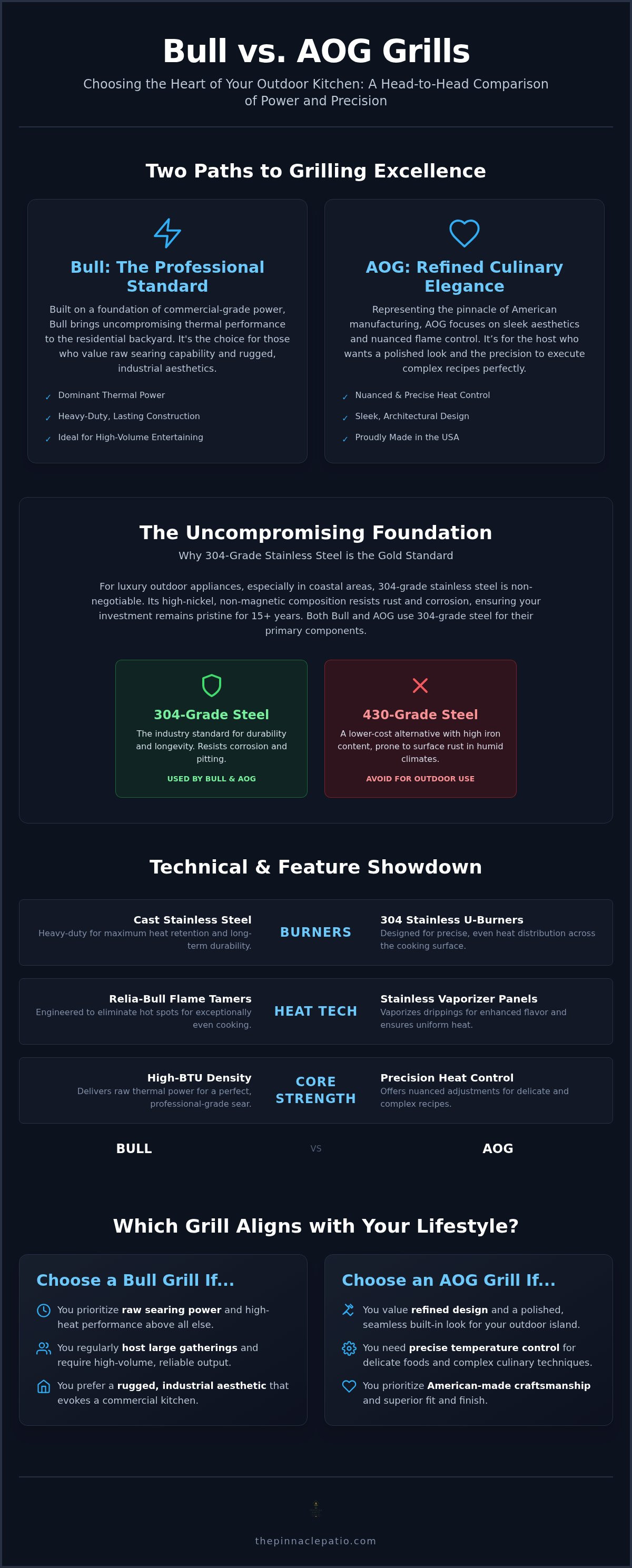
Homeowners often encounter the generic term "stainless steel" without realizing the profound difference between alloys. 304-grade stainless steel is the non-negotiable gold standard for luxury outdoor appliances in 2026. Unlike 430-grade steel, which has a higher iron content and is prone to surface rust in humid or coastal areas, 304-grade is a high-nickel, non-magnetic alloy. It's built to withstand the elements without pitting or corroding. Both Bull and AOG utilize 304-grade steel for their hoods and fireboxes, providing the durability needed for a 15-year lifecycle. Choosing 304-grade ensures that your sanctuary remains as polished as the day it was installed, even in challenging environments.
| Feature | Bull Grills | AOG Grills |
|---|---|---|
| Burner Construction | Cast Stainless Steel | 304 Stainless U-Burners |
| Steel Grade | 304 Stainless Steel | 304 Stainless Steel |
| Heat Technology | Relia-Bull Flame Tamers | Stainless Vaporizer Panels |
| Ignition System | Piezo or Electronic | Piezo Rapid-Fire |
Burner Engineering and Heat Density
The choice between bull vs aog grills often hinges on your preference for burner thermal mass versus responsiveness. Bull utilizes heavy-duty cast stainless steel burners, which are solid pieces of metal designed to retain massive amounts of heat. This commercial-grade approach is ideal for consistent, high-BTU output during large gatherings. AOG employs high-grade 304 stainless steel U-burners. These are lighter and more responsive to dial adjustments, allowing you to shift from a high-heat sear to a delicate simmer with precision. This responsiveness is a significant benefit for the sophisticated host who values nuanced temperature control for complex recipes.
Heat distribution is managed through different but equally effective technologies. Bull's Relia-Bull system uses specifically designed flame tamers to eliminate cold spots, creating a uniform cooking surface from edge to edge. AOG utilizes high-performance vaporizer panels that distribute heat while protecting the burners from drippings, which reduces flare-ups and provides a cleaner flavor profile. Both systems ensure that every inch of the cooking grate is usable, allowing you to maximize the footprint of your outdoor kitchen island.
Feature Showdown: Cooking Versatility and Luxury Add-ons
A high-end grill head is the engine of your outdoor kitchen, but it isn't the only factor in your culinary success. When you're evaluating bull vs aog grills, look beyond the primary burners to the specialized tools that expand your repertoire. For coastal homeowners, these luxury features must be engineered from high-grade materials to prevent salt air from seizing moving parts or dulling the aesthetic finish over time. The right suite of accessories transforms a simple patio into a curated sanctuary for gathering.
Mastering the Rotisserie
Slow-roasting a whole bird or a heavy prime rib requires mechanical consistency. Bull equips their professional units with high-torque motors specifically designed to rotate heavy roasts without stuttering or losing momentum. Their system often includes a dedicated backburner to provide indirect heat, which is vital for preventing charring on the outside before the center is cooked. AOG takes a different design path by utilizing recessed backburners. This architectural choice increases the usable depth of the cooking surface, allowing you to rotisserie larger items while keeping the primary grates clear for side dishes. It's an essential part of The Professional Secret: Rotisserie Grilling, where the precise distance between the heat and the protein creates that sought-after self-basting effect.
The Searing Station Factor
Achieving a steakhouse-quality crust requires temperatures far beyond what standard burners provide. Bull offers drop-in infrared sear burners that generate 15,000 BTUs of intense, focused heat to caramelize proteins instantly. These burners utilize ceramic plates with thousands of tiny ports to create a uniform curtain of heat, locking in juices that traditional gas flames might miss. AOG provides comparable infrared options that reach peak searing temperatures in a fraction of the time required by traditional burners. These tools are transformative for the host who prioritizes the science of the sear, though you'll want to consider if your specific menu style justifies the dedicated space.
Nighttime functionality is a hallmark of a well-curated sanctuary. Both manufacturers integrate sophisticated interior lighting systems that illuminate the grates without creating glare for your guests. Your island's integration is simplified by their extensive lines of matching 304-grade stainless steel doors and drawers. Matching outdoor kitchen islands with the right storage solutions creates a professional workflow that keeps your workspace organized. This intentionality in design allows you to focus on the social atmosphere rather than searching for tools in the dark.
Buying Guide: Which Brand Fits Your Lifestyle?
Selecting between bull vs aog grills is a decision that shapes the rhythm of your outdoor life. It's about matching the physical footprint of your equipment to your social ambitions and culinary habits. While both brands offer exceptional longevity, the way they integrate into your daily routine depends on sizing, fuel logistics, and the value you place on manufacturing heritage. This choice defines the atmosphere of your sanctuary for the next fifteen years.
Selecting the Right Size
The 30-inch, 3-burner configuration is the quintessential choice for a family of four. It offers a balanced cooking surface that handles weeknight dinners with ease without occupying excessive counter space. For those whose vision includes large-scale entertaining, the 38-inch (4-burner) and 42-inch (5-burner) models are designed for complexity. These expansive surfaces allow you to manage multiple heat zones simultaneously. You can achieve a high-heat sear on one side while maintaining a low-and-slow environment for delicate vegetables on the other. Selecting the Best Built-in Grill for Your Island involves choosing a size that accommodates your most ambitious menus and social gatherings.
Fuel and Utility Planning
The choice between natural gas and liquid propane often comes down to the existing infrastructure of your home. Natural gas provides the luxury of an uninterrupted fuel supply, which is ideal for the frequent backyard chef. Liquid propane offers more flexibility in island placement, especially in expansive estates where running a long gas line may be impractical. Regardless of the fuel source, you must account for proper ventilation within your island structure to ensure safety and performance. Professional utility planning is a fundamental necessity for the safe and efficient operation of built-in gas grills.
The "Made in USA" factor remains a powerful draw for many homeowners. AOG's heritage of American manufacturing ensures a level of craftsmanship and component availability that suggests a lifetime of service. While Bull's commercial-grade engineering is world-renowned, AOG offers a specific domestic refinement that many buyers find essential. Maintaining these investments is straightforward; regular care of the 304-grade stainless steel ensures your centerpiece remains a pristine focal point of your outdoor sanctuary for decades. This sense of permanence is what transforms a simple patio into a curated lifestyle experience.
Curated Excellence: Top Picks from the Bull Collection
Selecting the right model is the final step in the bull vs aog grills journey. While the broader debate covers various engineering philosophies, looking at specific models helps you visualize how your island will actually perform. Bull's catalog is a testament to the brand's commercial roots, offering configurations that solve the problem of uneven heat through heavy-duty materials. Each unit is designed for a specific scale of social gathering, ensuring you don't overspend on capacity you don't need or lack the power required for large crowds.
The Brahma: Power and Scale
The Bull Brahma is the 38-inch flagship, built for the homeowner who views the backyard as a primary culinary stage. It utilizes five cast stainless steel burners to produce 90,000 total BTUs, giving you the ability to manage complex menus with distinct heat zones. The cast burners are significant because they possess the thermal mass needed to hold heat when the hood is opened. This model includes a high-capacity rotisserie system and interior lighting as standard equipment, providing a turn-key professional setup for expansive built-in grills projects.
Explore the Bull Brahma and the full Bull Collection
The Angus: Compact Professionalism
The Bull Angus provides the same industrial pedigree in a more versatile 30-inch footprint. With four burners generating 75,000 BTUs, it delivers the high-heat performance needed for a perfect sear without requiring a massive island footprint. It's built around a firebox that carries a lifetime warranty, protecting your investment for the long term. This model is the ideal fit for standard island cutouts where professional results are non-negotiable. It doesn't sacrifice quality for size, maintaining the same 304-grade stainless steel integrity found in the larger Brahma.
The Bull Lonestar Select serves as the entry point to this high-performance collection. It maintains the same 304-grade stainless steel integrity and Relia-Bull technology found in the more expensive units, focusing on classic grilling excellence without the added complexity of a rotisserie backburner. The entire Bull lineup represents the pinnacle of 2026 outdoor cooking because it translates technical specs into predictable results. Your choice between these models ensures that your outdoor sanctuary remains a reliable place for connection and refinement for years to come.
Designing Your Permanent Outdoor Legacy
Selecting the right centerpiece for your patio is a commitment to both quality and connection. The nuanced comparison between bull vs aog grills reveals that your choice ultimately rests on whether you prioritize Bull's high-BTU commercial heritage or AOG's polished American-made precision. Both brands offer the enduring protection of heavy-gauge 304-grade stainless steel. This ensures your investment remains a pristine focal point for decades. It's about more than just cooking; it's about creating a transformative space where every meal becomes an extraordinary event.
As an authorized retailer for both Bull and AOG, we specialize in translating these technical specifications into tangible lifestyle benefits. We offer national shipping on premium outdoor kitchen islands and provide expert guidance to ensure your configuration matches your culinary ambitions. Whether you're designing a compact family retreat or an expansive social hub, our team is here to help you navigate the details of sizing and heat distribution. We take pride in being a knowledgeable partner in your journey toward a more refined way of living.
Your vision for a refined outdoor lifestyle is within reach, and we look forward to helping you curate a sanctuary that will serve as the heart of your home for years to come.
Frequently Asked Questions
Is Bull or AOG better for salt-air coastal environments?
Both brands are exceptional for coastal environments because they utilize 304-grade stainless steel. This specific alloy contains high levels of nickel and chromium to resist the corrosive effects of salt air and high humidity. While both perform well, Bull's heavy-gauge construction provides an additional layer of structural integrity. Maintaining a clean surface is the most effective way to ensure your investment remains pristine in high-moisture regions over several decades.
Do Bull and AOG grills come with a rotisserie kit included?
Many flagship models in the bull vs aog grills comparison include integrated rotisserie systems as standard features. For instance, the Bull Brahma and Angus models typically come equipped with high-torque motors and heavy-duty spit rods. AOG often includes dedicated rotisserie burners on their "T" series units. It's essential to verify the specific model series before purchase, as some entry-level configurations might offer these systems as optional upgrades rather than standard inclusions.
Can I convert a Bull grill from propane to natural gas later?
Yes, you can convert a Bull grill between liquid propane and natural gas, but it requires a brand-specific conversion kit. This process involves replacing the orifices and the manifold to ensure the gas pressure remains consistent with the burner requirements. Because gas safety is paramount for built-in installations, we always recommend that a licensed professional performs the conversion to maintain the integrity and warranty of your outdoor kitchen island.
What is the life expectancy of a 304-grade stainless steel grill?
A high-quality 304-grade stainless steel grill has a life expectancy of 15 to 25 years or more when properly maintained. The durability of this material is why brands like Bull and AOG are considered long-term investments rather than disposable appliances. Regular cleaning and seasonal covering are the primary factors that extend this lifespan. This longevity ensures your sanctuary remains a functional social hub for decades of family gatherings and celebrations.
Which brand has better heat distribution for large groups?
Bull is often recognized for superior heat distribution across large surfaces due to their proprietary Relia-Bull technology. This engineering choice utilizes specialized flame tamers to eliminate cold spots, effectively increasing the usable cooking area by up to 50 percent. AOG units also perform admirably using vaporizer panels that distribute heat while protecting the burners from drippings. Both brands are designed to handle high-volume entertaining, but Bull's system is specifically built for edge-to-edge consistency.
Are AOG grills completely made in the United States?
Yes, AOG grills are manufactured in the United States by RH Peterson, a leader in gas hearth products. This domestic production ensures a high level of craftsmanship and rigorous quality control standards throughout the assembly process. For many homeowners, the "Made in USA" label represents a commitment to local industry and easier access to genuine replacement components. This heritage of American manufacturing is a significant factor for those seeking a permanent, high-performance centerpiece.
What size cutout do I need for a 30-inch Bull Angus grill?
The standard cutout dimensions for a 30-inch Bull Angus grill are approximately 31 inches wide, 21 inches deep, and 9.5 inches high. These measurements can vary slightly based on the specific model year and the materials used in your island construction. You should always consult the official manufacturer's template before finalizing your masonry or cabinetry. Precise clearances are necessary to ensure proper ventilation and a seamless aesthetic fit within your outdoor kitchen.
How do I clean cast stainless steel burners vs. U-burners?
Cleaning Bull's cast stainless steel burners involves removing surface debris with a stiff wire brush to keep the gas ports clear. These heavy-duty components are designed to withstand aggressive cleaning without warping. For AOG's stainless steel U-burners, you should use a soft brush or a small wire to ensure the individual ports aren't clogged by grease. Regular maintenance of both burner types prevents uneven flame patterns and extends the life of your internal components.