

Ceramic Briquettes vs. Flame Tamers in Grills: How to Choose
The more even-heating option isn’t automatically the right choice for your grill. When comparing ceramic briquettes vs flame tamers in grills, start with compatibility: the systems handle heat and drippings differently, and they aren’t always interchangeable.
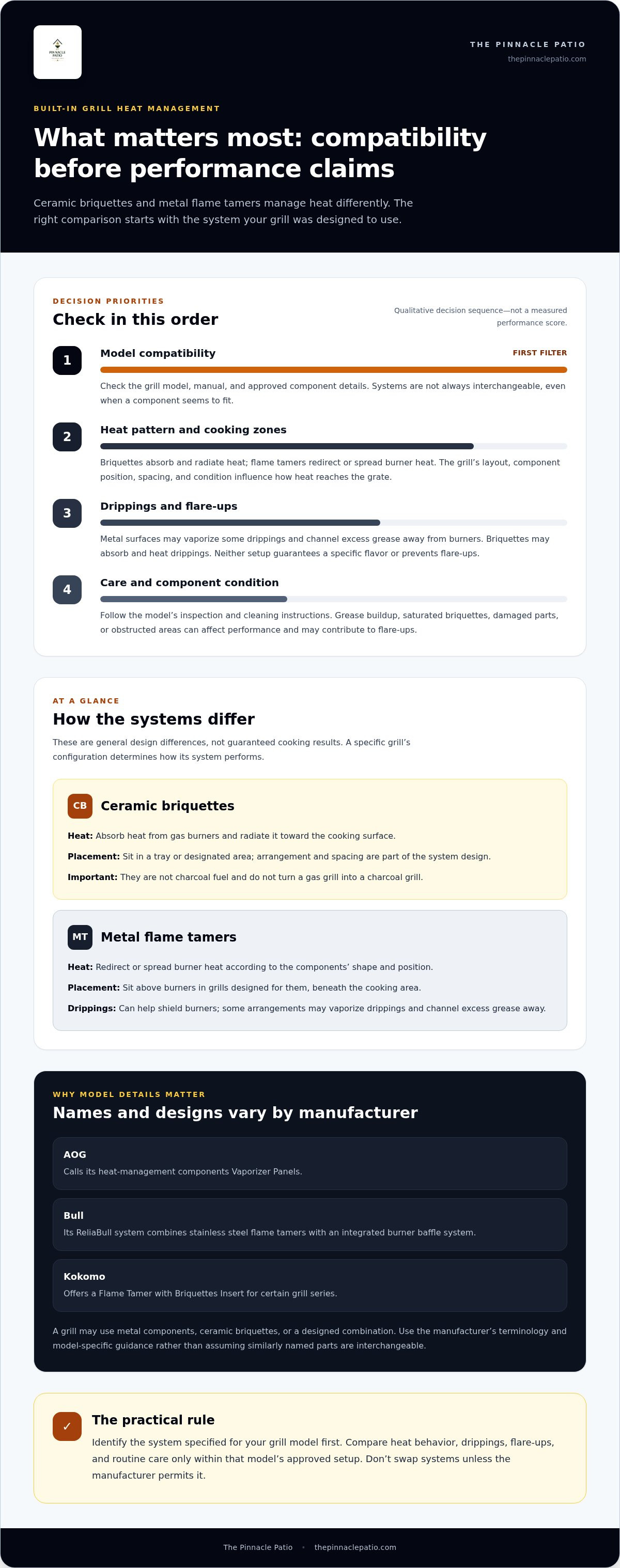
Ceramic briquettes absorb and radiate heat, while metal flame tamers redirect burner heat and can help shield burners from drippings. How either system performs depends on the grill’s design, not just the material. That’s why a general claim that one is better won’t tell you how a specific model will cook.
This guide compares the practical trade-offs and explains what to check before cleaning, replacing, or configuring a built-in grill. Use the manufacturer’s guidance and model-specific compatibility information to make the decision. Those details matter more than assumptions about fit or performance.
Key Takeaways
- Compare how each system manages heat, drippings, flare-ups, and routine care against your cooking priorities.
- For ceramic briquettes vs flame tamers in grills, the grill model and its manufacturer’s guidance determine compatibility.
- Use the manual and approved component details to guide replacement. Don’t swap systems unless the manufacturer permits it.
- Assess the existing components’ condition using the grill’s inspection and care instructions.
- When choosing a built-in grill, consider its specified heat-management system alongside cooking needs and maintenance expectations.
Ceramic Briquettes vs. Flame Tamers: What Each Grill Component Does
Ceramic briquettes and flame tamers are heat-management components that sit between the burners and cooking area, helping manage heat and protect burners from drippings. They serve related purposes, but differ in material and design. A grill is generally configured for specific components, so start with the grill model rather than assuming one system is universally better.
Ceramic briquettes are not charcoal briquettes. They aren’t fuel and don’t burn to create heat. Instead, they receive heat from the gas burners and help distribute it. Manufacturers may use different names for heat-management parts, so use the terminology in the manual rather than treating similarly named components as interchangeable.
What ceramic briquettes do in a gas grill
In a briquette-equipped grill, ceramic pieces sit in a tray or designated area above the burners and below the cooking grates. They absorb heat from the burners and radiate it toward the cooking surface. The resulting heat pattern depends on the grill’s design, the briquette arrangement, and how the system is intended to work.
What flame tamers are designed to do
In grills designed for them, flame tamers sit above the burners and beneath the cooking area. They can shield burners from drippings and redirect or spread burner heat. Their shape and material vary by model. For a general explanation of the cooking component, see What is a Heat Diffuser or Flame Tamer?
Names can offer clues, but they don’t guarantee identical construction. AOG calls its heat-management components Vaporizer Panels, while Bull’s ReliaBull system combines stainless steel flame tamers with an integrated burner baffle system. Kokomo offers a Flame Tamer with Briquettes Insert for certain grill series. These examples show why the manufacturer’s description matters: a grill may use metal components, ceramic briquettes, or a designed combination.
- Ceramic briquettes: Absorb and radiate heat. Their placement and spacing are part of the system’s design.
- Metal flame tamers: Sit over burners in grills designed for them and help manage heat and drippings.
When comparing built-in options, first identify the heat-management system specified for each model. Explore The Pinnacle Patio’s built-in grill selection as part of your outdoor cooking plans. A component that seems to fit physically may still differ from the system the grill was designed to use.
How Briquettes and Flame Tamers Manage Heat, Drippings, and Flare-Ups
In a gas grill, heat travels from the burners toward the cooking grates, but the path depends on the grill’s design. Ceramic briquettes absorb some burner heat and radiate it back toward the cooking area. Metal flame-tamer arrangements generally redirect heat as it rises. Component shape, position, spacing, and condition all influence how heat reaches the grate.
Heat-management results vary by grill because the layout and approved components affect how burner heat moves and spreads. This isn’t a material-only comparison. A system designed around a particular burner arrangement may behave differently from a similar-looking setup.
Heat distribution and cooking zones
Briquettes can absorb heat and release it across the area they cover. Metal panels or bars direct heat according to their shape and position. Neither description guarantees the same temperature across the grate. If one side runs warmer, you may be able to sear over the hotter area and cook more gently elsewhere. The available zones depend on the grill’s burner layout and heat-management design.
Coverage and spacing matter. Gaps, uneven placement, or worn components may affect how heat moves from burner to grate. When cooking foods that need different levels of heat, pay attention to how the grill performs across its cooking surface. Don’t assume the component alone will eliminate hot or cool areas. Look to the manufacturer for model-specific claims about heat distribution.
Drippings, flare-ups, and flavor expectations
Drippings can land on heat-management components as food cooks. Depending on the system, metal surfaces may vaporize some drippings and channel excess grease away from the burner area. Ceramic briquettes may absorb and heat drippings. These interactions can contribute to smoke, but they don’t guarantee a particular flavor or prevent flare-ups in every circumstance.
A gas grill with ceramic briquettes still cooks with gas. Briquettes aren’t charcoal fuel, so they don’t turn the grill into a charcoal grill or guarantee charcoal flavor. Heated drippings may create smoke, but its character and intensity depend on the food, the grill’s design, and the condition of the system.
Grease buildup, saturated briquettes, damaged components, or obstructed areas can affect performance and may contribute to flare-ups. Follow the grill manual for inspection, cleaning, and care. Don’t apply instructions for one component type to another: approved cleaning methods and component arrangements can differ by model.
If you’re assessing how a particular built-in grill’s heat zones fit your cooking routine, a complimentary grill configuration consultation can help you consider the model and its specified heat-management system together.
Ceramic Briquettes vs. Flame Tamers: A Practical Grill Comparison
Compatibility is the first decision filter. Before comparing heat behavior or upkeep, identify the system specified for your grill model. General advantages matter only if a component is designed to work with that grill’s burners, layout, and cooking area.
The table summarizes common design differences, not guaranteed results. Grills can use different shapes, arrangements, materials, and care instructions. For a particular model, follow its manual and component guidance over broad claims about either system.
| Decision factor | Ceramic briquettes | Flame tamers |
|---|---|---|
| Design | Ceramic pieces sit in a designated tray or area above the burners in grills designed for them. | Metal parts, often shaped panels or bars, sit above burners in grills designed around that arrangement. |
| Heat behavior | Absorb and radiate heat. The result depends on placement and grill design. | Redirect burner heat according to the components’ shape and position. |
| Maintenance | Care depends on the briquettes and grill. Follow the model’s cleaning and inspection guidance. | Care depends on component construction and grill design. Use the manufacturer’s instructions. |
| Compatibility | Use only in a grill designed or approved for the briquette system. | Match the part to the grill model and its specified heat-management arrangement. |
| Replacement | Check the manual for the correct component and replacement guidance. | Use the model-matched replacement component specified by the manufacturer. |
Where ceramic briquettes may suit a cook’s priorities
If you’re focused on how heat is distributed across the cooking area, a briquette system may be worth considering when it’s part of the grill’s intended design. Its heat behavior depends on component layout, so the material alone can’t predict how a particular grill will cook. Maintenance needs also vary. Check the model’s instructions before cleaning, rearranging, or replacing briquettes.
Where flame tamers may suit a cook’s priorities
Flame tamers are a suitable match for grills engineered around those parts. If a component needs replacement, using the part specified for the model preserves its intended configuration. That doesn’t mean every flame-tamer system is simpler to maintain: construction and care instructions vary, so compare the guidance for the actual grill instead of assuming all metal systems are alike.
Neither system is a universal winner. Compare complete, model-specific configurations, including care requirements and replacement components. If you’re weighing a built-in grill for an outdoor kitchen, explore built-in grill options with the specified heat-management system in mind.
How to Check Grill Compatibility, Replacement, and Routine Care
Before cleaning, replacing, or changing a heat-management system, identify what the grill was designed to use. Appearance alone doesn’t establish compatibility: parts that look similar may have different shapes, positions, or model-specific functions. Use this checklist to make a careful decision, rather than treating ceramic briquettes and flame tamers as interchangeable options.
- Identify the exact grill model. Find the model name or number on the appliance or in its accompanying records. Record it accurately so you can use documentation for the specific grill, not just a product family.
- Consult the grill manual and product documentation. Look for the manufacturer’s name for the heat-management components, plus instructions on approved parts, arrangement, care, and replacement. Some manufacturers use terms such as heat shield or vaporizer panel instead of flame tamer.
- Match the approved component and layout. Compare the part and its position with the manufacturer’s instructions. Similar shapes or dimensions don’t prove compatibility. A component made for a different model or brand may not function as intended.
- Assess condition using the manual’s criteria. Inspect only as directed. Look for visible damage, deterioration, or buildup that the manufacturer identifies as a concern, and follow its steps for deciding whether cleaning or replacement is appropriate.
Confirm the correct component before changing the setup
Compatibility is model-specific. If the documentation identifies ceramic briquettes, don’t assume a metal flame-tamer set can replace them, or the reverse. One system should not replace another unless the grill manufacturer’s guidance permits it. This applies even when a part appears to fit in the same general area. For ceramic briquettes vs flame tamers in grills, the manual’s approved configuration is more useful than generic conversion advice.
Base replacement decisions on the exact model and component, not a universal assumption about size, material, or service life. If the documentation lists an approved replacement part or arrangement, use that information to guide your selection. Don’t rely on a component’s name alone: manufacturers may use different terms for parts with related heat-management purposes.
Use model-specific care instructions
Cleaning methods vary with component material and grill design. The manufacturer may specify how to remove buildup, whether a part should be repositioned, and how to assess wear. Don’t apply a cleaning method intended for ceramic briquettes to metal parts, or vice versa, unless the manual directs you to. Follow the grill’s care guidance rather than relying on a general replacement schedule.
When comparing built-in grill models, consider compatibility and care alongside the heat-management system. The consultation option below can help you weigh those details as part of a grill decision.
Choose a Built-In Grill Around Its Heat-Management System
The useful question isn’t simply whether ceramic briquettes or flame tamers sound preferable. Choose a built-in grill whose specified heat-management system suits your cooking priorities and care preferences. Let the grill model determine the component, rather than relying on a general preference or a conversion suggestion for a different appliance.
Match the grill configuration to how you cook
Consider how often you grill, how much flexibility you want across the cooking surface, and what upkeep you’re prepared to follow. Burner arrangement and heat zones can affect how you manage different tasks, such as searing over a hotter area while cooking another item more gently. The grill’s design determines how those zones work. Compare the model’s configuration and manufacturer guidance instead of assuming a component will produce the same result in every grill.
- Cooking routine: Consider whether you usually prepare one type of food at a time or coordinate foods with different heat needs.
- Heat flexibility: Review how the model’s burners and specified heat-management components work together across the cooking area.
- Ongoing care: Compare the model’s cleaning and inspection instructions with the maintenance you’re prepared to perform.
- Approved setup: Treat the manufacturer’s specified component as part of the grill configuration, not an optional accessory to swap based on a general preference.
Keep the comparison focused on the complete grill. Width and island layout matter to the larger project, but they don’t establish whether a briquette or flame-tamer system is compatible. If you’re planning the surrounding cooking space, an outdoor kitchen island planning guide can help you think about how the grill fits alongside prep and storage areas while keeping the model’s specified heat-management system in view.
Explore built-in grill options with expert guidance
The Pinnacle Patio carries built-in grills from Bull, AOG, and Kokomo. Compare each model using its own documentation and configuration. Don’t assume a brand uses one system across every grill, or that a component transfers between models. The built-in grill collection is a starting point for considering a grill as part of a complete outdoor cooking setup.
As you narrow your options, list your usual cooking tasks, preferred heat flexibility, care expectations, and the component specified for each model. That gives you a more useful basis for comparing ceramic briquettes vs flame tamers in grills than choosing by material or a broad performance claim. A complimentary consultation can help you consider grill sizing, compatibility, and configuration together.
Make Your Grill Choice with Confidence
Compare complete grill configurations against the way you want your outdoor kitchen to work. Consider the cooking tasks you handle most, how you want heat zones to serve them, and the care routine that fits your household. For ceramic briquettes vs flame tamers in grills, let the specific grill model guide the component decision instead of relying on a general preference.
Before choosing, bring together your preferred grill size, cooking priorities, and outdoor kitchen plans. A complimentary consultation can help you work through sizing, compatibility, and configuration. With those details aligned, you can choose a grill setup based on how you plan to use it.
A considered configuration helps make the grill a better fit for the cooking and gatherings your outdoor kitchen is built around.
Frequently Asked Questions
Are ceramic briquettes the same as charcoal briquettes?
No. Ceramic briquettes are heat-management components; charcoal briquettes are fuel that burns to produce heat. Ceramic pieces belong only in a gas grill arrangement designed for them. They aren’t a substitute for charcoal in a charcoal grill, and charcoal briquettes don’t belong in a gas grill’s ceramic-briquette tray. Check the appliance manual for the correct fuel and approved components before using or changing the setup.
Do ceramic briquettes make food cooked on a gas grill taste smoky?
They don’t make a gas grill cook like a charcoal grill. Gas remains the heat source, though heated drippings may create smoke as they interact with the grill’s heat-management system. The amount and character can vary with the food, grill design, and system condition. Ceramic briquettes alone can’t guarantee a particular smoke profile, so consider the grill’s intended cooking method and manufacturer guidance.
Can I use ceramic briquettes and flame tamers together?
Only if the grill manufacturer specifies a configuration that uses both. Some systems may combine components by design, but adding briquettes to a grill built around flame tamers can change the intended layout or affect how parts fit and function. Don’t stack, substitute, or add components based on appearance. For ceramic briquettes vs flame tamers in grills, the model’s manual is the deciding reference for an approved combination.
Is it safe to run a gas grill without its heat-management components?
Don’t operate the grill without components the manufacturer requires. These parts can shield burners and manage heat and drippings, so removing them may affect the grill’s intended operation. Check the manual for the correct configuration before lighting the grill. If a component is missing or damaged and the instructions don’t clearly address operation in that condition, leave the grill off and follow the manufacturer’s guidance.
What should I do if a ceramic briquette cracks?
Let the grill cool completely, then consult its manual for inspection and replacement instructions. A crack is a reason to assess the briquette rather than assume it remains suitable for use. Follow the manufacturer’s criteria to determine whether it needs replacement. Avoid handling components while hot, and don’t replace a piece with a different type or size unless the grill documentation allows it. Keep the approved arrangement intact.
Can ceramic briquettes affect how quickly a gas grill heats up?
They can influence warm-up behavior because ceramic absorbs heat before radiating it, but the effect depends on the grill’s design and component arrangement. There isn’t one timing rule for every model. Follow the manufacturer’s preheating instructions and allow the grill to reach the recommended cooking condition rather than relying on a general expectation. If warm-up behavior changes noticeably, inspect the system as the manual directs.
Why might a grill still have uneven heat with ceramic briquettes installed?
Briquettes can’t compensate for every source of uneven heating. The grill’s burner layout, briquette placement, buildup, or a shifted or deteriorated component may affect how heat reaches different parts of the grate. Check placement and care instructions in the manual, and note whether the pattern is consistent across cooking sessions. If it persists after you follow the approved setup and cleaning guidance, consult the manufacturer’s troubleshooting steps.