

Extending the Life of Your Grill Cover: A Practical Care Guide
A grill cover rarely wears out all at once. Dirt, trapped moisture, sun, and everyday handling can each affect its condition, making it hard to pinpoint what’s causing a change. A consistent care routine is a practical starting point for extending the life of your grill cover.
If grime is building up or the cover feels damp after storage, consider how it’s cleaned, dried, fitted, and put away. The right approach depends on the cover’s material, so follow its manufacturer’s care instructions before choosing a cleaner or treatment.
This guide covers a straightforward routine: remove surface debris, clean the cover as directed, let it dry fully, and inspect it for wear before storing or using it again. You’ll also learn how to avoid preventable strain, including covering a grill before it has cooled. These habits can help keep the cover in better condition and protect the outdoor cooking setup beneath it.
Key Takeaways
- Judge a cover by whether it still fits and functions as intended, not by a promised number of years.
- For extending the life of your grill cover, let its care label guide each cleaning step, including whether rinsing is appropriate.
- Cover the grill only once it’s cool, and don’t put a damp cover away where moisture can remain trapped.
- Check seams, closures, attachment points, and fit regularly to catch changes before they affect everyday use.
- Distinguish removable dirt from damage that affects fit or use, and follow the manufacturer’s guidance when care limits are unclear.
Why Grill Cover Care Matters for Long-Term Use
A grill cover is handled repeatedly and exposed to the conditions around the cooking area. When you remove or replace it, it may brush against nearby surfaces, fold over itself, or pick up residue. Sun, wind, rain, and changing humidity can also affect its condition, depending on the cover and its setting. Regular checks help you notice changes before they affect fit or everyday use.
Here, “lifespan” means continued usability, not a set number of years. A cover remains useful while it fits the grill as intended and is in suitable condition to do its job. That avoids promising how long any particular cover should last. For general context on grilling and outdoor cooking, see the broader overview. This guide focuses on caring for the cover, not maintaining the grill itself.
Care depends on the cover’s material, design, condition, and manufacturer guidance. A method that suits one cover may be inappropriate for another, especially if its care label limits cleaning or drying options. Follow the cover’s own instructions rather than applying a universal method.
What can shorten a grill cover's useful life?
Check for dirt, food residue, and marks where the cover rubs against the grill or nearby surfaces. These are reasons to inspect the cover, not proof that it’s damaged. Handle it carefully instead of pulling abruptly or dragging it over rough edges. Also notice whether it’s being stored damp or left somewhere moisture can linger.
Look for visible wear, damaged seams, and changes in fit. If the cover shifts, sags differently, or no longer sits as expected, inspect it more closely. These checks help you distinguish surface dirt from a change that could affect continued use.
Why a single care routine does not fit every cover
Cover fabrics, coatings, and construction vary, as do their cleaning limits. Before using water, a brush, or a cleaning product, read the care label or manufacturer’s instructions. If directions are missing or unclear, don’t assume a familiar cleaning method is suitable. Material-specific instructions should guide cover care because a method that suits one design may not suit another.
Start by inspecting the cover and noting its condition, then use its care guidance to decide what to do next. Keep the task focused on the cover. Cleaning the grill and caring for its cover are related parts of an outdoor cooking routine, but they require separate instructions.
How to Clean a Grill Cover Without Damaging It
Cleaning can remove accumulated residue, but the method matters. Covers differ in materials, coatings, and construction, so don’t assume a household cleaning method will suit yours. Follow the care label or manufacturer’s guidance, and avoid trying to remove marks with force. This measured approach helps with extending the life of your grill cover without introducing avoidable wear.
Check the label before choosing a cleaning method
Look for care instructions on the cover or its packaging. If they aren’t available, find the manufacturer’s guidance before applying water or a cleaning product. Don’t assume machine washing, bleach, solvents, or pressure washing are suitable. A method that works on one cover may affect another’s surface or finish.
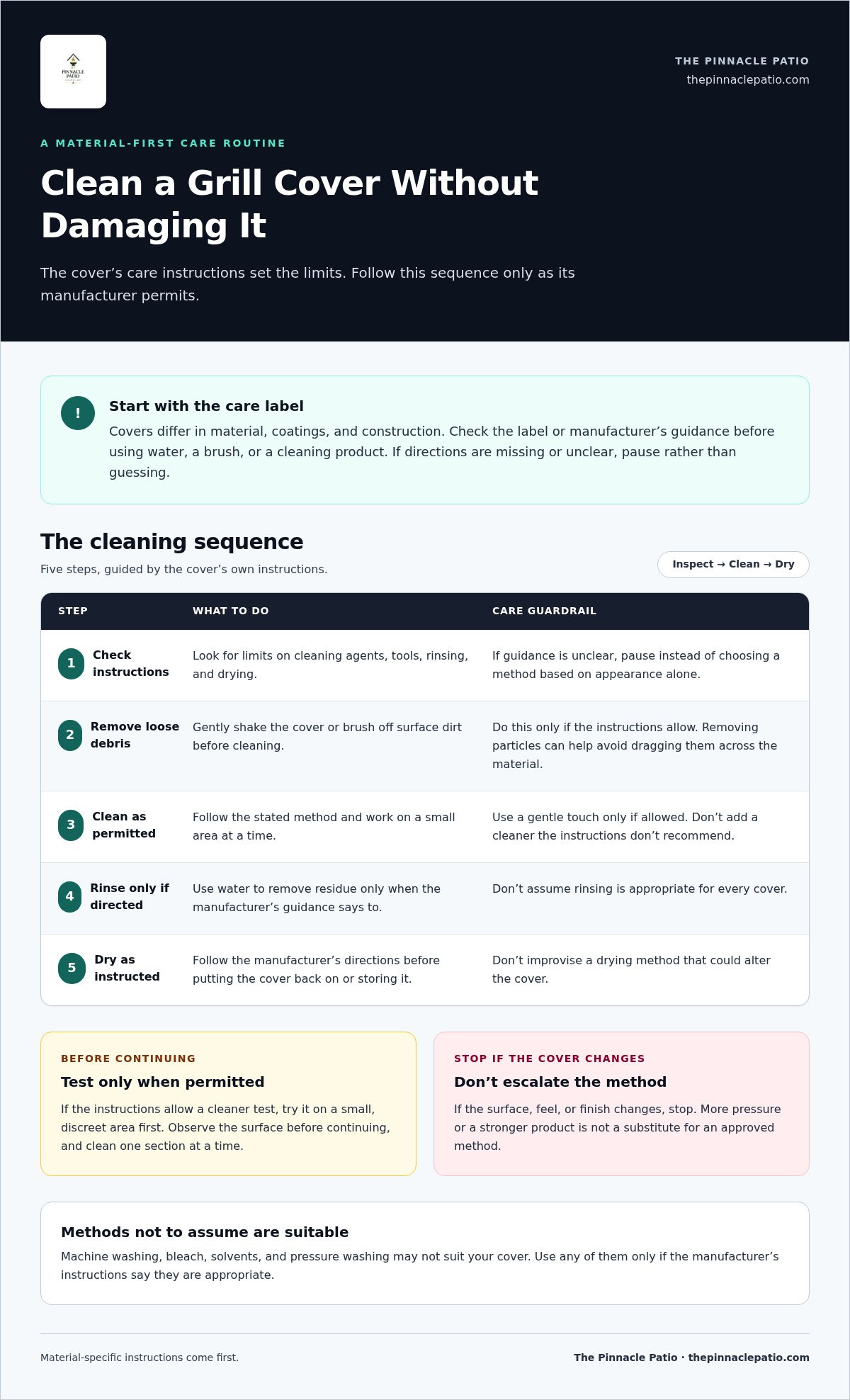
The cover’s care instructions determine which cleaning method is appropriate. Follow this sequence, taking each step only as the manufacturer permits:
- Check the instructions. Look for limits on cleaning agents, tools, rinsing, or drying. If the guidance is unclear, pause rather than choosing a method based on appearance alone.
- Remove loose debris. Gently shake the cover or brush off surface dirt before cleaning, if the instructions allow. This removes particles that could be dragged across the material.
- Clean as permitted. Follow the stated method and work on a small area at a time. Use a gentle touch if allowed, and don’t add a cleaner the instructions don’t recommend.
- Rinse only if directed. Follow the specific guidance instead of assuming water should be used to remove residue.
- Dry according to the instructions. Follow the manufacturer’s directions before putting the cover back on the grill or storing it. Don’t improvise a drying method that could alter the cover.
Remove residue with a controlled, gentle approach
If marks remain after loose debris is removed, start with a small, discreet area and use only a method the manufacturer permits. If the instructions allow you to test a cleaner, check that area first and observe the surface before continuing. Clean one section at a time. More pressure is not a substitute for an approved method.
Stop if the surface looks or feels different, or its finish changes as you clean. Don’t switch to a stronger product or tool to chase a stubborn stain. If the care guidance doesn’t resolve the question, use the manufacturer’s material-specific instructions rather than trying an unapproved treatment.
If cover fit is part of a broader outdoor cooking project, schedule a consultation about your grill setup to discuss the overall configuration.
When to Cover or Uncover a Grill to Protect the Cover
Covering a grill can help shield an outdoor cooking setup, but it also affects how the cover is handled and stored. One rule is clear: the grill must be cool before you cover it. Beyond that, follow the cover manufacturer’s directions and consider the grill’s condition and whether moisture is present. Conditions vary, so use the following as a practical guide, not a universal climate rule.
| Situation | What to do | Why it matters |
|---|---|---|
| After cooking | Wait until the grill is cool before putting the cover on. Follow the grill and cover manufacturers’ instructions for use. | Covering a hot grill may expose the cover to heat it isn’t designed to handle. |
| Rain or damp conditions | Check the grill and the inside of the cover for moisture. If either is damp, let it dry as appropriate before covering or storing. | Moisture beneath a cover may linger, depending on the surroundings and conditions. |
| After cleaning | Let the cover dry according to its care instructions before putting it back on the grill. | This helps avoid trapping moisture between the cover and the grill. |
| Before storage | Make sure the cover is dry, then store it as directed by its manufacturer. | Suitable storage helps prevent putting the cover away damp or handling it in a way its instructions prohibit. |
Should a grill cover stay on all the time?
Not necessarily. Consider the cover instructions, the grill’s condition, and moisture around the cooking area. A cover offers a layer of outdoor protection, but damp or humid conditions may leave moisture beneath it. Napoleon’s climate discussion offers useful context for weighing those conditions, not a rule for every cover or climate. The goal is to balance protection with an opportunity for damp surfaces to dry.
If the cover is already in place, check for moisture when conditions change or before using the grill. In a dry spell, leaving the grill uncovered briefly may help it air out, provided the grill and cover guidance allows it. Don’t assume continuous covering or uncovering is best in every setting.
What to do after rain, cleaning, or extended storage
After rain, check both the grill and the cover before putting the cover away. After cleaning, let the cover dry fully if its care instructions permit. Before extended storage, follow the manufacturer’s directions and avoid folding or compressing the cover if instructed. These checks make everyday cover care more deliberate and support extending the life of your grill cover without treating every climate or situation the same.
A Simple Routine for Inspecting, Drying, and Storing Your Grill Cover
A useful care routine doesn’t need a fixed calendar. Make a quick check part of ordinary handling, such as when you remove the cover before grilling or replace it afterward. That makes it easier to notice small changes before the cover stops fitting as expected. Follow the manufacturer’s care instructions whenever cleaning or drying is needed.
A quick check after removing the cover
As you take the cover off, notice whether debris is caught on it, whether any areas feel damp, and whether it sits as expected when replaced. Check seams, closures, and attachment points where present. If you find residue, use only a cleaning method allowed by the manufacturer. Avoid tugging at a loose seam or pulling on a damaged area.
- After use: Check for trapped debris, damp patches, tears, loose seams, or a change in fit. Remove loose debris carefully and follow the cover’s instructions for any remaining residue.
- After cleaning: Check that the cover is dry as directed and that cleaning hasn’t visibly changed its surface or finish. If something looks different, pause before using it again and review the care guidance.
- Before seasonal or extended storage: Inspect the cover from edge to edge, including seams, closures, attachment points, and how it sits on the grill. Note any damage or change in fit.
If you notice wear in the same place more than once, make a note of its location. For example, recurring abrasion near an edge is a reason to review how the cover is positioned and handled. It doesn’t establish the cause, but it gives you something specific to monitor. Address visible residue early with an approved method, and don’t treat a tear or loose seam as a cleaning problem.
Drying and storing the cover between uses
A damp cover put away before it dries may remain in contact with moisture during storage. After cleaning or exposure to damp conditions, let it dry fully before storing if the manufacturer’s guidance permits. Choose a clean, dry place, then follow instructions about whether to fold or hang the cover. Don’t compress or fold it in a way the manufacturer advises against.
Keep the routine simple: check the cover as you handle it, respond to what you see, and use only the care methods its manufacturer allows. These observations support extending the life of your grill cover without relying on a one-size-fits-all schedule or assuming every sign of wear has the same cause.
When Care Is Not Enough: Choosing Your Next Grill Cover
Cleaning can remove surface dirt, but it can’t repair a tear, a closure that no longer works, or a fit that leaves part of the grill exposed. Before replacing a cover, distinguish a removable mark from a functional problem. If approved care removes the residue and the cover still fits as intended, it may remain usable. If its condition or compatibility is uncertain, follow the cover manufacturer’s guidance before deciding.
Signs it may be time to replace a cover
Look for damage that interferes with coverage or ordinary use. These are practical warning signs, not a fixed replacement threshold. Consider them alongside the manufacturer’s guidance and how the cover fits the grill.
- Significant tears that leave an area of the grill exposed
- Failed closures that prevent the cover from sitting or securing as intended
- Persistent fit problems that remain after you’ve positioned the cover correctly
- Visible damage that compromises coverage or continues to worsen
Removable dirt or food residue alone doesn’t necessarily mean a cover has reached the end of its useful life. Follow the care instructions, clean it as directed, then reassess the surface and fit. If damage is hard to judge or the care limits are unclear, don’t try an unapproved repair or treatment. There’s no single age or schedule that determines when every cover should be replaced.
Match cover selection to the grill and intended use
When choosing a replacement, start with the grill’s verified specifications, not a visual estimate. Compare the cover’s stated dimensions and shape with the grill so it sits as intended without leaving important areas uncovered or creating a persistently awkward fit. Consider the grill’s outdoor placement too, since the surroundings affect how the cover will be used and handled.
Then compare the cover’s care instructions and outdoor-use guidance. If compatibility is unclear, use the grill’s model and verified specifications to review the cover manufacturer’s guidance. A suitable match supports extending the life of your grill cover by avoiding guesswork about size and use.
If you’re reconsidering the grill as part of the same project, explore the built-in grill selection with the appliance’s verified dimensions and intended placement in mind.
If you’re planning a larger grill or outdoor-kitchen decision, schedule personal guidance for your outdoor cooking setup.
Make Cover Care Part of a Thoughtful Outdoor Setup
A grill cover is one part of a larger outdoor cooking setup. If you’re replacing a cover or planning a change to your grill, use the grill’s verified specifications and intended placement to guide the decision. That makes extending the life of your grill cover a considered part of caring for the space, rather than a separate afterthought.
For homeowners weighing a broader equipment decision, The Pinnacle Patio offers authorized-dealer product guidance for premium outdoor cooking equipment, with personal guidance from founders Marc and Andrew. A conversation can help you consider how the grill fits into your plans and how you use your outdoor space.
With a well-considered setup and attentive care, you can return to outdoor cooking with greater confidence.
Frequently Asked Questions
How often should I clean my grill cover?
There’s no universal cleaning interval. Let the cover’s condition and use guide you. A food splash in one spot may need attention sooner than general dust on a cover used infrequently. Notice what collects around your grill, such as tree debris or cooking splatter, and use that pattern to decide when cleaning is worthwhile. Before treating an area, check which methods the cover’s instructions permit.
Can I put a grill cover on while the grill is still warm?
Wait until the grill has cooled before covering it. A short pause after cooking doesn’t mean every surface beneath the cover is cool, so follow the grill manufacturer’s directions rather than guessing at a cooling interval. Keep the cover clear of the grill while it’s still giving off heat, including during cleanup.
What is the safest way to dry a grill cover after cleaning?
Follow the cover manufacturer’s drying directions, and let it become fully dry before storage when those directions permit. If air drying is allowed, position the cover so folded-over sections aren’t pressed together, making damp areas easier to notice. Don’t use a heater, dryer, or direct heat unless the instructions specifically allow it. Once dry, use the manufacturer’s recommended storage method.
Can I machine-wash a grill cover?
Only machine-wash a grill cover if its manufacturer explicitly permits it. A general instruction to wash or clean the cover may not specify machine use, so look for directions that address machine washing and any limits. If those directions are absent, don’t infer permission from the cover’s appearance or presumed material. Use only a cleaning alternative the manufacturer names or allows; methods aren’t interchangeable across covers.
What happens if I store my grill cover while it is damp?
Moisture left in a folded cover may contribute to unwanted odor or changes in condition, depending on its material and storage surroundings. If you find that a cover has been put away damp, take it out and review the care instructions before trying to correct it. Notice any change in smell, appearance, or feel, and follow the manufacturer’s guidance. Don’t assume the cover is ruined or apply a treatment to mask an odor.
How can I tell whether my grill cover needs replacing?
Consider replacement if damage prevents the cover from providing reliable coverage or being used as intended. Age alone doesn’t determine whether it’s still suitable. For a borderline case, use the cover’s model details and the grill’s exact model information to review compatibility and continued use. If choosing another cover, compare its stated dimensions with the grill’s verified specifications instead of relying on a visual estimate.