

Gas vs. Electric Patio Heaters: The Connoisseur’s Guide to Outdoor Climate Control
What if the most defining element of your outdoor sanctuary isn't the furniture or the masonry, but the invisible climate that allows you to enjoy them? Most homeowners spend months selecting the perfect kitchen island only to find their evenings cut short by a subtle drop in temperature. You likely understand that a truly refined space requires more than just a source of warmth; it demands an intentional integration of technology and design. Deciding between gas vs electric patio heaters is the pivotal choice that determines whether your terrace remains a seasonal luxury or becomes a permanent extension of your home's living area.
This guide explores the technical nuances and lifestyle benefits of both systems to help you curate an environment that feels as effortless as it is sophisticated. You'll gain an expert-level understanding of how to balance the raw power of BTUs with the precision of wattage, ensuring your heating solution blends discreetly into your ceiling or architecture. We'll examine the performance of industry leaders like Bromic to resolve common frustrations regarding wind resistance and safety clearances. You are about to discover how to transform your patio into a year-round sanctuary where the atmosphere is always perfectly under your control.
Key Takeaways
- Understand how gas heaters provide the expansive warmth necessary for large-scale entertaining and open-air environments.
- Learn why electric heating is the premier choice for architectural precision, offering a discrete, zero-emission solution for semi-enclosed sanctuaries.
- Evaluate the technical nuances of gas vs electric patio heaters to determine which fuel source best supports your space's specific square footage and ventilation needs.
- Explore the curated Bromic collections to find the perfect balance between the industrial performance of the Tungsten series and the sleek elegance of the Platinum line.
- Gain the expert insight required to transition your patio from a seasonal amenity into a permanent, year-round extension of your home's living experience.
The Art of Outdoor Climate Control: Why Fuel Choice Matters
The evolution of the modern home has redefined the boundary between interior elegance and outdoor freedom. We now treat the terrace as a permanent extension of our living space, a sanctuary built for connection and refined relaxation. Achieving this year-round utility requires more than just furniture; it demands a sophisticated approach to climate control. When evaluating gas vs electric patio heaters, the decision rests on how you intend to inhabit your space. This patio heater overview highlights that while both systems provide warmth, they serve different architectural roles and social purposes. Your choice is an investment in the longevity of your outdoor lifestyle, ensuring that a drop in temperature never dictates the end of an evening.
Infrared Radiant Heat: The Luxury Standard
Luxury heating is defined by its ability to remain effective in the face of the elements. Traditional heaters often rely on convection, which warms the air, a method that fails the moment a breeze passes through your patio. Professional-grade systems utilize infrared radiant energy to mimic the natural warmth of the sun. This technology does not waste energy on the air itself; instead, it transfers heat directly to people and surfaces. It creates a consistent, comfortable heat envelope that feels natural and immersive. By focusing on radiant energy, brands like Bromic ensure your guests remain comfortable without the need for intrusive fans or noisy blowers. This method is the gold standard for maintaining a refined atmosphere regardless of the weather.
Assessing Your Space: Ventilation and Clearances
The architecture of your patio dictates the feasibility of your heating technology. Gas units require significant ventilation to manage combustion byproducts, making them ideal for expansive, open-air environments where high-volume warmth is paramount. Electric units offer a zero-emission profile, which provides the versatility needed for semi-enclosed spaces or recessed ceiling installations. You must also consider the clearance to combustibles. The distance between your heater and structural materials like cedar beams or canvas awnings is a critical safety and design constraint. Steel structures offer more flexibility, while wood requires the precision and protective shielding found in premium collections. Every sanctuary has its own unique layout, and understanding these technical boundaries is the first step in curating a space that is both beautiful and safe.
Gas Patio Heaters: Unmatched Power and Atmospheric Warmth
Gas heating remains the undisputed choice for those who demand expansive warmth in large, open-air environments. While the debate of gas vs electric patio heaters often centers on utility costs, the connoisseur understands that gas provides a "radiant throw" that electric units simply cannot replicate at scale. This throw refers to the actual distance and width of the heat footprint. A high-performance gas unit, such as the Bromic Tungsten series, projects a powerful cone of warmth that can cover a significant area. This makes it the ideal solution for sprawling terraces or high-ceilinged loggias where heat must travel further to reach the guest. It's about volume and intensity, ensuring that even the most exposed spaces remain inviting when the sun sets.
Beyond the technical output, there's a sensory quality to gas heating that contributes to the evening ambiance. The soft, amber glow of a ceramic burner adds a layer of visual warmth that complements the flickering light of a fire feature or the subtle glow of a built-in grill. It creates an atmosphere of permanence and hospitality, anchoring the space during late-night gatherings. This atmospheric warmth transforms a simple patio into a destination, where the climate feels as curated as the decor.
Natural Gas: The Permanent Solution
For the frequent entertainer, natural gas represents the pinnacle of convenience and reliability. By plumbing a dedicated line directly into your home's infrastructure, you eliminate the need for tank refills and ensure your sanctuary is always ready at the touch of a button. This approach is particularly effective when integrating heaters into luxury outdoor kitchens. A wall-mounted gas heater can be positioned to mirror the layout of your cooking station or dining area, creating a cohesive architectural statement. Investing in a professional gas line ensures that your climate control is as permanent and reliable as the masonry itself, providing a seamless experience for years to come.
Liquid Propane: Power with Flexibility
If your outdoor layout is designed to evolve, liquid propane offers the necessary versatility without sacrificing intensity. Freestanding gas units allow you to shift the heat source as your social needs change, whether you're hosting an intimate dinner or a larger garden party. To maintain the aesthetic integrity of your patio, sophisticated designers often utilize propane tank covers that double as side tables or decorative accents. While portability is a benefit, it requires a mindful approach to portable heater safety, including proper spacing and stable placement on level surfaces. If you're unsure which fuel source aligns with your architectural vision, you might schedule a consultation with an expert who can map out your specific heat coverage requirements.
Electric Patio Heaters: Architectural Precision and Versatility
While gas systems offer an undeniable presence and raw power, electric heating represents the pinnacle of architectural integration. The choice in the gas vs electric patio heaters debate often shifts toward electric when the goal is a seamless, unobtrusive aesthetic that preserves the clean lines of your home's design. Electric units don't require the bulky clearances or heavy ventilation of their gas counterparts; they offer a "quiet luxury" that allows the heater to disappear into the ceiling or walls. Beyond the visual appeal, electric heaters provide a zero-emission profile, making them the only appropriate selection for semi-enclosed loggias, covered balconies, or any space where air circulation is limited. They don't just heat a space; they refine it through precision and intentionality.
Control is another area where electric technology excels for the modern homeowner. Unlike the binary nature of many gas units, electric infrared heaters can be paired with sophisticated dimmers and smart-home integration systems. This allows you to modulate the intensity of the warmth as the evening progresses, moving from a gentle ambient heat to a more focused thermal envelope. By utilizing high-wattage units, such as the Bromic Tungsten Smart-Heat Electric 6000W, you can achieve significant coverage without compromising the sophisticated atmosphere of your social gathering. It is about having the exact amount of warmth you need, exactly when you need it.
Recessed and Flush Mounting: The Minimalist Dream
The ultimate expression of outdoor climate control is the recessed installation. Using specialized kits, such as those designed for the Bromic Platinum Electric series, these units can be mounted flush with the ceiling. This creates a completely flat surface that maintains the integrity of your architectural vision. When you are planning your outdoor cooking station, flush-mounted heaters provide the necessary warmth without obstructing the view or interfering with lighting fixtures. This level of integration requires careful structural planning during the design phase, particularly regarding the ceiling cavity depth and electrical load requirements, but the result is a space that feels truly custom and cohesive.
Performance in the Elements
Electric infrared heaters offer a unique advantage in breezy coastal or mountain environments. Because they don't rely on a pilot light or a flame that can be extinguished, they are virtually immune to wind-driven heat loss. The radiant energy travels in a straight line from the element to the target, ensuring your guests stay warm even when the air is moving. For those living in saltwater environments, marine-grade 316 stainless steel options provide the longevity and corrosion resistance necessary to withstand the elements. Following professional Outdoor heating safety tips ensures that these high-performance units are installed with the correct wiring and clearances, protecting your investment for years of year-round entertaining.
The Strategic Comparison: Gas vs. Electric Framework
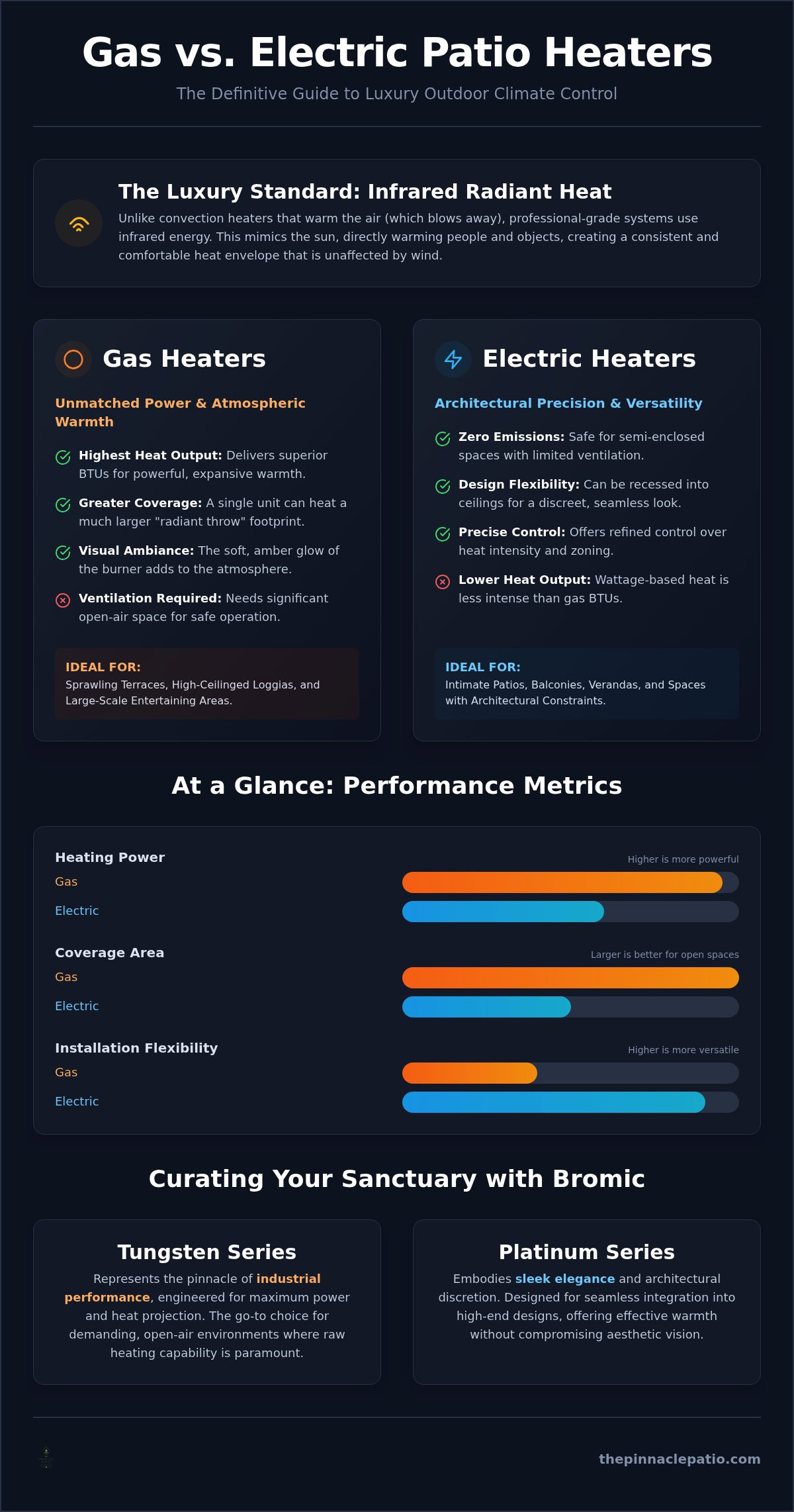
Selecting between gas vs electric patio heaters involves weighing the immediate intensity of the flame against the surgical precision of the circuit. While previous sections explored the individual merits of each fuel source, the strategic choice depends on how these systems perform over years of frequent use. Gas units typically command a larger presence, offering a broad thermal footprint that can cover up to 150 square feet in optimal conditions. Electric units provide a more concentrated radiant beam, making them ideal for specific zones where guests linger for extended periods. This comparison isn't merely about heat; it's about the logistical harmony between your home's infrastructure and your social aspirations.
The installation of these systems represents a permanent investment in your property's value. Gas plumbing offers the convenience of an endless fuel supply but requires professional pipework and strict adherence to ventilation codes. High-wattage electric systems demand dedicated 240V circuits to handle the necessary amperage, often requiring a coordinated effort between your architect and electrician. Maintenance also follows different paths. Gas units require seasonal inspections of the burner ports and pilot assemblies to ensure a clean, efficient burn. Electric heaters are largely maintenance-free, though the infrared elements possess a finite lifespan and will eventually require replacement to maintain peak thermal output. Both paths lead to a year-round sanctuary, provided the initial infrastructure is built with longevity in mind.
Coverage and Intensity
The experience of warmth differs significantly between the two technologies. Gas provides a raw, intense heat that pushes through open air, effectively counteracting the chill of a large, exposed terrace. Electric heating offers a softer, sun-like warmth that feels more intimate and less intrusive. When calculating the number of units required, you must consider the overlap of these thermal zones to avoid cold spots. The heat envelope is the target zone for optimal comfort. By mapping these envelopes during the design phase, you ensure that every seat at your table remains a preferred destination regardless of the external temperature.
Smart Controls and Automation
Modern outdoor living demands a centralized approach to technology. While gas controls have evolved to include electronic ignition and remote operation, electric systems offer the ultimate luxury of zone-based dimming. You can modulate the heat intensity of a single unit or an entire bank of heaters to match the changing mood of an evening. Integrating your heating system with built-in grills and lighting creates a master-controlled environment where the climate, light, and culinary experience are managed from a single interface. This level of automation ensures your sanctuary is always ready for guests without the need for manual adjustments.
Curating Your Sanctuary: Designing with Bromic Luxury Heaters
Bromic has earned its place as the definitive choice for those who view their patio as a legacy investment. While the fundamental choice of gas vs electric patio heaters provides the technical foundation for your comfort, the selection of a specific Bromic collection defines the aesthetic character of your environment. The Tungsten series offers a bold, industrial performance that suits high-traffic entertaining areas where raw power is required. In contrast, the Platinum series provides a slim, brushed stainless steel profile that complements modern, minimalist architecture without drawing attention away from the surrounding views. By selecting the right collection, you're not just choosing a heater; you're choosing a piece of functional art that enhances the permanence of your home.
A sophisticated outdoor space often requires a multi-layered approach to heating. You don't have to settle for a single fuel source if your layout demands diversity. Many homeowners find that layering their heat sources provides the most flexible solution for year-round enjoyment. You might utilize the expansive throw of gas units for a large, open-air dining terrace while relying on the precision of recessed electric heaters for a covered lounge or bar area. This strategic layering ensures that every corner of your sanctuary remains inviting, regardless of how the evening air shifts.
The Bromic Advantage
The Eclipse series represents a paradigm shift where heating becomes a central design element rather than a hidden utility. These circular units provide both radiant heat and dimmable LED lighting, allowing them to serve as a sophisticated focal point over a dining table or lounge area. This dual-purpose design is especially effective when planning luxury outdoor kitchens, where ceiling space is often at a premium. Bromic's focus on premium materials, such as 316 marine-grade stainless steel and high-performance ceramic glass, ensures that your investment resists the elements while maintaining its refined appearance for years to come.
Finalizing Your Design
The transition from a vision to a functional sanctuary requires careful coordination between your aesthetic goals and technical requirements. A professional heat layout plan is the most reliable way to ensure your heaters are positioned for maximum efficiency and safety. It's essential to coordinate with your architect or landscape designer early in the process to integrate the necessary electrical loads and gas plumbing into your blueprints. Our experts act as your visionary guide, helping you navigate these nuances to create a space that feels effortless and cohesive. To finalize your plan and ensure your outdoor climate is perfectly controlled, you can schedule a consultation with our specialists to curate your perfect patio.
Mastering Your Outdoor Atmosphere
Choosing between gas vs electric patio heaters is the final, essential step in crafting an outdoor living space that transcends the seasons. You've seen how gas offers the raw, atmospheric power required for expansive open-air terraces, while electric systems provide the surgical precision and architectural integration necessary for modern, semi-enclosed sanctuaries. This decision is an investment in the heritage of your home, ensuring that your patio remains a vibrant center for connection long after the summer sun has faded. It's about more than simple utility; it's about the permanence of your outdoor lifestyle.
As an authorized retailer of Bromic Luxury Heaters, we provide the expert guidance and nationwide shipping needed to bring these high-performance systems to your doorstep. Whether you're integrating heating into a new build or refining an existing terrace, our design specialists are here to ensure your layout is both beautiful and efficient. Every sanctuary deserves a climate that is as thoughtfully curated as the furniture and architecture that define it. We're here to help you navigate the technical nuances to achieve the perfect thermal envelope for your home.
We look forward to helping you transform your outdoor vision into a permanent, year-round reality where every moment is perfectly under your control.
Frequently Asked Questions
Which is cheaper to operate: gas or electric patio heaters?
Electric heaters are generally more cost-effective for frequent use. Based on 2026 industry data, electric units cost between $0.15 and $0.60 per hour to operate, while gas units typically range from $0.50 to $2.00 per hour. While gas provides a more intense heat throw, the higher efficiency of electric infrared technology makes it the more economical choice for most residential sanctuaries.
Can I install an electric patio heater under a covered roof?
Yes, electric heaters are the premier choice for covered structures because they produce zero emissions. Unlike gas systems, they don't require complex ventilation to manage combustion byproducts. This flexibility allows them to be mounted safely beneath pergolas or loggias, provided you maintain the manufacturer's specific clearance requirements to protect your architectural materials from radiant heat.
Do gas patio heaters work well in windy conditions?
High-performance gas units like the Bromic Tungsten series are engineered with advanced wind resistance, but they're still more susceptible to drafts than electric models. While these systems can withstand significant breezes, extreme wind can disrupt the heat envelope or extinguish the pilot light. For coastal or mountain environments with persistent wind, electric infrared heaters often provide more reliable comfort.
What is the difference between natural gas and propane heaters?
The primary difference lies in fuel delivery and the permanence of your outdoor design. Natural gas heaters connect directly to your home's utility line, providing a continuous fuel source for effortless entertaining. Propane heaters utilize portable tanks, offering the versatility to reposition your heat source as your social needs evolve. Both options deliver the powerful, atmospheric warmth characteristic of gas heating.
How many BTUs do I need for my outdoor patio area?
Determining your needs requires calculating the square footage and exposure of your space. A standard guideline is 30 to 40 BTUs per square foot for semi-enclosed areas, though fully open terraces often require higher output. When evaluating gas vs electric patio heaters, it's essential to remember that gas is measured in BTUs while electric is measured in wattage, requiring a specialized heat layout for accuracy.
Are Bromic heaters safe to leave out in the rain?
Bromic heaters are crafted with premium materials like 316 marine-grade stainless steel specifically to withstand outdoor exposure. While they're designed for permanent installation and can handle rainfall, we recommend using protective covers during extended periods of non-use. This practice preserves the elegant finish and protects the internal components from the elements, ensuring your investment maintains its beauty for years.
Can I recessed-mount a gas patio heater into my ceiling?
No, gas heaters cannot be recessed into a ceiling due to the extreme heat they generate and the necessity for open ventilation. These units require significant clearance from all combustible materials to ensure safety and performance. If your architectural vision demands a flush-mounted, invisible heating solution, the Bromic Platinum Electric series is the appropriate choice for your recessed ceiling installation.
How long do the heating elements last in an electric infrared heater?
Premium infrared heating elements typically provide between 5,000 and 7,000 hours of operational life. This longevity ensures several seasons of refined warmth before a replacement is required. Since these elements are a finite component, maintaining a regular inspection schedule helps ensure your system continues to deliver the precise, sun-like warmth you expect from a high-end electric heating solution.