

How to Break In a New Pizza Oven: A Safe, Step-by-Step Guide
The first fire should prepare your pizza oven, not put it at risk. If you’re wondering how to break in a new pizza oven, start with the instructions for your exact model rather than a one-size-fits-all temperature or schedule. Brick and refractory ovens may need gradual curing to release trapped moisture, while other designs may call for a different first-use procedure.
It’s understandable to feel unsure when advice about curing, seasoning, and burn-off seems to conflict. Heating an oven too quickly can stress moisture-bearing materials, but the right preparation depends on how your specific oven is built and what its manufacturer recommends. Following those instructions is the best way to prepare the oven for use.
This guide explains why first firing matters, what to review before lighting the oven, and how to follow the prescribed process. You’ll also learn why instructions vary by construction and fuel, what to monitor, and how to tell when the oven is ready for its first cooking session.
Key Takeaways
- Use your oven’s model-specific manual as the authority for its first firing. There’s no universal break-in schedule.
- Before lighting, identify the oven model and review its setup, ventilation, clearance, and fuel instructions.
- Follow the manufacturer’s sequence instead of borrowing directions for another oven design.
- Complete the prescribed first-use process before cooking. Readiness depends on the manufacturer’s instructions, not a general visual cue or elapsed time.
- If you notice a concern during or after the first firing, consult the manual before using the oven again.
Why a New Pizza Oven Needs a Careful First Firing
A new pizza oven is a considered investment, so it’s worth understanding what the first fire is meant to do. Depending on the design, the manufacturer may prescribe curing, a burn-off, a component check, or another first-use sequence. These terms can overlap in casual advice, but they don’t necessarily describe the same procedure.
Follow the manufacturer’s instructions for your oven’s first firing. A schedule designed for one model may not suit another, whether the oven is part of an outdoor kitchen or a standalone appliance. For broader context on how designs differ, see this overview of pizza oven types and history.
What does breaking in a pizza oven mean?
“Breaking in” is a general phrase for the manufacturer-directed process before regular cooking. It describes the first-use guidance, not one universal task. Curing may refer to gradual heating for an oven whose construction requires it. Seasoning may refer to preparing a cooking surface, while burn-off may describe initial heating intended to clear residues. Use the manual’s terminology and steps rather than treating these labels as interchangeable.
This distinction helps answer how to break in a new pizza oven without borrowing directions from a different appliance. If your manual doesn’t call for seasoning, adding that step based on generic advice may be unnecessary. Likewise, don’t assume every oven needs curing or a burn-off. The model’s construction, fuel system, and manufacturer guidance determine what applies.
Why can the first fire matter?
The first firing introduces the oven to heat under the conditions its manufacturer specifies. Some designs may require gradual heating; others may call for operating checks or a particular burn-off procedure. If an oven includes moisture-sensitive materials, its instructions may explain how to heat it to manage moisture. These are model-specific reasons to follow the prescribed process, not reasons to apply a generic temperature ramp or timeline.
Fuel type also affects which instructions apply. A wood-fired oven and a gas-fired model may have different lighting, controls, and operating sequences. A hybrid design may have separate guidance for each fuel mode. The broad range of pizza ovens is useful when comparing products, but it cannot replace the manual for your exact model.
Before lighting, find the product documentation and identify the first-fire instructions. If online advice conflicts with the manual, follow the manual. Don’t set a target temperature, extend a burn, or add a curing step because another oven’s schedule recommends it. The goal is to complete the procedure written for your oven, not to reach a number that may not apply.
Prepare Your New Pizza Oven Before Lighting the First Fire
Prepare by reviewing the oven’s own requirements, not by starting with a schedule found online. Record the model information and locate the manual or manufacturer’s current instructions. Then check what the maker specifies for setup, surroundings, ventilation, clearances, fuel, and first use. These details vary by model, so don’t assume generic measurements or procedures apply.
Find the instructions for your exact oven
Use documentation for the precise model as your controlling reference. It should explain whether first use involves curing, seasoning, a burn-off, or another procedure. Keep the instructions nearby so you can follow them as you go. Don’t transfer another oven’s fuel method, sequence, or temperature settings, even if the appliances look similar.
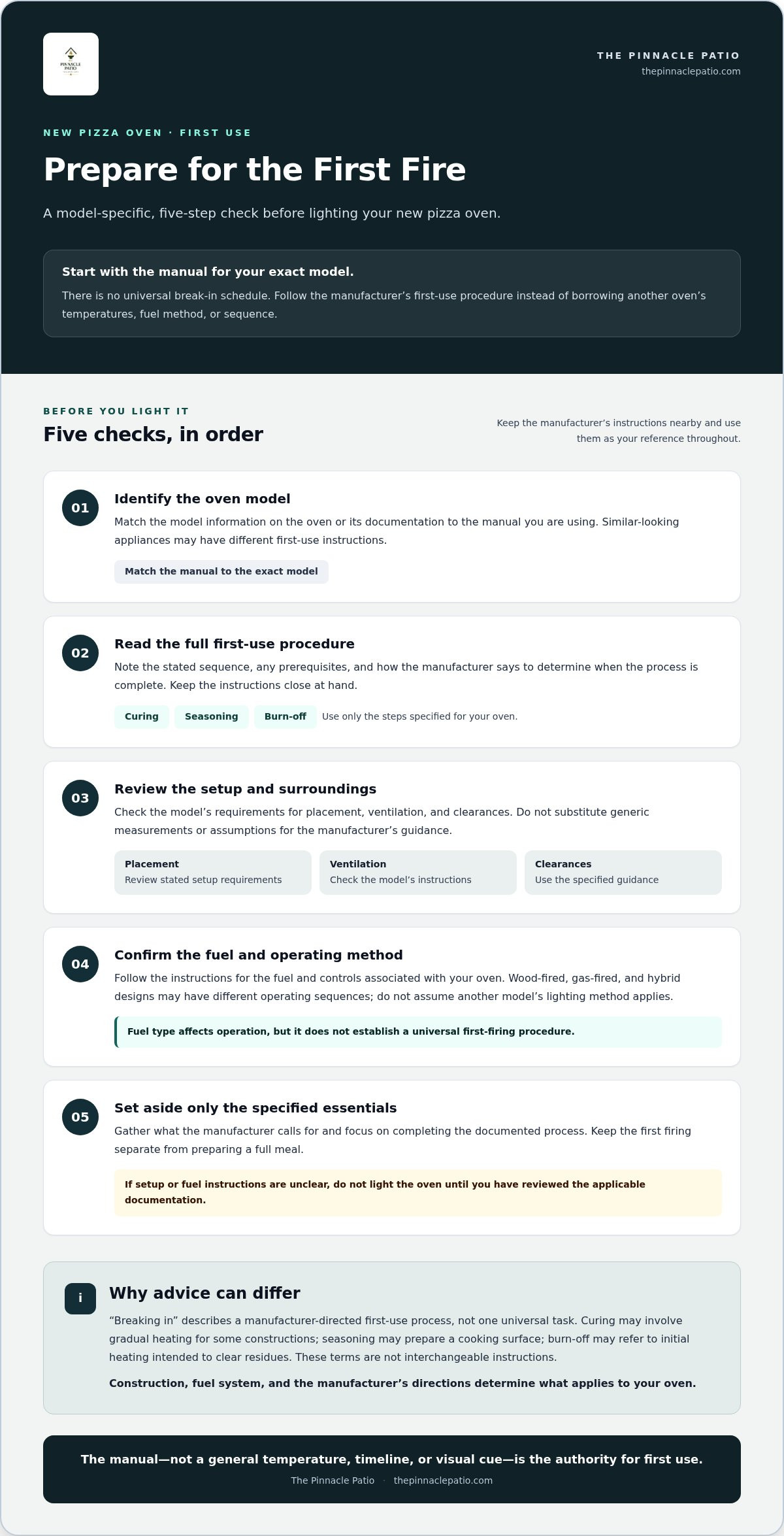
- Identify the oven model. Match the model information on the oven or its documentation to the manual you’re using.
- Read the first-use instructions in full. Note the procedure, prerequisites, and what the manufacturer says to do when it is complete.
- Review setup and surroundings. Check the model’s requirements for placement, ventilation, and clearances. Don’t substitute generic measurements for the stated guidance.
- Confirm the specified fuel and operation. Follow the manual’s instructions for the fuel and controls associated with your oven. Don’t assume another model’s lighting method applies.
- Set aside the first-fire essentials. Gather only what the manufacturer specifies. Focus on completing the documented process rather than preparing a full meal at the same time.
Prepare the space and first-use essentials
Configuration affects what you need to review before lighting. A freestanding oven and one incorporated into a built-in outdoor kitchen can have different setup considerations. Browse the pizza oven collection to compare configurations, then use the manual as the authority for your selected model’s setup and first use.
Keep routine operation separate from construction, installation, or utility work. If the manufacturer’s instructions include work beyond routine operation, this checklist isn’t a substitute for those requirements. Review the applicable documentation before proceeding, and don’t light the oven until its setup and fuel instructions are clear.
This preparation is especially helpful when an oven is part of a larger outdoor cooking plan. If you’re considering how an oven will fit alongside other appliances, schedule a complimentary consultation to discuss product selection and configuration.
Wood-Fired, Gas, and Other Pizza Ovens: Why Break-In Advice Differs
Fuel type shapes how an oven is operated, but it doesn’t tell you what its first firing requires. Wood-fired, gas, and hybrid designs may have different controls, fuel instructions, and first-use procedures. Construction and the manufacturer’s directions matter too.
Fuel type alone does not establish a safe break-in schedule. A single high-heat firing may sound like a straightforward way to prepare a new oven, but it isn’t a universal method. The manual may prescribe a specific sequence or provide other first-use directions. Don’t assume reaching a high temperature quickly is appropriate for your model.
| Oven category | What may differ | Manufacturer instruction to locate |
|---|---|---|
| Wood-fired | Fuel guidance, fire placement, and the first-use sequence may be specific to the oven’s design. | Find the directions for permitted fuel, where to build the fire, and whether a curing sequence is prescribed. |
| Gas | Fuel connection, controls, lighting, and first-use steps depend on the model. | Locate the instructions for the specified fuel, operating controls, and any stated burn-off or other first-use procedure. |
| Hybrid | Instructions may address each fuel mode separately rather than treating them as interchangeable. | Check the first-use directions for each mode, including any model-specific sequence or operating steps. |
| Other designs | Construction and operating features can call for different preparation from wood or gas models. | Use the exact model’s manual to identify the required first-use process and any setup details. |
Does a wood-fired oven use the same first-fire method?
No single fire-building schedule applies to every wood-fired oven. Follow the manufacturer’s guidance for fuel, fire placement, and any curing sequence, if one is specified. A personal account or forum post describes one owner’s experience, not necessarily the correct method for another oven. Even models that use the same fuel may have different instructions.
How should gas and hybrid oven owners approach break-in?
Use the exact model’s stated fuel and first-use procedure. Don’t presume every gas oven needs a burn-off or that every hybrid oven should follow directions written for a wood-fired design. The manufacturer may provide instructions for controls or fuel modes specific to that appliance. If the guidance is unclear or appears inconsistent, pause and consult the documentation before lighting it.
For how to break in a new pizza oven, category labels help you find the right instructions, but they don’t replace them. Match the procedure to the oven’s model and follow its directions rather than adapting an online schedule. That keeps the first firing grounded in the design and operating guidance for the appliance you own.
How to Break In a New Pizza Oven Step by Step
Approach a first firing in a clear sequence, while letting the oven’s instructions determine the details. The steps below are a framework, not a replacement for your manual. Don’t add a temperature target, burn duration, fuel method, or cooling period that the manufacturer hasn’t specified.
- Read the complete first-use instructions. Find the section for initial firing, curing, seasoning, or burn-off. Note the prerequisites and order of operations. If the manual refers to a separate document or operating mode, locate that guidance before lighting.
- Prepare the oven as directed. Confirm that the setup, ventilation, clearances, and fuel arrangements match the model’s instructions. Gather the items the manufacturer specifies, and make sure you understand the ignition and control steps before starting.
- Follow the stated first-fire sequence. Use only the specified fuel and ignition method. Follow the manufacturer’s directions for heat progression and duration. If no gradual ramp or series of firings is prescribed, don’t add one based on another oven’s schedule.
- Observe the oven as instructed. Stay attentive to the fire and to any indicators or operating conditions identified in the manual. Don’t leave an active fire unattended. If the oven behaves unexpectedly, pause and consult its safety and troubleshooting instructions instead of improvising.
- Finish and let the oven rest as directed. Follow the manufacturer’s directions for ending the firing, cooling, and any post-use inspection. Don’t assume it’s ready for cooking because a certain amount of time has passed or it looks a particular way.
Follow the manufacturer’s first-fire sequence
The manual is the source for the actual sequence. If it specifies a fuel, ignition method, heat progression, or duration, follow those directions for your exact model. If you don’t have model-specific documentation, don’t fill in the gaps with generic temperatures or timing from an online post. A schedule that suits one oven may not apply to another.
Observe the oven and complete the procedure
During the firing, monitor the oven as its instructions direct and watch for anything the manual identifies as unexpected. If you’re uncertain how to interpret an issue, stop rather than continuing by guesswork. Use the manufacturer’s guidance for next steps, including any cooling or inspection. The pizza oven collection offers product-planning context, but it isn’t a substitute for your oven’s instructions.
After the First Firing: Know When Your Pizza Oven Is Ready
The first firing is complete when you’ve finished the manufacturer’s stated process, not when the oven reaches a universal visual cue or a certain amount of time has passed. One model’s instructions may define completion differently from another’s. Use the guidance for your exact oven to decide when to move from first use to cooking.
When can you cook in a new pizza oven?
Check the manual for its completion criteria and any directions that apply before cooking. Don’t rely on a particular color, temperature, smell, or number of fires as proof of readiness unless the manufacturer specifically identifies it. If the process includes a prescribed cooling or inspection step, complete it as written before preparing food.
Once the manufacturer’s process is complete, follow the oven’s regular operating guidance. If the manual permits cooking after the first firing, a modest first session can help you focus on using the oven as directed rather than managing a large meal at the same time. Prepare the food and tools you need in advance, and follow the instructions for the oven’s fuel, controls, and cooking use.
Readiness doesn’t mean skipping the ordinary preparation for a cooking session. It means the first-use procedure is finished and you’re moving on to the operating instructions for that model. If the manual doesn’t make the transition clear, refer to the manufacturer’s guidance rather than treating an informal cue as a substitute.
What if something seems wrong after the first fire?
If you notice anything unexpected during or after the firing, stop and consult the model’s manual before using the oven again. Don’t assume a crack, odor, smoke, discoloration, or other change is harmless or dangerous based only on a general online description. Its significance depends on the specific oven and the manufacturer’s guidance. Use the troubleshooting instructions, including any direction they give about whether to continue operation.
This measured approach is part of how to break in a new pizza oven: complete the prescribed first-use process, confirm the manufacturer’s completion guidance, and proceed to cooking only as directed. That gives you a clear transition from preparation to the first meal without relying on a one-size-fits-all sign.
The Pinnacle Patio offers pizza ovens for outdoor cooking spaces. If you’re planning a purchase and want guidance on product selection or configuration, schedule a complimentary consultation.
Shape the Outdoor Cooking Space You’ll Enjoy
A pizza oven can influence more than what you serve. As you consider how to break in a new pizza oven, think about the role it will play in your outdoor cooking space: how it fits alongside other appliances, where you’ll prepare food, and how you want guests to gather. Considering those needs early can help the oven feel like a natural part of the space rather than an appliance planned in isolation.
If you’re choosing an oven or considering how it will fit into a larger outdoor kitchen, product-selection and configuration guidance can help you assess the whole setting. Explore The Pinnacle Patio’s pizza ovens, or schedule a complimentary consultation to discuss your plans.
With an oven suited to the space and your cooking habits, the first meal can be the start of many shared dishes and gatherings.
Frequently Asked Questions
How long does it take to break in a new pizza oven?
The time depends on the steps required for your oven, so don’t plan a meal or gathering around an assumed finish time. Review the full process in advance and set aside enough time to complete it without rushing. If the instructions describe multiple stages, plan for the overall process rather than treating each firing as unrelated.
Can I cook pizza during the first firing?
Keep the first firing separate from cooking unless the instructions specifically allow food preparation during it. This lets you focus on the oven and avoids having ingredients ready before you know the appliance is available for cooking. Keep dough and toppings refrigerated as appropriate, and plan your first pizza session after the preparation process is complete.
What happens if I heat a new pizza oven too quickly?
Rapid heating can put stress on an oven, and the consequences depend on its construction and the circumstances. If the heat rose faster than intended, note what happened, including any displayed temperature or control setting, if available. Don’t try to correct the situation by changing the heat abruptly or applying water. Use the oven’s troubleshooting guidance before returning to normal use.
Do all new pizza ovens need to be cured?
No. “Curing” describes a particular kind of first-use process, not a required step for every new oven. Check the terminology in the documentation for your appliance, since its initial preparation may be described another way. This helps you avoid adding a process that isn’t part of the oven’s intended preparation.
Should I use wood or gas to break in a pizza oven?
Use the fuel specified for the initial procedure, which may differ from the fuel you prefer for everyday cooking. For example, an owner of a hybrid oven shouldn’t assume that the most-used mode is automatically the right one for first use. Follow the preparation instructions for the appliance’s specified fuel and operating mode.
Can I leave a pizza oven unattended during its first firing?
No. Stay present and attentive for the entire firing. Choose a time when you can focus on the oven rather than handling errands, meal preparation, or other distractions. Before lighting, have the instructions and any required items within reach. If you can’t supervise the process, wait until you can.
What should I do if the manual does not explain the break-in process?
Gather the information needed to identify the exact appliance before seeking clarification: the model name or number, any serial information shown on the oven, and the document you reviewed. Note which part of the initial preparation is unclear and whether the oven has already been fired. This gives the manufacturer a specific question to address instead of relying on general guidance for a different model.