

How to Clean Stainless Steel Grill Grates: The Professional Maintenance Guide
Could the most essential ingredient in your signature grilled ribeye be the meticulous care you show your equipment between gatherings? For the owner of a professional-grade outdoor kitchen, learning how to clean stainless steel grill grates is more than a chore; it's a ritual of respect for a high-performance investment. We understand the hesitation that comes with maintaining 304 stainless steel. You want to remove stubborn carbon without compromising the luster or the structural integrity of your Bull or Kokomo grill.
It's true that the wrong tools can leave lasting scars on a premium cooking surface, leading to unnecessary worry during your post-dinner cleanup. This guide promises to help you master the art of preserving your grates to ensure both culinary excellence and equipment longevity. You'll discover a sophisticated approach to maintenance that replaces harsh chemicals with gentle, effective techniques. We'll explore the best non-abrasive tools, the ideal temperature for debris removal, and the professional secrets to a pristine, seasoned finish that stands the test of time.
Key Takeaways
- Understand why professional-grade 304 stainless steel demands a specialized approach to preserve its heat distribution and culinary purity.
- Master the post-cook burn-off ritual for how to clean stainless steel grill grates efficiently before grease hardens into difficult carbon.
- Learn the "soak and soften" method to safely restore your grates when standard maintenance isn't enough to remove deep deposits.
- Identify the professional tools that protect your high-end hardware, including the critical rule against using steel wool or abrasive wire brushes.
- Discover how consistent grate maintenance and quality covers extend the lifespan of your investment within a luxury outdoor kitchen island.
The Professional Approach to Stainless Steel Grate Maintenance
Maintaining a luxury outdoor kitchen requires a shift in perspective. It isn't merely about hygiene; it's about preserving the metallurgical integrity of your equipment. When you invest in a professional-grade grill, you're investing in a precision instrument designed for heat consistency and longevity. Understanding the specific properties of your hardware is the first step in mastering how to clean stainless steel grill grates without causing unintended damage. While 304 stainless steel is remarkably resilient, it is not invincible.
Carbonization is the primary adversary of both flavor and performance. When food proteins and fats are left to incinerate repeatedly, they transform into a hard, carbonized crust. This layer does more than just taint the taste of a delicate sea bass or a prime filet; it acts as an insulator that disrupts the even distribution of heat across the cooking surface. Over time, ignoring this buildup can lead to deep-seated oxidation that compromises the smooth finish of your grates. Regular maintenance ensures that surface debris never has the opportunity to evolve into a permanent blemish on your centerpiece investment.
The Science of Clean: Why Stainless Steel Requires Specific Care
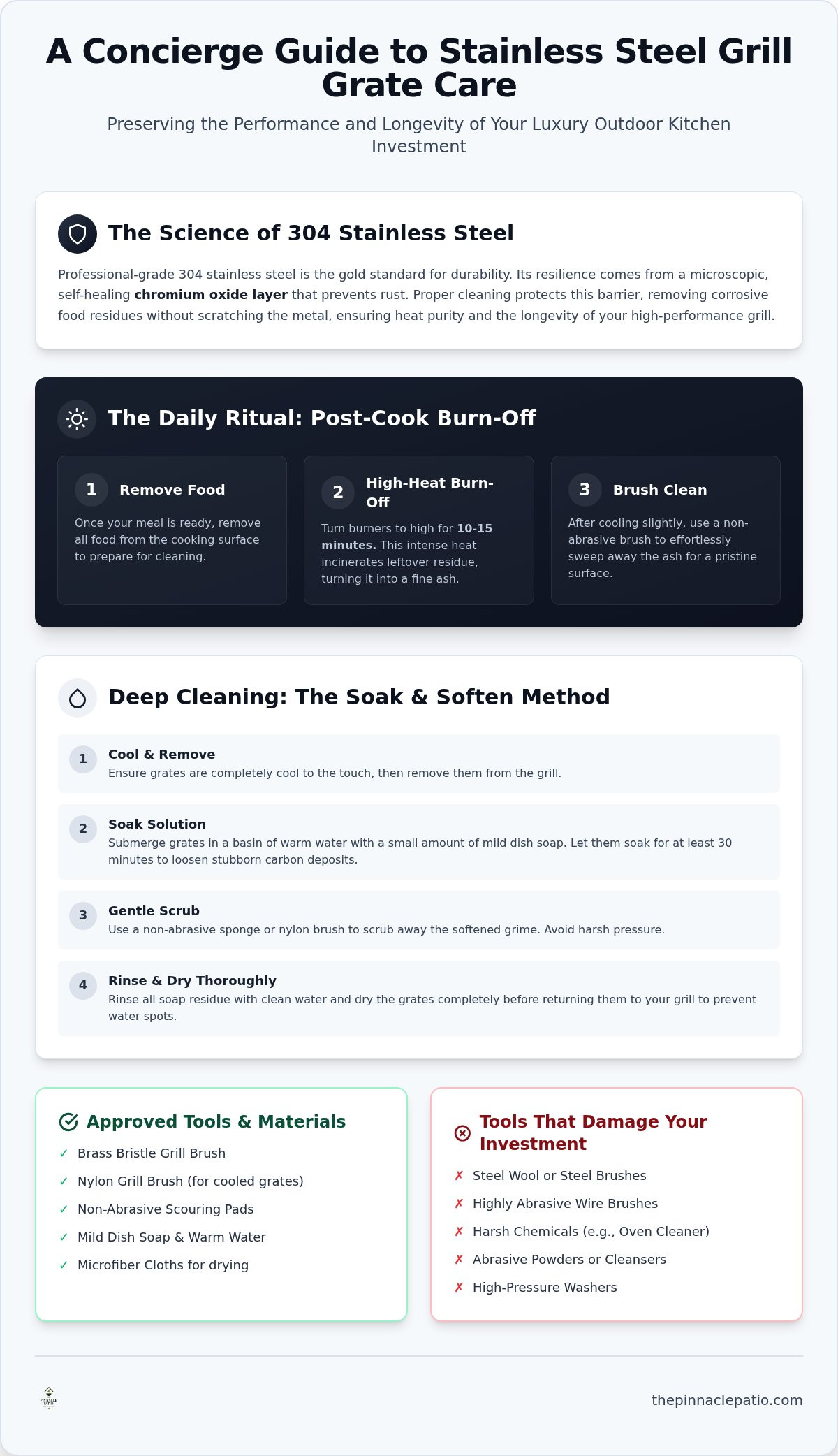
The secret to the endurance of high-end alloys lies in the chromium oxide layer. This microscopic, self-healing barrier is what prevents oxygen from reaching the iron within the steel, effectively stopping rust before it starts. 304 stainless steel serves as the industry gold standard for outdoor durability because its high chromium and nickel content provides exceptional resistance to the elements. However, excessive heat combined with acidic food residues can temporarily strip this protective layer. Professional care focuses on removing the grime while allowing that chromium oxide barrier to remain intact and functional.
Identifying Your Grate Type: Heavy-Gauge vs. Wire
Not all stainless surfaces are created equal, and your cleaning technique should reflect the craftsmanship of your hardware. Most premium built-in grills from brands like Bull, Kokomo, or AOG feature heavy-gauge solid stainless steel bars rather than the thin, hollow wire tubes found in entry-level models. These solid bars are prized for their immense heat retention and ability to produce those iconic, wide sear marks.
- Solid Cast Bars: These require more thorough degreasing because their larger surface area provides more space for oils to collect.
- Hollow Tubes: These are more susceptible to warping if subjected to aggressive pressure or extreme temperature shocks.
- Hexagonal or Contoured Grates: These specialized shapes, often found in high-performance brands, require a methodical approach to ensure every angle is cleared of carbon.
By tailoring your pressure and tool selection to the thickness of the metal, you ensure a pristine cooking surface that remains as beautiful as the day it was installed.
The Daily Ritual: The Post-Cook Burn-Off Method
The transition from a successful meal to a tranquil evening begins with a simple, disciplined ritual. Mastering how to clean stainless steel grill grates doesn't require hours of scrubbing if you utilize the residual energy of your cook. By initiating a post-cook burn-off, you effectively manage grease and organic residues before they have the chance to cool and harden into a stubborn carbonized shell. This proactive step ensures your grill remains a pristine centerpiece for your next culinary endeavor, ready for the next layer of flavor at a moment's notice.
The process starts by turning your burners to a high setting immediately after removing your food. This intense heat serves to incinerate any remaining proteins or fats, reducing them to a fine, brittle ash. For heavy-gauge 304 stainless steel, this thermal treatment is the most efficient way to maintain a professional surface. Once the debris has been neutralized by the flames, a gentle sweep with a non-abrasive brush will clear the path for a spotless finish. A final inspection for stubborn spots ensures no residue remains to haunt your next delicate seafood course.
Executing the High-Heat Burn-Off Safely
When operating high-performance equipment like Bull or Kokomo grills, safety and precision are paramount. You should typically run the burners on high for approximately 10 to 15 minutes. While it's tempting to close the lid to trap heat, grills with exceptionally high BTU outputs may require the lid to be left slightly ajar to prevent overheating the internal thermometers or delicate ignition components. Always ensure your grease tray is clear of significant accumulation before starting this process, as the intense heat can lead to a secondary ignition in the drip pan if neglected.
The Importance of Timing: Cleaning While Warm
Attempting to clean a cold grate is a common mistake that often leads to unnecessary abrasion. When the metal is warm, it is slightly expanded, and the molecular bond between the carbon and the steel is at its weakest. It's the secret to how to clean stainless steel grill grates without the need for harsh chemicals or excessive physical force. You can enhance this effect by using the "steam method." Simply dip your professional cleaning tool into a small container of water before making your pass; the resulting burst of steam provides a natural, chemical-free lift for even the most persistent spots.
This maintenance step can be elegantly integrated into your hosting flow. As your guests transition to the lounge area for dessert, a quick five-minute sweep ensures the work is done while the grill is at its most cooperative. If you're looking to upgrade your current setup to a system that simplifies this process, consider speaking with our design experts to explore high-performance options that match your lifestyle.
Deep Cleaning Techniques for Professional-Grade Grates
While the daily burn-off ritual maintains the cooking surface, a periodic deep clean is essential to preserve the structural integrity of your investment. Every few months, or after a particularly demanding gathering, you should move beyond the surface to address the undersides and crossbars where grease tends to migrate. Mastering how to clean stainless steel grill grates at a deeper level ensures that hidden residues don't lead to flare-ups or unwanted smoke during your next delicate cook. This process is less about physical exertion and more about the chemistry of restoration.
The "Soak and Soften" strategy is the most effective approach for large, heavy-gauge grates found in built-in grills. Since these professional components often exceed the size of a standard kitchen sink, we recommend using a large, shallow utility bin or a heavy-duty plastic soak bag. Submerging the grates in warm water with a pH-neutral degreaser allows the solution to penetrate the molecular bonds of polymerized fats. This methodical soaking prevents the need for aggressive scrubbing that could micro-scratch the polished 304 stainless steel finish.
The Natural Solution: Vinegar and Baking Soda Paste
For those who prefer a non-toxic approach, a paste of white vinegar and baking soda offers a powerful yet gentle alternative. Apply the mixture generously to the vertical surfaces of the bars and allow it to sit. According to current maintenance standards, a vinegar soak can range from 10 to 30 minutes for mild cleaning, though tougher carbonization may require several hours of contact time. This reaction naturally lifts debris, allowing you to simply wipe away the residue with a soft cloth or a non-metallic sponge, preserving the pristine luster of your Bull or Kokomo hardware.
Restoration and Seasoning: The Final Touch
Once the grates are cleared of debris, thorough rinsing and drying are paramount to prevent "tea staining," which is the appearance of light brown surface oxidation caused by minerals in tap water. Use a microfiber towel to ensure the metal is completely moisture-free. The final step in how to clean stainless steel grill grates is the application of a high-smoke-point oil, such as grapeseed or avocado oil. Applying a thin, even coat with a lint-free cloth creates a temporary non-stick barrier that protects the metal from environmental humidity. A properly seasoned stainless steel grate eventually develops a darkened patina that mimics the exceptional non-stick performance of seasoned cast iron, combining professional utility with enduring beauty.
Essential Tools and Materials for Luxury Grill Care
A master craftsman selects the finest chisels for a bespoke commission. Similarly, the curation of your maintenance kit should match the caliber of your equipment. When considering how to clean stainless steel grill grates, the objective is to remove debris without compromising the aesthetic beauty of your Bull or Kokomo hardware. Using high-quality tools prevents the micro-abrasions that can dull the luster of 304 stainless steel over time. High-performance grills deserve tools that respect their craftsmanship.
A non-negotiable rule in professional maintenance is the absolute avoidance of steel wool. While it may seem effective at first, steel wool leaves behind microscopic carbon steel particles that embed themselves in the stainless surface. These foreign particles will eventually rust, creating an unsightly and damaging condition known as cross-contamination. You don't want to introduce rust to a rust-resistant surface. Instead, prioritize tools made from materials softer than the stainless steel itself, such as brass or high-density nylon.
The Great Brush Debate: Wire vs. Bristle-Free
Traditional wire brushes have faced increased scrutiny due to the risk of stray bristles detaching and adhering to the cooking surface. For the safety-conscious homeowner, bristle-free scrapers or wooden paddles offer a sophisticated alternative. Wooden scrapers are particularly effective; over time, they develop custom grooves that perfectly match the spacing and gauge of your specific grates. For those with heavy-duty solid bars, a stainless steel chainmail scrubber provides an elegant solution that is both incredibly durable and completely dishwasher safe. These tools offer a tactile, effective cleaning experience without the safety compromises of old-fashioned bristles.
Chemical Cleaners: What to Avoid
Your luxury outdoor appliances require a delicate touch regarding chemistry. You must avoid any cleaning agents containing bleach or chlorides, as these chemicals aggressively attack the chromium oxide layer that protects your steel. Caustic oven cleaners should also be excluded from your repertoire. They are designed for porcelain-coated interiors and can permanently cloud or pit the finish of a professional-grade grill. When evaluating commercial products, always look for "stainless safe" certifications to ensure the formula is designed to nourish rather than degrade the metal.
Preserving the Longevity of Your Outdoor Culinary Sanctuary
The performance of your built-in grill is a reflection of the environment it inhabits. A professional-grade cooking surface does not exist in isolation; it is a vital component of a meticulously designed outdoor kitchen island. When you master how to clean stainless steel grill grates, you are doing more than just preparing for your next meal. You are protecting the structural harmony of your entire culinary suite. Neglecting the grates can lead to grease migration that affects the interior burners and the surrounding cabinetry, eventually dulling the experience of your al fresco entertaining.
Longevity is built on the foundation of consistency. For the dedicated outdoor chef, a seasonal deep cleaning schedule is the best way to ensure your equipment remains in peak condition. Every three to four months, perform a comprehensive audit of your 304 stainless steel components. This is the time to inspect for any signs of wear that might suggest it's time to upgrade your grates or burners to maintain the high-performance standards of brands like Bull or AOG. High-end hardware is built to last, but even the finest metal benefits from a seasonal reset.
Environmental Protection for Your Grill
The elements are a constant factor in the life of an outdoor kitchen. Salt air in coastal regions or high humidity in inland areas can accelerate the process of surface oxidation if the metal is left exposed. A premium, custom-fitted grill cover is your first line of defense. It prevents environmental debris and moisture from settling on your grates between uses. This protection is especially critical for maintaining the visual continuity between your grill and other features, such as outdoor fireplaces or pizza ovens. A cohesive aesthetic requires that every stainless steel surface receives the same level of care and shielding from the weather.
The Concierge Edge: Professional Maintenance Services
There are moments when the expertise of a professional detailing service is the most sophisticated choice for your sanctuary. A full system refresh involves more than just understanding how to clean stainless steel grill grates; it includes a deep-tissue cleaning of the firebox, the heat shields, and the ignition system. Regular professional care reduces the long-term need for replacement parts and ensures your grill operates with the same precision it had on the day of installation. Ultimately, a pristine grill is the hallmark of a master host who values intentionality. It signals to your guests that every detail, from the sear on the steak to the polish on the steel, has been curated for their enjoyment.
Ready to refine your outdoor culinary experience? Schedule a consultation with The Pinnacle Patio today to explore our collection of high-performance grills and bespoke kitchen islands.
Elevating Your Outdoor Culinary Standards
Preserving the integrity of your outdoor kitchen is an investment in the quality of your future gatherings. By adopting the post-cook burn-off ritual and selecting professional-grade tools like brass brushes or wooden scrapers, you ensure that your 304 stainless steel remains as resilient as it is beautiful. Understanding how to clean stainless steel grill grates with pH-neutral solutions and seasonal deep cleans prevents the carbonization that compromises both flavor and equipment longevity. As an authorized dealer for Bull, AOG, and Kokomo Grills, we provide the expert guidance needed to maintain a professional-grade culinary environment that lasts for generations.
Your grill is more than a tool; it's the heartbeat of your outdoor sanctuary. With these professional practices, you can move past the mechanics of maintenance and focus on what truly matters: the connection and refinement of every moment spent around the fire. We invite you to treat your equipment with the same intentionality you bring to your craft as a host.
Frequently Asked Questions
Can I put my stainless steel grill grates in the dishwasher?
Putting your grates in the dishwasher is generally discouraged for professional-grade hardware. The aggressive chemicals in standard detergents can etch the surface of 304 stainless steel, leading to a loss of the signature luster found on Bull or Kokomo equipment. Hand washing with pH-neutral soap ensures you maintain the protective chromium oxide layer while avoiding the mineral spotting common in automated drying cycles.
How often should I deep clean my stainless steel grates?
You should perform a deep clean every three to four months, depending on your culinary frequency. While the high-heat burn-off method is a mandatory daily ritual, a seasonal restoration addresses the undersides and crossbars where grease accumulates. This proactive schedule prevents permanent carbonization and ensures your outdoor kitchen island remains a pristine environment for high-end entertaining.
Is it safe to use an onion to clean my grill grates?
Using a halved onion is a safe, natural method for light surface maintenance, but it doesn't replace professional cleaning. The sulfur compounds and moisture in the onion help lift fresh residue between courses without the need for tools. However, for those learning how to clean stainless steel grill grates effectively, this should be viewed as a supplementary trick rather than a substitute for a methodical burn-off or deep soak.
Why are my stainless steel grates turning black or brown?
Darkening is a natural result of heat tinting and the development of a seasoned patina. While brilliant silver is the factory standard, an amber or dark brown hue indicates the metal is reacting to high temperatures and oils. This is normal for heavy-gauge stainless steel. However, thick black crusting is carbon buildup that must be removed to prevent flavor contamination and uneven heat distribution.
Should I oil my stainless steel grates after every cleaning?
Yes, you should apply a thin layer of high-smoke-point oil after every thorough cleaning. This process creates a temporary non-stick barrier and protects the steel from environmental moisture. Using a lint-free cloth to apply grapeseed or avocado oil helps your grates develop a performance-enhancing patina that eventually mimics the non-stick qualities of professional cast iron.
What is the best way to remove rust from stainless steel grates?
The most effective way to remove surface oxidation is using a paste of baking soda and water. Apply the paste to the affected area, let it sit for twenty minutes, and wipe it away with a non-abrasive microfiber cloth. Never use steel wool or carbon steel brushes. These introduce foreign particles that will cause the stainless steel to rust again almost immediately.
Are bristle-free grill brushes actually effective for 304 stainless steel?
Bristle-free tools are exceptionally effective for the heavy-gauge bars found in luxury grills like those from AOG or Kokomo. These tools, such as coiled stainless steel scrapers or wooden paddles, provide the necessary leverage to clear carbon without the safety risks of detaching wire bristles. Over time, wooden tools actually mold to the specific shape of your grates for a custom cleaning experience.
Does cleaning the grates affect the flavor of the next meal?
Cleaning your grates significantly improves the flavor purity of your next meal. Accumulated carbonized grease from previous cooks releases acrid smoke that can impart a bitter, burnt taste to delicate proteins like scallops or poultry. A clean surface ensures the only flavors your guests experience are the fresh ingredients and the intentional seasoning of your current dish.