

How to Design an Outdoor Kitchen with a Grill: The 2026 Luxury Planning Guide
What if the most prestigious room in your home didn't actually have a ceiling? You likely envision a space where the scent of wood-fired crust from your outdoor kitchen island with pizza oven mingles with the evening air, yet the transition from a simple patio to a professional culinary sanctuary often feels daunting. It's common to feel overwhelmed by the technical nuances of built-in grills or the challenge of ensuring your investment withstands the elements. You deserve a space that reflects your taste for refinement, performance, and the art of gathering.
This 2026 luxury planning guide promises to demystify the design process, helping you master the balance between sophisticated aesthetics and professional-grade functionality. We'll explore how to select elite components from brands like Bull and AOG, identify materials built for permanent heritage, and architect a workflow that makes entertaining feel effortless. From thermal mapping to intentional zoning, we're providing the expert guidance needed to transform your vision into an enduring reality.
Key Takeaways
- Define the difference between a standard BBQ station and a high-performance culinary sanctuary built for heritage and longevity.
- Identify the technical nuances of professional built-in grills to ensure your kitchen's engine meets the highest standards of engineering.
- Master the "Kitchen Work Triangle" to create a functional flow that manages heat and smoke while keeping guests comfortable.
- Explore how to expand your menu beyond the grill by incorporating an outdoor kitchen island with pizza oven for a truly versatile cooking environment.
- Learn why curating your high-end hardware from brands like Bull or Kokomo is the essential first step before engaging local contractors for masonry.
Defining Your Vision: The Foundations of an Outdoor Culinary Sanctuary
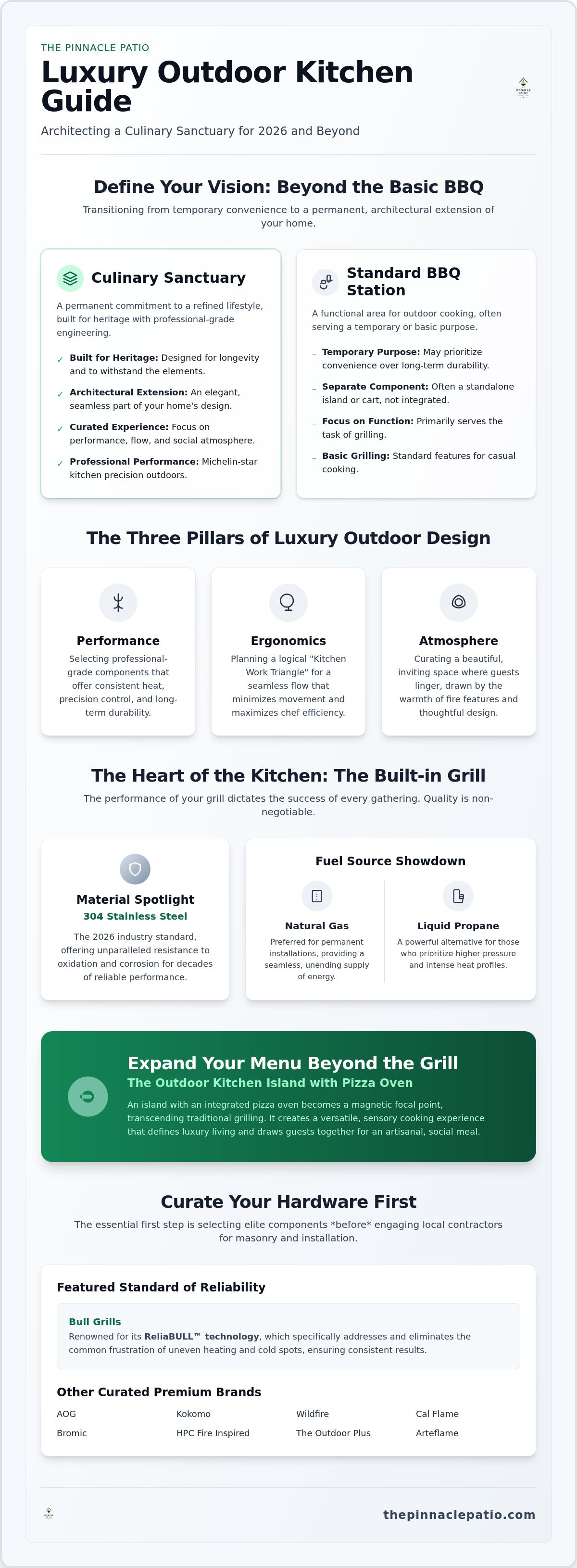
An outdoor culinary sanctuary is far more than a place to sear a steak. It represents a permanent commitment to a refined way of living; it's an architectural extension of your home's interior elegance. While the history of outdoor cooking traces back to primal necessity, the 2026 standard of luxury focuses on high-performance engineering and intentional social design. A basic BBQ island might serve a temporary purpose, but a sanctuary is built for heritage. It's designed to withstand the elements while providing the same precision you'd expect from a Michelin-star kitchen. This transition from a simple patio to a professional environment requires a shift in mindset from "buying a grill" to "curating an experience."
To achieve this vision, we look to the Three Pillars of outdoor design:
- Performance: Selecting professional-grade components that offer consistent heat distribution and long-term durability.
- Ergonomics: Planning a logical flow that minimizes unnecessary movement and maximizes chef efficiency.
- Atmosphere: Curating a space where the warmth of the fire and the beauty of the design invite guests to linger long after the meal.
The Role of the Outdoor Kitchen Island
The island is the anchor of your outdoor space. It provides the essential structural framework for your culinary tools, housing everything from your built-in grill to integrated refrigeration units. When selecting outdoor kitchen islands, the focus must remain on the intersection of aesthetic appeal and rugged durability. A well-designed outdoor kitchen island with pizza oven serves as a magnetic focal point, drawing guests together through the shared experience of artisanal cooking. Incorporating an outdoor kitchen island with pizza oven allows for a diverse menu that transcends traditional grilling, offering a tactile, sensory experience that defines luxury living. It's not just a counter; it's a curated stage for social connection.
Assessing Your Lifestyle and Entertaining Needs
Before choosing materials or brands, you must define how the space will be used. A dedicated chef’s station focuses on high-output equipment and ample prep space for the serious cook. Conversely, a social hub prioritizes seating and "cocktail and grill" functionality, ensuring the host remains part of the conversation. Consider the scale of your typical gathering. An island designed for a family of four feels quite different from one built to host twenty. Finally, evaluate your climate. Year-round usability requires a strategic approach to climate control and material selection, ensuring your sanctuary remains comfortable and beautiful through every season.
Selecting the Heart: High-Performance Built-in Grills for Professional Results
The built-in grill serves as the engine of your culinary sanctuary. Its performance dictates the success of every gathering, making quality a non-negotiable priority. When architecting a deluxe outdoor kitchen, the focus shifts from temporary convenience to permanent excellence. This begins with selecting professional-grade materials. Grade 304 stainless steel remains the industry standard for 2026, offering unparalleled resistance to oxidation and structural integrity that lasts for decades. It's an investment in heritage, ensuring your equipment performs as beautifully in ten years as it does on the day of installation.
Infrastructure planning requires an early decision on fuel sources. Natural gas is the preferred choice for permanent installs, providing a seamless, unending supply of energy without the need for tank swaps. Liquid propane remains a powerful alternative for those who prioritize higher pressure and intense heat profiles. Regardless of the fuel, the goal is consistent thermal distribution. High-end engineering eliminates "cold spots," allowing you to manage multiple ingredients with the same precision you enjoy in an indoor chef's kitchen. If you're feeling unsure about the technical requirements for your specific site, you can always schedule a consultation with our team to discuss your utility needs.
Bull and AOG: The Standards of Reliability
Bull Grills has earned its reputation through ReliaBULL technology. This specific engineering focus addresses the common frustration of uneven heating by utilizing improved manifold designs and cast stainless steel burners. It's about predictability. Similarly, American Outdoor Grill (AOG) provides a sleek, timeless aesthetic that complements modern architectural styles. Their grills are built with a focus on longevity and simple, effective controls. Both brands represent the pinnacle of mid-to-high-range built-in grills, offering a foundation of trust for any homeowner.
Kokomo Grills: Engineering Culinary Excellence
For the visionary who demands a "chef-spec" environment, Kokomo Grills offers a distinct level of performance. These units are designed for high-output searing and specialized heat management, often featuring higher BTU ratings across their burner configurations. When you integrate a Kokomo unit into an outdoor kitchen island with pizza oven, you expand your culinary reach significantly. This combination allows for simultaneous high-heat grilling and artisanal baking, creating a truly versatile workspace. An outdoor kitchen island with pizza oven anchored by a Kokomo grill ensures that your space isn't just functional; it's a high-performance laboratory for flavor and social connection.
Designing for Flow: Ergonomics and Layout of an Outdoor Kitchen with a Grill
Designing a high-performance space requires a deep understanding of movement and choreography. Beyond selecting premium appliances, perfecting an all-weather outdoor kitchen depends on the "Kitchen Work Triangle." This time-tested ergonomic principle creates a logical flow between the prep area, the cooking station, and the cleaning zone. In an outdoor setting, this triangle must also account for environmental factors. You don't want your guests caught in a plume of smoke, so strategic grill placement should always consider prevailing wind patterns. By positioning the grill at the edge of the kitchen's perimeter, you ensure that heat and aromas are directed away from the social lounge while maintaining easy access for the chef.
Infrastructure serves as the invisible backbone of any professional layout. Planning for utilities is a prerequisite for a permanent installation. This involves more than just running a gas line; it requires a comprehensive map of electrical outlets for rotisseries or lighting and plumbing for integrated sinks. Safety is equally paramount. Every high-output grill needs adequate "landing space" on both sides. A minimum of 12 inches on one side and 24 inches on the other provides a safe area to set down hot platters or raw ingredients, preventing accidents and streamlining the cooking process.
Common Layout Configurations
- The Straight Island: A sophisticated solution for compact spaces. It keeps all components in a single line, making it ideal for intimate gatherings and streamlined prep.
- The L-Shape Island: This configuration creates a natural "bar" area. It effectively separates the cooking zone from the social zone, allowing guests to interact with the chef without entering the workspace.
- The U-Shape Kitchen: For the dedicated host, this is the ultimate footprint. It offers the most counter space and is particularly effective when integrating an outdoor kitchen island with pizza oven, as it allows for specialized zones for dough preparation and high-heat baking.
The "Pinnacle" Approach to Prep Space
Professional results require professional proportions. We recommend a minimum counter width of 24 to 36 inches for food preparation to avoid a cramped environment. It's also vital to separate "hot zones," like your built-in grill or outdoor kitchen island with pizza oven, from "cold zones" such as wine coolers or refrigeration units. This thermal separation protects the efficiency of your cooling appliances and ensures the chef has a temperate area for plating. For deeper technical details on the structural requirements of these layouts, explore our guide on assembling an outdoor kitchen island.
Beyond the Cooking Surface: Essential Components for a Complete Kitchen Island
A truly sophisticated outdoor sanctuary functions as a self-contained ecosystem. It's not enough to simply have a place to sear; you need a space that supports the entire culinary lifecycle from preparation to preservation. This requires moving beyond the primary grill to include high-performance support systems. Outdoor-rated refrigeration is the first essential, ensuring that delicate ingredients and vintage pairings remain at precise temperatures despite the external heat. When these units are integrated into your island, they eliminate the need for constant trips back to the indoor kitchen, allowing the host to remain anchored in the social flow of the evening.
Storage is the second pillar of a functional island. Standard cabinetry often fails in varied climates, so we prioritize weather-sealed drawers and access doors made from heavy-gauge stainless steel. These components protect your artisanal tools and linens from moisture, dust, and pests. By curating a selection of professional-grade storage from brands like Bull or AOG, you ensure that every spatula and serving platter has a permanent, protected home. This level of intentionality transforms a simple counter into a professional workstation that feels both grounded and permanent.
Specialty Cooking: Pizza Ovens and Side Burners
To truly elevate your menu, you must diversify your heat sources. Integrating a pizza oven into your layout introduces an artisanal element that a standard grill cannot replicate. An outdoor kitchen island with pizza oven becomes a magnetic focal point, offering the high-intensity, radiant heat necessary for perfect wood-fired crusts and roasted vegetables. This versatility allows you to host everything from casual family gatherings to formal multi-course dinners. Complementing this with high-output side burners ensures you can manage delicate sauces or boils simultaneously, creating a outdoor kitchen island with pizza oven that rivals the capability of any indoor chef's kitchen.
Climate and Atmosphere: Bromic Luxury Heaters
The hallmark of a luxury sanctuary is its ability to transcend the seasons. Sophisticated climate control, specifically through Bromic heaters, ensures your kitchen remains a welcoming destination even as the temperature drops. These units aren't merely functional; they're designed with a sleek, minimalist aesthetic that integrates seamlessly into your architecture. Whether mounted to a pergola or recessed into a ceiling, Bromic heaters provide consistent, radiant warmth that doesn't disrupt the atmosphere. By managing the thermal environment, you extend your entertaining window from a few months to a year-round experience, securing the legacy of your outdoor investment.
The Curator’s Path: Bringing Your Luxury Outdoor Vision to Life
The transition from a conceptual vision to a finished culinary sanctuary requires a steady, methodical approach. It's a journey of curation where every decision, from the choice of stone to the specific burner configuration, contributes to a sense of permanence and heritage. One of the most critical steps in this process is the "hardware-first" rule. You must select your professional-grade components before a single stone is laid. This ensures that your local masonry contractor has the exact technical specifications for cutouts, preventing the costly errors and aesthetic compromises that occur when attempting to fit high-end appliances into pre-existing structures.
A finalized plan is more than a blueprint; it's a map of your future social life. As you move toward execution, your focus should shift to the harmony between the hardware and the hardscaping. While we provide the professional-grade engines of your kitchen, working with a skilled local mason allows you to tailor the exterior finish to match your home's architecture. Whether you choose the rugged beauty of natural stone or the sleek lines of polished concrete, the result should be a cohesive environment where your outdoor kitchen island with pizza oven feels like a natural part of the landscape. It's this intentionality that elevates a simple cooking area into a true extension of your home's interior elegance.
The Advantage of Prefabricated Luxury
For many homeowners, the path to a sanctuary is streamlined through prefab outdoor grill islands. These units offer a sophisticated balance of speed and craftsmanship, arriving with the structural work already completed. This doesn't mean sacrificing exclusivity. You can still customize these foundations with the specific brands that match your culinary goals, whether that's the reliability of Bull or the professional searing power of Kokomo. Staying informed on prefabricated outdoor kitchen kits ensures your project reflects modern trends in durability and aesthetic design, providing a high-performance outdoor kitchen island with pizza oven without the extended timelines of traditional masonry.
Expert Guidance for Your Project
The final layer of your sanctuary involves the sensory details: integrated LED lighting for evening ambiance, comfortable seating for lingering guests, and the warmth of a fire feature. Before you break ground, ensure your site is prepared with a comprehensive checklist of gas, water, and electrical requirements. Avoiding common pitfalls starts with expert guidance. We're here to act as your visionary guide, helping you navigate the nuances of technical specifications and brand selection to ensure your investment stands the test of time and becomes a vessel for extraordinary moments.
Ready to design your sanctuary? Schedule a consultation with our experts.
Architecting Your Permanent Outdoor Legacy
Creating a professional-grade sanctuary is an exercise in intentionality. It's about moving beyond the standard BBQ and investing in a lifestyle defined by connection and refinement. By prioritizing the "hardware-first" approach and curating elite components from Bull, AOG, or Kokomo, you ensure your space is built for permanence. Whether your vision centers on a high-output searing station or a versatile outdoor kitchen island with pizza oven, the success of your project lies in the harmony between professional engineering and sophisticated social design.
As an authorized retailer with a nationwide reach, we provide more than just equipment. We offer the expert, concierge-style guidance necessary to navigate technical specifications and avoid common planning pitfalls. Your outdoor kitchen should be a seamless extension of your home's architectural narrative; it's a place where every detail reflects a commitment to quality craftsmanship and enduring beauty.
The transition from inspiration to reality is a rewarding pursuit. We look forward to helping you curate a space that transforms everyday moments into extraordinary memories.
Expert Guidance: Frequently Asked Questions
How much space do I need for an outdoor kitchen with a grill?
You should allocate at least 10 linear feet for a luxury setup to accommodate both preparation and high-performance cooking. A sophisticated outdoor kitchen island with pizza oven often requires additional depth to manage the thermal footprint of the oven alongside the primary grill. Don't forget to include at least 24 inches of landing space on one side of the grill for safe plating and ingredient handling.
What is the best material for an outdoor kitchen island frame?
Grade 304 stainless steel is the premier choice for framing due to its exceptional resistance to oxidation and structural longevity. While some builders use galvanized steel, 304 stainless provides the heritage-quality durability required for high-end coastal or varied climates. It's essential to avoid combustible materials like wood to ensure the permanent safety of your built-in appliances and fire features.
Do I need a permit to install an outdoor kitchen with a gas grill?
Permit requirements vary by municipality, but most jurisdictions require them for any permanent gas, electrical, or plumbing lines. Because these involve safety codes and utility connections, you should consult with your local building department before beginning construction. Professional-grade installs from brands like Bull or AOG always perform best when the underlying infrastructure meets or exceeds local regulatory standards.
Can I use my indoor kitchen appliances in an outdoor kitchen island?
You can't use indoor appliances in an outdoor setting because they aren't engineered to withstand moisture, temperature fluctuations, or UV exposure. Outdoor-rated refrigeration and cooking components feature sealed electronics and reinforced insulation specifically designed for the elements. Using indoor units outdoors poses significant safety risks and will almost certainly void your manufacturer's warranty immediately.
What is the difference between a built-in grill and a freestanding grill?
A built-in grill is a permanent fixture designed to be recessed into a custom masonry structure or a prefabricated island. It lacks the wheels and side shelves of a freestanding grill, offering a more integrated, high-end aesthetic. This permanent placement allows for a seamless culinary workspace that mirrors the sophistication and performance of a professional indoor chef's kitchen.
How do I protect my outdoor kitchen with a grill during winter?
Protecting your investment involves using custom-fit, weather-resistant covers and winterizing any integrated plumbing lines to prevent freezing. For those who wish to maintain a year-round sanctuary, integrating Bromic heaters provides the necessary warmth to enjoy the space during colder months. Keeping the stainless steel surfaces clean and treated with a professional protectant will maintain that polished, gallery-ready finish through every season.
Is natural gas or propane better for a built-in outdoor grill?
Natural gas is generally superior for permanent luxury installs because it provides a continuous fuel supply directly from your home's utility line. While liquid propane offers high pressure and doesn't require a utility line, natural gas eliminates the inconvenience of tank swaps. When planning an outdoor kitchen island with pizza oven, natural gas ensures you never run out of fuel during long, high-heat artisanal baking sessions.
How far should an outdoor kitchen be from my house?
We recommend placing your outdoor kitchen at least 10 feet away from any combustible structures or home siding for fire safety and smoke management. However, staying within 15 to 20 feet of the house is ideal for easier utility connection and maintaining a cohesive social flow. This balance ensures the chef remains part of the conversation without compromising the safety or atmosphere of the primary residence.