

Outdoor Kitchen Appliance Utility Requirements: An Electrical Planning Guide
Choose appliances before you finalize the island. Outdoor kitchen appliance utility requirements can affect where each unit fits and whether electricity, gas, water, drainage, or other provisions need to reach that location. Sorting out connections after cabinetry or hardscaping is in place can require costly changes.
If you’re unsure whether your home’s electrical service can support a refrigerator, lighting, and the other appliances you have in mind, start by listing the equipment and checking its documentation. Utility planning is easier when it begins with the products and layout, then gets reviewed before construction.
This guide explains what to gather before choosing appliances and how to coordinate electrical needs with gas, water, and drainage. You’ll learn what to check in each product manual, why the manufacturer’s outdoor-use instructions matter, and what to ask a qualified electrician to confirm. The goal is a clear plan that supports your intended setup before you commit to an island configuration.
Key Takeaways
- Map each appliance to its planned location before finalizing your outdoor kitchen island or cabinetry.
- Gather the model-specific manuals to identify documented electrical, fuel, water, and drainage needs.
- Use the outdoor kitchen appliance utility requirements checklist to organize appliance details and site information for professional review.
- Ask a qualified electrician to assess the site and confirm the electrical plan before wiring or construction begins.
- Compare your appliance shortlist with island sizing and compatibility information before committing to a configuration.
Outdoor kitchen appliance utility requirements: what to plan before choosing equipment
Utility requirements are the connections and provisions an appliance needs to operate in its intended location. They may include electrical power, a fuel supply, water, drainage, or ventilation considerations. The exact requirements depend on the appliance and model, its location, and the manufacturer’s current instructions. A grill, for example, may use gas for cooking while also having electrical needs documented for particular features. Don’t assume every appliance in a category has the same requirements.
Planning utilities before construction helps align appliance locations, island configuration, and service needs before materials are committed. It also gives your electrician and other qualified professionals specific information to review before work begins.
Start with an appliance schedule, not a generic wiring assumption
Begin with a working schedule of the equipment you’re considering. Record each appliance’s exact model and intended location, then consult its current manufacturer manual. This is more useful than assuming a standard outlet or connection will suit every product.
- List each planned appliance, including the grill and any refrigeration, lighting, or additional equipment.
- Note the exact model and location in the proposed layout.
- Record the utility requirements stated in the manual, separating confirmed details from open questions.
If you haven’t selected a model, mark its requirements as unknown. Treating an estimate as confirmed can lead to a layout that doesn’t accommodate the final appliance. A schedule also gives your electrician specific information to assess instead of asking them to plan around assumptions.
Separate electrical service from other outdoor kitchen utilities
Keep electrical needs distinct from fuel and plumbing-related considerations. For each appliance, record an electrical connection only when the manual specifies one. Separately note whether the manual or project design identifies a gas connection, water supply, drainage, or ventilation consideration. Not every appliance will require every utility.
For a built-in grill, distinguish its selected fuel setup from any electrical requirements documented for that model. For refrigeration or lighting, check the product instructions rather than relying on a category-wide assumption. If details are unclear, ask the manufacturer or retailer to help identify the relevant documentation, then have a qualified professional review the plan.
A well-organized schedule supports more informed choices among outdoor kitchen islands and built-in appliances. Product compatibility guidance can help with selection and configuration, but it doesn’t replace professional design review or installation. Utility coordination is a planning step, not a substitute for qualified electrical, gas, or plumbing work.
How to plan outdoor kitchen electrical wiring around each appliance
Electrical planning should follow the equipment, not a generic assumption about what an outdoor kitchen needs. Choose the appliances, collect their current manuals, map their intended locations, then ask a qualified electrician to review the complete plan before wiring decisions are made.
Use the appliance manual and site conditions to guide electrical planning, not a rule of thumb. Even appliances with similar functions may have different connection details, so confirm the information for the exact model under consideration.
Gather electrical specifications from product documentation
For each selected appliance, record the electrical information stated in its manual and keep the relevant pages with your planning documents. Check whether the product is identified for outdoor use and note any installation conditions the manufacturer specifies. Don’t infer requirements from another model or product category.
- Capture the documented power and connection details for the exact model.
- Check instructions for intended use and installation conditions.
- Mark missing or unclear information for confirmation before finalizing the layout.
If a manual doesn’t answer a question, contact the retailer or manufacturer for clarification. Keep confirmed specifications separate from assumptions so your electrician can see which details are established and which still need review.
Coordinate the layout with a qualified electrician
Once the appliance locations are mapped, share the schedule, available product documentation, site plan, and proposed island location with a qualified electrician. The electrician can assess the property and determine which requirements apply to the specific installation. Existing electrical provisions and the planned locations may affect that review, so provide the most accurate site information available.
Bring focused questions: Can the proposed locations be served as planned? What site details or product information are still needed? Are there applicable local requirements to address before work begins? The electrician should determine the electrical design rather than relying on a homeowner’s estimate of circuits, wiring, outlets, or protective devices.
Keep electrical decisions and installation recommendations with qualified professionals. Product selection and electrical review are complementary steps: guidance on appliance compatibility and island configuration can help refine the plan, while the electrician evaluates the site-specific work. If you’re comparing built-in appliances and island configurations, a product sizing and compatibility consultation can help clarify equipment choices before that professional review.
Compare utility needs for grills, refrigeration, lighting, and added appliances
Use the comparison below as a research framework, not a substitute for product documentation. Outdoor kitchen appliance utility requirements depend on the exact model and planned installation, so confirm each item’s needs before finalizing the island layout. A gas grill’s fuel supply, for instance, is separate from any electrical connection its manual may document.
| Appliance category | Utility to investigate | Manual detail to check | Who should confirm |
|---|---|---|---|
| Built-in grill | Specified fuel supply and any electrical connection | Fuel type, connection details, and installation conditions | Retailer or manufacturer for product questions; qualified professionals for site work |
| Refrigeration | Electrical connection and any other provisions identified for the model | Documented power and outdoor-use instructions | Retailer or manufacturer, then electrician for site review |
| Lighting | Electrical connection and planned locations | Product-specific power and installation conditions | Manufacturer or retailer, then electrician |
| Additional appliances or accessories | Any electrical, fuel, water, drainage, or ventilation needs stated for the product | Exact model requirements and location guidance | Manufacturer or retailer, with relevant qualified professionals reviewing the site |
Built-in grills and cooking appliances
Compare grills by checking each model’s manual for its specified fuel type and any documented electrical connection. Don’t assume a gas grill has no electrical needs, or that models in the same category share identical requirements. As you compare options in the built-in grill collection, keep fuel details separate from electrical specifications and flag unanswered questions for confirmation.
Refrigeration, lighting, and other planned features
Add every intended feature to the appliance schedule before settling on the island configuration. A refrigerator, lighting, or another accessory may have its own model-specific instructions. Don’t assume one documented connection covers multiple items. Early decisions give the electrician a more complete picture of the equipment and locations to assess.
As the appliance list takes shape, consider how each item’s footprint and placement relate to the island. Exploring outdoor kitchen options alongside the equipment can help keep the layout and utility plan aligned. Final connection decisions still depend on product documentation and professional review.
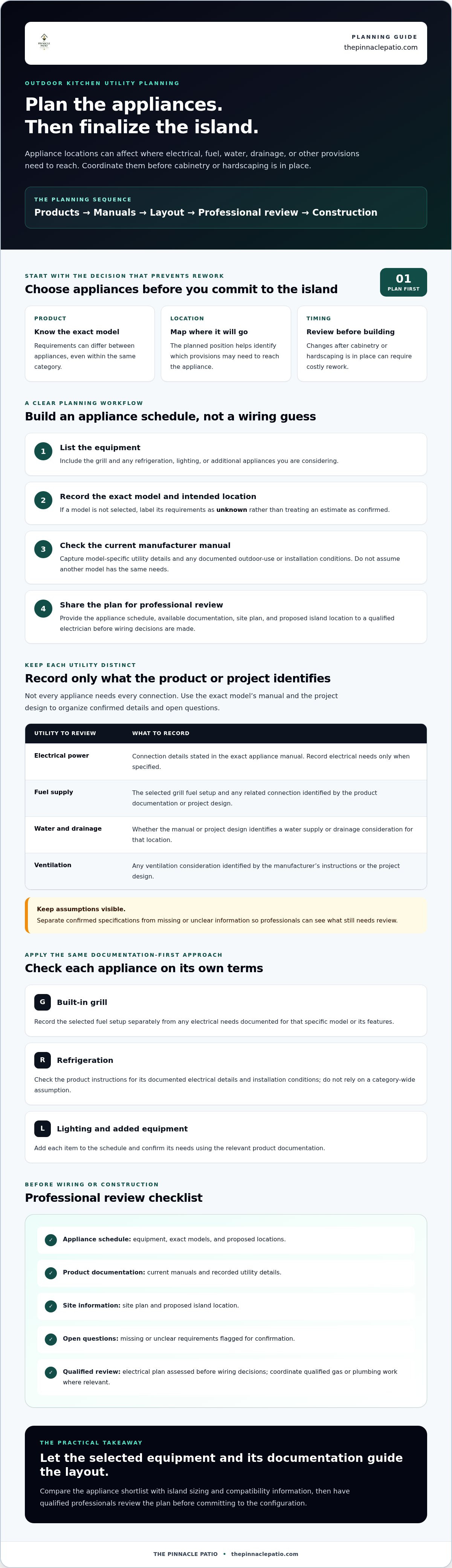
Use this outdoor kitchen utility checklist before wiring or construction
Use this checklist to turn appliance research into a clear brief for your electrician. Record the outdoor kitchen appliance utility requirements stated in current product documentation, and mark open questions for review instead of filling gaps with assumptions.
Information to prepare for the electrician
- Appliance schedule: List every planned appliance and accessory, including the exact model where selected.
- Product documentation: Gather current manuals and note each item’s documented electrical, fuel, water, drainage, or ventilation needs.
- Proposed locations: Mark each appliance and the proposed island location on a site or layout plan.
- Existing site information: Provide available property plans and details about existing electrical service or utility provisions for the electrician to assess.
- Open questions: List anything unclear, including questions about existing service capacity. Leave specifications blank until confirmed.
Share the complete package with the electrician before wiring decisions are made. That allows the review to consider the planned equipment and site together, rather than assessing an appliance in isolation.
Questions to resolve before finalizing the island
Check that each selected appliance suits the intended island configuration and placement. Compare the product documentation with the proposed layout, then ask the relevant professional which utility details could affect the arrangement or construction sequence. If a manual’s instructions are unclear, seek clarification before treating the product as a fit.
- Are the selected appliances compatible with the planned island configuration?
- Do the documented utility needs align with the proposed locations?
- What site details or product specifications still need confirmation?
- Could an unresolved utility need affect the layout or work sequence?
Reviewing outdoor kitchen island options alongside your appliance schedule can help connect product placement with the overall layout. Product guidance can support sizing and configuration decisions; electrical and other installation work should remain with qualified professionals.
Choose compatible outdoor kitchen appliances and schedule expert guidance
A well-coordinated outdoor kitchen begins with how you plan to use it. Define the experience first, whether that means a focused grilling area or a broader cooking setup. Then shortlist appliances, check current manuals for documented requirements, and have a qualified professional review the site before electrical or other utility decisions are finalized.
This sequence keeps product selection and technical review in their proper roles. Outdoor kitchen appliance utility requirements help inform which models and island configurations to consider, while an electrician assesses the electrical plan for the specific property. Neither step should rely on assumptions about a product’s dimensions, connections, or installation conditions.
Match the island configuration to documented appliance requirements
Compare your intended equipment list with the island configuration you’re considering. Check each appliance’s current product documentation for dimensions, compatibility information, and installation conditions before deciding that it fits. If you’re comparing built-in grills from Bull, AOG, or other manufacturers, use the exact model manuals rather than applying one model’s details to another.
Reviewing outdoor kitchen island options alongside your shortlist can help connect appliance selection with the overall configuration. Product guidance can help identify sizing or compatibility questions to resolve before you commit to a layout.
Know when to seek product guidance and when to hire an electrician
The Pinnacle Patio can help with product selection, sizing, compatibility, and configuration for outdoor kitchen islands and built-in appliances. Direct questions about wiring, applicable requirements, and installation decisions to a qualified electrician or other relevant professional. The retailer sells products but doesn’t provide on-site installation or electrical work.
Bring your appliance shortlist and available product documentation to a consultation when you’d like help refining the configuration. This product guidance complements, but doesn’t replace, a professional review of the site and planned work.
Plan your outdoor kitchen with confidence
A dependable utility plan starts with the appliances you intend to use, not a generic wiring assumption. Shortlist the equipment, verify each model’s current manual, and share the proposed locations and site information with a qualified electrician before wiring or construction decisions are finalized.
These outdoor kitchen appliance utility requirements also help shape the island configuration. Confirm product dimensions and compatibility from current documentation, and leave electrical design and installation decisions to qualified professionals.
The Pinnacle Patio offers outdoor kitchen islands and built-in grills, with product guidance for sizing, compatibility, and configuration. If you’re comparing grills, Bull, AOG, and Kokomo Grills are among the available brands. Product guidance can help refine your choices; it doesn’t include installation or electrical work.
With a clear equipment list and professional review, you can move toward an outdoor kitchen that fits your plans and is ready for the moments you want to share.
Frequently Asked Questions
What utilities should I plan for an outdoor kitchen?
Start with the exact appliances you intend to use, then review each current product manual for documented connections and installation conditions. Depending on the equipment, planning may involve electricity, fuel, water, drainage, or ventilation. Requirements vary by model and site, so don’t rely on assumptions based on appliance category. Share your appliance schedule, manuals, and proposed layout with qualified professionals before construction or wiring begins.
Does an outdoor kitchen grill need an electrical connection?
It depends on the specific grill and its features. A gas grill may still have an electrical connection documented in its manual, and models within the same category may differ. Check the current instructions for the exact model, including its connection details and installation conditions. If the information is unclear, ask the manufacturer or retailer to clarify it, then have an electrician review the planned installation.
How do I plan electrical wiring for an outdoor kitchen?
Choose the intended appliances, gather their current manuals, record documented electrical requirements, and mark each appliance’s proposed location. Then share the schedule and site plan with a qualified electrician. The electrician can assess the property and applicable requirements for your specific project. Avoid choosing wiring or protective equipment based on generic online figures or another appliance’s specifications. Verify the outdoor kitchen appliance utility requirements for your selected models.
Can I add outdoor kitchen appliances after the island is built?
You may be able to add appliances later, but first check how the new equipment affects the layout and utility plan. The implications depend on the product, its documented requirements, and the existing installation. Don’t assume existing provisions or island space will suit the addition. Review the appliance manual and ask relevant qualified professionals to assess the proposed change before altering wiring, cabinetry, or other utilities.
Do outdoor kitchen appliances need special weather protection?
Weather-related requirements depend on the appliance, its location, and the manufacturer’s instructions. Check the exact model’s documentation for approved placement and stated environmental conditions rather than relying on a general rule. Ask a qualified professional to assess the proposed location and applicable requirements. Confirm these details while planning the island, since appliance placement and utility decisions should be coordinated before work begins.
Who should install outdoor kitchen electrical wiring?
Have a qualified electrician assess and complete the electrical work for your property and planned appliances. Prepare the manuals, model details, and proposed layout so the review addresses the actual equipment and site. The Pinnacle Patio sells outdoor kitchen islands and appliances, but doesn’t provide electrical installation, on-site installation, hardscaping, or masonry. Product guidance and professional electrical work serve different purposes, and one doesn’t replace the other.
Should I choose appliances before designing an outdoor kitchen island?
Shortlist appliances early enough to check their current specifications and compatibility with the intended island configuration. Exact models can affect placement and utility planning, so assumptions made before equipment selection may need to be revisited. Coordinate product sizing and configuration guidance with a professional site review before construction. A consultation with The Pinnacle Patio can help with product choices, while wiring and other installation decisions remain with qualified professionals.
Ready to compare island configurations and built-in appliances? Schedule a product sizing and compatibility consultation with The Pinnacle Patio.