

Outside Kitchen Planning: Create a Weather-Ready Space for Cooking and Gathering
A grill alone doesn’t make an outside kitchen work. The space needs to support the full rhythm of a meal, from preparing ingredients and cooking to serving guests and lingering together. Before choosing appliances, consider how you’ll use the space, what you cook most often, and where people naturally gather.
A considered layout can keep cooking practical while connecting the kitchen to the dining and gathering areas. The right choices depend on your household’s routines, available space, and the outdoor conditions your appliances and finishes will face.
This guide walks through cooking, prep, and serving zones, then helps you narrow appliance and comfort choices to fit your plans. You’ll also find guidance for exploring outdoor kitchen islands and built-in grills from Kokomo, Bull, and AOG, plus a complimentary consultation for project-specific sizing and configuration questions.
Key Takeaways
- Plan your outside kitchen around how often you cook, the meals you make, and the way you host.
- Organize cooking, preparation, serving, storage, and gathering areas to keep tasks and movement flowing naturally.
- Choose grill capacity and other appliances based on your usual cooking style, household, and entertaining needs.
- Factor outdoor exposure, appliance placement, and product care into durability and comfort decisions.
- Before comparing products, record the available space, site conditions, hosting patterns, and comfort priorities.
Start an Outside Kitchen Plan With the Way You Cook and Gather
An inviting outdoor cooking space should feel useful in everyday life, not reserved for special occasions. Picture a typical meal outside: how often you cook, who joins you, and whether you usually grill a main dish or prepare a full meal outdoors. Those habits are a more reliable starting point than choosing appliances first.
An outside kitchen is an outdoor space planned for cooking, preparing, and serving food, with room to gather. It might be a grill with a nearby prep surface or a larger setup with additional work areas and space for guests to spend time near the cook.
Which outdoor kitchen features fit your household?
Consider whether you grill occasionally, cook full meals outdoors, or regularly host groups. Separate essential functions from optional additions. If you mainly grill dinner, prioritize a well-placed grill and a practical surface for preparing ingredients. If your meals involve several steps, dedicated prep and serving areas can keep tasks moving without crowding the cooking zone.
- Cooking frequency: List the appliances and work surfaces you expect to use regularly.
- Hosting pattern: Think about how many people typically gather and where they spend time.
- Serving style: Decide whether you’ll plate food at the kitchen or carry it to a nearby dining area.
Serving habits affect the layout. Buffet-style meals need a clear place for dishes, while plated service benefits from a convenient route between prep, cooking, and dining. Plan these everyday tasks before adding features that may see less use.
How does the outdoor setting shape the plan?
Observe the patio at the times you expect to use it. Sun and wind influence comfort and where cooking feels pleasant, while exposure to rain and other conditions can inform appliance placement and care. Notice how the kitchen relates to the home, nearby doors, dining areas, and gathering spots. A direct route for carrying food helps keep cooks and guests from competing for the same space.
Outdoor cooking has a long cultural history, from simple open-air methods to today’s purpose-planned settings; the history of cooking outdoors offers a broad view of that evolution. For a practical starting point, sketch the patio, mark existing routes, and identify where cooking, serving, and conversation can happen without crossing paths. The guide The Art of the Outdoor Kitchen Island can also inform island-focused planning. Explore outdoor kitchen islands as you consider whether an island can bring preparation and gathering together.
Arrange Outside Kitchen Zones for Cooking, Preparing, and Hosting
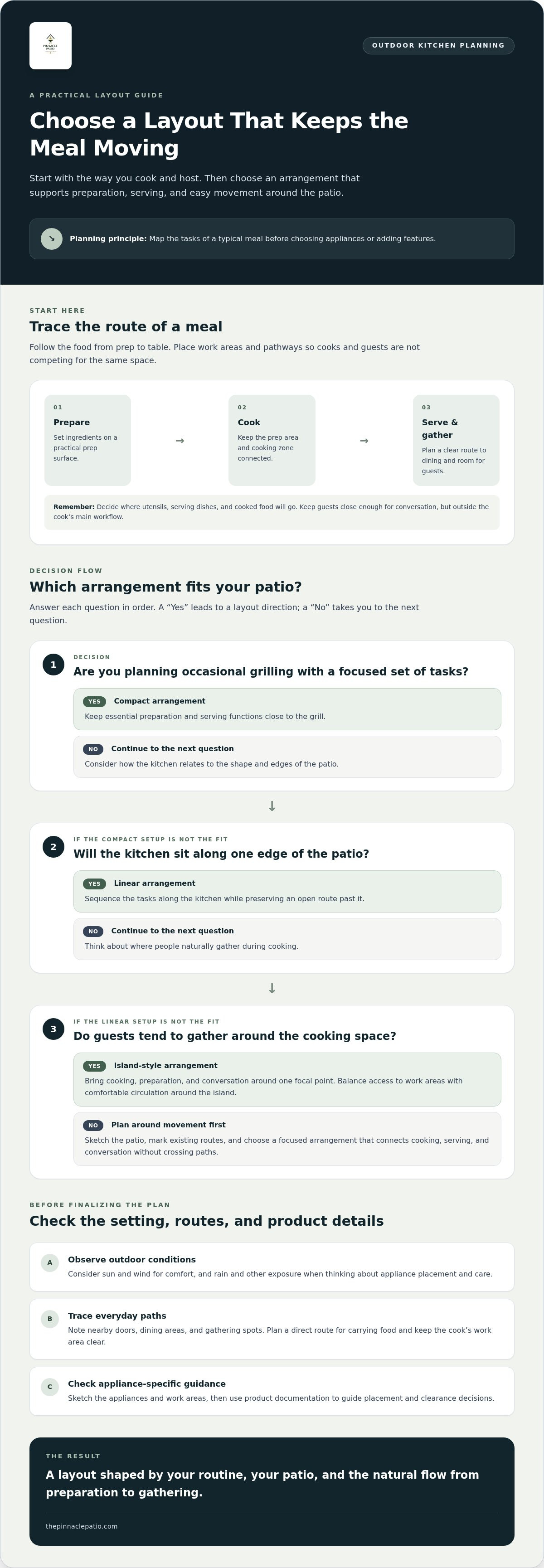
A well-planned outside kitchen connects the tasks of a meal instead of treating every appliance as a separate feature. Start at the grill, then work outward: where will you prepare ingredients, set down cooked food, keep cooking essentials, and serve guests? Also decide where people can gather without blocking the cook’s working area.
How should cooking and preparation areas relate?
Map a typical meal in order. If you season food just before grilling, put a prep surface within convenient reach of the cooking area. Decide where utensils and serving dishes will go, too. Once food is ready, a clear path to the dining area helps prevent people carrying plates from crossing the cook’s route. Keep guests close enough for conversation but outside the main work flow.
Rather than relying on a generic layout, sketch the appliances and work areas you have in mind, then trace how people will move between them. Use product-specific documentation to guide decisions about appliance placement and clearances.
Is an island layout right for your outside kitchen?
An island can bring cooking, preparation, and conversation around one focal point, particularly if guests tend to gather near the cook. Plan access to both the working and social sides so people can move around it comfortably. A linear arrangement may suit a kitchen along one edge of the patio, while a compact setup keeps the plan focused on essential tasks.
| Arrangement | Works well for | Planning priority |
|---|---|---|
| Compact | Occasional grilling and a focused set of tasks | Keep essential prep and serving functions close to the grill. |
| Linear | A kitchen positioned along a patio edge | Arrange tasks in sequence while preserving an open route past the kitchen. |
| Island-style | Hosting where guests gather around the cooking space | Balance access to work areas with comfortable circulation around the island. |
For inspiration on making an outdoor kitchen support entertaining year-round, consider how shelter, cooking choices, and gathering areas work together. Explore the outdoor kitchen island collection as you compare configurations. The guide Sculpting Your Sanctuary can also help you think through island components. For project-specific sizing or configuration guidance, schedule a consultation.
Choose Outside Kitchen Appliances Around Your Cooking Style
Choose appliances based on the food you expect to make, not the number of options available. If grilling is central to your meals, make the built-in grill the starting point. If you regularly prepare different dishes or host meals that go beyond grilling, consider whether another cooking method will have a clear role. Your routine and available space should guide the setup.
What should guide a built-in grill decision?
Think about how many people you typically cook for, the variety of meals you make, and how much control you want over different cooking temperatures. Grill size and cooking capacity affect how comfortably you can prepare food for your household or guests, but a larger grill isn’t automatically a better fit. Match capacity to your usual meals while allowing for the occasions when you host.
Consider burner count in terms of cooking zones. On grills with separately controlled burners, different areas can be managed for different cooking needs, such as keeping one area at a lower heat while another cooks more directly. Compare the control you want with the food you prepare. The Pinnacle Patio offers built-in grills from Bull, AOG, and Kokomo. Compare each model’s features and specifications before deciding.
When might another cooking appliance add value?
A pizza oven suits a distinct cooking style; it isn’t a necessary addition to every outdoor kitchen. Consider how often you would use it, whether it suits the meals you enjoy making, and how it fits the space and workflow. If it would see occasional use, a grill-led plan may be a better fit. Base compatibility and placement decisions on the relevant manufacturer documentation.
| Setup | Best suited to | Planning question |
|---|---|---|
| Grill-led | Households whose regular outdoor meals center on grilling | What cooking capacity and heat control suit your typical meals? |
| Grill plus pizza oven | Home cooks who expect to prepare pizza and grilled dishes outdoors | Will both appliances see regular use, and can the layout accommodate their separate roles? |
| Expanded cooking | Frequent hosts who want more than one cooking method | Does each appliance solve a specific, recurring need? |
Build the plan around the appliances you’ll use most, then consider additions in order of practical value. Explore the built-in grill collection to compare options against your cooking habits, capacity needs, and intended configuration.
Make an Outside Kitchen More Durable and Comfortable Outdoors
Outdoor conditions should inform appliance placement, finish choices, and care from the start. Assess what the space is exposed to, then use product-specific guidance to help make decisions. A covered patio, an open terrace, and a coastal setting can each raise different considerations for the kitchen and its upkeep.
What should you consider about outdoor exposure?
Walk the site and note how conditions change through the day and across the seasons. Record where direct sun falls, where rain reaches, which areas are exposed to wind, and whether temperatures vary substantially over the year. In coastal settings, include exposure to salt air in your product-care planning. Use these observations to guide placement and questions about finish and upkeep. Don’t treat a general material label as a guarantee of performance; consult the documentation for each product for its intended use and care guidance.
- Sun: Note exposed surfaces and areas where shade could improve comfort.
- Rain and wind: Identify which parts of the kitchen receive the most direct exposure.
- Seasonal changes: Consider how weather may affect use, storage, and routine care.
- Product guidance: Follow manufacturer instructions for cleaning, protection, and use.
How can comfort extend the time spent outside?
Comfort belongs in the layout from the beginning. Shade can make a sunny seating area more inviting, while thoughtful lighting supports cooking and conversation as daylight fades. Place seating where guests can talk with the cook without interrupting the work area, and plan the route between the kitchen and dining space.
Heating is optional, but it may suit a patio used in cooler conditions. The Pinnacle Patio offers Bromic luxury heaters as an outdoor comfort option. Treat a heater as one part of the setting, alongside seating and shelter, rather than as a required kitchen appliance. Explore the patio heater collection as you consider ways to make the space more comfortable.
Keep a short record of the site’s exposure, preferred gathering areas, lighting needs, and product-care guidance. These notes make it easier to compare options without assuming that one finish or arrangement suits every outdoor kitchen.
Turn Your Outside Kitchen Ideas Into a Clear Product Plan
Once you’ve considered how you cook, how the space flows, and what outdoor conditions it faces, bring those decisions together in a short project brief. Recording your priorities helps narrow the product choices and makes questions about sizing, configuration, and compatibility easier to address.
What should an outside kitchen project brief include?
Build your plan in sequence, moving from everyday use to specific product choices:
- Define how you’ll use the space. Note your preferred cooking methods, meals you expect to prepare outdoors, and how often you anticipate using the kitchen.
- Describe your household’s routine. Record typical hosting patterns, how food is served, and whether guests tend to gather near the cook or around a separate dining area.
- Capture site conditions. Write down the available space and observations about sun, wind, rain, access, and nearby gathering areas. These notes describe the setting and help frame appliance-placement questions.
- Choose the core appliances. Start with the cooking equipment that supports your regular meals. Then consider whether optional appliances or comfort features have a clear role in your routine.
- Shortlist products and questions. Note the products you’re considering and questions about their sizing, configuration, or compatibility with your plans.
Include the atmosphere you want to create, too. A lively, cooking-centered gathering may call for different priorities than a quiet family dinner outdoors. Keep that intention beside your practical notes so the plan supports both cooking and spending time together.
How can expert guidance help refine the plan?
A project brief gives a consultation a useful starting point. With your preferred cooking methods, hosting patterns, available space, and comfort priorities in view, product choices can be considered as part of the whole setting. Guidance is especially useful when comparing grill sizes, planning an island configuration, or deciding how selected products work together. Review product details alongside the relevant manufacturer information.
Use your shortlist to explore outdoor kitchen islands and built-in grills with a clearer sense of what matters. You don’t need to decide on every optional feature at once. A focused plan helps distinguish essentials from possibilities and shape the space around how you intend to use it.
Bring Your Outdoor Kitchen Plan Into Focus
A thoughtful outside kitchen starts with the way you cook and gather, then takes shape through practical zones, well-chosen appliances, and a plan for the conditions your patio faces. Prioritize features you’ll use regularly, keep routes between cooking and serving clear, and account for comfort and product care from the outset.
The Pinnacle Patio’s curated outdoor kitchen islands and high-performance built-in grills offer a starting point, with grill selections from Bull, AOG, and Kokomo. Bromic luxury heaters are another option for patio comfort. Notes on your cooking style, available space, and hosting routine can help you compare products in context.
Explore The Pinnacle Patio’s outdoor kitchen islands and built-in grills, and schedule a complimentary consultation to discuss sizing, configuration, or product compatibility for your plans.
Frequently Asked Questions
What is an outside kitchen?
An outside kitchen is an outdoor space planned for cooking, food preparation, serving, and gathering. It can be as simple as a grill with a nearby work surface or include an outdoor kitchen island and additional cooking appliances. The right arrangement depends on how you cook, how often you use the space, and how you want family and guests to share it.
What should an outside kitchen include?
At minimum, plan for the cooking method you’ll use most and a practical way to prepare and serve food. A built-in grill may be central for a household that grills regularly, while an island can bring work and gathering areas together. Storage, seating, lighting, shade, or a heater may be useful additions, but prioritize everyday needs before optional features.
How do I plan an outside kitchen layout?
Begin with the grill or other primary cooking point, then map the related tasks: preparing ingredients, storing cooking essentials, setting down finished food, and serving guests. Consider how people will move between the kitchen, home, and dining area so the cook’s working path stays clear. Record the available space and site conditions, then use product documentation to guide appliance-specific placement questions.
Can an outside kitchen fit a small patio?
Yes. A small patio can support a focused outdoor cooking area if the plan prioritizes essential tasks and preserves comfortable movement. A grill with a useful nearby prep surface may be more suitable than a collection of appliances. Sketch the patio, note access routes and gathering areas, then compare product options with the space you have.
What appliances work best in an outside kitchen?
The best appliances depend on the meals you expect to prepare. A built-in grill can anchor a grill-led setup, while a pizza oven suits households that regularly want that distinct cooking option. Consider how often each appliance will be used, the cooking capacity you need, and how products fit your layout. The Pinnacle Patio carries built-in grills from Bull, AOG, and Kokomo.
How do I protect an outside kitchen from the weather?
Start by noting the site’s exposure to direct sun, rain, wind, and seasonal temperature changes. In coastal settings, include salt-air exposure in your care planning. Use your observations to inform appliance placement and finish choices, and consult each product’s manufacturer guidance for care, cleaning, and use. Avoid assuming that a material or finish performs the same way in every setting. Follow the instructions for the specific products you select.
Does an outside kitchen need a built-in grill?
No. A built-in grill is a popular choice, but an outdoor cooking space should reflect your preferred cooking methods rather than follow a fixed formula. If grilling is central to your meals, it may be the natural starting point. If you rarely grill, consider whether another cooking approach better suits your routine. Choose core equipment first, then assess additions by how often you’ll use them.