

Patio Design Ideas with Fire Bowl Features: Inspiring 2026 Layouts
A fire bowl should never be treated as a casual afterthought placed onto an open slab of stone. When exploring refined patio design ideas with fire bowl centerpieces, your primary objective is to establish an architectural anchor that brings structure, warmth, and intuitive movement to your entire outdoor living space.
You already understand the magnetic draw of gathering around an open flame. Yet balancing a fire feature alongside outdoor kitchen islands, alfresco dining tables, and safe walking clearances often leads to layout frustration. You shouldn't have to settle for a disjointed footprint that feels visually cluttered or underutilized. In this guide, you'll discover sophisticated design concepts that seamlessly unite fire bowls with culinary zones and deep-seating lounges, creating harmonious outdoor rooms built for everyday entertaining. We'll explore purposeful 2026 layout plans, essential fuel infrastructure and clearance requirements, and professional material pairings to help you curate an enduring, high-performance retreat.
Key Takeaways
- Explore proven patio design ideas with fire bowl features to anchor dedicated conversation zones without crowding walkways or dining spaces.
- Discover how to blend tactile finishes like glass-fiber reinforced concrete and spun metals with premium 304 stainless steel outdoor kitchens.
- Compare natural gas vs. liquid propane fuel connections to determine which infrastructure delivers the ideal flame output and convenience for your property.
- Learn critical installation clearance standards for combustible walls, overhead pergolas, and safe, comfortable seating perimeters.
- Master multi-zone space planning that harmonizes sculptural fire vessels with luxury culinary islands and supplemental directional heating.
Architectural Anchoring: Defining Outdoor Living Zones Around a Fire Bowl
A successful exterior floor plan treats open space with the same deliberate zoning as an interior open-concept home. Rather than dropping a fire feature haphazardly onto a concrete slab, high-end layouts establish the vessel as a primary architectural anchor. Applying fundamental landscape design principles allows you to delineate conversation, dining, and culinary quarters while maintaining clear sightlines across your entire property.
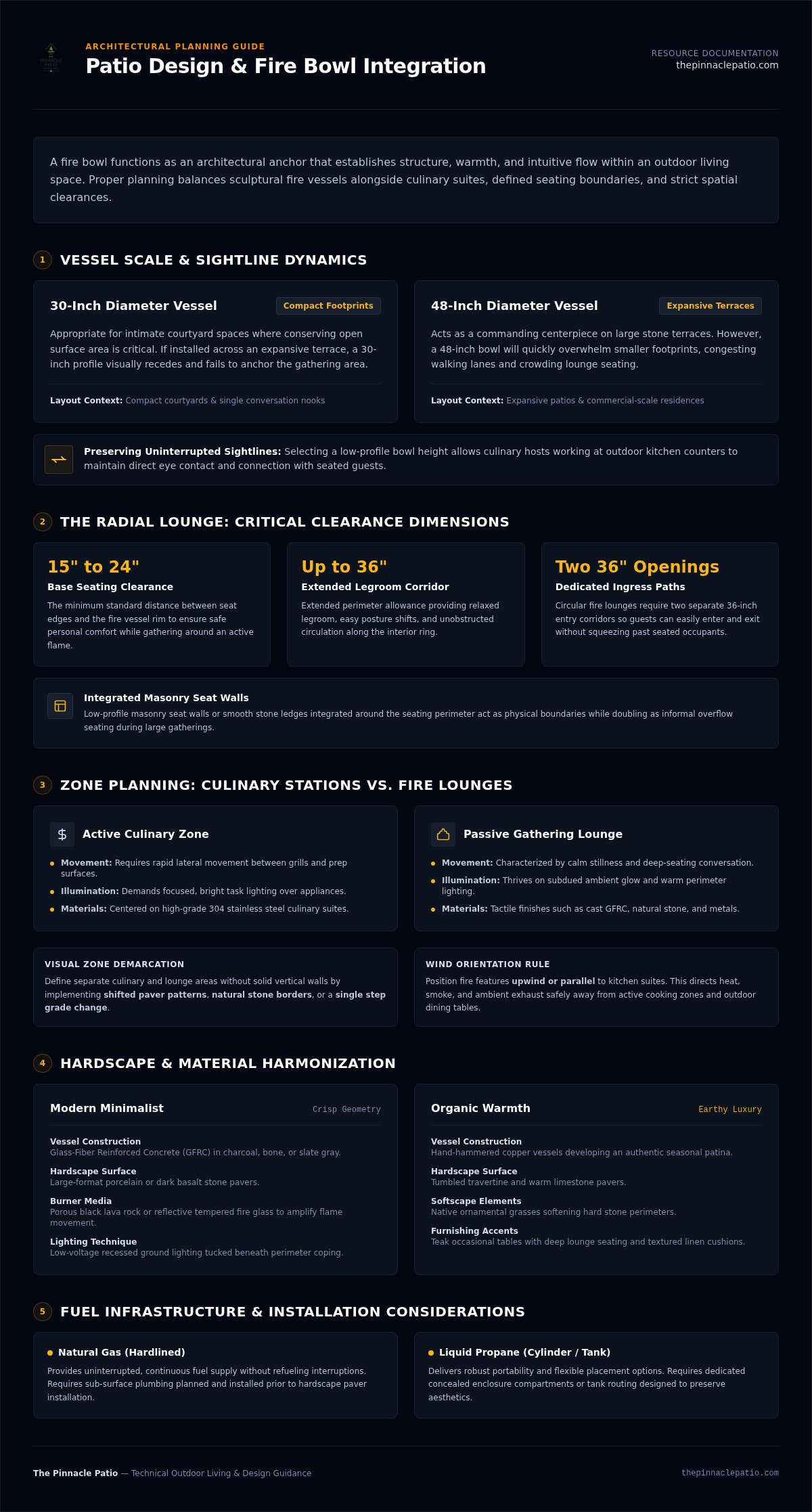
When curating refined patio design ideas with fire bowl centerpieces, proportion dictates comfort. A vessel that spans 48 inches will overwhelm an intimate courtyard, while a modest 30-inch bowl disappears on an expansive terrace. Selecting the appropriate bowl diameter and low-profile height preserves uninterrupted views, allowing hosts at outdoor kitchen counters to stay connected with guests lounging around the fire.
The Radial Lounge Configuration
Circular fire vessels naturally inspire radial furniture arrangements. Placing curved modular sectionals or deep-seating club chairs equidistant from the flame establishes an intimate, welcoming environment. Keep these core spatial metrics in mind:
- Seating Clearance: Maintain at least 15 to 24 inches between seat edges and the fire vessel rim for personal comfort, extending up to 36 inches to allow relaxed legroom and unobstructed movement.
- Integrated Perimeters: Incorporate low-profile masonry seat walls or smooth stone ledges that double as informal perimeter seating during larger gatherings.
- Access Ingress: Leave two dedicated 36-inch entry corridors into the circle so guests can enter without squeezing past occupied seats.
Linear Separation Between Culinary and Gathering Spaces
The most common layout flaw in outdoor living is clustering heat sources together. Position your fire lounge adjacent to, yet clearly divided from, high-traffic grilling stations and outdoor kitchen islands. Active culinary preparation demands rapid lateral movement, bright task lighting, and immediate access to appliances, whereas a fire lounge thrives on subdued ambience and relaxed stillness.
Define these distinct functional territories without erecting visual barriers. Shift paver patterns, incorporate natural stone borders, or introduce a single step grade change between cooking and lounging zones. Most importantly, evaluate prevailing wind patterns across your property. Orienting your fire feature upwind or parallel to cooking suites ensures heat and ambient exhaust drift harmlessly away from dining tables and prep surfaces, preserving an effortless entertaining experience.
Inspiring Patio Design Styles: Harmonizing Materials and Fire Elements
A fire bowl's aesthetic impact relies entirely on the dialogue between its construction and the surrounding hardscape. When evaluating refined patio design ideas with fire bowl features, selecting cohesive textures ensures your gathering area feels purposefully designed rather than pieced together over time.
Modern Minimalist with Cast Concrete and Dark Basalt
Monolithic styling embraces crisp geometric profiles, unadorned surfaces, and neutral palettes. Glass-fiber reinforced concrete (GFRC) vessels in charcoal, bone, or slate gray provide exceptional structural integrity without excessive weight. Pair these smooth matte vessels with large-format porcelain or dark basalt pavers.
Fill the burner with porous black lava rock or reflective tempered fire glass to amplify flame movement. Low-voltage recessed ground lighting tucked beneath perimeter coping casts soft uplighting across the concrete facade after twilight, accentuating crisp architectural lines.
Organic Warmth with Travertine, Copper, and Natural Elements
If your exterior leans toward earthy, relaxed luxury, look to hand-hammered copper vessels. Natural untreated copper reacts with air and heat over time, developing a rich, authentic patina that deepens with every season.
Balance the metallic glow by surrounding the seating circle with tumbled travertine, warm limestone pavers, and soft native grasses. Teak occasional tables and deep lounge chairs with textured linen cushions soften the stone hardscape, creating an inviting space tailored for calm evenings.
Contemporary Harmony with Outdoor Kitchen Islands
The hallmark of cohesive layout planning is uniting your fire feature with culinary appliances. Rather than treating cooking and lounging as disconnected spaces, repeat visual textures across both environments. Align the stone cladding of your vessel with the exterior veneer of your prep counters.
Investing in curated outdoor kitchen islands finished in coordinating stone, porcelain, or stucco creates immediate architectural continuity. Match your fire burner pan with matching commercial-grade 304 stainless steel access doors, drawers, and built-in grill hoods. Unlike magnetic 430-grade steel, which often shows rust within five years, 304 stainless steel offers a resilient 15 to 20+ year lifespan against heat and humidity.
If you're mapping out finishes across multiple zones and need help verifying finish compatibility, you can always schedule a design consultation with our team to refine your overall configuration.
Fuel Selection and Heat Dynamics: Natural Gas, Liquid Propane, and Wood
Selecting the appropriate fuel source bridges the gap between architectural concept and functional reality. In refined patio design ideas with fire bowl centerpieces, your fuel choice dictates underground utility rough-ins, burner longevity, and realistic thermal performance when evening temperatures drop.
Plumbed Natural Gas vs. Integrated Propane Storage
A plumbed natural gas line provides continuous, on-demand operation with zero tank swaps. It's the premier choice for frequent entertaining, though it requires permanent trenching before you lay your base stone and pavers. Once installed, it offers reliable, low-maintenance convenience.
Liquid propane offers installation agility for remote gathering zones where running utility lines isn't practical. Standard 20-pound tanks require either a vessel designed with internal tank storage or a coordinating hardscape side table that conceals the cylinder. When choosing gas equipment, look for engineered brass burner systems rated between 60,000 and 100,000+ BTUs to ensure tall, luminous flames that resist stiff evening breezes.
Wood-Burning Considerations for Open Patio Expansions
Wood fire bowls deliver an authentic sensory experience through crackling embers and deep radiant heat, but they require diligent site planning. Heavy-gauge corten steel and thick structural steel vessels endure repeated thermal cycles far better than thin cast iron, weathering into an earthy bronze tone over time.
Because wood fires produce free-floating sparks, you'll need a clear perimeter and an fitted spark arrester. Plan dedicated firewood storage directly into your outdoor layout, such as built-in dry niches beneath masonry bench seating, to keep seasoned hardwood dry and orderly.
Layering Ambient Flame with Directed Overhead Heat
A common mistake is expecting a central fire bowl to heat an entire outdoor living room. Because thermal energy rises vertically, a fire vessel delivers focused warmth to guests seated immediately around the rim, leaving outer perimeters cool.
Curating an all-weather retreat requires layered heating. Pair the low ambient glow of your central fire bowl with mounted luxury patio heaters by Bromic positioned above dining tables and outdoor bar counters. Directional infrared heating warms people and surfaces directly, ensuring every seat on your patio remains comfortable long after the sun goes down.
Spatial Planning, Safety Clearances, and Surface Materials
Executing ambitious patio design ideas with fire bowl features requires meticulous spatial planning before breaking ground. Integrating an open-flame feature into a luxury living space is as much an exercise in structural safety and building science as it is an aesthetic choice. Prioritizing correct clearances preserves clear walkways and protects your property investment.
Essential Clearance Dimensions and Overhead Safety
Setback requirements differ significantly between gas and solid fuel. Gas fire features certified to ANSI Z21.97 / CSA 2.41 standards typically require a minimum 36-inch clearance from combustible exterior walls, siding, and wood fencing. Always verify your specific model documentation and local municipal codes, which supersede national baselines.
If you're situating a gas vessel beneath an open-air structure, you must maintain at least 84 inches of overhead clearance to non-combustible ceiling elements. In contrast, wood-burning fire pits require a generous 10 to 25-foot clearance from all structures and combustible rooflines due to wind-blown sparks. Never place an open wood-burning bowl beneath a covered veranda, pergola, or low tree canopy.
Foundation Requirements: Pavers, Poured Slabs, and Decking
Heavy concrete and stone vessels require an uncompromising, level substructure. Pouring a dedicated reinforced concrete slab or installing dry-laid natural stone pavers over a densely compacted crushed gravel base prevents shifting over time.
If you intend to install an approved gas feature over composite or hardwood decking, you must utilize an engineered, non-combustible insulation barrier to isolate thermal transfer. Ensure the bowl housing features integrated base drainage holes. Trapped rainwater rusts burner components and damages internal ignition modules during freeze-thaw cycles.
Wind Direction and Ambient Lighting Integration
Safe traffic circulation requires a minimum 36-inch walking lane around all seating groups and open flames. Guests should never have to brush past an active fire feature to reach cooking stations or patio exits.
Map your regional prevailing wind patterns to position seating and dining suites upwind of the flame. For convenience and code compliance, equip plumbed gas features with accessible emergency quarter-turn shutoff valves located outside the immediate heat perimeter. Finally, conceal low-voltage pathway fixtures in nearby plant beds to illuminate grade changes and masonry borders without washing out the warm flame glow.
Curating a Complete Alfresco Retreat: Fire Bowls and Culinary Stations
According to the 2026 U.S. Houzz Outdoor Trends Study, 83% of homeowners renovating their outdoor footprints now prioritize dedicated lounge spaces, moving away from single-appliance setups in favor of full alfresco living suites. The most successful patio design ideas with fire bowl features unite fireside relaxation with chef-grade outdoor cooking. Synthesizing these elements into one cohesive environment creates an effortless rhythm for hosting.
Harmonizing Fire Features with Built-In Culinary Centers
Anchor your culinary prep zone with heavy-duty built-in outdoor grills from renowned manufacturers like Bull or Kokomo. Sizing your grill appropriately ensures your cooking station matches your hosting demands without crowding the patio:
- 30-Inch Grills: Feature three primary burners, providing compact efficiency ideal for smaller courtyards and weeknight family dinners.
- 36-Inch Grills: Offer four burners, creating distinct indirect and direct cooking zones to manage multiple courses simultaneously.
- 42-Inch Grills: Deliver five or more high-output burners with dedicated infrared sear stations, built for large-scale entertaining.
For in-depth planning principles, review our guide to luxury outdoor kitchens. If you have an adjacent lawn area, consider adding secondary curated fire pits to draw guests naturally across the yard as dinner wraps up.
Artisan Wood-Fired Additions for Gourmet Entertaining
Expand your culinary possibilities beyond the standard grill grate by adding dedicated outdoor pizza ovens. Incorporating a stone-hearth pizza oven establishes a live-fire cooking experience that complements the visual warmth of your central fire bowl.
Unify these features by using identical masonry cladding across your oven pedestal and the base surrounding your fire lounge. Weatherproof prep drawers and under-counter refrigeration keep fresh ingredients and chilled beverages within arm's reach, eliminating tedious trips back inside to the kitchen.
Expert Consultation for Tailored Outdoor Living Plans
Balancing gas supply lines, adequate ventilation, appliance cutouts, and walking clearances across multiple outdoor rooms requires precise spatial planning. A small mistake in gas line placement or clearance measurement can disrupt your entire entertaining flow.
When you're ready to align your culinary equipment with an architectural fire feature, take the guesswork out of the design process. You can schedule a complimentary consultation with our equipment specialists to map your island dimensions, utility lines, and overall configuration.
Transform Your Outdoor Living Space for 2026 and Beyond
Bringing sophisticated patio design ideas with fire bowl features to life requires balancing intentional zoning, resilient materials, and dependable fuel infrastructure. When you pair an architectural fire vessel with high-performance culinary stations and directional Bromic heating, your patio evolves into an enduring, year-round retreat built for effortless entertaining.
As an authorized national curator of premier outdoor brands including Bull, AOG, Kokomo, and Bromic, The Pinnacle Patio provides trusted guidance to simplify equipment sizing, installation clearances, and luxury island layouts. Our team translates complex appliance specifications into functional outdoor rooms, ensuring your long-term investment delivers exceptional performance.
With thoughtful planning and the right culinary elements in place, your outdoor space will serve as an inviting haven for gathering, dining, and unwinding for decades to come.
Frequently Asked Questions
Can you put a gas fire bowl directly on a paver patio without damaging the stone?
Yes, certified gas fire bowls can safely sit directly on natural stone or concrete pavers. Because gas burner pans elevate the flame above an open air gap, heat directs upward rather than into the ground. However, you should confirm the bowl includes integrated leveling feet or an elevated base pedestal. This design prevents moisture from getting trapped against your pavers, eliminating potential mineral staining and thermal cracking.
How much clearance is required above and around a residential patio fire bowl?
Gas fire vessels certified to ANSI standards typically require at least 36 inches of horizontal clearance from combustible exterior walls, siding, and deck railings. Overhead, you need a minimum clearance of 84 inches to non-combustible ceilings or pergola beams. Wood-burning bowls demand substantially larger setbacks of 10 to 25 feet from structures because floating embers create real fire hazards.
What is the primary difference between a fire bowl and a traditional fire pit?
The primary difference lies in structural silhouette and elevation. Traditional fire pits are typically heavy, boxy enclosures or sunken structures built into the ground. Fire bowls are elevated, sculptural vessels crafted from cast concrete, hammered copper, or spun steel. Their curved, low-profile design preserves sightlines across furniture groupings and establishes an artistic visual centerpiece for contemporary patios.
How many BTUs do I need for a patio fire bowl to provide noticeable warmth?
Aim for a commercial-grade burner producing between 60,000 and 100,000 BTUs for tangible radiant heat. A 60,000 BTU burner warms guests seated within three feet in mild weather. Larger bowls delivering 100,000+ BTUs offer taller flames that resist stiff breezes, maintaining outdoor comfort on crisp autumn evenings across an entire conversation circle.
Is it possible to install an outdoor kitchen and a fire bowl in a mid-sized backyard?
Yes, executing thoughtful patio design ideas with fire bowl elements is entirely achievable in moderate spaces with intentional zoning. Choose a compact 30-inch or 36-inch built-in grill island to conserve square footage along a perimeter wall. Then, anchor the central lounge with a low-profile 30-inch fire vessel, ensuring you preserve 36-inch walking corridors between cooking, dining, and seating areas.
What type of fire media works best inside a luxury gas fire bowl?
Tumbled volcanic lava rock and ceramic river stones deliver classic textures while promoting uniform gas distribution across the burner pan. For a sleek, reflective aesthetic, choose quarter-inch or half-inch tempered fire glass. Never use standard landscaping gravel or unrated river rocks. Porous, non-rated rocks trap internal water pockets that can dangerously explode when exposed to direct burner heat.
Can a fire bowl be operated safely on a composite wood deck?
Approved gas fire bowls can operate on composite decking only when installed with a dedicated manufacturer heat deflector or non-combustible sub-pad. Composite materials soften and warp at lower temperatures than natural hardwoods. Never burn real wood in a fire bowl on a wood or composite deck, as escaping sparks and intense downward radiant heat present immediate fire hazards.