

Prefab vs. Custom Outdoor Kitchens: 2026 Luxury Guide
The most expensive custom masonry build might actually be the least intentional path to a professional-grade outdoor sanctuary. You've likely envisioned a space where architectural harmony meets culinary excellence, yet the fear of months of site-bound construction often stalls the dream. It's natural to assume that bespoke luxury always requires building from the ground up with a disruptive crew of masons. This 2026 guide clarifies the prefabricated vs custom outdoor kitchen debate by focusing on what truly matters: high-performance output and aesthetic permanence.
You'll discover whether a precision-engineered island or a site-built masonry structure is the right investment for your lifestyle. We'll examine lead times, seamless integration with premium outdoor cooking appliances, and how to ensure your new culinary space feels like a natural extension of your architecture. By the end, you'll have a clear roadmap to a stress-free implementation process that prioritizes both your time and your pursuit of the extraordinary. This is about more than just a grill; it's about curating a permanent venue for connection, refinement, and shared experience.
Key Takeaways
- Evaluate the "time-to-table" advantage of luxury prefabricated islands, which arrive ready for appliance integration and bypass the extended disruption of traditional masonry.
- Navigate the prefabricated vs custom outdoor kitchen decision by balancing the desire for bespoke architectural stone with the precision engineering of professional-grade islands.
- Identify how to achieve a seamless aesthetic by pairing your chosen kitchen structure with high-performance elements like Bromic heaters and specialty pizza ovens.
- Learn why the modern "Sophisticated Curator" often favors single-source culinary solutions to ensure perfect compatibility with premium brands like Bull and Kokomo.
- Discover our 2026 planning framework for auditing your space, culinary goals, and entertaining requirements to ensure a permanent, high-value investment.
Prefabricated vs. Custom Outdoor Kitchens: Defining Your 2026 Vision
The concept of the backyard has undergone a profound transformation. What was once a simple patch of grass for a standalone grill is now an intentional extension of the home's interior. As we look toward 2026, the modern outdoor space is a culinary destination where connection and refinement intersect. Deciding between a prefabricated vs custom outdoor kitchen used to be a choice between convenience and quality. Today, that distinction has dissolved. The conversation has shifted from "which is better" to "which process aligns with your vision for a seamless lifestyle."
Luxury is no longer defined solely by the labor of a mason; it's found in the precision of the build. While a custom masonry project offers architectural permanence, it often brings months of site-bound construction and logistical friction. Conversely, high-performance islands offer a curated path to excellence. Your primary goal should be to balance the desire for a bespoke look with the need for professional-grade culinary performance. In 2026, the most sophisticated homeowners are prioritizing the outcome over the method, seeking spaces that are ready to host the moment they arrive.
The Shift Toward High-Performance Islands
Modern homeowners are increasingly acting as "Sophisticated Curators," choosing expert-engineered modules over traditional contractor-built structures. This shift is driven by the desire for predictable excellence. When you choose a prefabricated island, you're investing in a structure designed specifically to house elite appliances like Bull and AOG grills. These islands aren't temporary fixtures. They utilize advanced kitchen cabinet construction principles adapted for the elements, featuring commercial-grade frames that offer better longevity than many site-built alternatives. This isn't about cutting corners. It's about choosing a foundation built for high-heat performance and structural integrity.
Assessing Your Space and Lifestyle
Before committing to a build method, you must audit your patio's physical and functional limits. A fixed masonry structure requires a permanent footprint and often extensive foundation work. If you prefer a more agile approach, a prefabricated island provides a seamless, stress-free implementation that doesn't compromise on luxury. Both paths require early planning for utility access, including gas, water, and electricity. Understanding these nuances is the first step in mastering The Art of the Outdoor Kitchen Island. Your space should dictate the build, ensuring that whether you choose prefab or custom, the result is a harmonious sanctuary designed for a lifetime of entertaining.
The Sophistication of Prefabricated Islands: Speed Without Compromise
Many homeowners equate the term "prefabricated" with temporary or budget-friendly solutions. In the 2026 luxury market, this is a fundamental misunderstanding. High-end islands represent a fusion of factory precision and artisan finishes, designed for those who value both their time and their culinary experience. When debating a prefabricated vs custom outdoor kitchen, the primary advantage of the island is the elimination of the "construction zone" reality. Instead of enduring weeks of masonry dust, heavy equipment, and logistical delays, these units offer a refined "plug-and-play" experience. A professional crew can often finalize the placement and appliance integration in a single afternoon, transforming a patio into a sanctuary in hours rather than months.
Built-in Excellence: Integrating Professional Grills
The engineering behind a luxury island is built around the specific thermal and structural requirements of high-performance cooking. Brands like Kokomo and Bull design their islands to ensure optimal airflow and dedicated heat shielding specifically for their built-in grills. This synergy prevents common issues like "hot spots" or ventilation failures often found in poorly planned masonry builds. Factory-controlled environments allow for precision-cut openings that match the appliance's specifications down to the millimeter. Factory tolerances in prefabricated islands consistently surpass the variability of on-site masonry, ensuring a flush, professional fit that lasts for decades. This level of detail ensures that your investment in a premium grill is supported by a structure that respects its performance needs.
Material Longevity and Aesthetics
Durability is a cornerstone of the modern luxury island. While older modular units may have relied on wood or thin aluminum, today's high-performance islands utilize heavy-duty galvanized steel framing. This construction is vital in coastal environments where salt air or high humidity can quickly compromise lesser materials. These structures are finished with premium stucco, hand-applied stone veneer, and solid granite countertops to ensure architectural cohesion with your home. Even though these units arrive ready for use, they are engineered to meet stringent outdoor kitchen building codes regarding gas and electrical safety. This blend of structural permanence and aesthetic refinement makes the modern island a sophisticated choice for the visionary homeowner.
For those seeking a curated culinary destination without the mess of a traditional build, exploring Elegance in Detail: Prefab Outdoor Grill Islands provides a deeper look into these ready-to-entertain solutions. If you're ready to define the specific layout of your sanctuary, you might schedule a consultation with one of our experts to explore the best fit for your space.
The Custom Masonry Route: Architectural Permanence and Its Demands
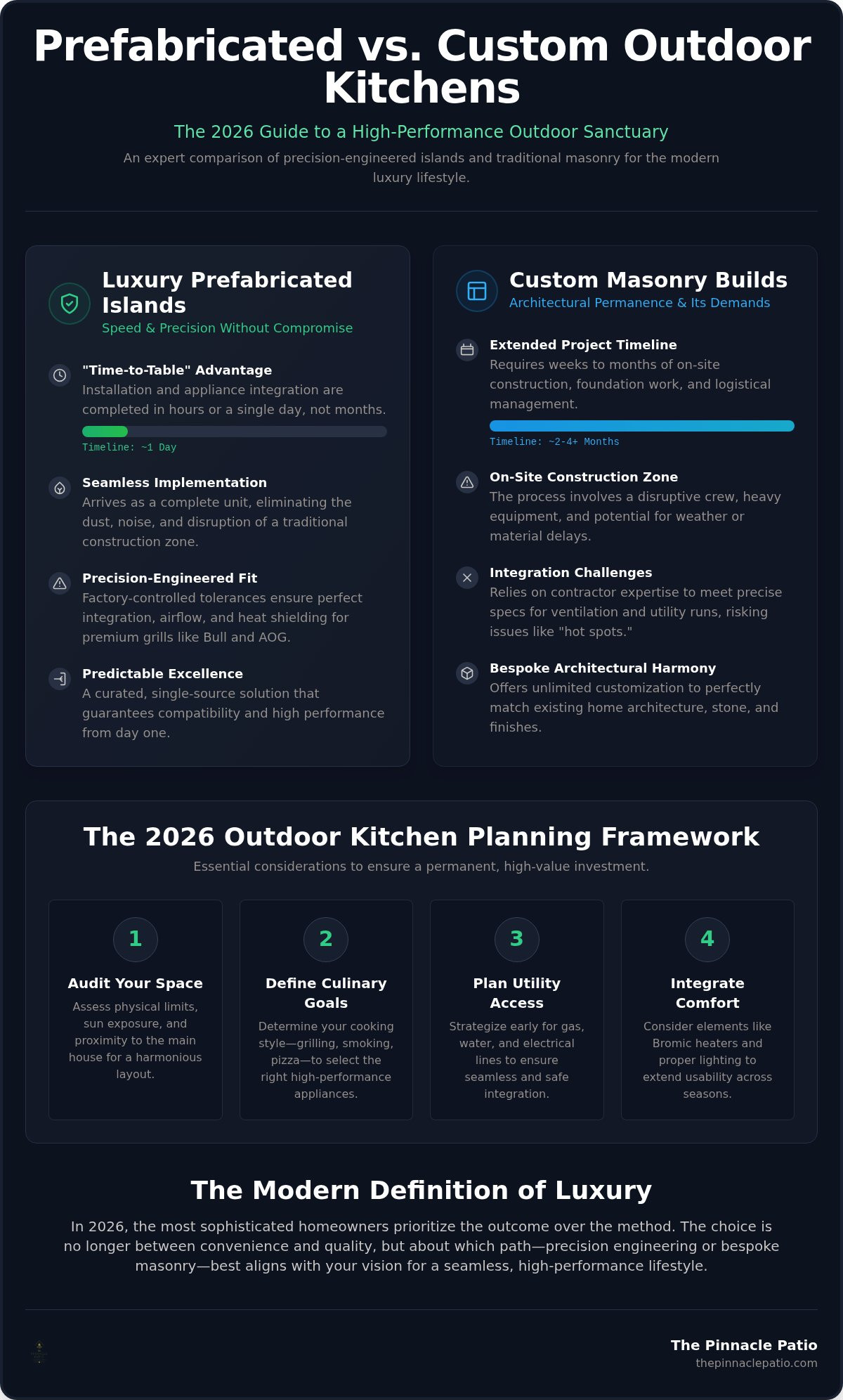
Custom masonry remains the definitive choice for homeowners seeking absolute architectural continuity. This path allows you to match the exact stone, mortar, and granite used in your home’s primary structure, creating a seamless transition from interior to exterior. However, when evaluating a prefabricated vs custom outdoor kitchen, you must account for the logistical weight of a site-built project. This isn't a simple weekend installation; it's a structural undertaking that requires deep footings, rigorous permitting, and a tolerance for a prolonged construction presence on your property. To assist in your decision-making, the following table outlines the primary differences in the build experience.
| Feature | Luxury Prefabricated Island | Custom Masonry Build |
|---|---|---|
| Installation Timeline | Typically 1 to 2 days after delivery. | Often 4 to 12 weeks of on-site labor. |
| Design Flexibility | Curated, high-performance layouts. | Infinite, bespoke architectural shapes. |
| Site Disruption | Minimal; island arrives pre-finished. | High; requires active construction zone. |
| Asset Type | Semi-permanent; can be moved if needed. | Permanent deeded fixture of the home. |
Navigating the Construction Process
Building bespoke outdoor kitchens necessitates a "culinary-first" mindset. You aren't just hiring a stonemason; you're coordinating a multi-trade symphony of plumbers, electricians, and gas specialists. Misalignment by even a half-inch in the stone cutout can derail the installation of a premium Kokomo grill. It's essential to have a visionary guide or general contractor who understands that utilities must be placed with surgical precision to support modern luxury outdoor kitchen trends, such as integrated power burners and dedicated pizza oven stations. Without this oversight, the structural integrity of the stone can be compromised by the intense thermal energy generated by high-performance AOG or Bull grills.
Long-Term ROI and Resale Value
Custom masonry is a permanent fixture of your landscape, often adding more to a home's appraised value than a modular unit. It suggests a level of heritage and permanence that resonates in high-end real estate markets. Before committing to this path, consider these factors:
- Custom builds are considered permanent improvements that stay with the property.
- They require permanent gas and electrical hardwiring that must meet 2026 safety codes.
- The design can accommodate non-standard shapes, such as curved radius bars or multi-level tiered seating.
For a deeper exploration of how these permanent structures compare to modular luxury in the coming year, our Luxury Outdoor Kitchens: The 2026 Guide offers a comprehensive look at the high-performance landscape. Deciding whether you want a permanent monument or a refined, movable island is the first step in curating your ideal outdoor sanctuary.
The 2026 Outdoor Kitchen Planning Framework: 5 Essential Considerations
Planning an outdoor culinary sanctuary requires a structured approach that transcends simple aesthetics. To resolve the prefabricated vs custom outdoor kitchen dilemma, you must audit your lifestyle requirements against the practicalities of construction. This framework serves as your visionary guide, ensuring your investment provides a lifetime of connection and refinement rather than logistical friction.
- Step 1: Evaluate your "Time-to-Table" requirement. If you intend to host an event this season, a luxury island is the logical choice. Custom builds often face lead times of several months due to contractor scheduling and masonry curing.
- Step 2: Audit your culinary goals. Beyond the grill, consider if you require specialized heat for pizza ovens or professional power burners.
- Step 3: Analyze total project lead time. This includes hardscaping and permitting, which are often more rigorous for permanent masonry structures that require deep footings.
- Step 4: Determine climate needs. A true sanctuary is usable year-round. Integrating Bromic heating solutions or high-performance patio heaters ensures guest comfort during cooler evenings.
- Step 5: Define your budget structure. Weigh the transparent pricing of a premium island against the variable costs of trade labor and on-site masonry materials.
Balancing Aesthetics and Performance
Selecting your primary cooking suite is the most critical decision in the planning phase. Whether you choose Bull, AOG, or Kokomo, the appliance specifications should dictate the build method, not the other way around. Modern islands are engineered for these specific dimensions, whereas custom builds require meticulous oversight to ensure future tech upgrades remain possible. The grill is the soul of your culinary sanctuary; the structure is merely its silhouette. Focusing on the performance of your sear zones and BTU output ensures your kitchen is as functional as it is beautiful.
Climate and Seasonal Extension
Your planning shouldn't stop at the countertop. Integrating Bromic heaters or strategically placing fire pits creates a multi-zone atmosphere that invites guests to linger. In 2026, safety and ventilation are paramount. Ensuring proper airflow around high-BTU appliances is essential for structural longevity and guest safety. By curating these elements early, you create a space that feels intentional, grounded, and ready for any season.
Curating Your Destination: Why Premium Islands Define Modern Luxury
For the visionary homeowner, the choice between a prefabricated vs custom outdoor kitchen isn't merely a construction decision. It's an exercise in curation. The modern "Sophisticated Curator" recognizes that true luxury lies in the intentionality of the space. While custom masonry offers a permanent monument, a premium island provides a single-source culinary solution that guarantees performance without the logistical burden. This approach ensures every element, from the high-heat capacity of a Bull grill to the ambient warmth of Bromic heaters, is designed to work in perfect harmony. It's about the elevation of everyday moments into something extraordinary, focusing on the transformative experience rather than the mess of a construction site.
Choosing a precision-engineered island means embracing peace of mind. You're opting for a structure that has already undergone rigorous testing for thermal safety, weight distribution, and appliance fitment. This removes the uncertainty often associated with multi-trade masonry projects where a single measurement error can compromise the entire layout. By selecting a curated island, you're investing in a better way of living, ensuring your outdoor sanctuary is ready to host connection and refinement from the moment it's placed on your patio.
The Visionary Guide Approach
Expert guidance is the bridge between a broad vision and a functional reality. At The Pinnacle Patio, we act as your visionary guide, filtering the market to present only the most durable, high-performance equipment. Professional-grade equipment from brands like Kokomo and AOG outlasts common retail-grade alternatives, providing a sense of heritage and longevity. Our role is to simplify the prefabricated vs custom outdoor kitchen debate by focusing on your specific culinary goals. We understand the nuances of social gathering and outdoor aesthetics, ensuring your investment reflects impeccable taste and intentionality.
Your Next Step in Outdoor Excellence
Moving from inspiration to a finalized layout requires a methodical approach. It begins with auditing your social habits, your culinary ambitions, and your architectural constraints. A professional consultation is essential for high-end builds. It ensures the seamless integration of utilities and specialty items like pizza ovens or fire features. Your outdoor space is an investment in a better way of living; it's a place where everyday moments are elevated into memories. Let us help you finalize the details of your 2026 culinary sanctuary.
Elevating Your Outdoor Culinary Sanctuary
Deciding between a prefabricated vs custom outdoor kitchen is a choice that defines the rhythm of your home's exterior life. While bespoke masonry creates a permanent architectural monument, precision-engineered islands provide a seamless path to professional-grade performance. Both methods require a focus on elite components to ensure your investment stands the test of time. We provide expert curation and national delivery on all premium islands, serving as an authorized retailer for Bull, AOG, and Kokomo Grills. These brands are the bedrock of a high-performance sanctuary.
Our expertise helps bridge the gap between your vision and a high-performance reality. Whether you prioritize the speed of a ready-to-integrate island or the unique silhouette of a custom build, the goal remains the same: a space that fosters connection, refinement, and culinary excellence. Every detail matters when creating a venue for your most meaningful social gatherings.
Your ideal patio is more than just a place to cook; it's a curated destination designed for a lifetime of extraordinary moments and shared connections.
Frequently Asked Questions
Is a custom outdoor kitchen worth the extra cost compared to a luxury prefab island?
The value of a custom build depends on your desire for architectural permanence versus speed. Custom masonry offers a higher return on home value and absolute design freedom for complex spaces. However, luxury islands provide high-performance materials without the disruptive labor costs. For many, the immediate "time-to-table" advantage of prefab makes it the more intentional investment for rapid lifestyle elevation.
Can I install a prefabricated outdoor kitchen island myself or do I need a contractor?
While the island itself arrives as a finished structure, you'll still need licensed professionals for utility connections. A plumber is required for gas lines and a licensed electrician for any integrated lighting or power. Most homeowners find that hiring a contractor for the final set and hookup ensures safety and compliance with local codes while avoiding the mess of a full custom build.
Which built-in grill brands are best for prefabricated islands?
Bull, Kokomo, and AOG are the premier choices for luxury islands because they're engineered for structural synergy. These brands offer specific cut-out dimensions that factory-built frames are designed to accommodate perfectly. Using these professional-grade grills ensures proper ventilation and thermal protection, which are critical for the longevity of any prefabricated vs custom outdoor kitchen project.
How long does it take to get a prefabricated outdoor kitchen island delivered in 2026?
Current 2026 lead times for luxury prefabricated islands typically range from four to eight weeks. This is significantly faster than the three to six months often required for custom masonry design, permitting, and construction. This predictable timeline allows you to plan your first social gathering with confidence, knowing the culinary sanctuary will arrive ready for immediate appliance integration.
Do custom outdoor kitchens require building permits?
Yes, permits are almost universally required for custom builds involving new gas lines, electrical wiring, or structural foundations. Using existing utilities for a luxury island may simplify this process, but it's essential to check local 2026 regulations. Working with a visionary guide ensures you navigate these requirements early to avoid project delays or compliance issues during your patio renovation.
Can I add a pizza oven or side burners to a prefabricated island later?
Adding appliances later is difficult because luxury islands are factory-cut for specific dimensions. It's much more effective to curate your full culinary suite, including pizza ovens and side burners, during the initial design phase. This ensures the internal framing and utility runs are built around your long-term needs, providing a cohesive and functional cooking environment from day one.
What is the lifespan of a prefabricated island vs. a custom masonry kitchen?
A high-end island built with galvanized steel and stone veneer can last 20 years or more with proper care. Custom masonry is a permanent structure that can last the lifetime of the home if the foundation remains stable. Both options require professional-grade grills to ensure the appliances don't fail before the structure does, making curation the most important factor in longevity.
How do I choose between natural gas and propane for my outdoor kitchen island?
Natural gas is ideal for permanent sanctuaries as it offers an endless fuel supply without the need for tank refills. Propane is a versatile alternative for those who don't want to run new gas lines across their property. Your choice often dictates the internal configuration of your prefabricated vs custom outdoor kitchen, so deciding on fuel early is vital for a seamless setup.