

The 2026 Guide to Built-In Pizza Ovens
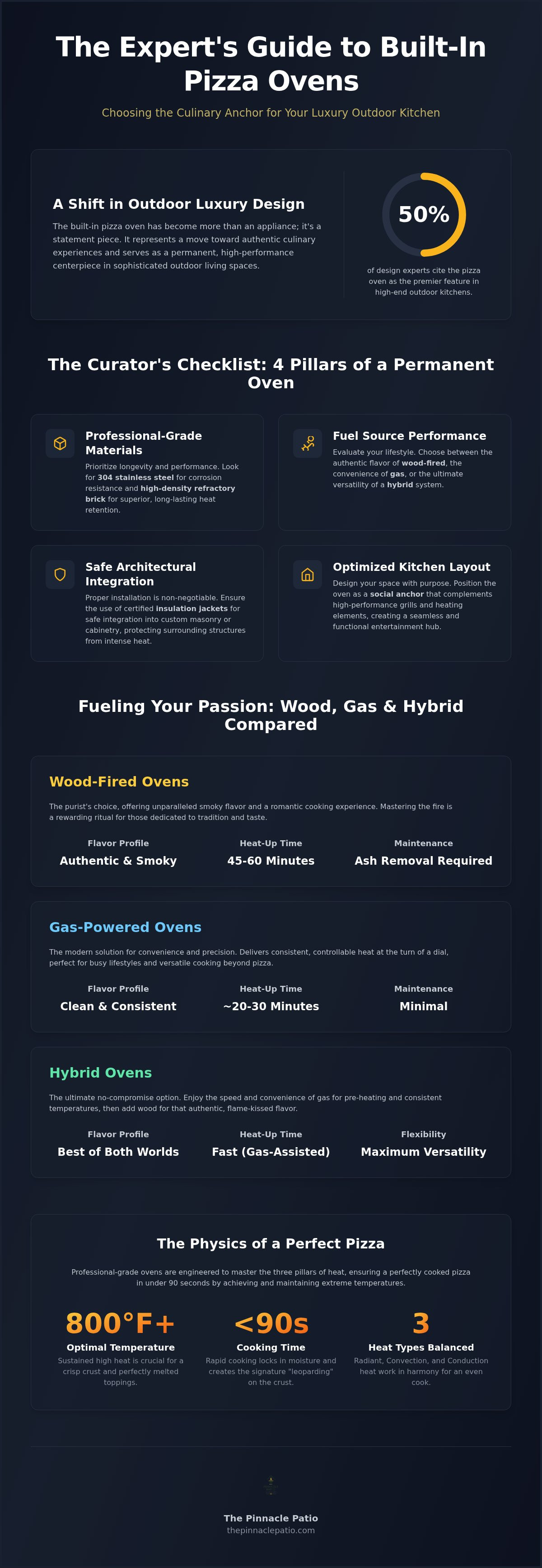
Did you know that 50% of design experts now cite the pizza oven as the premier feature for high-end outdoor kitchens? It's a shift that reflects a deeper desire for authentic, tactile experiences that go far beyond a simple weekend barbecue. You've likely felt the pull toward creating a space that feels both permanent and purposeful. A well-placed built-in pizza oven isn't just an appliance; it's a curated centerpiece designed for those who value the intersection of professional performance and sophisticated home design.
We understand that choosing the right foundation for your culinary vision involves more than just aesthetics. You might feel uncertain about whether wood or gas offers the best performance for your lifestyle, or perhaps you're concerned about how a heavy masonry installation will integrate with your existing architecture. This guide is designed to provide clarity. You'll discover how a built-in pizza oven transforms a standard patio into a high-performance culinary destination through expert design and premium engineering. We'll walk through the essential elements of heat retention, material longevity, and seamless integration. By focusing on the craftsmanship found in elite brands like Bull and AOG, we'll help you build a space that serves your family for decades.
Key Takeaways
- Learn why professional-grade materials like 304 stainless steel and high-density refractory brick are essential for superior heat retention and equipment longevity.
- Evaluate the performance differences between wood-fired, gas, and hybrid fuel sources to determine which best suits your desired flavor profile and lifestyle.
- Understand the critical engineering requirements for a built-in pizza oven, including the use of insulation jackets for safe integration into custom masonry or cabinetry.
- Discover how to optimize your outdoor kitchen layout by positioning your oven as a social anchor that seamlessly complements high-performance grills and luxury heating.
Understanding the Allure of the Built-In Pizza Oven
A built-in pizza oven is far more than a simple cooking device; it's a permanent architectural commitment that defines the character of a luxury patio. Unlike portable units that can be moved or stored away, these ovens are engineered as high-thermal-mass appliances designed to hold intense heat for hours. They serve as a foundational element of the outdoor space, much like a grand fireplace or a custom pool. Understanding the history and types of pizza ovens reveals that while the core principles of masonry cooking remain timeless, modern engineering has refined them for the contemporary home.
Distinguishing between residential-grade and professional-grade built-ins is essential for the discerning homeowner. Professional models, such as those curated from brands like Bull or AOG, utilize superior insulation and heavy-duty refractory materials that mimic the performance of a high-end trattoria. Residential-grade options might look the part, but they often lack the density required to maintain the consistent 800-degree temperatures necessary for a true Neapolitan crust. In 2026, the trend has shifted decisively toward these permanent, professional-grade anchors as homeowners move away from modular, temporary solutions in favor of lasting quality.
The Culinary Advantage of Permanent Installations
The primary benefit of a permanent installation lies in its physics. High-performance refractory brick and dense ceramic fibers create a heat reservoir that a thin-walled modular unit simply cannot match. This consistent thermal environment allows you to expand your repertoire far beyond pizza. You can roast whole chickens, bake sourdough bread with a perfect ear, or slow-cook vegetables in the residual heat long after the fire has dimmed. Because these units are integrated into the structure of your outdoor kitchen, they often feature larger internal cooking diameters, allowing you to manage multiple dishes with ease.
Investment Value and Property Esthetic
Choosing a permanent culinary anchor is a strategic decision for those looking to build a legacy home. A built-in pizza oven increases the perceived value of your property by creating a cohesive, high-end finish that temporary appliances lack. It allows for a seamless blend with premium materials like natural stone, reclaimed brick, or sleek 304 stainless steel. When you integrate a built-in pizza oven into a custom island, you aren't just buying an appliance; you're investing in a durable piece of functional art that will serve your family for decades. This sense of permanence creates a "quiet luxury" atmosphere, where the equipment is as much a part of the landscape as the garden itself.
Fueling Your Passion: Wood-Fired, Gas, and Hybrid Mechanisms
Choosing the energy source for your built-in pizza oven is a decision that balances culinary tradition with modern lifestyle demands. To understand the performance of these machines, one must look at the three pillars of heat: conduction, convection, and radiant energy. Conduction occurs through the floor of the oven, where the pizza dough makes direct contact with the stone. Radiant heat reflects from the curved dome, while convection is the movement of hot air that circulates over the toppings. Professional-grade units are engineered to balance these three forces, ensuring that a pizza cooks evenly in under 90 seconds.
While the physics remain the same, the fuel choice dictates your daily experience. Wood-fired ovens offer a romantic, smoky profile that is difficult to replicate. Conversely, gas-powered models provide the precision required for delicate baking or slow roasting. For those who refuse to choose, hybrid models have emerged as the ultimate no-compromise solution. These units allow you to pre-heat quickly with gas and finish with a wood flame for authentic flavor, offering the greatest flexibility for a permanent outdoor kitchen.
The Tradition of Wood-Fired Built-Ins
The heart of a traditional wood-fired built-in pizza oven is its high-density refractory brick. This material is designed to withstand and store temperatures exceeding 800°F, creating a thermal battery that remains hot for hours. Fire management is a ritual; it requires selecting seasoned hardwoods like oak or maple and allowing 45 to 60 minutes for the dome to reach its optimal saturation point. Maintenance is straightforward but essential. You'll need to clear the hearth of ash after each use and ensure the chimney remains free of soot to maintain the drafting required for a clean, rolling flame.
The Convenience of Built-In Gas Ovens
Modern gas ovens prioritize control and rapid response times. Brands like Bull and AOG design their burners to reach high temperatures quickly, often cutting pre-heat times in half compared to wood. High-performance gas ovens typically require between 30,000 and 50,000 BTUs to maintain consistent stone temperatures during heavy use. Integrating these units into a luxury kitchen island involves dedicated Natural Gas or Liquid Propane lines. This setup eliminates the need for wood storage and allows you to adjust the flame height with a simple dial, making it ideal for low-and-slow cooking or quick weeknight dinners.
Whether you prefer the tactile nature of a wood fire or the refined control of a gas burner, your choice should align with how you intend to host. If you're unsure which mechanism best fits your architectural plans, you can schedule a concierge consultation to explore the technical requirements of each fuel type.
Architectural Integration: Built-In vs. Countertop Configurations
Achieving architectural harmony in a luxury patio requires more than simply choosing high-end appliances; it demands a thoughtful approach to how those elements occupy the space. When you move beyond portable units, you're faced with two primary paths for integration: the true built-in and the slide-in configuration. A true built-in pizza oven is typically encased within custom masonry, effectively becoming a permanent part of the home's structure. Slide-in models, however, are designed to fit precisely into specialized cabinetry within a kitchen island. Both options offer a level of visual cohesion that defines a professional outdoor space, especially when you match the oven's finish with your built-in grills for a unified aesthetic.
Engineering for safety is the silent partner of beautiful design. Because these ovens generate immense internal heat, the use of a high-quality insulation jacket is non-negotiable if the unit is placed near combustible materials or within certain cabinet types. Proper airflow and venting are equally critical. Ovens integrated into deep enclosures must have adequate drafting to ensure clean combustion and to prevent heat from building up within the island structure. This focus on premium engineering ensures that your investment remains safe and high-performing for decades.
Designing for Masonry and Stone
Integrating an oven into masonry provides a sense of heritage and permanence. Because heavy refractory ovens can weigh several hundred pounds, they require a reinforced structural base, often consisting of concrete and steel. You can tailor the facade to match your home's character, choosing between a traditional brick arch for a rustic Mediterranean feel or a sleek stainless steel face for a more contemporary look. Many homeowners choose to anchor their entire patio by building the oven into a larger outdoor fireplace or a stone kitchen wall, creating a dramatic focal point that draws guests together.
Cabinet-Mounted Solutions for Outdoor Islands
For those who prefer the streamlined look of a modern kitchen, cabinet-mounted solutions offer exceptional flexibility. Specialized pizza oven cabinets are designed to support the weight and heat of the unit while providing a clean, flush-mount finish. When planning this layout, it's essential to account for "landing zones." These are the adjacent counter spaces where you can safely place hot peels, pans, and prep ingredients. You can find inspiration for these layouts in our outdoor kitchen islands collection, which showcases how to balance social flow with culinary efficiency. This approach allows the oven to sit at a comfortable working height, ensuring the pizzaiolo remains part of the conversation while managing the fire.
The Curator’s Checklist: Selecting Your Permanent Pizza Oven
Selecting a permanent fixture for your outdoor space is an exercise in discerning quality from hype. While many units look impressive on a showroom floor, the true measure of a built-in pizza oven lies in its material composition and thermal engineering. High-end selection begins with a focus on 304 stainless steel. This grade of steel is the gold standard for luxury outdoor appliances; it offers superior resistance to the elements and maintains its polished luster far longer than the thinner, 400-series alloys found in entry-level models. When you choose an oven from established names like Bull or AOG, you're investing in a legacy of craftsmanship that prioritizes these premium materials.
Beyond the exterior, you must evaluate the oven's "recovery time." This technical term refers to how quickly the cooking floor returns to its optimal temperature after a cold pizza dough has absorbed its heat. Cheaper ovens with thin refractory cement floors lose heat rapidly, leading to soggy crusts on subsequent pizzas. Professional-grade built-ins utilize high-density firebricks or thick ceramic stones that act as a thermal battery. These materials store vast amounts of energy, ensuring that your fourth or fifth pizza cooks with the same blistering speed and precision as the first one you launched.
Size and Capacity Considerations
Internal cooking diameter is the most critical metric for your daily experience. A compact oven with a 24-inch floor is intimate and efficient, perfect for a couple who enjoys a single artisanal pie. However, if your vision involves hosting large gatherings or using the oven as a versatile roasting chamber, a larger model is essential. Multi-loaf ovens with 30-inch or 36-inch diameters provide the clearance needed to slide in a cast-iron skillet for a ribeye or a large roasting pan for seasonal vegetables. You should balance this internal capacity with the overall scale of your built-in grilling station to ensure the layout remains proportional and functional.
Essential Features for the Professional Chef
The difference between a hobbyist tool and a professional appliance often comes down to the details of the user interface. Look for ovens with integrated, high-heat thermometers that are easy to read at a glance. Some elite models even offer ports for infrared sensors to measure the stone's surface temperature with pinpoint accuracy. Interior halogen lighting is another hallmark of a well-curated oven; it allows you to monitor the leopard-spotting on your crust during evening events without opening the door and losing precious heat. Finally, consider the door design. A heavy, double-walled door is vital for heat retention during slow-roasting sessions, while a door with a viewing window provides the visual drama of the flame that guests always gravitate toward.
Perfecting Your Patio: Designing Around a Culinary Anchor
The final stage of integrating a built-in pizza oven is designing the living environment that surrounds it. This appliance is more than a utility; it's a visceral social magnet that naturally draws guests toward the warmth of the flame. Positioning the oven for social flow transforms the cooking process into a shared performance, making the 'pizzaiolo' the center of attention rather than a secluded chef. When the oven is placed at the correct height and orientation, it creates a theater of fire and dough that anchors the entire outdoor experience.
A truly sophisticated outdoor kitchen requires a balance of specialized tools. Pairing your oven with high-performance built-in grills from brands like Bull or AOG allows you to manage diverse menus simultaneously. While the oven handles artisanal crusts and slow-roasted meats, the grill manages high-heat searing. To ensure this space remains a sanctuary regardless of the season, consider the addition of Bromic luxury heaters. These units provide discrete, effective climate control that extends your hosting capabilities well into the cooler months, ensuring the patio remains a destination year-round.
Creating the Social Circle
Designing for connection often involves incorporating bar-height seating directly adjacent to the oven workspace. This 'chef’s table' arrangement allows guests to enjoy the aroma of the wood fire while engaging with the cook. Beyond seating, the workspace must be as functional as it is beautiful. Dedicated storage for seasoned hardwoods, specialized peels, and oversized serving boards keeps the area organized and professional. Lighting plays a dual role here; task lighting is essential for safety and precision during evening bakes, while soft, ambient under-counter LEDs highlight the texture of the stone and masonry, enhancing the overall atmosphere of the patio.
The Pinnacle Patio Experience
At The Pinnacle Patio, our role is that of a visionary guide. Our curated selection of pizza ovens is chosen specifically for those who demand professional standards and architectural elegance. We understand that a luxury kitchen is a sum of its parts, often finding its peak when the oven shares a design language with outdoor fireplaces to create a cohesive, high-end sanctuary. Finalizing such a complex vision requires attention to technical detail and aesthetic harmony. We invite you to schedule a consultation with our concierge team to assist in selecting the specific components that will transform your outdoor space into a lasting culinary destination.
Elevate Your Outdoor Culinary Legacy
A permanent outdoor kitchen is more than a collection of high-end appliances; it's a curated environment built for connection and craftsmanship. We've explored how the choice of fuel and high-thermal mass materials define the longevity of your investment. By integrating a built-in pizza oven as a social anchor, you transform a simple patio into a high-performance culinary destination that serves your family for decades.
As an authorized retailer for Bull and AOG, we provide national shipping on all luxury outdoor components to ensure your project receives only the finest equipment. Our team offers dedicated concierge support to help you navigate technical requirements and equipment selection with confidence. We take pride in helping you build a space that values intentionality over trends.
We look forward to helping you bring your vision of a sophisticated outdoor sanctuary to life.
Expert Answers for Your Built-In Pizza Oven Project
Do I need a professional to install a built-in pizza oven?
Professional installation is highly recommended to ensure safety and compliance with local building codes. Because these units involve complex gas line connections or heavy masonry work, an expert ensures the structure can support the weight and maintains the necessary clearance from flammable materials. General safety guidelines suggest a minimum clearance of 10 to 15 feet from any combustible structure for wood-fired models, though manufacturer specifications for insulated units can be as low as 1 inch.
Can a built-in pizza oven be used for things other than pizza?
These ovens are versatile high-thermal-mass appliances that excel at various culinary tasks. You can utilize the intense radiant heat for searing ribeye steaks in cast iron, roasting seasonal vegetables, or baking artisanal sourdough loaves. The consistent environment created by dense refractory materials allows for slow-cooking techniques long after the primary flame has been extinguished, making it a multi-purpose tool for any professional-grade outdoor kitchen.
What is the best material for an outdoor built-in pizza oven?
The premier choice for a built-in pizza oven is a combination of 304 stainless steel and high-density refractory brick. This pairing offers the ultimate balance of aesthetic beauty and functional longevity. Brands like Bull and AOG prioritize these materials because they resist the corrosive effects of the elements while providing the thermal mass required to maintain 800°F temperatures. Inferior materials often crack or lose heat too quickly, compromising the quality of the bake.
How long does a built-in pizza oven take to heat up?
Pre-heating times vary based on the fuel source and the thickness of the internal stones. A high-performance gas oven typically reaches its optimal cooking temperature in 20 to 30 minutes. Traditional wood-fired models require a more deliberate ritual, often taking 45 to 60 minutes to fully saturate the refractory dome with heat. This patience is rewarded with a thermal battery that remains hot enough to cook multiple dishes over several hours.
Do I need a chimney for a gas-powered built-in pizza oven?
Most gas-powered built-in models require a dedicated venting system or a short chimney to safely exhaust heat and combustion byproducts. While they produce less smoke than wood-fired counterparts, they still generate significant thermal energy that must be managed to protect the surrounding structure. It is essential to consult your local planning office or HOA regulations, as venting requirements can vary significantly based on your specific installation site.
Can I install a built-in pizza oven into an existing outdoor island?
Integrating an oven into an existing island is possible, provided the structure is engineered to handle the substantial weight. Many units are designed as slide-in components that fit into specialized cabinetry, but you must ensure the island materials can withstand the heat. If you're building into a structure made of combustible materials, you'll likely need an insulation jacket to ensure the built-in pizza oven operates safely without damaging the cabinetry.
How do I maintain the refractory stone inside my built-in oven?
Refractory stones are largely self-cleaning through the process of high-heat carbonization. By bringing the oven to its maximum temperature, you'll naturally burn off food residue and oils, leaving only a fine ash that can be brushed away once the hearth is cool. You should never use soap, water, or chemical cleaners on the porous cooking surface. These substances can be absorbed into the stone, potentially affecting the flavor of your food or causing the material to crack during the next heat cycle.
What is the difference between a pizza oven and a high-heat grill with a stone?
The distinction lies in the dome engineering and the way heat is reflected. A dedicated pizza oven uses a curved interior to reflect radiant heat back down onto the toppings, ensuring the top and bottom of the dish cook at the same rate. Standard grills primarily provide heat from below, which often leaves toppings undercooked even when the crust is charred. The superior insulation of a built-in unit also allows for much higher, more stable temperatures than any conventional grill can maintain.