

The 2026 Master Guide to Built-In Grills: Selecting the Culinary Heart of Your Outdoor Kitchen
A built-in grill is not merely a cooking appliance; it's a permanent architectural investment in your home’s culinary heritage. You likely recognize that a luxury outdoor kitchen serves as a vital sanctuary for connection and refinement, yet the prospect of navigating cutout dimensions and burner types often feels more like a technical hurdle than a creative journey. It's natural to feel a sense of hesitation when faced with complex specifications or the persistent fear of a premium fixture failing after only a few seasons in the elements.
This guide exists to offer the expert guidance of a sophisticated curator, ensuring you select professional-grade built-in grills that balance high-performance engineering with seamless aesthetic integration. We've done the work of filtering the market to provide you with a clear understanding of which technical requirements matter most for your specific project. By exploring a curated selection of industry leaders like Bull, AOG, and Kokomo, you will gain the confidence to choose a centerpiece that is designed for longevity and built around your unique lifestyle.
Key Takeaways
- Learn why professional-grade built-in grills serve as the permanent architectural anchor of a sophisticated outdoor kitchen, providing far greater longevity and aesthetic harmony than freestanding alternatives.
- Discover how to accurately calculate your "grilling footprint" and determine whether the infrastructure of natural gas or the flexibility of liquid propane best aligns with your lifestyle.
- Gain insight into the specialized engineering of premier brands like Bull, AOG, and Kokomo, ensuring your investment matches your specific performance and durability expectations.
- Understand the critical technical nuances of installation, from mastering precise cutout dimensions to ensuring safety with insulated liners in combustible island structures.
- Explore the transformative power of integrated features like infrared searing burners and rotisserie systems that elevate everyday outdoor meals into extraordinary culinary experiences.
The Built-In Grill: Anchoring Your Outdoor Culinary Sanctuary
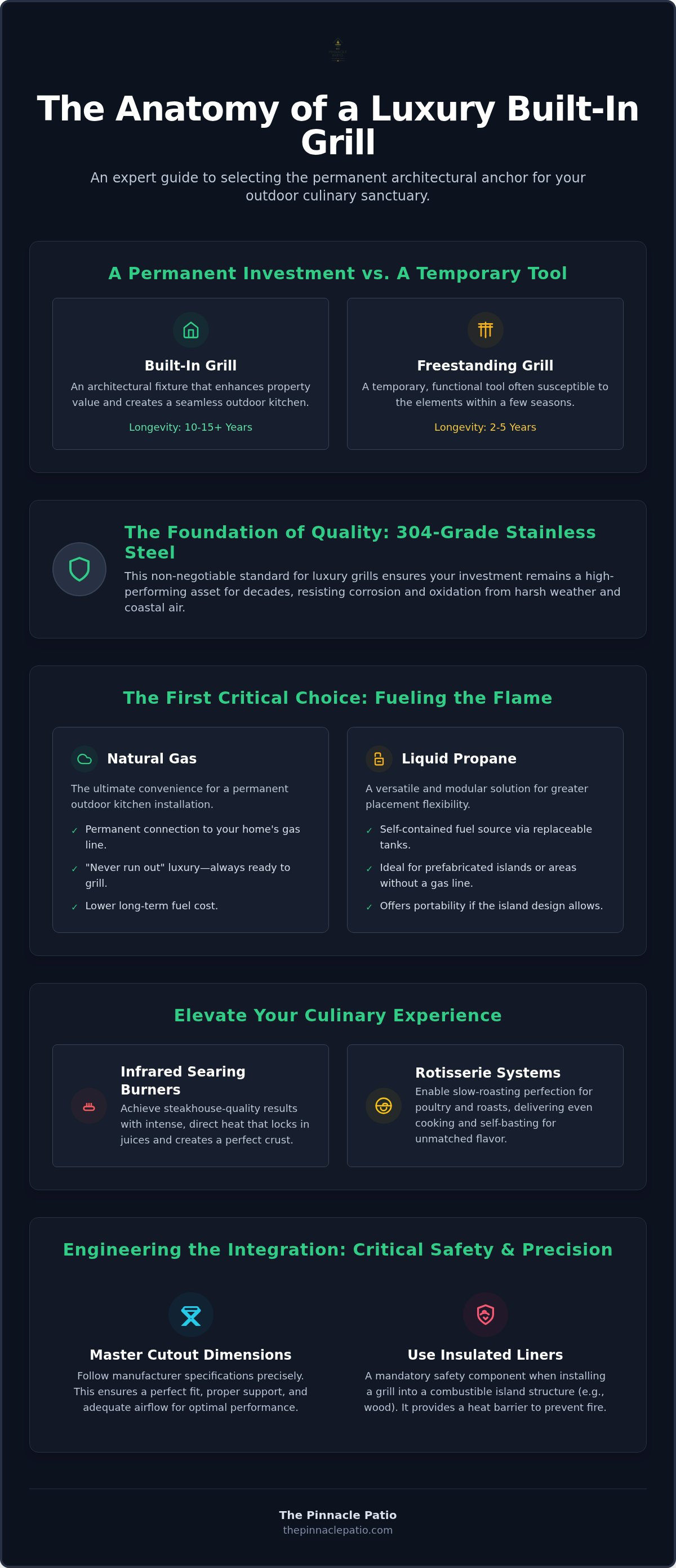
The transition from a simple backyard barbecue to a sophisticated outdoor living space begins with a single, intentional choice. While a freestanding cart grill serves as a functional tool for a season, a built-in unit is a permanent fixture of the home's architecture. It represents a shift from temporary convenience to an enduring lifestyle. In the context of a high-end outdoor kitchen island, the grill acts as both the functional heart and the aesthetic anchor, dictating the flow of conversation and the rhythm of the evening. Understanding the history of the built-in grill reveals how these units evolved from basic masonry pits into the precision-engineered instruments available today.
Professional-grade built-in grills are fundamentally different from the mass-produced options found at big-box retailers. The distinction lies in material integrity and engineering tolerances. A luxury insert is designed to remain a high-performing asset for decades, whereas lower-tier models often rely on thinner metals that succumb to the elements within a few years. Investing in a premier brand doesn't just improve your searing power; it enhances the overall desirability and valuation of your property by creating a seamless, "indoor-quality" kitchen in an al fresco setting.
Performance Meets Permanent Design
Modern luxury patios are built around a philosophy of seamless integration. This means every component must feel like it was born of the space, not simply placed upon it. The non-negotiable standard for this longevity is 304-grade stainless steel. This high-chromium alloy offers superior resistance to oxidation and corrosion, ensuring the chassis remains pristine through coastal salt air or harsh winters. Beyond the chemistry of the steel, the quality is felt in the tactile experience. You can sense the craftsmanship in the weight of the double-lined hood, the smooth resistance of the solid brass control knobs, and the effortless glide of the drip tray. These details transform cooking from a chore into a refined sensory experience.
The Investment in Al Fresco Heritage
Choosing a high-end built-in grill is an exercise in long-term vision. It's a 10 to 15 year asset that provides a reliable return on enjoyment. There is a profound psychological benefit to a dedicated outdoor cooking station; it designates a specific zone for gathering and relaxation, away from the distractions of the indoor world. Within this space, you begin to build what we call "culinary heritage." In the context of outdoor entertaining, culinary heritage is the intentional creation of a legacy through shared meals and time-honored techniques, facilitated by equipment that is built to last for generations. When you select from our curated collection of built-in grills, you aren't just buying a burner; you're securing the centerpiece for a lifetime of memories.
Navigating the Fundamentals: Fuel, Size, and Searing Power
Selecting the right foundation for your outdoor culinary space requires balancing technical infrastructure with your personal entertaining style. While the aesthetic appeal of built-in grills often draws the eye, the true performance of your kitchen resides in the fuel source and the precision of its heat management. It's a choice between the effortless permanence of natural gas and the versatile flexibility of liquid propane, each offering distinct advantages for the modern homeowner.
Fueling the Flame: Natural Gas vs. Propane
Natural gas is the preferred choice for those who value the "never run out" luxury of a permanent connection. By tapping into your home’s existing line, you eliminate the need for tank refills, ensuring your grill is always ready for a spontaneous evening of hosting. Conversely, liquid propane offers a modular solution, making it an excellent fit for prefabricated grill islands where running a permanent gas line may be impractical or cost-prohibitive. Regardless of your choice, safety remains the highest priority. Given that U.S. fire departments respond to an average of 12,141 home fires involving grills annually, strictly adhering to grilling safety guidelines during the installation of gas lines and masonry ventilation is essential for protecting your home and your guests.
Determining the Ideal Grilling Surface Area
Your "grilling footprint" should be designed around your typical guest count and the complexity of your menus. We often categorize these investments into three tiers of engagement to help you find the perfect fit:
- Compact Elegance (24" to 30"): These units are perfectly suited for intimate family meals or compact urban patios where space is at a premium.
- The Entertaining Standard (36"): This is the most versatile size for luxury homes, providing ample space for multi-course meals without overwhelming the island's footprint.
- Professional Grandeur (42"+): Designed for the visionary host, these expansive surfaces allow for simultaneous high-heat searing and low-temperature roasting across multiple zones.
Beyond raw dimensions, consider the "Rule of Three." A superior grill must provide enough surface area to maintain three distinct heat zones: a high-heat direct zone for crust development, a medium-heat indirect zone for thorough cooking, and a dedicated warming area. This versatility is often enhanced by heat zone separators, which prevent temperature bleed between burners. If you're feeling overwhelmed by these technical requirements, you might find that a personalized expert consultation can clarify the best path forward for your specific project.
Performance is frequently misunderstood as a simple calculation of BTUs. While British Thermal Units measure total heat output, they don't account for heat retention or distribution. Professional-grade built-in grills focus on the thickness of the cooking grates and the quality of the ceramic briquettes or flame tamers. These components ensure that heat is held and radiated evenly, preventing the hot and cold spots common in entry-level appliances and ensuring a steakhouse-quality result every time.
A Curated Selection: Comparing Bull, AOG, and Kokomo Grills
At The Pinnacle Patio, we don't simply stock appliances; we curate a collection of high-performance instruments designed for those who view outdoor cooking as a refined art. We select brands like Bull, AOG, and Kokomo because they offer a superior "Culinary ROI." This means your investment transcends the initial purchase, providing decades of reliable performance, aesthetic beauty, and enhanced property value. These built-in grills are the result of rigorous engineering, ensuring that your sanctuary remains functional and inviting for years to come.
Bull Grills: The Professional Standard
Bull Grills represent a masterclass in heat consistency. Their proprietary ReliaBULL technology was engineered to eliminate the hot and cold spots that plague lesser machines, ensuring that every square inch of the cooking surface performs with identical precision. Models like the Lonestar Select and the Angus are favored by those who demand professional-grade durability. The Bull Angus rotisserie system is a culinary game-changer that allows for effortless slow-roasting while you focus on your guests. Peace of mind is woven into the purchase, as Bull offers a Lifetime Warranty on their burners and fireboxes, signaling a commitment to permanence that matches our own philosophy.
Kokomo Grills: Precision Engineering
Kokomo Grills bridge the gap between high-performance features and attainable luxury. Their Professional Series is built around heavy-duty sear zones that reach the intense temperatures required for steakhouse-quality results. Beyond the mechanics, Kokomo understands the importance of atmosphere. Their signature LED control knob lighting provides a soft, sophisticated glow that facilitates evening gatherings and adds a modern touch to your space. These units are designed to integrate flawlessly with Kokomo outdoor kitchens, creating a unified, intentional look that feels established rather than assembled.
AOG Grills: Timeless Design for Modern Chefs
American Outdoor Grill, or AOG, is the choice for the minimalist designer who values reliable simplicity. Whether you choose the "T" Series with its rapid light piezo ignition or the "L" Series, you're investing in a flush-mounted look that disappears into the masonry of your island. This clean aesthetic is supported by rugged internals, specifically their 304 stainless steel vaporizers that distribute heat while protecting the burners from drippings. When planning your layout, it's wise to review Consumer Product Safety Commission tips to ensure your placement respects both local codes and optimal airflow. These built-in grills prove that sophisticated design doesn't have to be loud to be effective.
Engineering the Integration: Cutouts, Ventilation, and Safety
The transition from selecting a premier brand to executing a flawless installation is where vision meets technical precision. While the aesthetic of built-in grills defines the space, the engineering behind the integration ensures both safety and permanence. A successful project requires more than a rough estimate; it demands an understanding of the relationship between the appliance and the structure that supports it. This phase of the project is about protecting your investment and ensuring the sanctuary you've built remains a place of relaxed enjoyment.
Precision Cutout Dimensions
We advocate for the "Measure Twice" rule, but with a specific caveat: don't make your final cut until the grill is physically on-site. While manufacturer specifications provide a reliable "rough-in" guide, minor variations in masonry or countertop thickness can impact the final fit. It's essential to distinguish between the cutout dimensions, which represent the opening in your island, and the flange width, which is the decorative lip that rests on the surface. Designing for rear hood clearance is another frequent oversight. Many high-end hoods require several inches of space to swing fully open, meaning your backsplash or rear wall must be positioned with this arc in mind. A well-designed support ledge within the island provides the structural integrity needed for a seamless, professional drop-in look.
The Necessity of Proper Ventilation
Airflow is not a design preference; it's a non-negotiable safety requirement. Without proper cross-ventilation, gas can accumulate within the island cavity, creating a significant hazard. For liquid propane, which is heavier than air, vents must be placed low in the structure to allow gas to escape. Natural gas requires vents placed higher up. Beyond safety, proper airflow extends the life of your grill’s internal components by regulating ambient temperatures and preventing the corrosive effects of trapped moisture. Many of our curated brands offer custom vent covers that match the stainless steel finish of their built-in grills, ensuring that essential safety features don't compromise your aesthetic vision.
The material of your island dictates the complexity of the installation process. If you're building a combustible structure, such as a wood-framed island, an insulated liner is a mandatory requirement to prevent heat transfer to the frame. These liners act as a protective barrier, shielding the island from the intense heat generated during high-temperature searing. Finally, ensure your layout includes strategic access doors or drawers. These aren't just for storage; they provide the necessary access to gas shut-off valves and electrical connections required for modern ignition systems and LED lighting.
Beyond the Burners: Elevating Your Outdoor Kitchen Experience
The most successful outdoor kitchens aren't merely places to cook; they're environments designed for the elevation of everyday moments into something extraordinary. While your choice of built-in grills provides the functional foundation, the true artistry of al fresco dining emerges through the integration of specialized features. Infrared searing burners allow you to achieve steakhouse-quality crusts by reaching temperatures in excess of 1000 degrees within seconds. This intense heat caramelizes the exterior of the meat while preserving the delicate juices inside, a feat difficult to replicate with traditional burners alone.
Equally essential for the visionary chef is the art of rotisserie. An integrated back-burner provides the steady, indirect heat required for slow-roasting poultry or prime rib to perfection. This hands-off technique allows you to remain present with your guests, letting the machine do the heavy lifting while you curate the atmosphere. To ensure this atmosphere remains inviting long after the sun sets or the seasons shift, consider integrating Bromic luxury heaters near your cooking and dining stations. These whisper-quiet systems provide a gentle, radiant warmth that extends your entertaining window deep into the cooler months.
Essential Built-In Accessories
A complete culinary sanctuary requires a supporting cast of accessories that keep the entire meal outdoors. Side burners and high-output power burners are indispensable for simmering sauces or boiling pasta without the need to retreat to the indoor kitchen. For the ultimate in convenience, outdoor-rated refrigeration ensures that cold beverages and fresh ingredients are always within reach. We also see a beautiful synergy between built-in pizza ovens and high-end gas grills. Together, they create a multi-functional kitchen capable of handling everything from artisan flatbreads to complex roasts.
Before your first gathering, ensure you have a Day One readiness kit. This should include a custom-fit weather cover to protect your investment, a high-quality stainless steel cleaning kit, and long-handled professional tools. These small additions ensure your space remains as pristine and functional as the day it was installed.
Expert Guidance for Your Pinnacle Project
Investing in a luxury outdoor space is a journey that benefits from a knowledgeable partner. When you schedule a consultation with our specialists, you aren't just talking to a salesperson; you're engaging with a visionary guide who understands the nuances of social gathering and outdoor aesthetics. Choosing a curated boutique like The Pinnacle Patio ensures that every piece in your kitchen has been filtered for quality, craftsmanship, and longevity. We invite you to explore the Curated Built-In Grill Collection and begin the process of anchoring your own culinary heritage with equipment that is built to last for generations.
Crafting Your Culinary Legacy
Selecting the right centerpiece for your outdoor sanctuary is about more than matching technical specifications; it's about investing in a legacy of shared connection and culinary refinement. You've now gained the insight necessary to distinguish between temporary appliances and the permanent architectural fixtures that define a luxury home. By prioritizing professional-grade construction and mastering the technical nuances of integration, you ensure your space remains a high-performing asset for decades.
As a trusted authorized dealer for Kokomo, Bull, and AOG, we're dedicated to providing the expert guidance needed to navigate these decisions with absolute confidence. Whether you're drawn to the precision of ReliaBULL technology or the minimalist elegance of AOG, our curated collection of built-in grills represents the pinnacle of modern outdoor engineering. We provide national shipping on all professional-grade components and offer the personalized support required to bring your visionary project to life.
We look forward to helping you anchor your outdoor kitchen with a centerpiece that is truly designed for longevity and built around your unique lifestyle.
Frequently Asked Questions
What is the difference between 304 and 430 stainless steel in built-in grills?
304 stainless steel is the superior standard for luxury built-in grills due to its high chromium and nickel content. This specific alloy provides exceptional resistance to rust and corrosion, ensuring your investment survives the elements year after year. In contrast, 430 stainless steel is a lower-grade, magnetic metal that is far more prone to oxidation. For a permanent outdoor kitchen, 304-grade steel is essential for maintaining both structural integrity and a pristine aesthetic finish.
Do I need an insulated grill jacket for my built-in BBQ?
You must use an insulated grill jacket if you're installing your grill into a combustible island structure, such as one made of wood or composite materials. This specialized liner acts as a vital thermal barrier, preventing the intense heat of the firebox from reaching the flammable frame. If your island is constructed from non-combustible materials like stone or masonry, a jacket is typically not required. Always verify the specific safety requirements provided by your manufacturer to ensure a secure installation.
Can I convert a propane built-in grill to natural gas later?
Most professional-grade grills can be converted between fuel types, but the process requires a specific conversion kit from the original manufacturer. This isn't a simple adjustment; it involves replacing orifices and occasionally the regulator to match the new fuel's pressure. It's a technical task that requires precision. We strongly advise that any fuel conversion be performed by a licensed gas professional to maintain your warranty and ensure the safety of your outdoor sanctuary.
How much ventilation does an outdoor kitchen island require for safety?
A safe outdoor kitchen island requires a minimum of two vent panels to facilitate proper cross-ventilation. For liquid propane setups, these vents should be placed low in the structure because propane is heavier than air and sinks. Natural gas installations require vents placed higher up to allow rising gas to escape. These panels should ideally provide at least 20 square inches of venting per side to prevent gas accumulation and protect the internal components of your cabinetry.
What are the standard cutout dimensions for a 30-inch built-in grill?
There is no single universal cutout dimension for a 30-inch grill, as each brand utilizes its own unique chassis design. While the name refers to the approximate width of the unit, the actual cutout might range from 28.5 to 31 inches depending on the specific model. It's critical to consult the exact specification sheet for your chosen brand before making any permanent cuts. We often suggest having the physical unit on-site to verify measurements before the final installation begins.
Why are BTUs not the only measure of a high-performance grill?
BTUs measure raw energy output, but professional-grade built-in grills focus on heat retention and even distribution. A grill with a lower BTU count but heavy-duty 304 stainless steel grates and ceramic briquettes will often outperform a high-BTU unit made of thin materials. True performance is found in the grill's ability to maintain a consistent temperature across the entire cooking surface. This prevents the hot and cold spots that can compromise a refined culinary experience.
How do I protect my built-in grill from the elements when not in use?
The most effective protection is the consistent use of a high-quality, vinyl-lined weather cover designed specifically for your grill model. Beyond covering, we recommend a semi-annual deep clean and the application of a stainless steel polish to maintain the metal's protective layer. If you live in a coastal area, more frequent rinsing with fresh water is necessary to remove salt deposits. These simple steps ensure your equipment remains as beautiful and functional as the day it was installed.
Can I install a built-in grill into a wooden outdoor kitchen island?
Yes, you can install a grill into a wooden island, provided you utilize a mandatory insulated liner to shield the wood from the grill's heat. Without this liner, the radiant heat from the firebox will eventually dry out the wood, creating a severe fire hazard over time. When designing a wooden island, ensure your layout also accounts for proper ventilation and safe clearance from the rear hood. This prevents heat damage to any nearby wooden backsplashes or overhead structures.