

The Best Way to Cook Pizza on a Grill: A Step-by-Step Guide
High heat alone won’t guarantee a crisp, evenly cooked pizza. The best way to cook pizza on a grill is to control where the heat lands, so the base can brown without scorching before the cheese melts. Because a grill heats strongly from below, placing dough over an active burner or flame can darken the crust while the toppings are still underdone.
If dough has stuck to the grates, torn during a turn, or come off the grill with a soggy center, a deliberate setup and sequence can help. This guide covers preparing the grill, choosing between direct and indirect heat, and cooking pizza so the crust crisps while the toppings finish. You’ll also learn when a preheated stone can help, how to use the grill and tools you have, and what to adjust if the base browns too quickly or the top needs more time.
Key Takeaways
- The best way to cook pizza on a grill is to manage heat at the cooking surface, rather than simply turning the grill higher.
- Clean grates, workable dough, and a modest amount of toppings make transferring and cooking pizza easier to manage.
- A deliberate sequence for shaping, transferring, topping, and checking the dough helps reduce sticking and tearing.
- If the crust browns before the toppings are done, adjust the heat setup instead of assuming a hotter grill will help.
- Cooking directly on the grates and using a suitable pizza stone are both options. Choose the setup that fits your grill and cooking habits.
Why the Best Way to Cook Pizza on a Grill Starts with Heat Control
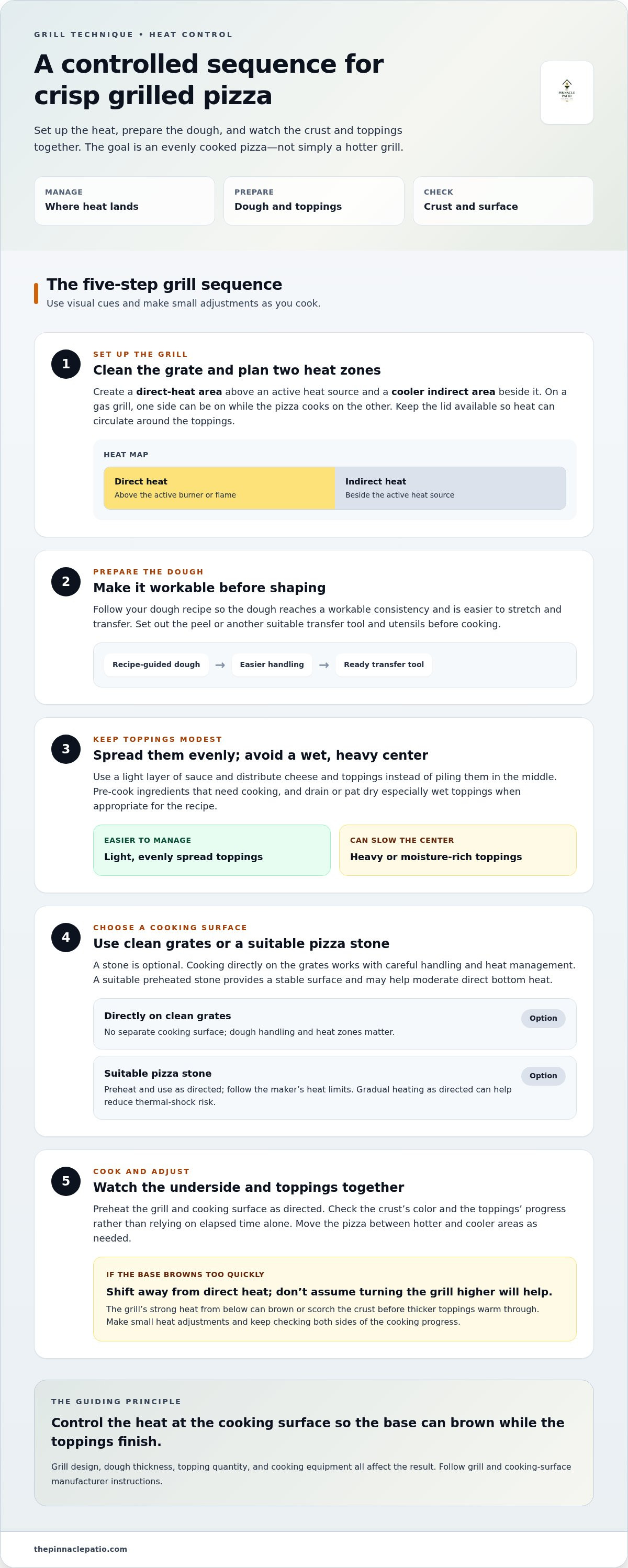
The best way to cook pizza on a grill starts before the dough goes on: prepare the cooking surface and decide where the heat will come from. A grill directs strong heat upward from below, so dough placed over an active burner or flame can brown or scorch before thicker toppings have time to warm through. Turning the grill higher can make that imbalance worse.
Think in zones. Direct heat is the area above an active heat source. Indirect heat is a cooler area beside it, where food cooks from heat circulating inside the covered grill rather than sitting directly over the flame. On a gas grill, for example, you can leave one side on and place the pizza on the other side, moving it as needed while the crust and toppings cook.
Grilling differs from indoor baking because heat comes strongly from below while the covered chamber holds heat around the pizza. Watch the crust’s color and the toppings’ progress instead of relying on elapsed time alone. Grill design, dough thickness, topping quantity, and cooking equipment all affect the result, so use visual cues and make small adjustments. A thinner base and a lighter layer of toppings are generally easier to manage outdoors.
What makes grilling pizza different from baking it indoors?
An indoor oven surrounds the pizza with heat, while a grill can expose its underside to intense heat before the top is ready. That makes placement and monitoring especially important. A covered grill helps heat circulate around the toppings, but you still need to check the base. For background on grilled pizza as a variation, see Wikipedia’s overview of pizza.
Keep toppings light, especially ingredients that release moisture, and don’t assume every pizza will cook at the same pace. A thicker dough or heavily topped center may need a different heat arrangement or more time than a thin, lightly topped pizza. Stay nearby and check both the underside and the surface as it cooks.
Is a pizza stone necessary for grilled pizza?
No. A suitable pizza stone can provide a stable surface and help moderate the grill’s direct bottom heat, which may make cooking easier to manage. It’s an option, not a requirement. Follow the stone manufacturer’s instructions, including any heat limits, and preheat the surface as directed.
You can also cook directly on clean grill grates with careful heat management. This avoids adding a separate cooking surface, but the dough needs attentive handling and the grill’s heat zones matter. Whichever method you choose, follow the cooking surface manufacturer’s guidance and don’t exceed its stated limits.
Prepare the Grill, Dough, and Toppings for Evenly Cooked Pizza
Preparation makes it easier to transfer the pizza cleanly and respond to the grill without rushing. Before lighting the grill, set out the dough, toppings, peel or other suitable transfer tool, and any utensils you’ll need. Keep toppings modest and spread them evenly. A heavy layer in the center can trap moisture and make the middle harder to cook through.
How should you prepare dough and toppings before grilling?
Follow your dough recipe for bringing it to a workable consistency before stretching or shaping. Dough that’s easy to handle is less likely to tear during transfer. Use a light layer of sauce, then distribute the cheese and toppings rather than piling them in the middle. Pre-cook ingredients that need cooking before they go on the pizza, and drain or pat dry especially wet toppings when appropriate for the recipe.
Have everything within reach before the dough meets the heat. A peel or suitable transfer tool, prepared toppings, and utensils close at hand help you work smoothly while the grill is open. King Arthur Baking’s Grilled Pizza Recipe offers a reference for preparing dough and using different grill setups.
How do you set up a grill for pizza?
Start with a clean cooking grate, then arrange the grill so you can move the pizza between a hotter area and a cooler finishing area. This gives you a way to respond if the underside browns faster than the toppings. A planned heat setup matters more than turning every burner to high. If you’re considering a dedicated outdoor cooking space, explore the built-in grill collection to see options for shaping the grill area around how you cook.
- Clean the grate before cooking, and set your transfer tool within reach.
- Prepare the dough according to its recipe so it stretches without undue effort.
- Portion toppings lightly and distribute them evenly to avoid a wet, weighted center.
- Set up heat zones before placing the pizza on the grill.
- Keep the lid available to retain surrounding heat, opening it briefly to check progress.
If you’re using a pizza stone, follow the manufacturer’s instructions for placement and preheating. Heating it gradually as directed can help reduce the risk of thermal shock, while respecting the stated heat limits protects the cooking surface. Grill designs and configurations vary, so follow the grill maker’s guidance as well. For help thinking through equipment sizing or a built-in grill configuration for an outdoor cooking area, you can schedule a consultation.
How to Cook Pizza on a Grill: A Step-by-Step Method
The best way to cook pizza on a grill is a steady sequence: preheat, transfer carefully, then watch the base and toppings together. Use your recipe and the grill or cooking-surface manufacturer’s instructions as guides, since grill designs, dough, and equipment vary. The steps below focus on cues that help you adjust as you cook.
- Step 1: Preheat the grill and cooking surface. Set up the heat zones you plan to use. Preheat a stone or other surface as directed by its manufacturer and your recipe so the dough starts on a ready surface.
- Step 2: Shape and top the dough. Stretch the dough to your preferred shape, then add a light layer of sauce and distribute cheese and toppings evenly. A modest amount is easier to cook through and less likely to weigh down the center.
- Step 3: Transfer the pizza carefully. Use a peel or suitable transfer tool to move the topped dough onto the grill or preheated cooking surface. Guide it into place rather than pulling or stretching it, which can distort the base or cause a tear.
- Step 4: Close the lid and let the heat work. Keep the lid closed while the pizza cooks, when appropriate for your grill and recipe. The covered chamber helps heat reach the toppings. Check briefly rather than leaving the lid open, which lets heat escape.
- Step 5: Inspect and adjust. Use a peel or suitable tool to lift an edge and check the underside. If it’s browning before the cheese melts and the toppings heat through, move the pizza to a cooler zone and close the lid again.
- Step 6: Remove when both base and top are ready. Look for a browned underside and a set crust, then check that the cheese has melted and the toppings are heated through. Follow recipe guidance, but don’t rely on a timer alone.
- Step 7: Rest, then slice. Transfer the pizza to a heat-safe surface and let it rest briefly before cutting with a suitable tool. This makes it easier to serve without disturbing the hot toppings.
For another practical example, The Washington Post’s Grilled Pizza With Pesto, Corn, Tomatoes and Cheddar pairs a specific topping combination with grilled-pizza instructions. Use your recipe’s directions alongside the visual cues above: the underside should be browned, the crust set, and the toppings ready to serve.
Fix Burnt Crust, Soggy Centers, and Other Grilled-Pizza Problems
Grilled-pizza problems usually point to an imbalance between the heat at the base and the time the toppings need. A hotter grill isn’t always the answer to an undercooked top. More direct heat may darken the crust faster; adjusting the heat zone, topping load, or cooking surface is often a better first move. Results vary with the grill, dough, and equipment, so follow the manufacturer’s instructions and make gradual adjustments.
| What you notice | Possible cause | What to adjust |
|---|---|---|
| Crust burns before toppings finish | Too much direct heat, prolonged exposure, or a surface that heats differently than expected. | Move the pizza to a cooler zone and, if appropriate for your grill and recipe, close the lid to finish the top. Check the cooking surface’s guidance. |
| Soggy or undercooked center | Excess sauce, wet toppings, or a thick layer of ingredients. | Use less sauce, simplify the toppings, and distribute them evenly. Follow your recipe for preparing ingredients that release moisture. |
| Dough sticks to the grate | The grate may be unclean, or the dough may not yet release easily from the cooking surface. | Keep the grate clean and check the base before trying to move the pizza. Use a transfer approach suited to direct-grate cooking. |
| Pizza tears or stretches during transfer | The dough may be difficult to handle, or the transfer tool may not support it evenly. | Shape the dough carefully and use a suitable peel or transfer tool. Move it steadily without pulling or stretching. |
| Top browns unevenly | Heat may not be circulating evenly, or toppings may be concentrated in one area. | Redistribute toppings next time and briefly reposition the pizza if needed. Keep lid checks short to retain heat. |
Why does grilled pizza burn underneath before the toppings cook?
Direct heat can brown the base quickly, especially if the pizza stays over the hot zone while thick or heavily layered toppings need more time. A cooking surface that wasn’t preheated as the recipe or manufacturer directs may also behave differently than expected. Move the pizza to a cooler area, then finish with the lid closed when appropriate. Avoid increasing the heat as your first response.
How do you prevent a soggy or stuck grilled-pizza base?
Too much sauce and moist toppings can leave the center wet; difficult dough transfer can also lead to sticking or tears. Use a lighter layer of toppings and a transfer method suited to your setup. Before moving or turning the pizza, check whether the base has set and releases readily. If using a stone or other cooking surface, follow its care and heat instructions.
For guidance on grill sizing and configuration for your outdoor cooking plans, schedule a consultation.
Choose the Right Grill Setup for the Pizza You Want to Make
The best setup depends on how often you make pizza, how much you enjoy managing heat as you cook, and what else you want your outdoor cooking area to do. Grilling on the grate uses equipment you may already own. A suitable pizza stone provides a separate cooking surface, while a dedicated pizza oven is an appliance designed around pizza cooking.
Should you cook pizza on a grill grate or a pizza stone?
Neither method is universally best. Direct-grate cooking suits cooks comfortable handling dough and monitoring the base closely. It keeps the setup simple, but the dough sits close to the grill’s heat, so placement and timing need attention.
A compatible stone creates a stable cooking surface and can help moderate direct heat. It also adds a preheating step, and you must use the stone according to its manufacturer’s instructions. Grates and stones behave differently, so choose the method that fits your equipment and cooking preferences.
| Setup | What it offers | Best suited to |
|---|---|---|
| Grill grate | Direct contact with the grill surface, with heat managed through placement and grill zones. | Those who want to use their existing grill and are comfortable watching the dough closely. |
| Suitable pizza stone | A stable surface that can help moderate direct heat, with preheating and handling guided by the maker. | Those who prefer a dedicated cooking surface and are prepared to follow its care instructions. |
| Pizza oven | A dedicated appliance for outdoor pizza cooking, distinct from adapting a grill. | Homeowners who make pizza often or are planning a purpose-designed outdoor cooking area. |
When does a dedicated pizza oven make sense?
If pizza is a regular part of your outdoor cooking, a dedicated oven may fit your routine better than adapting the grill each time. A grill remains a practical choice for occasional pizza and for homeowners who value one versatile cooking surface. Consider how the appliance fits into your broader outdoor kitchen plans, not simply which method can cook a pizza.
Explore the outdoor pizza oven collection to consider a dedicated appliance, or read our built-in pizza oven guide for more equipment guidance.
Make Your Next Grilled Pizza a Success
The best way to cook pizza on a grill is to manage heat before the dough goes on, then follow the crust and toppings instead of relying on a timer alone. A clean, prepared setup, a modest layer of toppings, and a cooler zone for finishing can help when the base cooks faster than the top. Choose direct-grate cooking or a suitable stone based on your grill, tools, and how often you make pizza.
If you’re planning a more complete outdoor cooking space, The Pinnacle Patio offers premium built-in grills, outdoor pizza ovens, and custom outdoor kitchen islands. Schedule a consultation to discuss how equipment and configuration can fit the way you cook outdoors.
With practice and thoughtful heat control, you can bring crisp, well-topped pizza to the table and make outdoor cooking a pleasure to share.
Frequently Asked Questions
Can you cook pizza directly on a grill grate?
Yes, you can cook pizza directly on a grill grate if the dough is manageable and you can control the heat. Clean the grate, transfer the dough carefully, and check the underside before it becomes too dark. Start with a light layer of toppings while you learn how your grill cooks. A suitable pizza stone is another option, but follow its manufacturer’s instructions and heat limits.
Do you need a pizza stone to cook pizza on a grill?
No, a pizza stone is optional. Direct-grate cooking can work with careful heat management and a controlled transfer. A stone provides a different, more stable cooking surface, but it must be suitable for your grill and preheated according to its maker’s guidance. Choose the method that suits your equipment, recipe, and comfort level, rather than assuming one setup is right for every grill or pizza.
Should you grill pizza with the lid open or closed?
For many methods, close the lid while the pizza cooks so heat circulating inside the grill can help cook the top as the base browns. Open it briefly to check progress, then close it again rather than leaving it open throughout. Your recipe, grill, and toppings can affect the approach. If the underside browns before the top is ready, move the pizza to a cooler area and continue monitoring.
How long does pizza take to cook on a grill?
There isn’t one dependable cooking time for every grilled pizza. Dough thickness, topping quantity, grill setup, and cooking surface all affect how quickly it cooks. Use your recipe as a guide, but start checking early. Look for a browned underside, a set crust, melted cheese, and heated toppings. Keep lid-open checks brief and stay attentive, especially when cooking directly over a heat source.
Why does pizza burn on the bottom on a grill?
The underside may be getting too much direct heat or spending too long over the hottest area. If it browns before the top is ready, move the pizza to a cooler zone rather than turning up the grill. Thick or heavily layered toppings may also need longer to heat through, so use a lighter layer. Grill heat can vary across the grate, so check the pizza and follow equipment instructions.
Can you cook frozen pizza on a grill?
It depends on the frozen pizza’s package directions and whether they indicate grilling is suitable. Don’t assume it can go directly onto every grill or cooking surface. Follow the product instructions and the grill or surface manufacturer’s guidance, then monitor the crust and toppings as it cooks. If the package doesn’t describe grilling, use its recommended cooking method instead of improvising with a different surface or heat setup.