

The Definitive 2026 Guide to Selecting a Built-In Grill with Side Burner
What if the secret to a truly professional outdoor kitchen isn't just the primary cooking surface, but the intentional integration of a built-in grill with side burner? Most homeowners invest heavily in a high-end grill only to find themselves running back to the indoor kitchen for every sauce, side dish, or sauté. It's a common frustration that disrupts the flow of an evening and separates the host from their guests. You've likely felt that pull between attending to your culinary craft and staying present with your company. We agree that a luxury patio should never demand such a compromise.
This 2026 guide will show you how to master your outdoor transformation by selecting components that offer professional heat output, lasting durability, and aesthetic harmony. You'll discover how to integrate high-performance features that elevate your cooking station into a seamless, cohesive sanctuary. We'll explore the nuances of spatial planning for your island, compare the craftsmanship of heritage brands like Bull and AOG, and address concerns about stainless steel longevity. By the end, you'll have the expert guidance needed to design an environment built for connection, refinement, and exceptional meals.
Key Takeaways
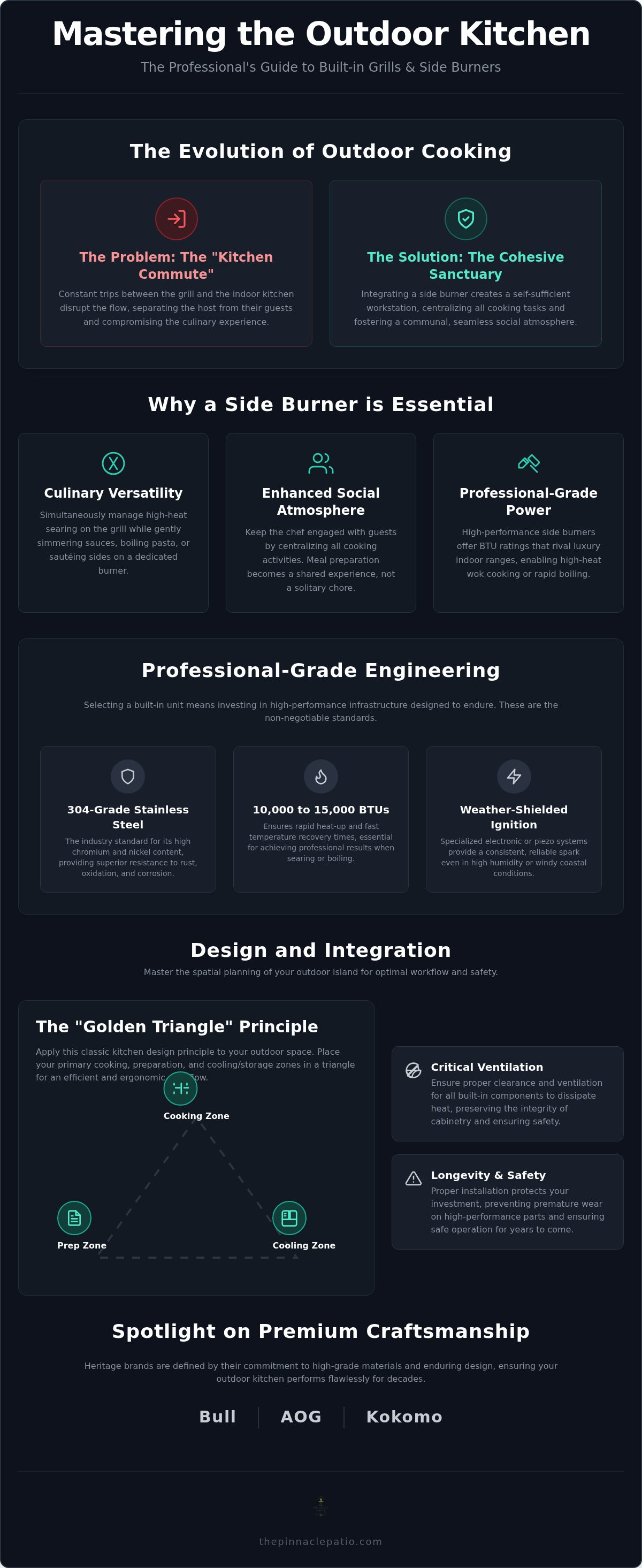
- Understand why a professional-grade auxiliary heat source is essential for eliminating the commute between your indoor kitchen and your outdoor sanctuary.
- Learn how to interpret BTU ratings and burner types to ensure your built-in grill with side burner provides the precision needed for delicate sauces or high-heat searing.
- Gain expert insight into the craftsmanship of premium brands like Bull and AOG, focusing on their use of high-grade materials and enduring design.
- Master the spatial planning of your outdoor island by applying the "Golden Triangle" principle to the placement of your cooking and preparation zones.
- Discover the critical safety and ventilation requirements that preserve the integrity of your cabinetry and the longevity of your high-performance components.
The Evolution of the Outdoor Kitchen: Why a Side Burner Matters
The modern outdoor space has transitioned from a simple grilling station to a sophisticated extension of the home. The history of outdoor cooking shows a steady progression toward complexity; today's discerning homeowner views the patio as a primary culinary stage. Integrating a built-in grill with side burner is the definitive step in this evolution. It transforms the grill from a singular heat source into a multi-functional workstation. While a standard grill excels at protein preparation, it often lacks the delicate temperature control required for complex menu items. A professional side burner provides that auxiliary heat, ensuring every component of the meal is finished simultaneously under the open sky.
Many homeowners settle for basic warming racks, but there's a vast difference between keeping food warm and active sautéing. High-performance side burners from brands like Bull, AOG, or Kokomo offer professional-grade BTUs that rival luxury indoor ranges. This power allows you to expand your repertoire significantly. You're no longer limited to traditional barbecue; you're empowered to prepare reduction sauces, sear scallops, or even manage a high-heat wok station without stepping away from the main event. It's about moving beyond the basics to embrace a more intentional way of cooking that prioritizes both flavor and efficiency.
The Culinary Versatility of Auxiliary Heat
True culinary freedom comes from managing disparate temperatures. You can gently simmer a delicate wine reduction on a low-flame side burner while simultaneously managing a high-heat sear on the main grates. This setup is particularly effective when boiling corn or pasta. It keeps the steam and heavy aromas out of the house, utilizing the specialized power of a dedicated burner rather than taxing your indoor appliances. Using cast-iron skillets or heavy woks becomes second nature when you have a stable, high-output auxiliary flame. It's a professional approach that ensures your sides are just as impressive as your main course.
Enhancing the Social Atmosphere
The side burner's greatest luxury is perhaps the gift of time and presence. It effectively eliminates the "kitchen commute," that disruptive back-and-forth between the patio and the pantry. When you choose a built-in grill with side burner, you centralize every task. This design keeps the chef engaged with guests, turning meal preparation into a communal experience rather than a solitary chore. These components are best realized when integrated into luxury outdoor kitchen islands, where the layout is built around the way you actually live and host. It creates a cohesive sanctuary where the craft of cooking and the joy of connection happen in the same space.
Technical Specifications: Understanding Burner Types and Power
Selecting a built-in grill with side burner requires a shift from culinary vision to technical precision. You aren't merely adding an accessory; you're investing in a piece of high-performance infrastructure designed to endure the environmental demands of 2026. While the primary grill handles the heavy lifting, the technical integrity of your auxiliary heat source determines the overall efficiency of your station. To ensure your investment remains a permanent fixture of your luxury patio, we prioritize specific engineering standards that define professional-grade equipment.
- 304-Grade Stainless Steel: This high-grade alloy is the non-negotiable standard for the modern outdoor kitchen. Its high chromium and nickel content provides essential resistance to oxidation and the corrosive effects of salt air.
- BTU recovery: British Thermal Units measure heat energy. A professional side burner typically ranges from 10,000 to 15,000 BTUs per burner, ensuring fast recovery times when cold ingredients are added to a pan.
- Weather-Shielded Ignition: Luxury models utilize electronic or specialized piezo ignition systems designed to provide a consistent spark even in high humidity or coastal wind conditions.
Single vs. Double Configurations
The configuration you choose should reflect both your hosting frequency and the physical constraints of your island. While a single burner offers a streamlined footprint, a double burner provides the versatility needed for complex, multi-course meals. Consider these spatial and functional differences when planning your layout:
- Single Side Burners: Typically require 12 to 15 linear inches. They are ideal for simmering a signature reduction or sautéing a single side dish while the main proteins rest.
- Double Side Burners: Usually occupy 24 to 30 linear inches. These units allow for simultaneous tasks, such as boiling water for pasta on one grate while managing a delicate garlic butter sauce on the other.
Advanced Heat Technology: Power and Infrared
For the visionary host who requires peak energy output, power burners and infrared technology offer specialized capabilities. Power burners are engineered for high-volume tasks, such as lobster boils or large-scale deep frying, often delivering over 30,000 BTUs. Conversely, infrared side burners utilize intense, direct heat to reach searing temperatures almost instantly. This technology is perfect for achieving a steakhouse-quality crust on proteins before they are moved to the primary grill surface.
Understanding these tools requires a look at BTU density, which is the measure of heat energy delivered per square inch of the cooking surface. This density is the secret to consistent, professional results in an open-air environment. As you master these high-heat tools, following best practices for grilling food safely ensures that your culinary craft remains as healthy as it is flavorful. If you're refining the technical details of your built-in grill with side burner, we invite you to schedule a consultation with our expert design team.
Comparing Premium Brands: Bull, AOG, and Kokomo
Selecting a built-in grill with side burner involves more than comparing spec sheets; it's about identifying a brand whose engineering philosophy aligns with your lifestyle. At The Pinnacle Patio, we curate a selection where brand synergy is paramount. Choosing components from the same manufacturer ensures that the stainless steel finish, knob design, and ignition performance remain consistent across your entire station. This creates a visually cohesive sanctuary that feels intentional. The following table provides a high-level overview of how our primary heritage brands approach outdoor culinary design.
| Brand | Engineering Philosophy | Primary Aesthetic | Signature Advantage |
|---|---|---|---|
| Bull | Industrial Durability | Rugged and Traditional | ReliaBull Heat Technology |
| AOG | Precision Elegance | Sleek and Timeless | Rapid-Start Ignition |
| Kokomo | Modern Versatility | Contemporary and Clean | Seamless Modular Integration |
Bull Grills: Engineering for Longevity
Bull Grills has established a reputation for rugged reliability. Their proprietary ReliaBull technology, which addresses uneven heat distribution, informs the design of their auxiliary burners. These units feature heavy-duty stainless steel grates and reinforced lids that mirror the durability of their primary grills. Because of this structural integrity, Bull components are often the preferred choice for integration into prefabricated BBQ island kits. The seamless fit and matched aesthetics make them a cornerstone for homeowners who value a professional look without the complexity of custom masonry. It's a system built for those who demand performance that lasts for decades.
AOG and Kokomo: Sophisticated Craftsmanship
American Outdoor Grill (AOG) and Kokomo offer distinct paths toward a refined outdoor kitchen. AOG is celebrated for its precision engineering. Their burners feature sleek ignitions and a flame distribution system that provides consistent heat for delicate simmering. It's a choice for the purist who values an understated design that never goes out of style. Kokomo Grills focuses on innovative features and exceptional value for modular islands. Their side burners are designed for aesthetic harmony, often featuring contemporary styling that complements modern patio architecture. While AOG leans toward traditional elegance, Kokomo excels in providing high-performance searing in a modern, streamlined package.
For those seeking bold design statements, Wildfire and Cal Flame offer specialized burner configurations that push the boundaries of modern outdoor kitchens. Wildfire’s black-infused stainless steel accents and Cal Flame’s versatile burner layouts provide options for the host who wants their built-in grill with side burner to serve as a visual centerpiece. Each of these brands brings a unique perspective to the outdoor culinary experience, allowing you to select a partner that reflects your personal taste and performance requirements.
Design and Integration: Planning Your Outdoor Kitchen Island
A successful island layout prioritizes the rhythm of the chef. By positioning your built-in grill with side burner in a way that mirrors professional indoor kitchens, you create an environment where movement feels effortless and intuitive. Designers often refer to the "Golden Triangle," a principle that optimizes the distance between the primary cooking surface, the preparation area or sink, and the auxiliary heat source. In an outdoor setting, this triangle ensures that you aren't crossing paths with guests while carrying heavy cookware. It's about creating a sanctuary where the logistics of the meal never overshadow the joy of the gathering.
Safety and longevity are equally dependent on what happens beneath the countertop. Proper ventilation is a non-negotiable requirement for any built-in installation. Without adequate venting, heat and residual gas can accumulate within the island structure, potentially damaging the internal components or the island's finish. Additionally, gas line planning requires foresight. Managing multiple connections for both the grill and the side burner necessitates a manifold system that ensures consistent pressure to every burner. When selecting luxury countertops like granite or high-performance porcelain, consider the thermal expansion near high-heat zones. A well-planned island accounts for these technical nuances to preserve the beauty of your investment for years to come.
Spatial Flow and Ergonomics
Thoughtful placement of auxiliary heat can prevent common patio accidents. Placing the side burner at the end of a counter run often improves safety by keeping high-heat pots away from high-traffic zones. You must also ensure there is at least 12 to 18 inches of "landing space" immediately adjacent to the burner. This area allows you to set down a hot skillet or a platter of ingredients without searching for a clear spot. For a deeper look at creating an elevated al fresco environment, explore our guide on The Art of the Outdoor Kitchen Island.
Natural Gas vs. Propane Configurations
Your choice of fuel dictates the structural needs of your island. Permanent natural gas lines offer the luxury of never running out of fuel mid-meal, but they require professional plumbing during the initial construction phase. If you prefer the flexibility of liquid propane, your island design must include dedicated tank storage with proper ventilation. Regardless of the fuel source, installing a 304-grade stainless steel access door under your built-in grill with side burner is essential. These doors provide the necessary reach for shut-off valves and maintenance, ensuring that your culinary station remains as functional as it is beautiful.
Curating Your Sanctuary with The Pinnacle Patio
Your vision for a refined outdoor lifestyle deserves a partner that understands the difference between a simple barbecue and a professional culinary destination. We act as a visionary guide, curating a selection of products that prioritize intentionality over trends. While many retailers offer an overwhelming catalog of low-quality options, we focus exclusively on heritage brands that represent the pinnacle of craftsmanship. We've done the hard work of filtering the market, ensuring that every built-in grill with side burner we provide is an investment in a better way of living. It's a commitment to quality that transcends the transaction, focusing instead on the transformative experience of your space.
Expert Guidance and Professional Selection
Choosing the right components for your kitchen requires more than a casual glance at a spec sheet. Our deep expertise in premium brands like Bull, AOG, and Kokomo ensures that your kitchen is built around longevity and professional performance. We focus on the details that matter, such as 304-grade stainless steel construction and consistent heat distribution, to ensure your sanctuary lasts for decades. As a knowledgeable partner, we help you navigate the complexities of island planning. As you integrate a built-in grill with side burner into your design, we provide the expert oversight needed to avoid common spatial planning errors. We invite you to schedule a consultation with our team to receive personalized advice tailored to your specific aesthetic and functional needs.
Completing the Outdoor Experience
A sophisticated patio is a holistic environment where every element works in harmony. Once you've selected your high-performance built-in grills, consider the elements that will complete the atmosphere. Integrating Bromic luxury heaters allows you to maintain a warm, communal invitation even as the seasons shift. These heaters provide the thermal comfort necessary for year-round use, ensuring your investment isn't limited by the weather. You might also explore complementary additions like pizza ovens to round out your culinary destination. These features turn your patio into a versatile stage for connection and refinement. Quality is the true mark of a sophisticated home, and we are here to help you move from vision to execution with confidence.
Mastering Your Outdoor Culinary Sanctuary
Investing in a built-in grill with side burner is more than a technical upgrade; it's a commitment to a refined lifestyle where the art of hosting meets professional performance. By prioritizing 304-grade stainless steel construction and high-BTU output, you ensure your sanctuary remains a centerpiece of your home for decades. We've explored how brand synergy between heritage names like Bull, AOG, and Kokomo creates a cohesive aesthetic, while intentional spatial planning preserves the social flow of your patio. These components work together to eliminate the commute to your indoor kitchen, keeping you present with your guests.
Your journey from a broad vision to a high-performance reality is best navigated with expert guidance. As authorized retailers for the industry's most respected brands, we provide the professional insight needed to curate a space that reflects your personal taste and culinary ambitions. We're ready to help you transform your patio into a permanent destination for connection and refinement through our complimentary design consultations.
We look forward to helping you craft a space where every meal becomes an extraordinary occasion and every gathering feels timeless.
Frequently Asked Questions
Can I add a side burner to an existing outdoor kitchen island?
You can add a side burner to an existing island, provided you have sufficient countertop space and a compatible internal structure. This process involves precise cutting of the island surface and extending your gas plumbing to the new location. Since we don't offer on-site masonry or installation services, we recommend consulting a professional contractor to ensure structural integrity and proper ventilation requirements are met before you purchase your new auxiliary burner.
What is the difference between a side burner and a power burner?
The primary difference lies in heat output and the size of the cooking surface. A standard side burner is designed for simmering sauces or sautéing vegetables with precision. In contrast, a power burner offers significantly higher BTU output and a wider grate. This makes power burners ideal for high-volume tasks like boiling large pots for lobster. Choosing a built-in grill with side burner often depends on your specific culinary priorities.
Do I need a separate gas line for my built-in side burner?
You don't usually need an entirely separate line from your main gas source, but you will require a dedicated connection point. Most professional installations utilize a manifold system that splits the gas flow between your primary grill and the side burner. This ensures both components receive consistent pressure for peak performance. It's essential to have a licensed plumber manage these connections to maintain safety and comply with local building codes.
Are built-in grills with side burners harder to maintain than standalone units?
Maintenance requirements are quite similar, though built-in models often enjoy better protection from the elements within an island structure. Regular cleaning of the 304-grade stainless steel surfaces is necessary to prevent environmental buildup. Because these units are permanent fixtures, you should also periodically inspect the gas connections and burner ports through your island's access doors. This ensures the system remains clear of debris or insect nests throughout the year.
What is the ideal BTU rating for a professional-grade side burner?
A professional-grade side burner typically delivers between 10,000 and 15,000 BTUs per burner for standard culinary tasks. This range provides enough heat for rapid boiling while allowing for the low-flame precision required for delicate reductions. If you frequently cook for large groups or use oversized cookware, look for power burners that exceed 30,000 BTUs. High BTU density ensures your equipment recovers heat quickly when you add cold ingredients to a hot pan.
Should I choose a single or double side burner for my BBQ island?
Your choice depends on your hosting frequency and available counter space. A single burner is a sophisticated solution for compact islands, providing essential auxiliary heat without cluttering the layout. Double burners are the preferred choice for those who host large gatherings, as they allow you to manage two distinct dishes at different temperatures simultaneously. Consider your typical menu complexity to decide if the extra linear inches are a worthwhile investment in your flow.
Is 304 stainless steel necessary for a side burner?
304-grade stainless steel is the non-negotiable standard for any high-end outdoor kitchen component. This high-chromium and high-nickel alloy provides the necessary resistance to corrosion and oxidation in varied climates. Brands like Bull, AOG, and Kokomo utilize this material to ensure their products maintain their aesthetic beauty and structural integrity over time. Investing in 304-grade steel prevents the premature degradation often seen in the lower-grade materials found in big-box retail alternatives.
Can I use regular indoor cookware on my outdoor side burner?
You can use standard indoor cookware, though heavy-duty materials like cast iron or professional-grade stainless steel are better suited for the high heat of outdoor burners. Be aware that the intense flames of a built-in grill with side burner may cause soot buildup or discoloration on the exterior of delicate pans. For the best results, we recommend dedicated outdoor cookware that can withstand the rigors of open-air cooking while maintaining consistent heat distribution.