

The Definitive Guide to Propane Tank Covers: Elevating Your Outdoor Sanctuary
A masterfully designed outdoor kitchen is only as refined as its most industrial element. You've likely spent months selecting the perfect stone for your island and the precise BTU output of your chosen outdoor appliances, only to find the entire aesthetic compromised by a weathered steel cylinder. It's a common frustration for those who value a seamless environment. That necessary utility shouldn't be a visual distraction in your curated sanctuary.
We understand that every detail contributes to the atmosphere of your home. By integrating a premium propane tank cover, you can transform a mechanical requirement into a sophisticated design element that adds functional surface area to your patio. This guide will show you how to protect your fuel source from the elements and prevent seasonal freeze-ups while maintaining the high-end look of your space. We'll examine the latest 2025 safety standards, compare artisan materials like GFRC and hammered copper, and help you select a piece that feels like a natural extension of your luxury furniture collection. Discover how to bridge the gap between necessary utility and the intentional elegance your outdoor living space deserves.
Key Takeaways
- Compare the architectural merits of GFRC and metal to find a permanent solution that complements your luxury stonework.
- Discover how a premium propane tank cover doubles as a sophisticated side table, adding both beauty and utility to your social space.
- Understand the 2025 safety updates regarding ventilation and setbacks to ensure your enclosure meets the highest standards of protection.
- Learn to integrate your utility covers with high-end appliances from Bull and AOG for a cohesive, designer-inspired outdoor kitchen.
- Explore the strategic placement techniques used by professionals to maintain symmetry and balance in high-end patio layouts.
The Aesthetic and Functional Necessity of a Propane Tank Cover
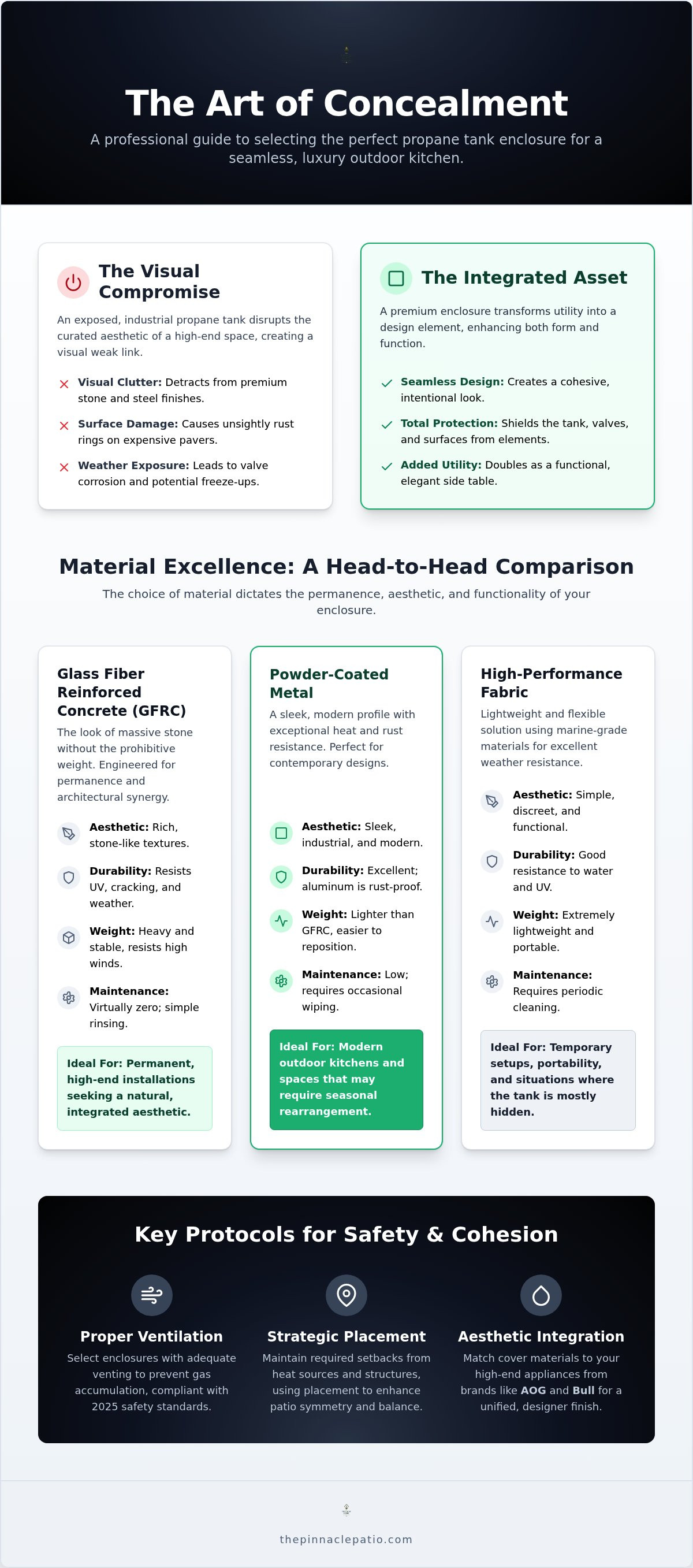
A high-end outdoor space is defined by its weakest visual link. Often, that link is the raw, industrial finish of a standard propane cylinder. While liquid propane is a versatile fuel source, the tank itself wasn't designed for beauty. A premium propane tank cover serves as a bridge, elevating a functional necessity into an architectural asset. It represents a shift from temporary utility bags to permanent, designer-grade enclosures that anchor your patio's layout. This isn't just about hiding a tank; it's about finishing a room.
The "Eyesore" Problem in Luxury Outdoor Living
Imagine a meticulously crafted built-in grill station featuring Kokomo or AOG hardware. The presence of a rusted 20lb tank nearby immediately shatters the illusion of a bespoke sanctuary. These industrial elements introduce visual clutter that distracts from the textures of natural stone and high-performance stainless steel. By choosing a curated enclosure, you achieve a sense of visual harmony where every component feels intentional and integrated. Removing this distraction allows the eye to focus on your design choices rather than the mechanics that power them.
Weather Protection and Tank Longevity
Beyond the aesthetic upgrade, these covers provide vital mechanical protection. Exposure to rain and humidity leads to valve corrosion and unsightly rust rings on your expensive pavers. During colder months, a drop in temperature can cause tank "freeze-up." This occurs when the vaporization rate slows and gas pressure fails to reach your burners. Learn more about propane and how temperature shifts affect its performance. A quality enclosure acts as an insulating layer, helping maintain consistent pressure so your fire features perform as expected. It also shields sensitive regulators from debris, dust, and moisture that can clog high-performance components. This protection extends the life of your fuel source and your appliances.
Selecting the right enclosure is the final step in perfecting your outdoor kitchen. Whether you're looking to match existing masonry or create a new focal point, these pieces offer the durability required for a lifetime of use. If you're ready to refine your space, feel free to schedule a consultation with our design experts to find the perfect fit for your layout.
Material Excellence: Evaluating GFRC, Metal, and High-Performance Fabrics
Selecting a propane tank cover requires a balance of weight, weather resistance, and architectural synergy. While a simple bag might suffice for a hidden utility area, a curated patio demands materials that mirror the quality of your primary appliances. The choice of material dictates not just the look but the permanence of your investment. It's the difference between a temporary fix and a lasting design element that anchors your outdoor living space.
The Resilience of Glass Fiber Reinforced Concrete (GFRC)
GFRC has become the preferred medium for high-end fire pits and tank enclosures because it offers the massive look of stone without the prohibitive weight. This material is engineered by reinforcing cement with high-strength glass fibers, resulting in a product that resists UV fading and structural cracking, even in climates with extreme temperature swings. These pieces are often hand-finished to match the custom textures of premium outdoor kitchen islands, creating a unified visual language across your entire space. The density of GFRC also provides a stable, immovable base that won't shift during high winds or heavy storms.
Metal and Synthetic Fabric Alternatives
For those seeking a more modern, industrial aesthetic, powder-coated metals provide exceptional heat resistance and a sleek profile. Aluminum is often favored for its natural rust resistance and lighter weight, making it easier to relocate during seasonal transitions, whereas heavy-gauge steel offers a sense of immovable permanence. While metal surfaces require occasional wiping to prevent water spots, concrete enclosures are virtually maintenance-free, needing only a simple rinse to maintain their stone-like luster. This ease of care makes GFRC a favorite for homeowners who prioritize longevity over portability.
In scenarios where flexibility is paramount, high-performance textiles like marine-grade, solution-dyed acrylics offer a lightweight solution. These fabrics protect the cylinder from the elements without the large footprint of a hard-sided enclosure. They're particularly useful for portable heaters or secondary grill stations that don't require a permanent furniture piece. Regardless of the material you choose, adhering to Propane cylinder safety guidelines is essential for proper handling and storage. If you're unsure which material best complements your existing Bull or Kokomo setup, you can schedule a consultation with our team to explore our curated selection of premium enclosures.
Functional Versatility: Beyond Concealment to Outdoor Furniture
In a masterfully planned outdoor sanctuary, every square foot must justify its presence. A premium propane tank cover transcends its primary role of concealment to become a vital piece of multi-functional furniture. By selecting a model with a flat, reinforced top, you transform a necessary utility into a sophisticated pedestal that anchors your social zones. It bridges the gap between a hidden fuel source and a functional accessory that enhances the guest experience. Instead of a tucked-away secret, the enclosure becomes an intentional part of your patio's conversation area.
The Tank Cover as a Side Table
Ergonomics play a critical role in the design of high-end enclosures. Most artisan-grade covers are crafted to a height of 18 to 22 inches, which mirrors the standard dimensions of luxury end tables. This intentional sizing ensures that your guests have a convenient surface for cocktails, small plates, or high-end lighting accessories while gathered around a fire feature. Whether finished in a smooth slate texture or a hand-cast wood-grain concrete, these surfaces are engineered to support significant weight. Unlike flimsy retail alternatives, a GFRC or heavy-gauge metal cover provides a stable, vibration-free platform that remains cool to the touch even during peak summer afternoons.
Access and Connectivity Features
True luxury is found in the ease of operation. Sophisticated enclosures often feature discrete side-access doors or magnetic panels that allow for effortless tank swaps without disturbing the items placed on top. This design is far superior to traditional lift-off lids that require you to clear the surface before accessing the valve. Look for models with recessed hose notches at the base; these allow gas lines to run flush with the ground, preventing trip hazards and maintaining a clean visual line to your built-in grill or pizza oven. Some high-end metal variants even include internal storage pockets for lighters or maintenance tools. To ensure safety and performance, these designs must adhere to NFPA 58 regulations regarding ventilation and clearance. Internal leveling systems are another hallmark of quality, allowing you to stabilize the tank on uneven natural stone or textured pavers, ensuring the furniture surface remains perfectly horizontal for your guests.
By treating the enclosure as a piece of curated furniture, you eliminate the industrial clutter often associated with portable propane setups. It becomes a permanent fixture that complements the aesthetic of your Kokomo or Bull appliances. If you're refining your patio layout and need guidance on integrating these dual-purpose pieces, our experts are available to help you schedule a consultation to discuss your specific design goals.
Safety Protocols and Strategic Placement for Propane Enclosures
A luxury patio is a place of relaxation, but the technicalities of fuel storage require a disciplined approach to safety. When integrating a propane tank cover, the primary concern isn't just how it looks against your stonework; it's how it breathes. Proper airflow is the most critical factor in preventing the dangerous accumulation of gas. While it's tempting to choose the most seamless enclosure possible, safety protocols dictate that utility must never be sacrificed for a clean silhouette. A well-designed space prioritizes the well-being of guests while maintaining its high-end aesthetic.
Ensuring Proper Ventilation
High-performance enclosures are designed with airflow as a foundational requirement. Unlike simple fabric bags that can trap moisture and gas, premium covers utilize breathable mesh panels or strategically placed vents. Because propane gas is heavier than air, it naturally pools at the lowest point of any enclosure, making bottom-mounted vents vital for safety. These openings allow any leaking gas to dissipate safely along the ground rather than concentrating inside the unit. Solid materials like GFRC or powder-coated metal must feature these drainage and ventilation points to meet modern safety standards. Without them, a minor leak could transform a sophisticated accessory into a significant hazard.
Placement and Hose Management
The strategic positioning of your enclosure affects both the safety and the visual flow of your outdoor kitchen. You should maintain a clear distance between the tank and your built-in grill to prevent the fuel source from being exposed to excessive radiant heat. Most professional designers recommend a minimum of five to ten feet of clearance depending on your specific appliance and local codes. Managing the connecting hose is equally important. To avoid trip hazards and protect the line from heat or UV damage, use recessed channels in your patio masonry or heavy-duty hose protectors. This keeps the line flush with the ground and maintains the "built-in" look of a professional installation from brands like Bull or Kokomo.
Stability is another factor that homeowners in coastal or high-wind regions must consider. A heavy GFRC propane tank cover offers natural resistance to movement, but lighter metal options may require anchoring to the patio surface. Ensuring the enclosure is level and secure prevents the tank from shifting, which could strain the regulator or the gas line connections. By following these placement protocols, you protect your investment and ensure your sanctuary remains a secure environment for social gatherings. Proper planning allows your utility elements to exist safely alongside your high-end furniture.
Curating Your Sanctuary: Integrating Covers into a Luxury Layout
A truly elevated patio isn't just a collection of high-end appliances; it's a cohesive narrative of material and form. Integrating a propane tank cover into your layout is the final, essential step in resolving the "hidden utility" puzzle. When you view these enclosures as architectural anchors rather than mere concealment, you unlock new possibilities for symmetry and balance. Whether you're anchoring a social zone or completing a modular kitchen, the right cover ensures that no industrial distraction remains to break the spell of your sanctuary. This isn't just about storage. It's a design choice that defines the character of your space.
Coordinating with Premium Brands
Achieving a designer-grade finish requires meticulous attention to material synergy. If your space features the robust stainless steel of Bull grills or the refined engineering of AOG hardware, a powder-coated metal cover provides matching industrial sophistication. For those utilizing the sleek profiles of Kokomo appliances, choosing an enclosure with complementary metallic accents creates a unified visual language. These finishes work together to suggest a space that was built with a single, uncompromising vision.
Material coordination extends beyond metal. If you've invested in a modular outdoor kitchen island with a stone or stucco finish, a GFRC cover is the ideal companion. These hand-cast pieces can be selected to mirror the texture and pigment of your island's base, making the enclosure feel like a custom extension of the masonry. This approach also allows you to bridge the aesthetic gap between your cooking station and peripheral elements like patio heaters. By selecting a neutral, stone-finished propane tank cover, you create a visual transition that grounds the more mechanical elements of your climate control system.
The Pinnacle Patio Concierge Experience
Design excellence often lies in the details that most homeowners overlook. In a high-performance entertaining space, symmetry is a powerful tool for creating atmosphere. Using dual propane enclosures to flank a pizza oven or a central fire feature creates a sense of formal elegance while doubling your functional surface area. This layout provides guests with convenient places for wood peels or serving trays, turning a storage necessity into a strategic asset for the host.
Our concierge team specializes in navigating these nuances of layout and brand integration. We help you move beyond a product-focused mindset toward a vision of a complete, high-performance sanctuary. A professional consultation ensures that your chosen enclosure meets safety setbacks without disrupting the flow of your social space. We invite you to finalize your vision with expert guidance tailored to your specific lifestyle needs. Let us help you select the finishing touches that transform a patio into a destination.
Refining the Vision of Your Outdoor Sanctuary
Transitioning from a temporary utility setup to a curated outdoor environment requires an eye for the subtle details that others might overlook. A premium propane tank cover serves as the definitive bridge between necessary mechanics and intentional design. By choosing artisan materials like hand-cast GFRC or sleek powder-coated metal, you ensure your fuel source matches the craftsmanship of your Bull or Kokomo appliances. These enclosures provide essential ventilation and weather protection while adding valuable surface area for your guests to enjoy. It's the final element that allows your patio to feel like a complete, uninterrupted retreat.
The Pinnacle Patio is dedicated to providing expert guidance for those who view their homes as long-term investments in quality living. As an authorized retailer of AOG and other elite brands, we offer a level of curation that prioritizes longevity and aesthetic beauty. With nationwide shipping available on our entire selection of premium accessories, achieving a cohesive and sophisticated layout is effortless. We're here to help you transform every functional element into a statement of refinement and permanence. Your journey toward a perfectly balanced outdoor kitchen begins with a single, thoughtful choice.
Frequently Asked Questions
Do propane tank covers cause the tank to overheat?
Properly engineered propane tank covers don't cause overheating because they're built with intentional ventilation systems. These vents allow for constant airflow, preventing heat buildup from direct sunlight or proximity to your grill. High-end models from brands like The Outdoor Plus utilize mesh panels or bottom vents specifically to ensure the internal temperature remains stable. Without these safety features, gas expansion could become a concern, but a quality enclosure is designed to mitigate this risk entirely.
Can I use a propane tank cover as a seat?
You can use GFRC or heavy-gauge metal covers as occasional seating, provided they're rated for the necessary weight capacity. Most artisan-grade concrete enclosures are structurally reinforced to support high-performance accessories or a seated guest. However, fabric covers or thin steel variants should never be used as stools, as they lack the internal framing required for safety. Always verify the manufacturer's load-bearing specifications before integrating a cover into your seating arrangement.
How do I prevent my propane tank from freezing inside a cover?
A propane tank cover prevents freeze-ups by acting as an insulating barrier against biting winter winds. This insulation helps maintain the internal vapor pressure required for your fire features to operate efficiently in cold climates. For extreme conditions, a solid GFRC enclosure provides superior thermal protection compared to thin fabric alternatives. This ensures your fuel remains at an optimal temperature, allowing you to enjoy your patio sanctuary year-round without the frustration of pressure drops.
Are fabric propane tank covers waterproof or just water-resistant?
Most luxury fabric covers are water-resistant rather than fully waterproof to allow for essential breathability. High-performance textiles, such as solution-dyed acrylics used by premium brands, are designed to bead water away while allowing moisture and gas to escape through the weave. This prevents mold growth on the cylinder and ensures safety. If you require absolute moisture protection, a solid enclosure made from GFRC or metal is a more effective permanent solution for your outdoor kitchen.
Do I need a specific cover for a 20lb tank vs. a 30lb tank?
Yes, you need a cover specifically sized for your tank's dimensions, as a 30lb cylinder is significantly taller than the standard 20lb variety. A 20lb propane tank cover typically stands around 20 inches high, whereas a 30lb tank requires a taller enclosure to ensure the lid fits securely. Using an incorrectly sized cover can interfere with the regulator connection or obstruct the ventilation ports. We recommend confirming your tank size before selecting an artisan enclosure.
What is the best material for a propane tank cover in a coastal environment?
Glass Fiber Reinforced Concrete (GFRC) is the gold standard for coastal environments due to its natural resistance to salt air corrosion. Unlike standard steel which can rust within a few seasons, GFRC maintains its structural integrity and finish even in high-humidity maritime climates. Powder-coated aluminum is another excellent alternative for those seeking a lighter, modern aesthetic. Both materials are investments in longevity, ensuring your outdoor kitchen remains a pristine sanctuary regardless of the proximity to the ocean.
Can I use a tank cover with a fire pit on a wooden deck?
You can safely use a fire-rated tank cover on a wooden deck, provided you maintain the required clearance distances from the fire feature itself. Most GFRC and metal enclosures are designed to remain cool at the base, protecting your decking from heat transfer. However, you should always place the cover on a level surface and ensure the connecting hose is shielded from foot traffic. Adhering to local fire codes ensures your social gathering remains both elegant and secure.
How often should I clean my concrete or GFRC tank cover?
You should rinse your concrete or GFRC cover with water once per season to remove surface dust and debris. These materials are prized for their low-maintenance nature, requiring only a mild, non-abrasive soap for deeper cleaning if organic stains occur. Avoid using high-pressure washers or harsh chemicals, as these can strip the hand-applied finishes that give your enclosure its stone-like luster. A simple annual inspection ensures your piece remains a beautiful, functional anchor for your layout.