

Creating a Chef-Grade Outdoor Cooking Space: The Professional Component Guide
A chef-grade outdoor kitchen isn't defined by the sheer size of its footprint, but by the technical integrity of the elements within it. You've likely felt the frustration of comparing endless rows of shiny appliances, only to realize that selecting the right professional outdoor kitchen components involves more than just aesthetics. It's common to feel overwhelmed by the choice between 304 and 430 stainless steel, or to worry if your ventilation plan meets the latest CSA/ANSI Z21.58-22 safety standards. You want a space that's designed for connection, built around durability, and curated for culinary excellence.
Mastering your environment requires an understanding of how high-performance equipment works together to create a seamless cooking experience. This guide provides the technical specifications and culinary logic you need to curate a setup that rivals any professional indoor kitchen. We'll explore the critical differences in BTU outputs, material longevity, and appliance sizing, giving you a clear path from initial vision to a sophisticated reality. By the end, you'll know exactly how to select the foundational pieces that transform a simple patio into a permanent investment in your lifestyle.
Key Takeaways
- Learn why 304-grade stainless steel is the non-negotiable standard for longevity and corrosion resistance in coastal environments.
- Understand how to choose between 30-inch, 36-inch, and 42-inch grill sizes by matching burner configurations to your specific entertaining style.
- Discover how to curate professional outdoor kitchen components like built-in pizza ovens and power burners to expand your culinary repertoire beyond standard grilling.
- Identify the essential safety infrastructure, including island vent panels, required to meet current gas safety standards and protect your investment.
- Explore how to extend your outdoor season using Bromic luxury heaters and strategic layout archetypes designed for optimal chef workflow.
Defining the Chef-Grade Standard: Materials and Construction
Chef-grade isn't just a marketing label; it's a structural promise. It represents the transition from temporary seasonal equipment to a permanent culinary sanctuary. While many mass-market options prioritize a polished appearance, the true measure of professional outdoor kitchen components lies in their metallurgical composition and structural integrity. High-performance professional outdoor kitchen components must endure intense thermal cycling and relentless environmental exposure while refined for a home's aesthetic. Understanding the science behind these materials is the first step in curating a space that performs as well as it looks.
The 304 Stainless Steel Benchmark
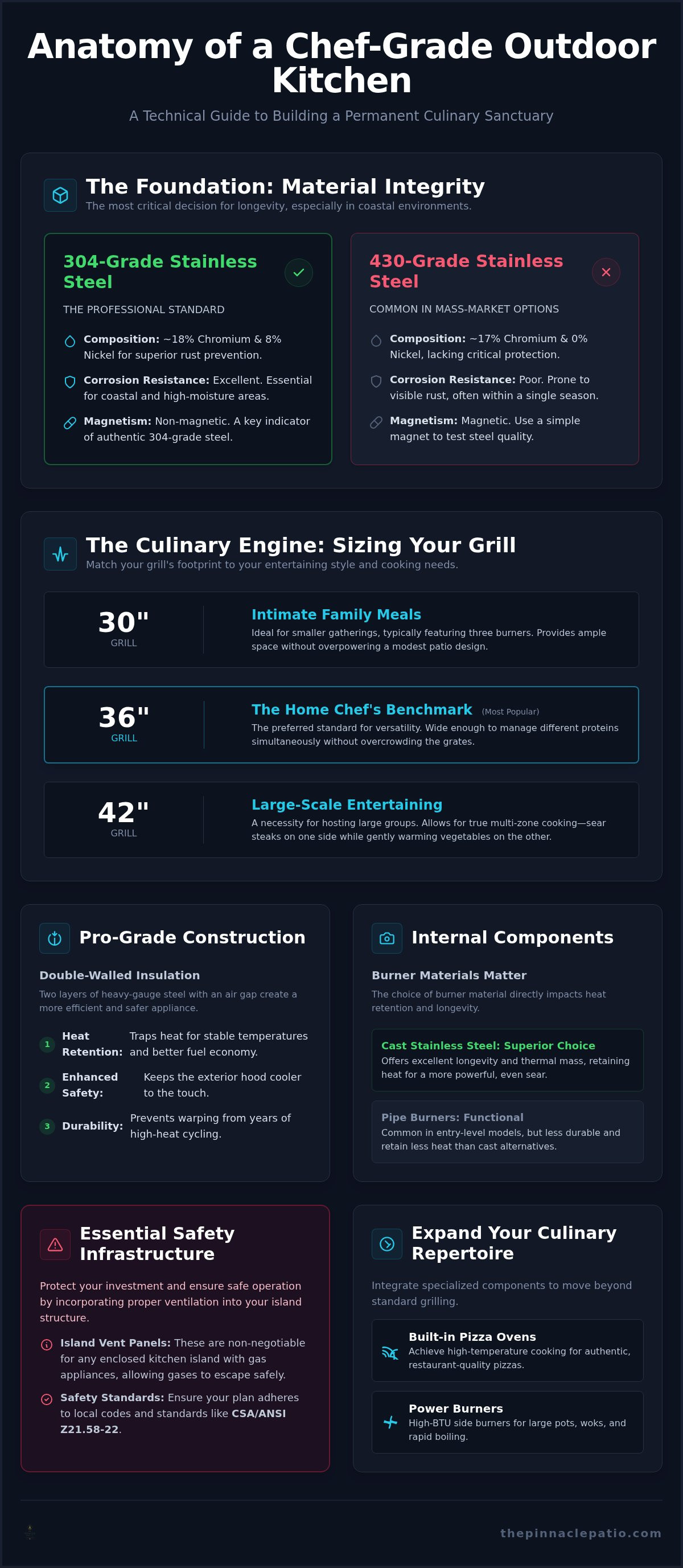
The most critical decision you'll face involves the grade of steel used in your cabinetry and appliances. 304 stainless steel is the industry standard for professional outdoor kitchens because it contains approximately 18% chromium and 8% nickel. This nickel content is the essential differentiator; it creates a protective barrier against the pitting and rust common in high-moisture or coastal environments. In contrast, 430-grade steel contains 16-17% chromium and 0% nickel, which often leads to visible corrosion within a single season. You can verify the quality yourself with a simple magnet test. A magnet will stick to 430-grade steel but will slide off authentic 304-grade components. Investing in built-in grills and accessories crafted from this superior alloy ensures your kitchen remains a legacy piece rather than a recurring expense.
Double-Walled Insulation and Longevity
Maintaining consistent internal temperatures is vital for advanced outdoor cooking techniques. Professional-grade components utilize double-walled construction, featuring two layers of heavy-gauge steel with an insulating air gap between them. This design serves two purposes. First, it traps heat efficiently, allowing for better fuel economy and more stable searing zones. Second, it keeps the exterior hood cool to the touch, which is a vital safety feature when guests are gathered nearby. This robust architecture prevents the warping that often plagues thinner, single-walled units after years of high-heat use. When combined with heavy-duty hinges and professional-grade hardware, the result is a tactile experience of quality that lasts for decades.
The Culinary Engine: Selecting High-Performance Built-in Grills
If the materials are the foundation of your space, the grill is undoubtedly its engine. Selecting the right model requires balancing raw power with the nuance of temperature control. Most homeowners begin their journey by looking at burner counts, but the true value of professional outdoor kitchen components is found in how those burners manage heat across the cooking surface. From high-heat searing to low-and-slow roasting, your choice in a built-in grill dictates the culinary possibilities of your backyard sanctuary. Raw power means little without precise control.
Sizing for the Way You Entertain
Grill dimensions should mirror your lifestyle rather than just your patio's square footage. A 30-inch grill typically offers three burners, providing an ideal footprint for intimate family meals and smaller gatherings. For those who value versatility, the 36-inch standard is the preferred benchmark for the home chef. It provides the width necessary to manage different proteins simultaneously without overcrowding the grates. If you frequently host large groups, a 42-inch professional grill becomes a necessity. This expansive surface area allows for true multi-zone cooking, where you can maintain an intense searing station on one side while finishing delicate sides over low heat on the other.
Burner Materials and Heat Management
The internal components are where professional grills separate themselves from standard retail models. You'll generally choose between pipe burners and cast stainless steel burners. While pipe burners are functional, cast stainless steel is the superior choice for longevity and thermal mass. These heavy-duty elements retain heat more effectively, ensuring that your BTU output translates into consistent cooking temperatures rather than unpredictable hot spots. It's also vital to ensure your installation adheres to Outdoor Kitchen Safety Codes to manage gas pressure and enclosure ventilation properly.
To achieve a restaurant-quality crust, look for models equipped with an Infrared Searing Burner. These specialized burners reach peak temperatures almost instantly, locking in juices through rapid caramelization. When evaluating power, don't be misled by high BTU ratings alone. Without proper airflow and double-walled insulation, excessive heat can lead to fuel waste. If you're unsure which configuration fits your specific layout, you can schedule a complimentary consultation to discuss your project. You might also explore our curated collection of high-performance built-in grills to see how these technical features integrate into a complete design.
Specialized Culinary Components: Beyond the Standard Grill
A truly professional outdoor kitchen transcends the capabilities of a standalone grill. While the grill acts as the primary heat source, a chef-grade environment is defined by its versatility and the ability to execute complex menus without retreating indoors. Integrating professional outdoor kitchen components like high-heat ovens and dedicated burners allows you to manage different cooking techniques simultaneously. This intentional curation transforms your patio from a simple barbecue area into a comprehensive culinary station designed for high-performance entertaining.
The Rise of the Built-in Pizza Oven
The built-in pizza oven has emerged as the ultimate secondary anchor for sophisticated outdoor spaces. These units aren't just for pizza; their high-heat stone surfaces and radiant heat are perfect for searing cast-iron steaks, roasting vegetables at 800 degrees, or baking artisan breads. When selecting an oven, prioritize models with thick refractory stone floors and 304 stainless steel domes to ensure heat retention and longevity. For a deeper look at specific models and installation requirements, consult The 2026 Guide to Built-In Pizza Ovens. You can also view professional pizza ovens in our collection to find a design that complements your existing island.
Side Burners and Power Burners
Many homeowners confuse standard side burners with power burners, but the distinction is vital for a functional workflow. A standard side burner, typically rated around 10,000 to 15,000 BTUs, is designed for simmering sauces or warming sides. In contrast, a power burner can exceed 60,000 BTUs, providing the intense heat required for wok cooking, large-scale seafood boils, or rapid preheating of heavy stockpots. Proper placement logic is essential here; keep these high-heat components away from primary prep zones to maintain a comfortable workspace. Using these tools allows you to keep the heat, and the mess, entirely outdoors.
Elevating the Craft: Rotisseries and Griddles
To round out a professional setup, consider a Rotisserie Kit. Many high-end grills feature dedicated infrared back burners specifically for this purpose. This allows for slow-roasted meats that retain moisture through self-basting. For those who enjoy breakfast outdoors or Japanese-style cooking, a Teppanyaki griddle offers a flat, consistent surface for eggs, stir-fry, or delicate seafood. By layering these specialized tools, you create a space that adapts to any culinary challenge, ensuring every meal is an elevated experience.
Functional Infrastructure: Storage, Ventilation, and Utilities
The sophistication of a chef-grade space extends far beyond the visible appliances. While the grill and pizza oven capture the attention, the professional outdoor kitchen components that handle storage, gas lines, and airflow are what ensure the longevity and safety of your investment. A truly curated layout prioritizes a logical workflow, placing utilities where they're accessible but never intrusive. This intentionality differentiates a high-end installation from a standard backyard setup, providing a sense of permanence and professional utility.
Essential Storage and Access
Strategic storage transforms a chaotic workspace into a refined culinary environment. 304 stainless steel access doors are essential for more than just aesthetics; they provide the necessary entry points for plumbing maintenance and gas shut-off valves. To maintain a professional workflow, consider the convenience of sealed dry storage drawers that keep your linens and tools weather-tight regardless of the season. Trash drawers and dedicated spice racks should be positioned within arm's reach of the primary cooking zone to minimize movement and maximize efficiency. You can Browse The Pinnacle Patio Outdoor Kitchen Islands to see how these storage solutions integrate into a cohesive, pre-configured design.
Safety and Ventilation Standards
Ventilation is the most overlooked safety component in professional outdoor kitchen design. Without proper airflow, gas can pool inside an enclosed outdoor kitchen island, creating a significant hazard. The placement of your island vent panels depends entirely on your fuel type. Because liquid propane is heavier than air, vents must be placed low to the ground to allow gas to escape. Conversely, natural gas is lighter than air and requires vents positioned higher in the cabinet structure to prevent buildup.
Current safety guidelines specify a minimum of 100 square inches of total vent area per compartment to ensure adequate cross-ventilation. If your design involves a combustible structure, the use of an insulated jacket is a non-negotiable requirement. These protective liners act as a thermal barrier between the high-heat grill and the island's frame, preventing heat transfer and potential fire risks. Adhering to these installation clearances protects your home and ensures your equipment operates within its engineered specifications for years to come.
Climate Control and the Final Sanctuary Layout
The final layer of a chef-grade space isn't found in the cooking surface, but in the atmosphere that surrounds it. A truly integrated outdoor environment functions as a sanctuary, balancing the intense heat of the grill with the refined comfort of a climate-controlled social hub. Selecting the right professional outdoor kitchen components for heating and layout ensures your space remains an inviting destination long after the sun sets or the seasons shift. It's about creating a permanent setting for connection that feels as intentional as your indoor living room.
Sophisticated Warmth with Bromic Heaters
To extend your entertaining season into the cooler months, sophisticated climate control is essential. Bromic Luxury Heaters provide radiant warmth that heats objects and people rather than the air; this makes them remarkably effective even in breezy conditions. Whether you choose the sleek, low-profile design of electric models or the high-output performance of gas units, these heaters integrate seamlessly into patio ceilings or wall structures. This approach allows for year-round al fresco dining without the clutter of portable units. You can Explore Bromic patio heaters to find a solution that matches your architectural style and heating requirements.
Finalizing Your Vision
The physical layout of your components dictates the rhythm of the culinary experience. The Kitchen Triangle logic-the relationship between prep, cooking, and cleaning zones-is vital for a professional workflow. Your choice of archetype should reflect your hosting style:
- Straight Island: A minimalist approach ideal for smaller footprints or as a dedicated beverage and bar station.
- L-Shape Island: Provides a natural corner for prep work and effectively separates the chef from the social seating zone.
- U-Shape Island: The ultimate configuration for high-volume hosting, offering maximum counter space and multiple professional outdoor kitchen components in a single cohesive unit.
Integrating a social hub, such as seating around the island or nearby fire pits, ensures the chef remains part of the conversation. For a deeper exploration of these configurations and how they impact your workflow, read The Art of the Outdoor Kitchen Island.
A chef-grade outdoor kitchen is a permanent investment in your home and your quality of life. It's a space designed for connection, built around the highest standards of craftsmanship and durability. Because the technical requirements for gas lines, electrical clearances, and structural compatibility can be complex, expert guidance is the most effective way to move from inspiration to execution. You can schedule a complimentary consultation to ensure your curated selection of components is perfectly tailored to your vision and your environment.
Investing in a Lifetime of Culinary Excellence
Building a chef-grade space requires more than just high-end labels; it demands an intentional alignment of material science and culinary logic. You've discovered that 304 stainless steel is the non-negotiable benchmark for durability and that the right professional outdoor kitchen components, from infrared searing burners to radiant Bromic heaters, are what transform a simple patio into a high-performance sanctuary. By prioritizing technical specifications like proper ventilation and the "Kitchen Triangle" layout, you ensure your investment is as safe as it is sophisticated.
The transition from a broad vision to a functional reality is a journey best taken with expert guidance. As authorized specialists in the Bull, AOG, and Kokomo brands, we focus on translating complex technical features into tangible lifestyle benefits. Whether you're navigating the nuances of coastal corrosion or optimizing a multi-zone cooking station, our curated approach ensures every element is built around your specific culinary needs. Your outdoor kitchen isn't just a place to cook; it's a permanent setting for connection and refinement.
We look forward to helping you create a space where every meal becomes an extraordinary moment.
Frequently Asked Questions
What is the difference between 304 and 430 stainless steel for outdoor kitchens?
304 stainless steel contains approximately 18% chromium and 8% nickel, making it highly resistant to rust and corrosion. In contrast, 430 stainless steel contains no nickel and will often show signs of pitting or surface rust within a single season, especially in coastal environments. For long-term durability, 304 is the non-negotiable standard for professional outdoor kitchen components. You can verify this with a magnet; it won't stick to high-quality 304 steel.
Do I need a vent hood for my professional outdoor kitchen?
You require a ventilation hood if your outdoor kitchen is located under a combustible patio cover, ceiling, or within a screened-in enclosure. A hood effectively removes smoke, grease, and intense heat that can damage structures or create safety hazards. For open-air islands, a hood is generally not required by code, but many homeowners install them to keep the cooking area clean and smoke-free during social gatherings.
What size grill is best for a professional-grade outdoor kitchen?
The ideal size depends on your entertaining style and the number of guests you typically host. A 30-inch grill is perfect for intimate family meals, while a 36-inch model is the industry standard for the average home chef. If you frequently host large-scale events or require multiple heat zones for complex menus, a 42-inch professional grill provides the expansive surface area and burner count necessary for high-volume, multi-zone cooking.
Is natural gas better than liquid propane for built-in grills?
Natural gas is often preferred for its permanence and convenience, as it provides an endless fuel supply without the need for tank refills. However, it requires a professional gas line installation to your home's supply. Liquid propane offers more flexibility for island placement and is a high-output fuel source, but you must manage tank levels. Both fuel types perform exceptionally well when paired with high-quality professional outdoor kitchen components and proper ventilation.
What are the essential safety components for a BBQ island?
Safety begins with proper ventilation and heat management. Every enclosed island must have vent panels to prevent dangerous gas buildup; placement varies based on whether you use propane or natural gas. If you are installing a grill into a wood-framed or combustible island, an insulated jacket is a mandatory requirement to prevent heat transfer. Additionally, accessible gas shut-off valves and GFCI-protected electrical outlets are critical for a safe, code-compliant installation.
How do I choose between Bull, AOG, and Kokomo grills?
Each brand offers distinct advantages for the sophisticated chef. Bull is renowned for its ReliaBULL technology and high BTU outputs, making it a favorite for searing power. AOG provides a sleek, all-stainless aesthetic with American-made craftsmanship. Kokomo specializes in high-performance modular systems that allow for a seamless transition between the grill and specialized components like pizza ovens. Your choice should align with your specific layout requirements and desired cooking features.
Can I install a professional grill in a wood-framed island?
Yes, you can install a professional grill in a wood-framed island, provided you use an insulated jacket. This component is a stainless steel sleeve that houses the grill, creating a thermal barrier that protects the combustible wood structure from extreme temperatures. Installing a high-heat appliance directly into wood without this protection is a significant fire hazard and violates most local building codes and manufacturer warranty requirements.
How many BTUs does a professional outdoor grill need?
A professional grill typically produces between 12,000 and 15,000 BTUs per burner. However, raw BTU numbers are less important than the grill's ability to retain and distribute that heat. High-performance models utilize cast stainless steel burners and double-walled hoods to ensure that energy is directed toward the cooking surface rather than escaping. Look for a balance of high output and thick, heavy-duty grates that provide the thermal mass needed for consistent searing.