

Designing the Ultimate Outdoor Cooking Station: A Guide to High-Performance Culinary Destinations
A world-class outdoor cooking station isn't just a place to sear a steak; it's a permanent architectural investment that transforms your backyard into a high-performance culinary destination. You've likely spent hours comparing BTU counts and stainless steel grades, only to feel more uncertain than when you started. It's natural to worry that expensive components won't fit together or that your layout will feel cramped once the utilities are in place. We understand that you aren't just looking for a grill; you're looking for a curated ecosystem where elite performance meets sophisticated design.
This guide masters the art of selecting and designing a professional-grade space that functions with the precision of an indoor kitchen. We will walk you through the nuances of 304-grade stainless steel, compare industry leaders like Bull and Kokomo, and clarify the spatial requirements that ensure your patio remains both beautiful and functional. By the end, you'll have a clear roadmap for creating a bespoke culinary retreat built around longevity and lifestyle.
Key Takeaways
- Learn why a permanent island is a superior long-term investment over freestanding grills for creating a cohesive lifestyle destination.
- Understand the technical necessity of 304-grade stainless steel to protect your culinary investment against corrosion and humidity.
- Discover how to apply the "Outdoor Work Triangle" to your layout and select the ideal grill size, whether it's a 30-inch, 36-inch, or 42-inch model.
- Explore specialized features like pizza ovens and professional rotisserie systems that expand your menu beyond traditional grilling.
- Gain expert insight into curating your outdoor cooking station with high-performance brands like Bull, AOG, and Kokomo.
Defining the Modern Outdoor Cooking Station
A modern outdoor cooking station represents a fundamental shift in how we approach al fresco dining. It's a departure from the temporary nature of a backyard BBQ toward a permanent, integrated culinary destination. While a portable grill might serve a basic function, it can't match the architectural presence or the technical capability of a built-in kitchen. In the landscape of 2026, luxury outdoor living is defined by spaces that feel like a natural extension of the home's interior, blending elite performance with refined aesthetics. This station acts as a magnetic focal point, drawing guests together in a space designed for connection and shared experiences.
The Evolution of the Outdoor Kitchen Island
The movement toward permanent outdoor kitchen islands is driven by a commitment to quality and heritage. Homeowners are increasingly replacing disposable, portable carts with structures that offer a sense of permanence. This evolution isn't just about utility; it's about investing in a lifestyle that rewards you for years to come. A thoughtfully designed island increases the functional square footage of your home and serves as a significant asset for property value. For a deeper look at how these structures elevate your entertaining capacity, see our detailed exploration of The Art of the Outdoor Kitchen Island.
Key Components of a Professional Setup
Creating a high-performance outdoor cooking station requires a deliberate selection of appliances that mirror the functionality of a professional indoor kitchen. A cohesive layout ensures that the chef remains part of the conversation while maintaining complete control over the menu.
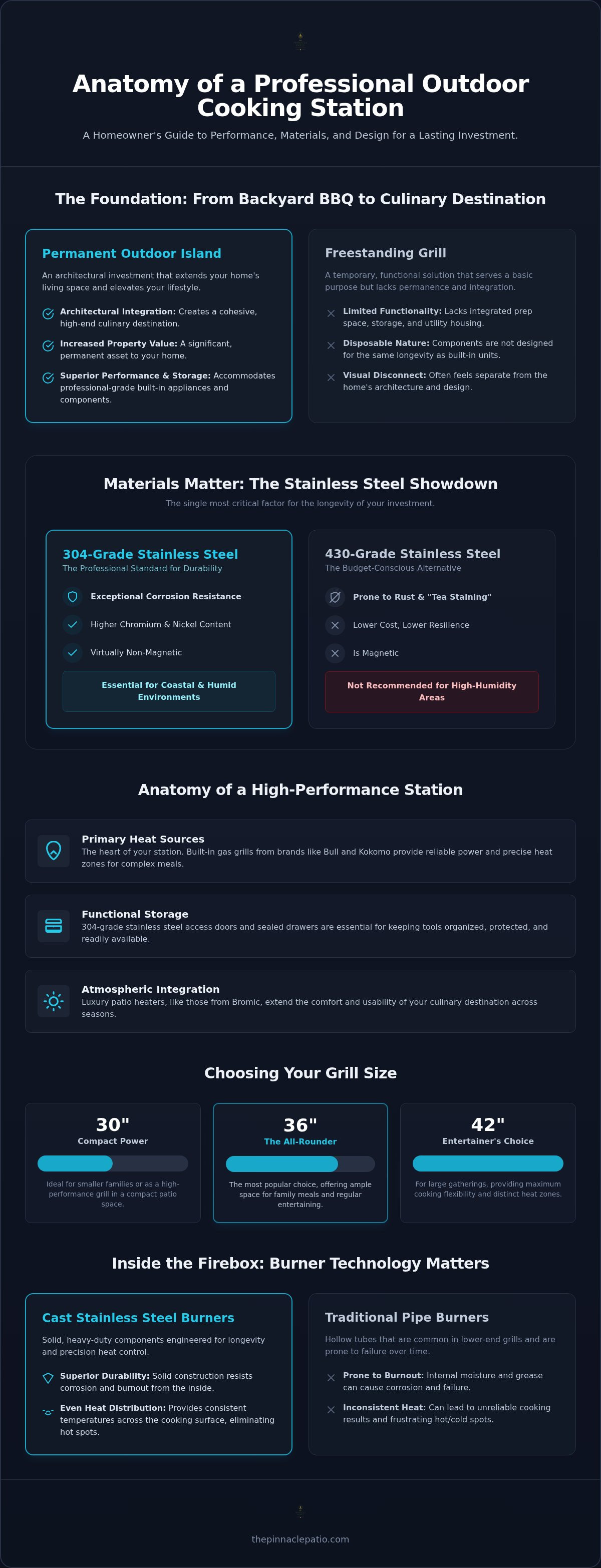
- Primary Heat Sources: Built-in gas grills from brands like Bull and Kokomo provide the reliable power and heat zones necessary for complex meals. Adding a pizza oven introduces a versatile element that traditional grilling alone cannot provide.
- Functional Storage: Professional-grade access doors, sealed drawers, and dedicated propane enclosures are essential for maintaining an organized prep area. These components, typically crafted from 304 stainless steel, ensure your tools stay protected from the elements.
- Atmospheric Integration: A truly sophisticated setup considers the comfort of the chef and guests alike. Integrating luxury patio heaters, such as those from Bromic, allows the culinary destination to remain active and welcoming regardless of the season.
The Anatomy of Performance: Engineering and Materials
The longevity of your outdoor cooking station depends entirely on the caliber of its engineering. While aesthetics draw the eye, it's the metallurgical composition and internal components that determine whether your investment remains a high-performance destination or a victim of the elements. In the world of professional outdoor appliances, material choice isn't just a technical spec; it's the foundation of permanence and a testament to craftsmanship.
Understanding Stainless Steel Grades
The distinction between 304-grade and 430-grade stainless steel is the most critical factor for homeowners, particularly those in coastal or humid environments. 304 stainless steel contains higher levels of chromium and nickel, making it virtually non-magnetic and exceptionally resistant to oxidation. Many lower-end models use 430-grade to reduce costs, but it lacks the chemical resilience to prevent structural corrosion over time. When evaluating a built-in grill head, you should look for heavy-gauge 304 construction throughout the hood, firebox, and internal components. To maintain that pristine finish, a simple routine of wiping down the exterior with a dedicated stainless steel polish prevents surface contaminants from bonding to the metal and causing "tea staining."
Burner Design and Heat Distribution
True culinary precision requires more than just raw power. High-end built-in grills from brands like Bull and Kokomo utilize cast stainless steel burners rather than traditional hollow pipe burners. Cast burners are solid, heavy-duty components that offer superior heat distribution and a much longer lifespan because they won't corrode through from the inside. This engineering allows for the creation of distinct heat zones, especially when paired with heat zone separators that prevent temperature bleed between different areas of the cooking surface. This design choice means you can sear a steak on an infrared sear burner while simultaneously slow-roasting delicate vegetables on the other side of the grill.
Many buyers focus solely on BTU output, but high numbers are meaningless without proper heat retention. A professional grill head features a heavy-duty, double-lined hood that acts like an oven, trapping heat and maintaining steady temperatures even in windy conditions. This synergy between high BTUs and structural insulation ensures your grill performs consistently in any season. If you're unsure which configuration best suits your local climate or cooking style, you can schedule a complimentary consultation to ensure every component is perfectly matched to your vision.
Designing for Flow: Layout and Utility Requirements
Designing a high-performance outdoor cooking station requires a delicate balance between culinary efficiency and social fluidity. Just as in a professional indoor kitchen, the layout should be built around the 'Outdoor Work Triangle.' This concept prioritizes the seamless movement between the primary heat source, the sink, and the prep area. By minimizing the steps between these three points, you ensure that the chef remains engaged with guests while maintaining total control over the meal. A well-planned flow doesn't just make cooking easier; it creates a relaxed atmosphere where the transition from preparation to presentation feels effortless.
Spatial Planning and Sizing
Choosing the correct grill width is a foundational decision that dictates the rest of your island's footprint. A 30-inch grill is typically ideal for intimate family meals, while a 36-inch grill serves as the industry standard for most homeowners who entertain regularly. For those who host large-scale events, a 42-inch grill provides the expansive surface area needed for multiple heat zones and diverse menus. Don't forget to account for at least 24 to 36 inches of landing space on either side of the grill for platters and tools. If you're designing a space with limited square footage, every inch of counter space becomes a premium asset for staging and serving. For those seeking a streamlined design process, our guide to prefabricated bbq island kits offers a curated approach to spatial harmony.
Utility and Installation Considerations
The infrastructure beneath your island is as vital as the appliances on top. Planning your outdoor cooking station involves more than just aesthetics; it's about the technical integrity of the installation. When planning for utilities, you must decide between natural gas (NG) and liquid propane (LP). Natural gas offers the convenience of a continuous fuel supply, though it requires a dedicated line from your home's main source. Liquid propane provides more flexibility for island placement but requires accessible storage for tanks and regular monitoring of fuel levels.
Regardless of fuel type, proper ventilation is a non-negotiable safety requirement to prevent gas buildup within the island structure. Additionally, ensure your layout maintains strict clearances: typically, a minimum of 10 to 12 inches of clearance is required for non-combustible surfaces, while combustible walls require much greater distances or specialized insulated jackets. While The Pinnacle Patio is your premier source for high-performance equipment, please note that we specialize in retail and expert guidance; we don't provide on-site installation or masonry services.
Expanding the Menu: Specialized Cooking Features
A truly world-class outdoor cooking station transcends the capabilities of a standalone grill by integrating specialized tools that diversify your culinary repertoire. While the primary grill head remains the engine of the kitchen, the addition of professional-grade accessories allows you to transition from simple searing to complex, multi-course entertaining. This expansion isn't just about adding more burners; it's about curating a space that adapts to every social gathering and seasonal change. By selecting components built from 304-grade stainless steel, you ensure these specialized features maintain their performance and aesthetic beauty for decades.
The Rise of the Built-In Pizza Oven
Integrating a dedicated pizza oven has become a hallmark of the modern outdoor lifestyle. These units provide the intense, consistent heat necessary for authentic Neapolitan crusts that a standard grill can't replicate. When selecting an oven for your station, you must choose between the traditional ritual of a wood-fired flame and the precision of a gas-fired system. Wood-fired models offer an evocative, smoky profile and a sense of heritage, while gas-fired options prioritize convenience and rapid recovery times for large groups. For a deeper analysis of these specialized heat sources, explore our 2026 Guide to Built-In Pizza Ovens.
Beyond the oven, professional rotisserie systems represent a secret weapon for the home chef. High-performance grills from brands like Bull and Kokomo often include heavy-duty rotisserie motors and dedicated infrared back burners. This combination ensures even, self-basting heat for large roasts or poultry, freeing up the main cooking surface for side dishes. To further enhance utility, consider adding a high-BTU power burner. Unlike standard side burners designed for warming sauces, a power burner provides the concentrated heat needed for wok cooking or boiling large stockpots, keeping the heavy heat and steam out of your indoor kitchen.
Climate Control and Comfort
The most sophisticated cooking destinations are designed for year-round utility rather than just summer afternoons. Extending your season requires a strategic approach to climate control. Integrating Bromic luxury heaters into your patio design ensures the environment remains welcoming even as temperatures drop. Strategic placement is key; mounting heaters above prep areas or seating zones creates a consistent blanket of warmth that protects the chef and guests from evening drafts. This intentional design turns a seasonal patio into a permanent retreat, allowing you to host holiday gatherings or cool autumn dinners with the same comfort as an indoor dining room.
Curating Your Vision: Selecting the Right Station
Selecting the final components for your outdoor cooking station is the definitive step in translating a design concept into a tangible reality. This process requires a discerning eye, as the market is filled with options that often prioritize temporary flash over enduring substance. As a sophisticated curator, we've filtered the landscape to present only the brands that meet our rigorous standards for metallurgy, engineering, and aesthetic harmony. Whether you're building a sprawling entertainment hub or a focused culinary retreat, your choice of brand dictates the performance and permanence of the space.
Brand Comparison: Bull vs. AOG vs. Kokomo
Bull Grills have earned their reputation as a premier standard for durability in the luxury market. Their built-in heads are designed for high BTU output and consistent heat distribution, making them the preferred choice for chefs who demand raw power and precision. The heavy-gauge 304 stainless steel construction ensures these grills withstand the rigors of frequent use and harsh environmental exposure.
AOG Grills, or American Outdoor Grills, offer a timeless stainless steel design that complements almost any patio aesthetic. Known for their reliable performance and clean, understated lines, AOG units are perfect for homeowners who value a blend of classic craftsmanship and dependable utility. They provide a high-end experience that focuses on the fundamental joy of cooking without unnecessary complexity.
Kokomo Grills are built for the modern outdoor chef who seeks innovative features and contemporary styling. Their islands and grill heads often incorporate advanced lighting and ignition technology, providing a refined user experience that feels both intuitive and sophisticated. Their designs are particularly well-suited for integrated islands that serve as a social centerpiece.
Your Next Steps toward a Culinary Sanctuary
Moving from the planning phase to the final purchase involves a choice between the efficiency of modular units and the bespoke nature of fully integrated islands. Modular islands offer a curated, high-end look with shorter lead times, while integrated designs allow for complete customization of every surface and utility placement. Regardless of the path you choose, the goal is to create a space that feels like a natural extension of your home.
To ensure your investment is perfectly sized for your space and utility requirements, we recommend reviewing our Pinnacle Outdoor Kitchens collection. This curated selection represents the highest level of craftsmanship and performance available today. Because these are substantial long-term investments, we invite you to schedule a consultation for personalized guidance on sizing, fuel types, and component compatibility. Your outdoor cooking station should be a source of pride and connection for years to come.
Final Investment Checklist:
- Confirm 304-grade stainless steel for all exterior and internal components.
- Verify gas line compatibility and ventilation requirements for your specific layout.
- Ensure adequate counter space for both preparation and social staging.
- Select a retailer that provides expert guidance and national shipping across the United States.
Elevating Your Outdoor Culinary Experience
Transforming your patio into a high-performance destination requires more than just high-end appliances; it's about the intentional orchestration of engineering, layout, and atmosphere. By prioritizing 304-grade stainless steel and following the principles of the outdoor work triangle, you create an outdoor cooking station that serves as a permanent architectural asset. Whether you choose the raw power of Bull or the modern innovation of Kokomo, your investment should focus on longevity and the shared moments it will host.
Our role as a sophisticated curator is to simplify the technical complexities of BTUs and clearances, ensuring every component you select integrates seamlessly into your lifestyle. With national shipping on all luxury appliances and expert brand guidance, we're here to help you move from the planning stage to a fully realized culinary sanctuary.
Your journey toward a more refined way of living begins with a single, thoughtful choice. We look forward to helping you design a space that brings people together and elevates every everyday moment into something extraordinary.
Frequently Asked Questions
What is the best material for an outdoor cooking station?
The most enduring material for a professional outdoor cooking station is 304-grade stainless steel. This high-nickel alloy provides the chemical resistance needed to prevent oxidation and structural decay over time. For the island structure itself, we recommend non-combustible materials such as stone veneer, high-density stucco, or porcelain tile. These selections ensure your culinary destination remains a permanent fixture that withstands intense heat and varied weather cycles without losing its sophisticated aesthetic.
Do I need a permit to install an outdoor cooking station with a gas grill?
Most municipalities require permits for the gas and electrical lines necessary to power your built-in appliances. While the island structure itself might not always require a building permit, the utility connections must adhere to local safety codes to ensure proper pressure and ventilation. We recommend consulting with a licensed professional in your area before beginning the process. Please note that The Pinnacle Patio provides premium equipment retail, but we don't offer on-site installation services.
What is the difference between 304 and 430 stainless steel in grills?
The primary distinction lies in the elemental composition and long-term corrosion resistance. 304-grade stainless steel contains higher levels of chromium and nickel, making it non-magnetic and exceptionally durable against environmental stressors. Conversely, 430-grade is a lower-cost alternative that contains more iron and is magnetic; it's far more prone to surface rust and structural pitting. For a high-performance island, 304-grade is the essential standard for ensuring your equipment maintains its integrity and professional finish.
How much clearance do I need between my grill and my house?
Safety requirements vary by manufacturer, but you typically need at least 10 to 12 inches of clearance from non-combustible surfaces. If your station is positioned near combustible materials like wood siding or vinyl, the requirements are much stricter and often necessitate an insulated grill jacket. These jackets act as a thermal barrier, protecting your home's structure from the intense heat generated during high-temperature cooking. Always verify the specific installation clearances in your grill's technical manual before finalizing your layout.
Can I use my indoor pizza oven in an outdoor cooking station?
You shouldn't use an indoor pizza oven for an outdoor application. Indoor units aren't engineered to handle the moisture, temperature fluctuations, or wind conditions of an al fresco environment. A dedicated outdoor pizza oven is built with weather-resistant materials and superior insulation to maintain high internal temperatures despite external conditions. Integrating a purpose-built unit ensures consistent performance and safety while adding a sophisticated, versatile element to your permanent culinary sanctuary that stands up to the elements.
Should I choose natural gas or liquid propane for my built-in grill?
Choosing between natural gas and liquid propane depends on your preference for convenience versus flexibility. Natural gas offers an uninterrupted fuel supply, which is ideal for a permanent outdoor cooking station that sees frequent use. Liquid propane requires tank refills but allows for easier island placement if you don't have an existing gas line. Most professional grills from brands like Bull or Kokomo are available in both configurations, though they aren't easily interchangeable once the installation is complete.
What size grill is best for an outdoor kitchen island?
A 36-inch grill is the most versatile choice for most homeowners, providing ample surface area for hosting guests and creating multiple heat zones. If you primarily cook for a small family, a 30-inch model offers efficient performance without occupying excessive counter space. For those who frequently host large gatherings, a 42-inch grill provides the expansive capacity needed for diverse menus. Your choice should balance your typical guest count with the overall footprint and prep space of your island.
How do I maintain my outdoor cooking station in a coastal environment?
Coastal environments require a rigorous maintenance routine to combat the corrosive effects of salt air. You should clean your stainless steel surfaces at least once a month using a dedicated cleaner and a soft cloth to prevent salt buildup. Utilizing 304-grade steel is a non-negotiable requirement in these areas, as lower grades will fail rapidly. Additionally, keeping your appliances covered when they aren't in use provides an essential secondary layer of protection against the humid, salty atmosphere.