

How to Choose an Outdoor Heater: A Practical Guide for 2026
What if the best outdoor heater isn’t the one with the highest output, but the one that suits where you sit and gather? Learning how to choose an outdoor heater starts with the patio itself. An open terrace, a covered dining area, and a sheltered lounge each call for a different approach to comfort. Before comparing heaters, consider how the space is laid out and where people spend time.
If you’re unsure how a heater’s coverage relates to warmth, or concerned that it may feel out of place, start with your seating plan and the product’s specifications. A good choice balances practical needs with the look and flow of your outdoor setting.
This guide will help you match a heater to your space, comfort goals, and design. You’ll learn how shelter affects your assessment, compare approaches to delivering heat, and identify placement and clearance questions to address before choosing. The Pinnacle Patio offers Bromic and Infratech outdoor heaters, as well as Lava Heat Italia heaters, including flame towers, to help you find an option suited to your patio.
Key Takeaways
- To learn how to choose an outdoor heater, begin with how you use the patio, how sheltered it is, and where people gather.
- Compare heat delivery and placement before relying on stated coverage. Coverage varies by model and setting.
- Consider electric radiant heaters and freestanding flame-tower styles by their practical fit and visual effect. Check each model’s product details rather than assuming its fuel or requirements.
- Map seating and possible heater positions, then follow the selected manufacturer’s instructions for mounting and clearances.
- Use your preferred atmosphere, layout, and verified model details to narrow the options and guide your next decision.
How to Choose an Outdoor Heater: Start With Your Patio and How You Use It
Want to enjoy your patio beyond warm afternoons? Begin with the moments you want to make more comfortable, whether that’s dinner outdoors, a quiet place to unwind, or time with friends after sunset. The right choice depends on the setting and how people use it, not on a universal “best” heater. An open entertaining area and a sheltered seating nook have different needs.
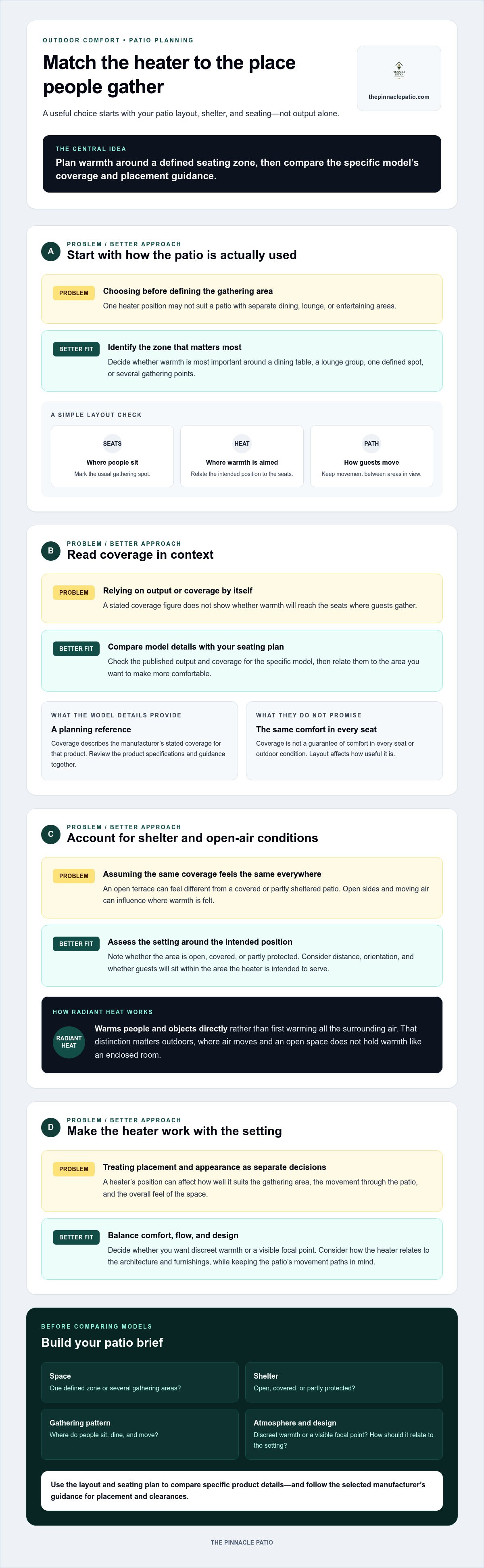
Define the space before selecting a heater. Use this checklist:
- Space: Do you want to make one defined zone more comfortable or serve several gathering areas?
- Shelter: Is the patio open, covered, or partly protected?
- Gathering pattern: Where do people sit, dine, and move through the space?
- Atmosphere: Are you looking for discreet warmth or a visible focal point?
- Design: How should the heater relate to the architecture and furnishings?
Which parts of the patio do you want to make more comfortable?
First distinguish the main uses of the patio. A dining area may call for warmth around the table, while a lounge zone is organized around seats where guests linger. A larger, open entertaining space may have several gathering points, so one heater position may not suit the way people use the whole area.
Consider movement, too. Guests may pass between the house, an outdoor kitchen, and seating. A heater’s intended position should work with that flow, not interrupt it. Ask whether comfort is most important at one gathering spot or across a broader part of the patio. This distinction helps narrow your options before comparing models. Explore The Pinnacle Patio’s outdoor heaters with your layout in mind.
How do shelter and everyday use shape the choice?
An open patio is more exposed to its surroundings than a covered or partly sheltered area. That can affect how warmth feels, so note the setting and intended placement before choosing a heater. This overview of patio heater types can help you recognize different approaches, but your own patio should guide the decision.
Consider when and how often you use the space. Regular evening dining may call for a different arrangement than occasional gatherings, while a quiet lounge may call for a more understated presence than a social focal point. Picture the atmosphere you want, whether it’s comfortable conversation, inviting outdoor dining, or a place to linger. A heater can contribute to that setting, but it can’t control every condition in an exposed space. Be clear about what you want it to improve before comparing heat delivery, placement, and model details.
How Outdoor Heater Coverage and Radiant Heat Affect Comfort
A heater’s output and stated coverage are useful starting points, but neither tells the whole story of how warmth will feel on your patio. The way a heater delivers heat matters, too. Radiant heat warms people and objects directly rather than first warming all the surrounding air. That distinction is relevant outdoors, where air moves and an open space doesn’t hold warmth like an enclosed room.
For a comfortable gathering, consider where the warmth is directed in relation to the seats, table, and usual paths through the patio. A heater can have substantial stated coverage yet feel less effective for guests seated outside its intended area. A well-defined seating zone may be a more practical target than trying to warm the entire patio at once.
What does a heater’s coverage information tell you?
Use the coverage and output stated for the specific model you’re considering. Coverage isn’t a universal measure that applies equally to every heater or patio. It describes the manufacturer’s stated coverage for that product. How useful it is depends on the area and seating arrangement you have in mind.
To compare models, look at their published details alongside a simple sketch of your patio. Mark the area you want to make more comfortable, where people will sit, and the heater’s proposed position. Don’t judge a heater by output alone. A number doesn’t show whether warmth will reach the places where guests gather, so review the model’s specifications and guidance together.
Stated coverage is a planning reference, not a guarantee of comfort in every seat or outdoor condition. Layout matters. If chairs are spread across a broad area, the stated coverage may not mean each seat experiences warmth in the same way. A compact arrangement around a table or lounge group is a different heating goal.
Why can open-air conditions change the experience?
In an exposed setting, open sides and moving air can influence where warmth is felt. A covered or sheltered patio may feel different from an open terrace, even if the heater’s stated coverage is the same. This doesn’t mean a heater will overcome wind or every change in outdoor conditions. It means the surroundings belong in your assessment.
Think about distance and orientation. Are the seats gathered in the area the heater is intended to serve? Will guests sit within that zone? These details help you assess whether the proposed placement suits how people use the patio, rather than relying on coverage figures in isolation.
- Compare the published output and coverage for each specific model.
- Relate the stated area to your actual seating layout and intended heater position.
- Consider how exposed the gathering area is, without assuming a heater can eliminate outdoor conditions.
These questions bring the technical details back to a practical decision: how and where you want to feel warmth. If you’d like help relating model information to your patio layout, schedule a conversation about heater selection.
Outdoor Heater Types Compared: Match Heat Source and Style to Your Patio
Heater categories differ in how they fit into a patio, the planning they require, and the visual role they play. Compare those factors rather than assuming one type suits every space. As you consider how to choose an outdoor heater, use the categories below to frame your questions, then rely on each model’s published specifications for the details.
| Heater category | Typical placement | Design effect | Decision to investigate |
|---|---|---|---|
| Electric radiant heaters | Placement varies by model. Some are intended for a fixed position. | Can be planned as a subtle part of the patio’s architecture. | Review the model’s output, placement options, and manufacturer guidance alongside your seating plan. |
| Fuel-powered heaters | Position and configuration depend on the specific product. | May be a visible freestanding element or part of a planned heating arrangement. | Check the model’s stated fuel type, connection needs, and placement requirements. Don’t assume these are the same across products. |
| Freestanding flame-tower styles | Place according to the model’s instructions. | The vertical form can create a distinct focal point near a seating arrangement. | Consider visual scale, location, and the model’s operating and clearance directions. |
How do electric radiant and fuel-powered options differ?
Electric radiant heaters use electricity to deliver radiant heat. Other heaters operate using the fuel specified for each model. These broad categories don’t determine a particular heater’s output, installation method, or operating cost. Compare the product’s published details with the intended location, available utilities, and the way you plan to use the patio. The Pinnacle Patio offers outdoor heaters from Bromic and Infratech.
When might a freestanding or flame-tower style suit the design?
A freestanding heater may suit a layout where its position complements the seating without interrupting circulation. Flame towers have a more prominent visual presence and may suit a patio where the heater is also intended to contribute to the atmosphere. The Pinnacle Patio offers Lava Heat Italia heaters, including flame towers. Treat this as a design distinction, not a promise about coverage or performance.
Before deciding, review the manufacturer’s information for the specific model, including fuel type, output, placement, clearances, and installation requirements. Don’t infer these details from a heater’s appearance or category. Models within the same broad type may have different specifications, so compare each product with your intended use and patio design.
Explore The Pinnacle Patio’s outdoor heaters to compare available styles with your priorities. For help connecting product details to your layout, schedule a heater consultation.
Where to Place an Outdoor Heater: Layout, Clearances, and Practical Planning
A good heater position supports comfort without making the patio harder to use. Start with the layout, then assess possible locations against the selected model’s instructions. This helps you weigh the gathering area, visual balance, and practical constraints together, rather than choosing a spot for appearance alone. Placement is a key part of how to choose an outdoor heater because it affects both how the space functions and how the heater fits its surroundings.
What should you map before deciding on a heater position?
Sketch the patio as it’s used, not just as it appears in a plan. Mark the dining and lounge furniture, walkways, doors, overhead structures, and open edges. Note where guests tend to gather and pass through. A position that looks symmetrical may be less useful if it sits outside the main seating area or interrupts an everyday route.
- Mark the gathering areas. Show where people sit for meals, conversation, or quiet time, and identify the area you most want to make comfortable.
- Trace circulation. Include doors, routes between the home and seating, and paths around furniture so the proposed position doesn’t obstruct movement.
- Note overhead structures and open edges. Record covered areas, partial shelter, and exposed sides that may affect which placements are practical.
- Consider sightlines and balance. Think about views from inside the home and from the seating area. The heater should feel integrated without becoming an obstacle or drawing attention away from the space.
- Compare the layout with the model instructions. Once you have a candidate model, use its specific directions to assess suitable mounting, placement, and clearances.
Use the sketch to compare the intended gathering area with possible heater locations. If a location looks attractive but doesn’t align with how people sit or move, revise the plan. Explore different heater styles, but let the instructions for the exact model guide the placement decision.
How should safety guidance shape placement?
Outdoor heaters are for outdoor use. Follow the selected manufacturer’s directions for placement, mounting, and clearances. These details vary by model, so don’t substitute a general distance or rule of thumb for the product instructions. If your patio has a ceiling, awning, nearby furniture, or other potential constraints, account for them as you assess the proposed location.
Check the instructions before finalizing the design or installation plan. The Pinnacle Patio does not provide on-site installation, so customers arrange professional assembly where needed. Keep the model documentation with your layout so the person handling assembly has the relevant product-specific guidance.
Choose an Outdoor Heater That Fits Your Space, Then Plan Your Next Step
A sound heater choice brings together your patio’s layout, the way you use it, and the atmosphere you want to create. Rather than starting with a model, use what you’ve learned about your space to narrow the options. This is the practical heart of how to choose an outdoor heater: match your intended use to the setting, then compare specific products using their published information.
What should you have in hand before narrowing the selection?
Bring together a simple picture of your patio and the details that will shape the decision. A marked-up layout can make it easier to discuss whether a heater suits the space and intended gathering area. Manufacturer information keeps comparisons grounded in the actual model rather than assumptions about its category.
- Use: Note whether the priority is dining, lounging, or another kind of gathering.
- Layout: Mark the seating area, circulation paths, and possible heater positions.
- Shelter: Record whether the location is open, covered, or partly sheltered.
- Heat preference: Consider the kind of warmth and visual presence you want.
- Model details: Review the published output, features, placement guidance, and requirements for each option.
Keep the last point specific. Model details can differ, even within a broad heater category, so rely on the manufacturer’s published information for output, features, and requirements. The Pinnacle Patio offers Bromic and Infratech outdoor heaters, but assess each model according to its own specifications. Explore the outdoor heater collection with your layout and priorities in mind.
How can personal guidance make the decision clearer?
When the layout, intended use, and product details are considered together, it becomes easier to compare options on relevant grounds. Marc and Andrew offer personal product guidance to help homeowners think through how a heater may fit an outdoor space. This is especially useful when placement, patio design, and the product’s published requirements all factor into the selection.
Bring your layout and any model information you’ve been reviewing. A focused conversation can help clarify which questions matter for your project and which options merit closer consideration. Product guidance supports selection, but doesn’t include on-site installation. If professional assembly is needed, customers arrange it separately.
When your heater arrives, inspect the shipment for damage and contact The Pinnacle Patio immediately if you find any issues.
Make Your Patio’s Next Season More Inviting
The right heater should feel considered within the outdoor space, not like an afterthought. As you decide how to choose an outdoor heater, bring your patio layout and priorities into the product conversation. A clear sense of how you want to use the space can help turn product details into a choice that feels intentional and suited to your home.
For personal product guidance, Marc and Andrew can help you consider premium outdoor heater options, including Bromic and Infratech, in relation to your setting and design preferences. The aim is to select an option that supports the way you gather and feels at home in the space.
With a thoughtful plan, your patio can become a more welcoming place to linger and connect beyond warm afternoons.
Frequently Asked Questions
How do I calculate the outdoor area a patio heater can warm?
Use the coverage information published for the exact heater model, then compare it with the area you want to make more comfortable. Sketch the patio and mark seats, tables, and the proposed heater position. A single open area differs from a compact seating group. Treat stated coverage as a planning reference, not a promise of equal warmth everywhere. To choose an outdoor heater, match the product details to your actual layout.
Can an outdoor heater work effectively in a windy area?
Wind and exposure can affect how warmth feels, so don’t assume any heater will make a breezy patio comfortable in all conditions. Consider whether the seating area has shelter, and review the manufacturer’s information for the model you’re considering. Note whether the spot is open on several sides or protected by a structure. If conditions vary, plan around the gathering area you use most rather than expecting uniform comfort across the patio.
Is it safe to use an outdoor heater under a covered patio?
Only use a heater under a cover if its manufacturer’s directions allow that placement and the required clearances can be maintained. A covered patio isn’t automatically suitable for every model. Review the instructions for the specific heater, including guidance for overhead structures, and keep the appliance outdoors. Never use an outdoor-rated heater inside a home, garage, or other enclosed indoor space.
How far should furniture be from an outdoor heater?
There isn’t one distance that applies to every heater. Follow the specific model’s instructions for clearances from furniture and other nearby materials, and account for the heater’s intended position and orientation. Before arranging the patio, check the guidance against the furniture layout, including chairs that may shift during use. If the required space conflicts with a walkway or seating plan, reconsider the location rather than narrowing the clearance.
Do outdoor heaters need professional installation?
It depends on the heater and how it is designed to be placed. A freestanding model may have different setup needs from a heater intended for mounting or integration into a structure. Follow the manufacturer’s instructions and arrange professional assembly where needed. The Pinnacle Patio does not provide on-site installation, so arrange installation or assembly separately when the selected model calls for it.
Can an outdoor heater stay outside year-round?
That depends on the particular heater and its care instructions. Before leaving a unit outdoors between seasons, consult the manufacturer’s guidance for storage, protection, and maintenance. Don’t assume that outdoor use means every model should remain exposed year-round. If you plan to store the heater, follow the product instructions for preparing it and choose a location consistent with those directions.
What should I do if my patio heater will not turn on?
Start by switching the heater off and consulting its manual before troubleshooting. If the instructions permit basic checks, confirm that the unit is connected to its intended power or fuel source and that any user-operated controls are set as directed. Don’t open the heater or attempt repairs beyond the manual’s guidance. If it still won’t operate, stop using it and seek support through the appropriate product or manufacturer channel.
How should I clean and maintain an outdoor heater?
Use the cleaning and maintenance directions supplied for the specific model, since materials and care requirements can differ. Before cleaning, turn the heater off and let it cool, then follow the manual’s guidance on approved methods and any parts that require attention. Avoid assuming that a household cleaner, abrasive tool, or general outdoor-appliance routine is suitable. Review the manufacturer’s care instructions as part of seasonal patio preparation.