

How to Clean Stainless Steel Grill Grates
The mirror-like finish of your 304-grade stainless steel grates is more than just an aesthetic choice; it's a precision instrument for heat management. You’ve curated a high-performance outdoor sanctuary with top-tier equipment because you value the art of the perfect sear. It's natural to feel a sense of hesitation when researching how to clean stainless steel grill grates for the first time. The fear of scratching that architectural finish or using a caustic agent that might damage the metal is common among those who view their luxury grill as a permanent investment in their lifestyle.
We understand that your time is best spent as a host rather than a cleaner, yet maintaining a pristine surface is essential for consistent heat distribution and culinary excellence. This guide from The Pinnacle Patio promises to transform your maintenance routine into a sophisticated ritual of preservation. We'll explore the safest bristle-free tools to replace hazardous wire brushes, highlight effective, professional-grade cleaners, and provide a methodical approach to removing stubborn carbon. You'll gain the confidence to care for your high-end equipment correctly, ensuring it remains the centerpiece of your outdoor gatherings for years to come.
Key Takeaways
- Discover why the high-BTU "Burn-Off" method is the most efficient way to carbonize residue while protecting your grill's architectural integrity.
- Learn the "Concierge Method" for deep restoration, ensuring your 304-grade stainless steel surfaces return to their original culinary brilliance without the risk of scratching.
- Master the nuances of how to clean stainless steel grill grates using bristle-free tools that safeguard both your family’s safety and your equipment’s longevity.
- Understand the vital role of the passivation layer and how to re-establish this protective barrier to prevent corrosion in diverse outdoor climates.
- Shift your perspective from simple maintenance to a ritual of preservation, treating your high-performance Bull or AOG grill as a generational investment.
The Architecture of Performance: Why Stainless Steel Grates Require Specialized Care
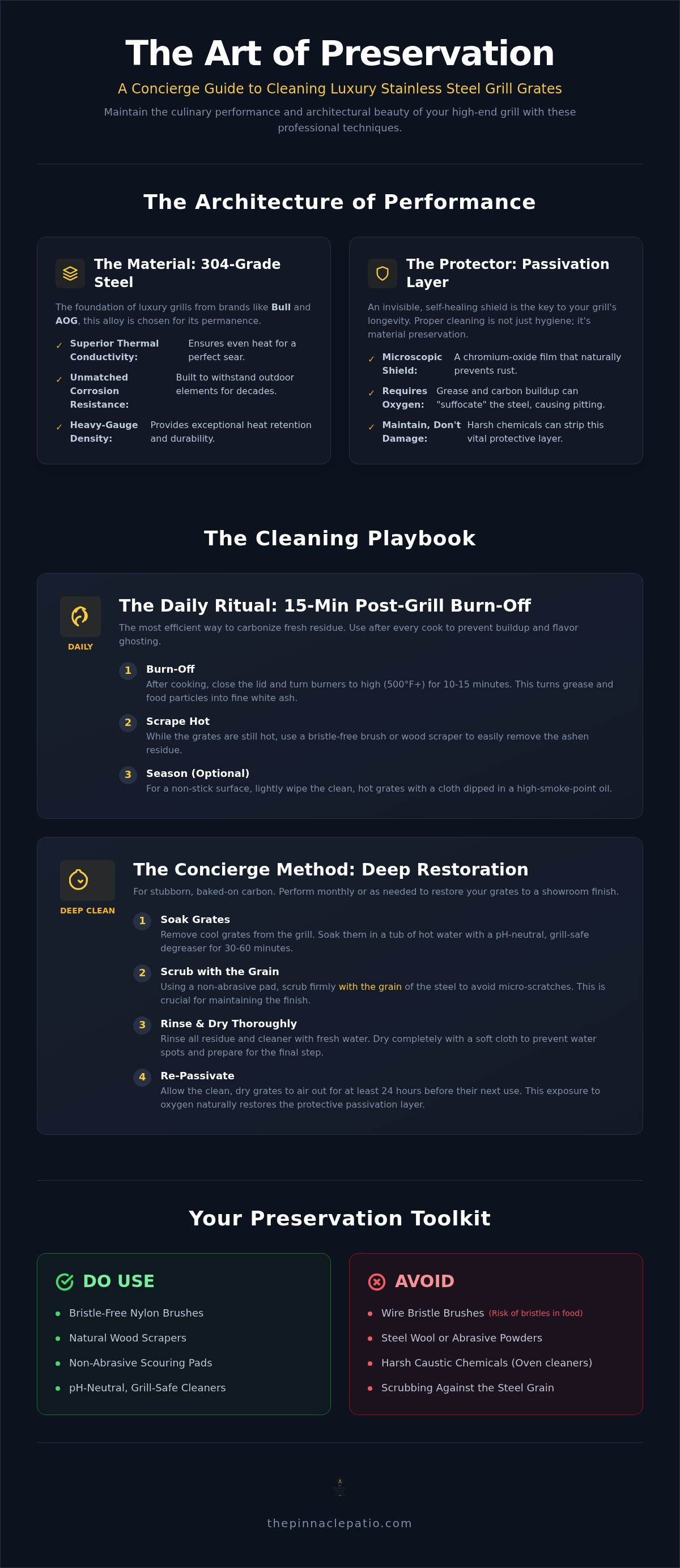
Choosing a professional-grade grill is an investment in culinary precision, social connection, and architectural beauty. High-performance brands like Bull Grills utilize heavy-gauge 304 stainless steel because it offers a rare combination of superior thermal conductivity and unmatched corrosion resistance. While standard retail grates might feel lightweight or flimsy, these professional components are built for permanence. They're designed to withstand the intense heat of high-BTU burners while maintaining their structural integrity over decades of use. Understanding the material science behind your equipment is the first step in mastering how to clean stainless steel grill grates effectively.
The passivation layer is the invisible, chromium-rich oxide film that naturally forms on the surface of 304-grade steel to prevent oxidation and rust. This microscopic shield is what separates a heritage investment from a disposable appliance. However, this layer requires oxygen to remain active. When grates are neglected, food particles and grease can suffocate the steel, leading to localized pitting. Learning how to clean stainless steel grill grates isn't just about hygiene; it's a dedicated practice of material preservation.
Understanding 304 Grade Stainless Steel in Luxury Grilling
The secret to the self-healing nature of luxury grates lies in the precise ratio of chromium and nickel within the alloy. This specific composition creates a surface that resists the harsh elements of an outdoor environment. Unlike big-box retail options that often use thinner 430-grade steel, professional-grade grates provide significant material density. This density ensures consistent heat retention, allowing for the deep, mahogany sear that defines high-end outdoor cooking. When you work with equipment from AOG or Kokomo, you're interacting with materials selected for their ability to distribute energy evenly across the entire cooking surface.
The Impact of Carbon Buildup on Culinary Precision
In the world of professional grilling, there's a fine line between seasoning and neglect. While flavorization adds character to your cook, excessive carbon buildup acts as an unintended insulator. This layer of burnt residue creates frustrating cold spots that compromise the precision of your sear. A pristine surface is essential for the thermal dynamics required to execute complex menus. Beyond the technical benefits, maintaining a clean cooking area preserves the aesthetic harmony of your luxury outdoor kitchen. A well-cared-for grill serves as the centerpiece of your sanctuary, reflecting a commitment to craftsmanship and the elevation of the everyday hosting experience.
The Daily Ritual: Mastering the Post-Grill Clean
Mastering the post-grill cleanup is a ritual that ensures your next culinary event starts with a blank canvas. By leveraging the high-BTU performance of a luxury burner, you can carbonize food particles before they have the chance to bond permanently to the metal. This is the most efficient way to understand how to clean stainless steel grill grates without resorting to harsh chemical degreasers. Performing this task while the metal is still hot is vital. When the stainless steel is expanded by heat, debris is lifted from the microscopic pores of the surface more easily, preventing the buildup that leads to "flavor ghosting" between different dishes.
A well-maintained professional grill develops a subtle, amber patina over time. This golden hue is a mark of a seasoned outdoor kitchen, distinct from the thick, black carbonization that results from neglect. Maintaining this patina while removing food residue preserves the "soul" of your equipment. It signals that the grill is used by a master of atmosphere who understands that high-performance tools require a light but consistent touch to remain at peak performance.
The 15-Minute Post-Grill Sequence
The process begins the moment you remove your last cut of meat. Increase the heat to at least 500°F for approximately 10 minutes with the lid closed. This high-temperature "burn-off" turns grease and proteins into fine white ash. Once the 10 minutes have passed, use a high-quality bristle-free brush to sweep the grates. For a professional finish, try the "steam clean" trick: grip a damp, rolled-up cloth with long-handled tongs and glide it over the hot bars. The resulting steam lift-off provides a level of pristine cleanliness that a dry brush simply cannot match, leaving the surface ready for its next use.
Selecting the Correct Tools for Premium Grates
The tools you choose must respect the craftsmanship of your equipment. While brass brushes are common in retail stores, they're often too soft for heavy-duty 304 steel and wear out prematurely. Conversely, carbon steel brushes should be avoided at all costs. They can leave behind microscopic metal particles that lead to rust contamination on your stainless surface. Wood scrapers are an elegant alternative, as they naturally contour to the specific gauge of your Kokomo Grills hardware over time. Matching your maintenance tools to the durability of your components prevents micro-scratches and preserves the architectural finish of your sanctuary. If you're currently planning a long-term outdoor space, you might schedule a consultation to discuss which high-gauge components best suit your hosting style.
Deep Restoration: Revitalizing Your Culinary Canvas
Even with a dedicated daily ritual, there comes a moment when the architectural luster of your equipment requires a deeper level of care. You'll know it's time for a professional-grade restoration when the grates feel tacky to the touch or when you notice persistent smoke that doesn't dissipate after the initial preheat. Mastering how to clean stainless steel grill grates at this level is about returning the metal to its foundational state without compromising its structural integrity. It's a process of revealing the craftsmanship that lies beneath months of high-performance use.
We advocate for the "Concierge Method," an approach that prioritizes chemical harmony and physical patience over brute force. Avoid the temptation to use power washers or abrasive sanding disks. These aggressive tools can strip the protective chromium oxide layer, leaving your 304-grade steel vulnerable to environmental pitting. This same philosophy of gentle restoration applies to maintaining the stainless steel components of built-in pizza ovens, ensuring your entire outdoor kitchen remains a cohesive sanctuary of performance and beauty.
The Sophisticated Soak: Vinegar and Baking Soda
For heavy-duty grates from Bull or AOG, a non-toxic soak is the gold standard for deep restoration. Create a paste using white vinegar and baking soda; this combination lifts organic matter through a gentle effervescent reaction rather than corrosive etching. This method is particularly effective for reaching the underside of the bars where carbon often hides. By understanding how to clean stainless steel grill grates with patience, you preserve the metal's density and heat retention capabilities.
- Place the grates in a large, shallow container or a specialized soaking bag.
- Apply the paste liberally and allow it to sit for a full 24 hours for maximum effect.
- Rinse thoroughly with warm water and dry immediately with a microfiber cloth to prevent unsightly water spotting.
Handling Stubborn Carbonization
If carbon has bonded deeply to the metal, the "Foil Method" provides concentrated heat to break those bonds. Cover the grates with heavy-duty aluminum foil and run the burners on high for 15 minutes. This creates a localized oven effect that further carbonizes stubborn residue into a fine ash. For the exterior shroud and internal heat plates, utilize specialized stainless steel cleaners designed for high-end appliances. This ensures a residue-free surface, guaranteeing that your next hosting event is defined by the precise flavor of your ingredients rather than remnants of the past.
Protecting the Passivation Layer: Long-Term Preservation
Passivation is the invisible chemical state that defines the longevity of 304-grade steel. It occurs when chromium within the alloy reacts with oxygen to form a microscopic, self-healing oxide film. While we have explored how to clean stainless steel grill grates to remove stubborn carbon, a deep abrasive clean can sometimes temporarily disrupt this protective barrier. Re-passivating your grates is a simple but essential ritual of restoration; it requires allowing the thoroughly cleaned and dried metal to sit in open air for 24 hours before its next use. This restorative pause allows the chromium to react with the atmosphere and reform its shield, ensuring your investment remains impervious to rust.
Environmental factors play a significant role in maintaining this chemical balance. Coastal homeowners face the constant challenge of salt-laden air, which can accelerate oxidation if components aren't regularly maintained. Even in inland sanctuaries, ambient moisture can settle into the metal's microscopic pores during the cooler evening hours. Integrating Bromic luxury heaters into your space does more than extend your hosting season. These high-performance units help manage the microclimate of your patio, reducing the localized humidity that can lead to atmospheric pitting on your stainless steel components.
Seasonal Maintenance for the National Homeowner
Whether you're preparing for winter dormancy or a high-humidity summer season, consistency is your greatest ally. High-quality, breathable covers are non-negotiable for preventing debris and moisture from sitting on the steel surface for extended periods. These covers act as the first line of defense for your built-in investment, shielding it from the elements while allowing trapped gases to escape. After every deep clean, apply a thin layer of high-smoke-point oil to the grates to seal the surface. This creates a temporary barrier that protects the metal while the underlying passivation layer strengthens.
Maintaining the Architectural Luster
The exterior of your outdoor kitchen island deserves the same level of curation as the cooking surface itself. Polishing the stainless steel shroud and cabinetry maintains the visionary aesthetic of your sanctuary and prevents the buildup of environmental grime. There is a profound psychological impact in approaching a clean, gleaming workspace; it validates your commitment to quality and your role as a master of atmosphere. By mastering how to clean stainless steel grill grates and the surrounding architecture, you ensure your patio remains a refined space for connection and culinary excellence.
The Pinnacle Approach: Elevating Your Outdoor Kitchen Maintenance
A well-maintained grill is the hallmark of a master of atmosphere. It reflects a deep commitment to the craft of hosting and an appreciation for the precision of high-end engineering. When you master how to clean stainless steel grill grates, you aren't just performing a chore; you're engaging in a ritual of culinary preservation. Top-tier brands like AOG and Bull are designed with a sense of permanence and heritage. Unlike mass-market alternatives that are destined for a landfill after a few seasons, these professional components are built to be refurbished rather than replaced. This philosophy of longevity is what transforms a simple patio into a generational sanctuary of connection and refinement.
Transitioning from maintenance to mastery brings a distinct joy to the outdoor cooking experience. There's a tactile satisfaction in placing a prime cut of meat onto a perfectly prepared surface, knowing that the thermal dynamics will behave exactly as intended. Expert guidance is invaluable when selecting your next built-in outdoor grill. Choosing the right equipment ensures that every physical attribute of your kitchen island is designed around your specific lifestyle benefits, from the material density of the grates to the BTU output of the burners.
When to Consult a Visionary Guide
While 304-grade steel is incredibly resilient, there are specific signs that your grates have reached the end of their functional lifespan. Significant warping that prevents a level cooking surface or deep, structural pitting that disrupts heat distribution suggests it's time for an evolution. You might consider upgrading to laser-cut stainless steel grates, which offer sophisticated searing patterns and increased surface area for superior heat transfer. If you're noticing these changes in your equipment's performance, you should schedule a consultation to discuss your outdoor kitchen’s future and explore how new technology can elevate your hosting capabilities.
Curating a Lifetime of Outdoor Memories
Investing in quality over quantity is the cornerstone of creating a permanent outdoor residence. The right maintenance ritual does more than clean a metal surface; it protects the social atmosphere of your patio by ensuring every meal is a flawless performance. We view ourselves as your knowledgeable partner in this luxury lifestyle, providing the expert guidance needed to curate a space that fosters connection and extraordinary moments. Your journey doesn't end with the selection of a grill; it continues through every sunset shared around a pristine, high-performance cooking surface that was built to last a lifetime.
Preserving Your Culinary Legacy
Maintaining a high-performance grill is a commitment to both craftsmanship and the art of hosting. By understanding the science of the passivation layer and the efficiency of the high-heat burn-off method, you ensure your 304-grade stainless steel remains a precision tool for decades. Mastering how to clean stainless steel grill grates isn't just a matter of hygiene; it's a ritual that protects the thermal dynamics and architectural beauty of your outdoor sanctuary. Whether you're caring for a Bull, AOG, or Kokomo unit, consistent preservation is what separates a standard meal from an extraordinary culinary experience.
As specialists in high-performance outdoor kitchen curation, we provide national expertise and concierge-style support to help you navigate every stage of your patio evolution. Your investment deserves the highest level of care, and we're here to offer the expert guidance required to keep your sanctuary performing at its peak. We look forward to helping you create a space where every gathering feels timeless and every moment is elevated.
Frequently Asked Questions
Can I use steel wool to clean my stainless steel grill grates?
You should avoid using steel wool on your professional-grade grates. Steel wool is typically made of carbon steel, which can leave microscopic particles behind on your 304-grade stainless steel surface. These foreign particles will eventually oxidize, leading to unsightly surface rust and compromising the material's architectural integrity. Instead, opt for a high-quality stainless steel brush or a wood scraper that respects the craftsmanship of your Bull or AOG equipment.
How often should I deep clean my built-in grill grates?
We recommend a deep restoration every three to six months, depending on your frequency of hosting. While the daily burn-off method is effective for routine maintenance, a periodic deep clean ensures that stubborn carbonization doesn't permanently insulate the metal. This seasonal ritual preserves the thermal dynamics of your outdoor kitchen. If you notice persistent smoke or a tacky texture that doesn't dissipate after preheating, it's time for a thorough Concierge Method soak.
Is it safe to put stainless steel grill grates in the dishwasher?
While heavy-gauge stainless steel grates are technically dishwasher safe, we don't recommend this method for luxury components. The harsh detergents and intense cycles used in home dishwashers can dull the professional finish over time. Additionally, the sheer weight of grates from brands like Kokomo can damage your dishwasher's racks. Hand cleaning with a non-toxic vinegar paste remains the gold standard for maintaining the sophisticated luster and longevity of your culinary investment.
What is the best oil to use for seasoning stainless steel grates?
Selecting a high-smoke-point oil is essential for protecting your grates after a deep clean. Grapeseed, avocado, or canola oils are excellent choices because they won't break down or become acrid under the intense heat of a luxury burner. Applying a thin, even layer of oil creates a temporary barrier that aids the natural passivation process. This simple step ensures a smooth release for your next sear while providing an additional layer of climate protection.
Why are my stainless steel grates turning magnetic or showing rust?
It's a common misconception that 304-grade steel is never magnetic; intense heat or cold-working during manufacturing can slightly alter its properties. If you see rust, it's often "tea staining" from environmental salt or contamination from improper cleaning tools like carbon steel brushes. Understanding how to clean stainless steel grill grates involves recognizing these external factors. Regular maintenance and ensuring a healthy passivation layer will prevent this surface oxidation from becoming a structural concern.
Can I use a pressure washer on my outdoor kitchen grates?
You should generally avoid using a pressure washer on your luxury grill grates. The high-velocity water stream can be overly aggressive, potentially stripping the protective chromium oxide layer or driving debris into sensitive burner ports. This forceful cleaning also creates messy overspray that can damage the delicate finishes of your surrounding outdoor kitchen island. A patient, sophisticated soak in a vinegar and baking soda solution is a far more refined and effective way to achieve a pristine cooking surface.
Does high heat damage the structural integrity of 304 stainless steel?
High heat is actually a requirement for the performance of 304-grade stainless steel. This material is specifically chosen by premium brands like Bull and AOG for its ability to withstand temperatures exceeding 1,000°F without losing its structural integrity. While the steel may develop a golden patina over time, this is a natural sign of a well-used professional tool. Regular high-heat burn-offs are a vital part of the ritual when learning how to clean stainless steel grill grates.
What should I do if my grill grates have heavy pitting?
Heavy pitting is a sign that the metal's structural integrity has been compromised, often due to long-term neglect or harsh environmental exposure. If the pitting is deep enough to trap food particles or cause uneven heating, it may be time to consider a replacement. This is an ideal moment to consult a visionary guide about upgrading your components. Laser-cut stainless steel options can provide a significant performance boost while revitalizing the aesthetic of your outdoor sanctuary.