

The L-Shaped Outdoor Kitchen: A Guide to Sophisticated Design and Culinary Efficiency
What if the most significant upgrade to your home isn't found within its four walls, but in the strategic geometry of your patio? Many homeowners find themselves overwhelmed by the sheer volume of appliance choices and the fear of a disjointed workflow. The l-shaped outdoor kitchen offers a sophisticated solution to these common frustrations, acting as both a professional culinary sanctuary and a natural boundary for social gatherings. It's a layout that understands the delicate balance between high-end performance and the warmth of a shared meal.
You likely recognize that a great kitchen requires more than just premium hardware; it needs a design that works with you, not against you. In this guide, you'll discover how to master the "Work Triangle" for peak efficiency and gain clarity on which elite brands, such as Bull, AOG, or Kokomo, best align with your culinary goals. We'll move beyond basic aesthetics to explore how a well-conceived layout integrates seating and cooking into one cohesive experience. By the end, you'll have a clear vision for an outdoor space that feels curated, intentional, and perfectly suited for a lifetime of hosting.
Key Takeaways
- Master the professional "Work Triangle" by leveraging the 90-degree angle of an l-shaped outdoor kitchen to optimize the flow between your grill, sink, and refrigeration.
- Learn how to utilize the "short wing" of your island as a dedicated social zone, integrating bar-height seating that encourages guest interaction without interrupting the chef.
- Discover why 304-grade stainless steel is the non-negotiable standard for longevity and how brands like Bull, AOG, and Kokomo offer distinct engineering advantages.
- Understand the architectural power of the two-wing layout to define a sophisticated "outdoor room" and create a sense of permanence on your patio.
- Identify the critical planning steps for your project, from mapping utility access points to selecting high-performance appliances tailored to your specific culinary style.
The Architectural Elegance of the L-Shaped Outdoor Kitchen
An l-shaped outdoor kitchen is more than a mere arrangement of high-end appliances; it's a deliberate architectural statement that utilizes a two-wing configuration to transform an open patio into a structured sanctuary. By anchoring into a corner or extending purposefully into the landscape, this layout provides a sense of permanence and heritage that linear islands often lack. It functions as a psychological boundary, defining the "outdoor room" without the need for restrictive walls or partitions. It creates a curated atmosphere where the architecture of the home extends gracefully into the natural world, offering a space that feels both expansive and intimate.
This geometry allows for a sophisticated separation of duties that enhances the hosting experience. One wing serves as the high-performance "hot zone" where the chef commands the fire, while the secondary wing acts as a dedicated "social zone" for guests to gather. It's an invitation to linger, turning the act of cooking into a shared performance rather than a solitary chore. The l-shaped outdoor kitchen stands as the definitive choice for the modern host who seeks a seamless transition between professional culinary performance and the warmth of a shared experience.
Defining Your Outdoor Culinary Boundary
The natural 90-degree turn of the L-shape creates an intuitive barrier that protects the chef's workspace from the flow of foot traffic. In expansive environments, it anchors the patio, providing a focal point that draws the eye toward the craftsmanship of the masonry and the gleam of 304 stainless steel. In more compact settings, it maximizes every square inch by reclaiming underutilized corners that would otherwise remain empty. This layout transitions your cooking station from a functional utility into a luxury destination, designed for efficiency, built for longevity, and curated for the refined host.
Why the L-Shape Outperforms Linear Layouts
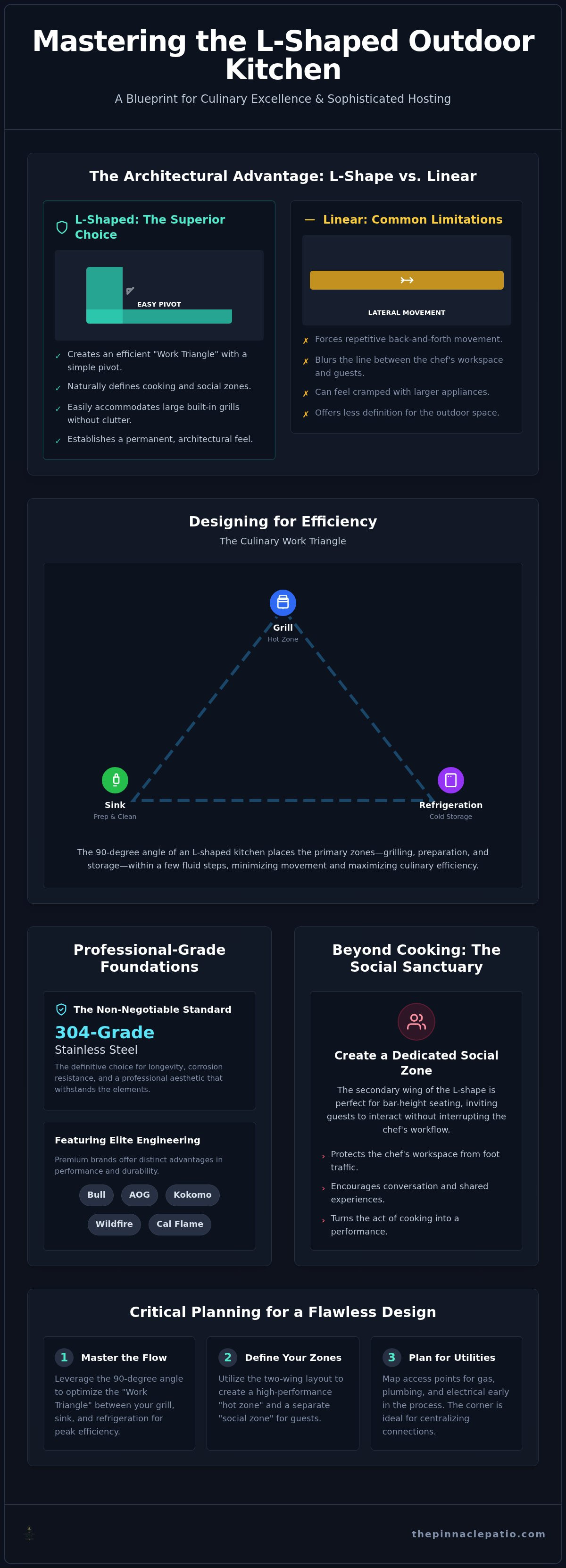
While linear islands offer a simple aesthetic, they often force the chef into a repetitive lateral movement that can feel cumbersome during complex meal preparation. The L-shape introduces the advantage of the easy pivot, where prep surfaces, refrigeration, and storage are all within a single step's reach. This layout is particularly adept at accommodating larger built-in grills from premium brands like Bull or Kokomo. Because the footprint is distributed across two planes, even a massive 40-inch grill doesn't overwhelm the counter space, allowing for:
- Increased prep-to-cook ratios that prevent surface clutter during intensive searing or roasting.
- Dedicated zones for raw and finished ingredients to maintain food safety and organization.
- Ample room for integrated side burners, power burners, or pizza ovens without sacrificing workspace.
Designing for Efficiency: The Culinary Work Triangle
Mastering the flow of an l-shaped outdoor kitchen requires an understanding of the "Work Triangle," a design principle that dictates the ergonomic distance between the grill, the sink, and the refrigeration. In a professional environment, every second counts. The 90-degree intersection of an L-shape naturally facilitates this triangle, placing the primary points of activity within a few fluid steps of one another. Unlike a linear setup that stretches your workflow across a single plane, the L-shape allows you to rotate between tasks with minimal exertion. It's about creating an intuitive rhythm where the chef remains the calm center of the culinary experience.
Safety and efficiency also depend on "landing space," which is the clear countertop area on either side of the grill. You need room to set down heavy platters of raw protein and space to rest finished dishes. Integrated storage plays a vital role here; by concealing tools, fuel, and cleaning supplies within the island's structure, you maintain a professional, uncluttered environment that reflects the sophistication of your home.
Optimizing the Corner: Storage and Service
The corner of an l-shaped outdoor kitchen is often overlooked as "dead space," but it offers a unique opportunity for deep storage or centralizing utility access. This intersection is the ideal location for housing complex plumbing for the sink or gas manifolds for the built-in grill. Strategically, we often recommend placing the high-heat appliances on the longer wing to better manage smoke and heat, while the shorter wing serves as the bar and social hub. This separation ensures that guests can enjoy their cocktails without being subjected to the intensity of the searing station. Proper ventilation is essential here; ensuring your island includes vent panels, especially when using high-BTU units from Bull or AOG, allows heat to dissipate safely.
Ergonomics for the Professional Home Chef
True luxury is found in the details of height and movement. While standard prep counters sit at 36 inches, many hosts choose to elevate the social wing to 42 inches for bar-height seating. This staggered design creates a visual hierarchy and keeps the prep work tucked away from the dining experience. The goal is the "pivot," which is a design where the chef can reach the refrigerator, prep area, and grill simply by turning on their heel. Planning for these gas and electrical lines early is critical, as a fixed L-shaped structure offers less flexibility for post-installation changes. If you're feeling uncertain about the technical requirements of your layout, our team can help you plan your utility configurations to ensure a seamless execution.
Selecting Professional-Grade Components for Your Island
The grill stands as the heart of any l-shaped outdoor kitchen. It's not just a tool; it's an investment in a lifestyle defined by refinement and performance. For a culinary sanctuary intended to last a lifetime, 304-grade stainless steel is the non-negotiable benchmark. This material offers superior resistance to oxidation and environmental wear, ensuring your island maintains its luster through every season. When you select a built-in grill from elite brands like Bull, AOG, or Kokomo, you're choosing professional-grade engineering. Matching your access doors, drawers, and storage components to your primary grill brand is equally vital. It creates a cohesive visual narrative, ensuring the grains of the steel and the style of the handles remain consistent across the entire structure.
Precision is paramount during the planning phase. High-performance grills require specific, exacting cutout dimensions within the island to ensure proper airflow and structural integrity. A fraction of an inch can be the difference between a seamless, flush-mount finish and a costly design error. This technical necessity is why we recommend selecting your core appliances before the final construction of your island begins, allowing the architecture to be built around the hardware.
The Powerhouse: Bull and AOG Built-In Grills
Bull Grills are celebrated for their ReliaBULL technology, a proprietary design that improves heat distribution by up to 50 percent. This eliminates the frustrating cold spots found in lesser units, allowing you to utilize every square inch of the cooking surface with identical precision. It's a level of consistency that transforms a standard meal into a professional masterpiece. AOG, manufactured with the heritage of R.H. Peterson, offers a more minimalist, timeless aesthetic. Their burners are designed for rapid searing, making them the ideal choice for those who prioritize a perfect crust on prime cuts. When deciding between infrared burners and traditional gas burners, consider your primary cooking style; infrared provides the intense heat needed for steakhouse-quality searing, while traditional burners offer the versatility required for slow roasting and delicate finishes.
Essential Island Accessories
A luxury social hub requires more than just fire. Outdoor-rated refrigeration is essential for seamless beverage service, allowing you to keep guests refreshed without leaving the conversation. To maintain the pristine atmosphere of a high-end patio, integrated trash centers and paper towel holders are quiet but necessary additions that keep clutter out of sight. To truly elevate your hosting capabilities, consider incorporating a built-in pizza oven into the secondary wing of your island. This addition diversifies your culinary repertoire, turning a simple gathering into an artisanal experience that engages every sense.
Beyond Cooking: Creating a Social Sanctuary
The short wing of an l-shaped outdoor kitchen acts as the primary zone for guest interaction, transforming a functional cooking space into a vibrant social hub. While the long wing handles the intense heat of the built-in grill, this secondary section invites guests to linger and engage. By integrating bar-height seating, you allow friends and family to converse with the chef without ever entering the active culinary zone. This layout creates a natural boundary that feels welcoming rather than restrictive. To elevate the atmosphere after sunset, subtle LED lighting tucked under the counter lip and high-quality stone finishes provide the visual depth expected in a luxury outdoor kitchen. It's about crafting an environment that appeals to the senses while maintaining a sophisticated, orderly aesthetic.
Sophisticated Climate Control with Bromic
To truly maximize your investment, your patio must remain comfortable beyond the peak of summer. Bromic luxury heaters are the preferred choice for high-end islands because they blend high-performance radiant heat with a sleek, minimalist design. Strategically placing these units allows you to cover both the cooking area and the seating zones, ensuring everyone remains warm during cooler autumn evenings. For permanent island installations, you'll need to choose between electric and gas heating. Electric heaters, like the Bromic Platinum series, offer a slim profile and precise control; gas-powered units provide intense, wide-reaching warmth that's ideal for larger open-air spaces. This climate control is a vital component in creating a space that feels like a permanent extension of your home's living area.
The Art of the Outdoor Bar
A well-conceived L-shape often features a 12 to 14-inch countertop overhang, which is specifically engineered for comfortable stool seating. This design choice turns the back of the island into a functional bar where you can incorporate ice chests or wine coolers on the guest-facing side. This placement ensures that guests can help themselves to refreshments without disrupting the chef's workflow. The choice of materials here is critical for a premium sensory experience. Combining the cool, tactile surface of engineered stone with the polished finish of 304 stainless steel creates a balanced aesthetic that feels established. It's a space built around the human experience, where the mechanics of the kitchen fade into the background of a perfect evening.
Navigating the Journey from Vision to Reality
Transforming a curated vision into a permanent reality requires a methodical approach that respects both the architecture of your home and the technical demands of professional appliances. An l-shaped outdoor kitchen is a significant investment in your lifestyle, and its success depends on a sequence of intentional steps. It's about moving from broad inspiration to the precise calibration of space and utility. By following a structured path, you ensure that your sanctuary is not only beautiful but also flawlessly functional from the moment the first burner is ignited.
- Step 1: Measure your intended footprint with precision, identifying existing utility access points for gas, water, and electricity.
- Step 2: Define your primary cooking style; whether you prioritize the slow rotation of a rotisserie, the intense heat of a searing station, or the patience of slow smoking, your habits will dictate your hardware.
- Step 3: Select a unified brand family, such as Kokomo or Bull, to ensure the aesthetic consistency of every handle, hinge, and stainless steel grain.
- Step 4: Consult with a specialist to verify that your appliance list aligns perfectly with your island's dimensions and ventilation requirements.
- Step 5: Establish a perfectly level, structural foundation before your island arrives to ensure a seamless and stable installation.
Preparing for Your L-Shaped Installation
Safety and longevity are built from the ground up. A non-combustible base is a non-negotiable requirement for built-in gas grills, providing a stable and fire-safe platform for your culinary efforts. Understanding the delivery logistics for large outdoor kitchen islands is equally important; these are substantial, professional-grade structures that require clear access and a prepared site. While we provide the expert hardware and guidance, you'll need to coordinate with local licensed trades for the final utility hookups. This coordination ensures that your gas and electrical connections meet modern safety standards and operate with the precision your equipment deserves.
Expert Guidance at The Pinnacle Patio
We believe that a luxury purchase should be accompanied by a luxury experience. Our concierge service is designed to help you navigate the nuances of high-end brands, moving beyond a mass-market catalog to a curated selection of items that meet our rigorous standards for craftsmanship. We act as your visionary guide, filtering the noise of the market to present only the most reliable and beautiful options for your l-shaped outdoor kitchen. It's a partnership built on trust, expertise, and a shared appreciation for the finer details of outdoor living. When you're ready to refine your plans and finalize your dimensions, our team is here to provide the clarity you need.
Elevating Your Outdoor Culinary Experience
Investing in an l-shaped outdoor kitchen is a commitment to a life well-lived. By mastering the ergonomic flow of the Work Triangle and selecting professional-grade components from Bull, AOG, or Kokomo, you transition from mere cooking to a refined performance. This layout doesn't just optimize your patio's footprint; it creates a permanent anchor for connection and hospitality. Whether you're searing on an infrared burner or sharing cocktails at a stone-finished bar, every detail should reflect your personal standard of excellence.
As an authorized dealer with national white-glove shipping, we specialize in curating the world's finest outdoor equipment to match your unique vision. Our expert guidance ensures that the complexities of utility planning and appliance selection are handled with the precision they deserve. Your journey toward a professional-grade culinary sanctuary starts with a single, intentional step toward expert design.
We look forward to helping you transform your outdoor space into an enduring hub of refinement and joy.
Frequently Asked Questions
What are the benefits of an L-shaped outdoor kitchen layout?
The primary benefit of an l-shaped outdoor kitchen is its ability to create distinct functional zones within a single structure. This layout provides a natural corner for high-performance grilling while extending a secondary wing for prep or social interaction. It effectively defines the boundaries of an outdoor room, offering more counter space than linear islands and protecting the chef's workflow from the movement of guests on the patio.
How much space is required for an L-shaped outdoor kitchen island?
A standard l-shaped outdoor kitchen typically requires a minimum footprint of approximately 10 by 8 feet to accommodate a professional grill and adequate landing space. While smaller 6 by 8 foot configurations are possible for compact patios, larger footprints of 14 to 18 linear feet are preferred for luxury installations. This ensures enough room for integrated refrigeration and bar-height seating without crowding the primary culinary work triangle.
Can I customize the appliances in a prefabricated L-shaped kitchen?
Many of our premium island packages allow for significant appliance customization within specific brand families like Bull or Kokomo. You can often select between different burner configurations, add specialized components like power burners, or integrate outdoor-rated refrigeration. It's essential to finalize these choices during the design phase, as prefabricated structures are built with precise cutouts that match the specific dimensions of your chosen professional-grade equipment.
Is a built-in grill better than a freestanding grill for an L-shaped island?
A built-in grill is the definitive choice for an L-shaped island because it provides a seamless, flush-mount aesthetic that freestanding units cannot replicate. Built-in models are engineered specifically for island integration, offering superior heat shielding and structural stability. This permanent installation allows for a cohesive look where the 304 stainless steel components blend perfectly with the stone or stucco finishes of your custom outdoor sanctuary.
How do I choose between Bull, AOG, and Kokomo grills for my kitchen?
Choosing the right brand depends on your specific culinary priorities. Bull grills are renowned for their ReliaBULL technology which ensures even heat distribution across the entire surface. AOG grills offer a sleek, minimalist design backed by the engineering heritage of R.H. Peterson. Kokomo grills provide robust performance and a wide array of specialized accessories. Our concierge team can help you compare these professional-grade options based on your primary cooking style.
What is the best countertop material for an L-shaped outdoor kitchen?
Granite and high-quality engineered stone are the premier choices for outdoor countertops due to their extreme durability and resistance to UV rays. These materials handle the intense heat of professional grills and the varied weather conditions of a national climate without fading or cracking. Concrete is another sophisticated option, though it requires regular sealing to maintain its finish. Each material should be selected for its tactile beauty and long-term resilience.
Do I need a permit to install an L-shaped outdoor kitchen island?
Most jurisdictions require a permit for any outdoor structure that involves extending gas, water, or electrical lines from your home. The 2024 National Electrical Code has also expanded requirements for GFCI protection in outdoor locations, which your local trades must follow. We recommend checking with your local building department and HOA regulations early in the planning process to ensure your installation meets all current safety and regional codes.
How do I protect my L-shaped kitchen from the elements?
Protecting your investment starts with choosing 304-grade stainless steel components that naturally resist oxidation. For the structure itself, high-quality custom-fit covers are the most effective way to shield your grill and accessories from debris and moisture when not in use. Integrating luxury Bromic heaters can also help manage ambient moisture during cooler months. Regular cleaning with specialized stainless steel polish will maintain the luster and integrity of your professional equipment.