

The Ultimate Guide to the Outdoor Grill Station: Engineering Your 2026 Culinary Sanctuary
A truly professional outdoor kitchen is less about the heat it generates and more about the engineering that survives the seasons. You likely already understand that a premium outdoor grill station is a permanent architectural investment, yet the technical nuances between a lasting sanctuary and a costly mistake often hide in the fine print. We've curated this guide to help you navigate the complexities of high-performance design, from the molecular integrity of 304-grade stainless steel to the seamless integration of 2026 smart technology. We'll show you how to select a configuration that balances professional-grade power with a sophisticated aesthetic that mirrors your interior style.
Selecting the right components requires a blend of culinary ambition and technical precision. We'll break down the essential specifications for 2026, including the latest multicolor LED-integrated AOG L-Series updates, gas line clearances, and the critical material differences required for harsh coastal environments. You'll discover how to coordinate BTU output with proper ventilation and appliance sizing. This guide provides the expert clarity needed to transform your patio into a curated, high-performance cooking space built for longevity, refinement, and connection.
Key Takeaways
- Understand why 304-grade stainless steel remains the non-negotiable standard for structural integrity and weather resistance in a high-end culinary environment.
- Learn to master the "Work Triangle" by selecting the ideal 30-inch, 36-inch, or 42-inch grill width to match your specific entertaining volume and spatial requirements.
- Discover how to transform a standard patio into a multi-season sanctuary by integrating Bromic luxury heaters directly into your outdoor grill station layout.
- Evaluate the advantages of pre-engineered luxury islands from brands like Bull and Kokomo to ensure perfect compatibility between your built-in appliances and their foundation.
- Explore the technical shift toward thermal engineering and integrated LED lighting that defines the 2026 generation of professional-grade outdoor cooking.
Defining the Modern Outdoor Grill Station: More Than a Barbecue
The transition from the humble backyard barbecue to the sophisticated outdoor grill station represents a fundamental shift in how we perceive our living spaces. We've moved past the era of the portable, wheeled cart that was tucked away in a garage for most of the year. Today, these stations are permanent culinary hubs, designed with the same intentionality and architectural permanence as a high-end indoor kitchen. They serve as an anchor for the patio, blending professional-grade performance with the refined comfort of an outdoor living room.
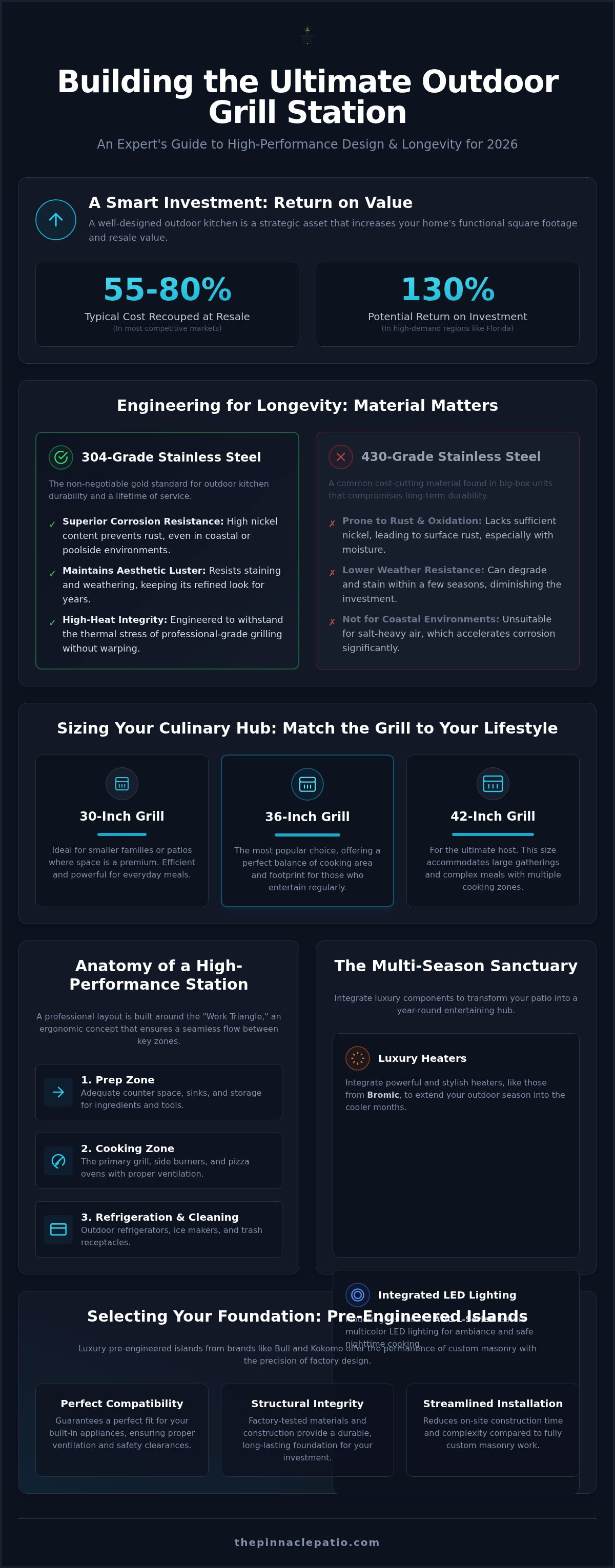
Beyond the immediate lifestyle benefits, an integrated station is a strategic asset for your home. Industry research indicates that a well-designed outdoor kitchen can return between 55% and 80% of its cost at resale in competitive markets like California. In regions like Florida, some estimates suggest the return on investment can reach as high as 130%. It transforms a simple backyard into a versatile entertaining venue, increasing the functional square footage of the property while providing a dedicated space for connection and hospitality.
The Anatomy of a High-Performance Station
A professional-grade layout is built around the "Work Triangle" concept, which prioritizes the flow between prep, cooking, and cleaning zones. The primary cooking zone, often featuring high-output Kokomo Grills, must be flanked by adequate landing areas. These are the non-heated surfaces where you place hot platters, heavy tools, and raw ingredients. Safety is paramount in these permanent designs; proper ventilation and specific clearances for combustible materials are non-negotiable engineering requirements. Integrating professional components ensures that the station operates safely and efficiently even under heavy use during large gatherings.
Investment vs. Expense: The 2026 Outlook
Choosing a outdoor grill station is an exercise in long-term thinking. While big-box retailers offer lower upfront costs, those units often lack the material integrity to survive more than a few seasons in the elements. Professional equipment is engineered for a 10-year horizon or longer, utilizing heavy-gauge 304 stainless steel that resists rust and maintains thermal efficiency. Modern landscape design has embraced "all-season" living, making durability essential for year-round utility. Pre-engineered Outdoor Kitchen Islands provide the ideal foundation for this investment. They offer the structural permanence of a custom masonry project with the precision and ease of a factory-tested kit, ensuring your appliances fit perfectly and perform as intended for years to come.
Engineering for Longevity: Material Quality and Thermal Performance
Longevity in a professional outdoor grill station isn't a matter of chance. It's the direct result of selecting materials that can withstand the corrosive combination of high heat, moisture, and ambient environmental factors. When investing in a permanent culinary sanctuary, the distinction between generic stainless steel and high-grade 304 stainless steel is the difference between a lifetime of service and a unit that develops surface rust within two seasons.
The 304 Stainless Steel Advantage
While many entry-level grills utilize 430-grade steel to reduce costs, this material lacks the nickel content necessary to resist oxidation in outdoor environments. 304-grade stainless steel is the gold standard for high-heat environments because its chemical composition provides superior resistance to corrosion, even in salt-heavy coastal regions. It maintains its aesthetic luster with minimal maintenance, ensuring your investment looks as refined in five years as it does on the day of installation. For those planning complex layouts near pools or oceanfronts, choosing 304-grade components is the most critical decision you'll make for the station's durability.
Burner Technology and Heat Management
Thermal performance is defined by how heat is distributed across the cooking surface, not just the raw BTU output. High-end brands like Bull and AOG utilize cast stainless steel burners rather than thin-walled tube burners. Cast burners are significantly heavier, offering exceptional heat retention and a more consistent flame pattern. This engineering allows for precise thermal mapping, creating dedicated heat zones that let you sear a ribeye at high temperatures while gently roasting vegetables on an adjacent rack. Heat deflectors and ceramic briquettes further refine this process by evening out hot spots and radiating heat back toward the food.
Modern configurations often include a mix of traditional convection burners and specialized infrared searing burners. Infrared technology uses intense, direct radiant heat to lock in juices instantly, a feature often found in professional steakhouse kitchens. Whether you choose natural gas for its convenience or liquid propane for its portability, optimizing fuel efficiency depends on the burner's ability to maintain steady temperatures against the wind. If you're unsure which burner configuration matches your cooking style, you can schedule a design consultation to ensure your layout is perfectly engineered for your needs.
Spatial Planning: Sizing and Ergonomics for the Culinary Hub
A well-engineered outdoor grill station is defined by its ability to facilitate a smooth transition from prep to plate. While aesthetics capture the eye, ergonomics dictate the long-term enjoyment of the space. Designers prioritize the Work Triangle, which optimizes the distance between the primary cooking surface, the prep area, and the cleaning zone. This flow ensures the chef isn't isolated from guests while managing high-heat tasks. To achieve this, standard countertop heights should remain at 36 inches, while a 30-inch depth is recommended to provide sufficient landing zones for heavy platters and rotisserie kits.
Planning for utilities is equally critical and often overlooked until late in the construction phase. Modern stations require more than just a gas line; they need 110V electrical circuits to power integrated LED lighting, rotisserie motors, and ignition systems. If you're selecting a built-in model from brands like Bull or AOG, ensure your layout accounts for the necessary installation clearances and ventilation to manage heat and airflow safely under varying wind conditions. Proper utility placement prevents the need for invasive retrofitting once the island structure is finalized.
Grill Sizing Comparison: 30" vs. 36" vs. 42"
Choosing the correct width is the most significant decision for your culinary workflow. The table below outlines how these standard sizes translate into tangible cooking benefits for the homeowner.
| Grill Width | Burner Count | Best Use Case |
|---|---|---|
| 30-Inch | Typically 3 Burners | Ideal for urban patios, balconies, and daily family dining. |
| 36-Inch | Typically 4 Burners | The versatile sweet spot for hosting mid-sized groups and multi-zone cooking. |
| 42-Inch | 5 or More Burners | Professional-scale capacity for large gatherings and advanced techniques. |
Layout Configurations for Entertaining
The footprint of your outdoor grill station should mirror your entertaining style. Straight islands offer a compact, efficient solution for smaller decks, but they can limit the chef's available surface area for prep work. In contrast, L-shaped and U-shaped configurations create a more immersive "cocktail bar" atmosphere. These larger layouts provide maximum prep space and allow guests to gather around the chef without interfering with the high-heat zone. This separation is vital for safety when operating professional-grade equipment at peak temperatures. For those seeking pre-configured inspiration that has been professionally engineered for these dynamics, explore the curated layouts of Pinnacle Outdoor Kitchens to find a foundation that matches your architectural vision.
The Multi-Season Sanctuary: Integrating Heaters and Specialty Appliances
The true measure of a luxury outdoor grill station is its ability to remain functional as the seasons shift. While the primary grill provides the heat for the meal, the surrounding environment requires a different kind of thermal engineering to maintain comfort during autumn evenings or crisp spring mornings. Transitioning from a seasonal setup to a year-round sanctuary involves integrating climate control and specialty culinary tools that go beyond the standard rotisserie. This evolution ensures that your investment remains a vibrant center for connection regardless of the temperature outside.
Achieving this balance requires a cohesive aesthetic approach. Modern heating elements are designed with sleek, low-profile silhouettes that complement the brushed 304 stainless steel of your appliances. By coordinating the finishes and mounting styles, you can maintain a polished professional look while significantly extending the utility of your patio well into the colder months.
Bromic Climate Control Integration
Bromic luxury heaters utilize infrared technology to warm objects and people directly, rather than wasting energy heating the moving air. This is essential for open-air kitchens where traditional convection heaters are often ineffective. When planning your layout, consider the strategic placement of Patio Heaters to create a consistent thermal envelope that mirrors the warmth of your interior dining room. Smart mounting options, such as recessed ceiling mounts or wall-mounted brackets, allow these units to blend into the architecture without disrupting the visual flow of the space. Coordinating the BTU needs for both comfort and cooking ensures your utilities are scaled correctly for the entire station.
Specialty Culinary Additions
Integrating specialty appliances transforms a standard cooking area into a versatile culinary destination. A Built-In Pizza Oven serves as a secondary focal point, offering a communal, high-heat cooking experience that differs from the intensity of the main grill. Beyond the oven, high-output power burners are indispensable for large-batch boiling or wok cooking, providing professional-grade versatility that standard burners cannot match. To ensure the chef remains part of the social gathering, consider these additions:
- Outdoor Refrigeration: Keeps ingredients at safe temperatures and beverages within reach, eliminating trips to the indoor kitchen.
- Integrated Ice Chests: Provides a durable, insulated solution for chilling drinks during long summer afternoons.
- Specialized Storage: Dedicated drawers for pizza stones, cast iron griddles, and wok rings keep the station organized and ready for any technique.
Selecting Your Foundation: Prefab Islands vs. Curated Kits
The final stage in engineering your outdoor grill station is selecting a foundation that supports both your culinary ambition and the physical weight of professional-grade appliances. While custom masonry offers a bespoke look, it often introduces variables in construction quality and significant labor timelines that can delay your project by weeks. Choosing Luxury Outdoor Kitchen Islands provides a pre-engineered solution where every cutout is precision-matched to your specific grill and accessories. This structural certainty is the cornerstone of a lasting investment, ensuring that your sanctuary is as safe as it is beautiful.
Safety remains the primary driver behind material selection for your island. High-performance grills generate immense heat, making the use of non-combustible materials essential for the island's core structure. Pre-engineered solutions from brands like Bull and Kokomo are built around galvanized steel frames or magnesium oxide boards, which offer superior fire resistance compared to traditional wood-framed alternatives. This engineering prevents the risk of structural failure or fire hazards, providing peace of mind as you master high-heat searing techniques.
The Prefab Advantage
Pre-engineered islands offer a streamlined alternative to traditional construction without sacrificing aesthetic quality. These units are built to handle specific weight loads and the unique thermal expansion that occurs when a 42-inch grill reaches peak temperatures. By utilizing factory-controlled environments, these islands ensure a consistent finish across every surface. You'll benefit from a significantly reduced installation timeline, as the primary structure arrives ready for appliance integration. Whether you prefer a refined stucco finish or a sophisticated stone veneer, the result is a polished, professional look that integrates seamlessly with your existing patio architecture.
Consultation and Configuration
Compatibility is the most common pitfall in outdoor design. A built-in grill requires a precise opening; even a half-inch discrepancy can lead to costly field modifications or improper ventilation. Beyond the grill, you must identify the necessary accessories that make a station truly functional. Integrating stainless steel access doors is required for reaching gas shutoff valves, while adding dual-drawer storage or integrated trash chutes keeps the chef's environment organized. Measuring your space for a seamless fit involves more than just length and width. You must also account for utility stub-outs and the necessary clearances for hood openings.
Finalizing these technical details is where expert guidance becomes invaluable. Our team helps you navigate the nuances of appliance sizing and utility requirements to prevent installation errors before they occur. If you're ready to design a space that balances high-performance engineering with sophisticated design, you can schedule a consultation for expert configuration guidance.
Engineering Your 2026 Culinary Destination
Creating a sophisticated outdoor grill station is a journey that moves from technical specifications to the art of hospitality. It's about more than choosing a burner count; it's about investing in 304-grade stainless steel that survives the seasons and thermal mapping that ensures every meal is a masterpiece. By balancing spatial ergonomics with the integrated warmth of Bromic climate control, you transform a simple patio into a permanent sanctuary for connection and refinement. This thoughtful approach ensures your investment delivers both high-performance utility and a seamless aesthetic that elevates your lifestyle.
As an authorized dealer for Bull, AOG, and Kokomo, we're here to ensure your vision is grounded in engineering excellence. We've curated the market to provide only the most durable components, allowing you to focus on the moments that matter most. Your 2026 culinary destination is within reach, built on a foundation of quality and expert guidance that will serve your family for a generation. We look forward to helping you curate a space where every evening feels like an extraordinary occasion.
Frequently Asked Questions
What is the difference between a BBQ island and an outdoor grill station?
A BBQ island typically refers to the physical cabinet or structure itself, while a modern outdoor grill station represents a fully engineered culinary ecosystem. This environment integrates high-performance appliances, dedicated prep zones, and sophisticated climate control like Bromic heaters. While an island provides the structural foundation, the station encompasses the holistic design of the space, focusing on professional-grade workflow and aesthetic harmony within your larger architectural landscape.
Can I install a built-in grill in a wood structure?
You can only install a built-in grill in a wood structure if you utilize a specialized insulated grill jacket. These non-combustible liners protect the surrounding wood from the intense heat generated by the appliance. Without a jacket, the heat transfer creates a significant fire hazard. It's essential to verify the specific clearance requirements of brands like Bull or AOG to ensure your installation remains safe and compliant with national fire safety standards.
Is 304 stainless steel really necessary for an outdoor grill?
304-grade stainless steel is essential for any permanent outdoor grill station intended to last more than a few seasons. Unlike lower-grade 430 steel, which contains higher levels of iron and is prone to surface rust, 304 steel features high nickel and chromium content. This chemical makeup provides the molecular integrity needed to resist oxidation and corrosion, particularly in high-moisture or salt-air environments common in coastal regions across the country.
Do I need a vent hood for my outdoor grill station?
A vent hood is mandatory if your cooking station is located under a roof, pergola, or any covered structure. These hoods extract grease, smoke, and heat that would otherwise damage your ceiling or create a safety hazard. Proper ventilation also prevents the buildup of carbon monoxide in semi-enclosed spaces. If your station is completely open to the sky, a hood is generally optional but remains useful for managing smoke during large gatherings.
What size grill is best for a family of four?
For a family of four, a 30-inch or 36-inch grill is typically the most efficient choice. A 30-inch model provides ample space for daily meals, while a 36-inch unit offers the versatility of four independent burners. This extra width allows you to create distinct heat zones, which is perfect for searing proteins on one side while gently roasting vegetables or warming sides on the other without overcrowding the cooking surface.
How do I choose between natural gas and liquid propane for my station?
Natural gas is the preferred choice for permanent stations because it provides an endless fuel supply and eliminates the need for tank refills. It does require a dedicated gas line. Liquid propane is an excellent alternative for locations where a gas line isn't feasible. While propane burns slightly hotter, you must plan for adequate storage and easy access to swap out tanks during long entertaining sessions to avoid interruptions.
What is the lifespan of a professional-grade built-in grill?
A professional-grade built-in grill engineered from 304 stainless steel can easily last 15 years or more with proper care. High-end components from manufacturers like Kokomo or Bull are designed for structural permanence. Unlike mass-market alternatives that often deteriorate within three to five years, these professional instruments feature heavy-duty burners and thick-gauge housings that withstand the rigors of high-heat cooking and constant exposure to the elements.
Can I add a pizza oven to my existing grill island later?
You can add a pizza oven to your setup later if you have sufficient countertop space for a tabletop model. If you desire a built-in pizza oven, the island structure must be specifically designed or modified with the correct non-combustible cutout dimensions. It's often more efficient to include the oven in your initial design to ensure that gas lines and structural weight loads are properly accounted for before the foundation is finalized.