

Wall-Mounted vs. Ceiling-Mounted Outdoor Heaters: A Guide to Elevated Climate Control
The most effective way to warm your patio might not be the most obvious one. While many focus on BTU output alone, the architectural placement of your heat source is what truly defines the social flow and atmosphere of your space. When weighing wall-mounted vs ceiling-mounted outdoor heaters, you aren't just selecting a utility bracket. You're designing an invisible layer of comfort that must integrate seamlessly with your sanctuary's aesthetic. It's an investment in a better way of living, ensuring your outdoor kitchen remains an inviting hub long after the sun sets.
We understand the hesitation that comes with adding bulky appliances to a beautifully curated environment. You deserve a high-performance heating solution that feels intentional and permanent, rather than an afterthought. This guide explores the nuanced differences between wall and ceiling configurations to help you select the perfect setup for your unique layout. You'll gain a clear understanding of heat distribution patterns, clearance requirements, and utility needs. By the end, you will have the expert guidance required to extend your patio season without sacrificing the sophisticated design of your luxury retreat.
Key Takeaways
- Understand how infrared energy transforms your outdoor sanctuary by warming people directly, ensuring your space remains comfortable regardless of the breeze.
- Learn how to utilize structural pillars and perimeters for targeted, directional warmth that preserves the open-air feel of your luxury deck.
- Master the nuances of wall-mounted vs ceiling-mounted outdoor heaters to determine if a vertical "blanket of warmth" from a pergola or covered patio best suits your social flow.
- Navigate complex clearance requirements and mounting specifications to ensure your high-performance heating solution protects your structure while providing peak efficiency.
- Discover how a hybrid configuration can optimize large luxury spaces, blending different mounting styles for complete coverage and uninterrupted aesthetics.
Evaluating the Dynamics of Outdoor Climate Control
Transforming a patio into a year-round sanctuary requires more than a simple heat source; it demands an intentional orchestration of atmosphere and architecture. A luxury outdoor living space is an extension of your home's interior elegance, designed for connection and refinement. Achieving this level of comfort relies on a sophisticated understanding of how heat interacts with an open-air environment. It's about moving beyond basic utility to create a space that feels curated and permanent.
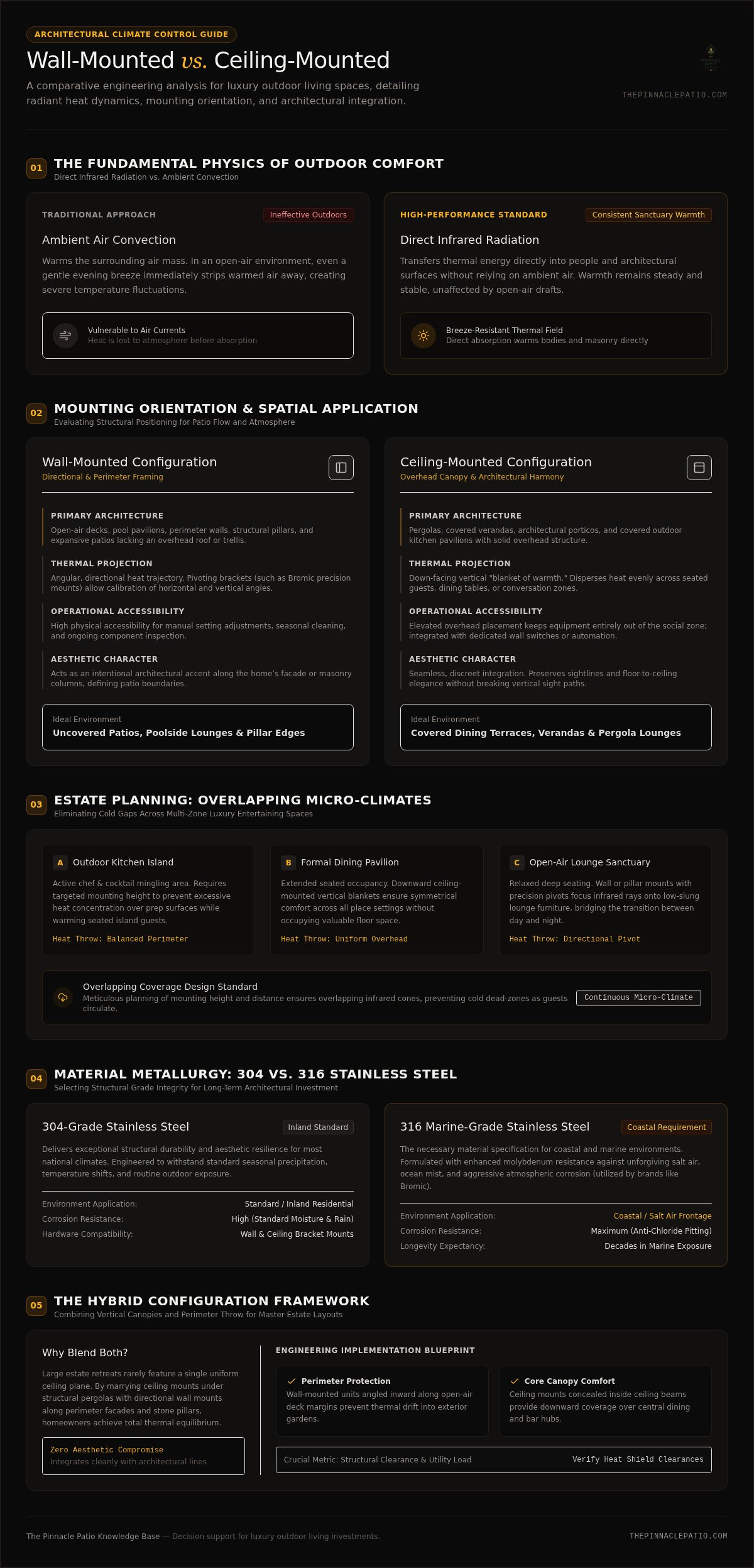
This transformation begins with high-performance radiant patio heaters. Unlike traditional convection systems that attempt to warm the air, infrared energy warms bodies and objects directly. This ensures that the warmth remains steady even when a light breeze passes through your estate. This foundational principle is the first step in the debate over wall-mounted vs ceiling-mounted outdoor heaters. The choice you make determines how that heat is projected and how it integrates with the structural lines of your patio.
Defining Heat Zones for Social Connection
Every luxury patio has a unique social rhythm. Guests often migrate through different zones, perhaps starting with cocktails near the outdoor kitchen island before transitioning to a formal dining area or lounge. Effective climate control anticipates this movement. Deciding on the best configuration for wall-mounted vs ceiling-mounted outdoor heaters is an architectural decision that balances technical clearance with your specific lifestyle needs. Mounting height plays a decisive role here, as it influences both the "throw" and the intensity of the infrared energy. We focus on creating overlapping heat patterns to ensure a consistent environment. This meticulous planning eliminates cold spots, allowing the conversation to flow naturally without the distraction of a temperature drop as guests move between areas.
Material Integrity and Longevity
A true outdoor sanctuary is built for longevity. When selecting your heating elements, the integrity of the materials is just as vital as the mounting configuration. We emphasize the distinction between 304 and 316-grade stainless steel for our clients. While 304-grade provides exceptional durability for most national climates, 316-grade is the necessary standard for coastal environments. Salt air is notoriously unforgiving; however, investment-grade appliances from brands like Bromic are engineered to resist such corrosive elements. Choosing the right material ensures that your heater bodies and mounting hardware remain pristine, functional additions to your estate for decades.
The Versatility of Wall-Mounted Outdoor Heaters
Wall-mounted units offer a distinct architectural advantage for open-air decks or perimeters defined by structural pillars. While the choice of wall-mounted vs ceiling-mounted outdoor heaters often centers on raw power, the wall-mounted configuration excels in its ability to frame a social scene. These units act as sophisticated accents, positioned to complement the lines of your estate rather than being tucked away as hidden utilities. They also provide superior accessibility for manual adjustments or routine maintenance, ensuring your investment remains in peak condition with minimal effort.
Choosing a wall-mounted path allows you to create warmth in spaces where a traditional ceiling or roof isn't present. It's an ideal solution for poolside lounging areas or expansive decks where the sky is your only canopy. By mounting heaters to the exterior walls of your home or on custom-built pillars, you maintain the open, airy feel of your sanctuary while providing the heat necessary for late-evening gatherings. This placement ensures that the equipment feels like a permanent, intentional part of the building's facade.
Precision Heating with Pivoting Mounts
High-performance brands like Bromic have mastered the art of the pivot. Their specialized mounting brackets allow for meticulous control over the heat's trajectory, letting you balance vertical and horizontal angles to suit the exact height of your lounge chairs or dining sets. Directional radiant heat is the ability to focus energy on specific seating areas. This level of control ensures that every guest feels a consistent, gentle warmth without energy being wasted on unoccupied corners of the patio. It's a tailored experience, built around the way you actually use your space.
Structural Considerations for Wall Installation
Integrating these powerful units requires a thoughtful assessment of your patio's anatomy. Load-bearing requirements are paramount, especially for heavier gas-powered models that demand rigid mounting surfaces to ensure long-term stability. Safety is equally critical; you must adhere to strict clearance to combustible materials to protect eaves, awnings, or decorative woodwork from thermal damage. Whether you choose natural gas for its permanent fuel supply or liquid propane for its portability, the routing of lines must be handled with professional precision. If you find the technical requirements of wall-mounted vs ceiling-mounted outdoor heaters complex, you can schedule a consultation with our specialists to design a layout tailored to your home. This expert guidance ensures your heating solution is as safe as it is beautiful, providing a permanent foundation for years of outdoor memories.
The Seamless Integration of Ceiling-Mounted Solutions
Ceiling-mounted heaters provide a distinctive atmospheric quality that wall-mounted units can't replicate. By projecting heat vertically, they create a "blanket of warmth" that envelops the social area from above. This configuration is ideal for covered patios, pergolas, and outdoor pavilions where the structure itself supports high-performance heating elements. It's a solution that prioritizes an unobstructed view, keeping the walls clear for artwork, architectural details, or large glass doors that connect your interior and exterior worlds.
The choice between wall-mounted vs ceiling-mounted outdoor heaters often comes down to the desired visual footprint. Ceiling units allow you to maximize floor and wall space in compact or minimalist designs. This is especially beneficial in high-traffic areas where floor-standing units or prominent wall brackets might interrupt the social flow. By elevating the heat source, you create a space that feels open, airy, and intentionally designed for communal connection.
Flush-Mounting vs. Surface-Mounting
For a truly integrated look, flush-mounting is the gold standard. Recessed heaters disappear into the ceiling architecture, providing comfort without competing for visual attention. This approach is increasingly popular in modern luxury outdoor kitchens where every detail is meticulously curated. However, flush-mounting requires specific technical planning. You must ensure the ceiling cavity has the depth and ventilation required to dissipate heat safely. For estates with exposed beams or a more rustic aesthetic, surface-mounting offers a compelling alternative. It allows the heaters to become part of the industrial or architectural character of the space while maintaining high performance.
Ceiling Height and Heat Performance
The height of your ceiling dictates the power required for your sanctuary. Electric heaters ranging from 2000W to 6000W must be positioned at optimal distances to ensure the radiant energy reaches the seating area effectively. If your pavilion features high-vaulted ceilings, pole-mount extensions are essential. These extensions bring the heat source closer to the guests, ensuring even distribution across large dining tables or lounge areas. We carefully calculate these heights to prevent energy loss, ensuring your investment provides a consistent and inviting environment regardless of the ceiling's elevation. It's about precision, performance, and the seamless integration of technology into your lifestyle.
Comparing Performance: Clearance, Coverage, and Aesthetics
When evaluating wall-mounted vs ceiling-mounted outdoor heaters, it's essential to look beyond the surface level. Wall-mounted units offer directional heat, allowing you to angle warmth toward specific seating arrangements with surgical precision. Conversely, ceiling-mounted units provide a vertical flow, blanketing the area from above in a more uniform fashion. This choice fundamentally alters the heat coverage pattern. While wall units are more visible and often serve as architectural accents, ceiling units favor seamless integration and a minimalist footprint.
Utility routing also differs significantly between these two configurations. Wall mounts usually involve simpler conduit runs along the exterior facade, which can be integrated into the building's trim or siding. Ceiling mounts often require more complex internal piping or wiring within the roof structure, which is best planned during the initial construction phase. For high-BTU gas heaters in semi-enclosed spaces, safety protocols are paramount. Proper ventilation and specific distances from walls are mandatory to prevent carbon monoxide buildup and ensure a safe, relaxed social environment for your guests.
Clearance and Safety Requirements
Protecting your structure is a non-negotiable aspect of luxury patio design. Navigating the technicalities of wall-mounted vs ceiling-mounted outdoor heaters requires attention to the specific materials of your sanctuary. Minimum distances vary based on whether you're mounting to combustible ceilings or non-combustible surfaces like stone or steel. For instance, mounting a heater near wooden eaves requires significantly more clearance than a concrete pillar. In tight configurations, the use of 304-grade stainless steel heat shields is a wise investment to deflect thermal energy and preserve the integrity of your home. Adhering to the standard clearances for Bromic luxury heaters is vital not just for safety, but for maintaining your warranty coverage and ensuring long-term performance.
BTU and Wattage Optimization
Calculating the total heat requirement involves more than just square footage. You must account for ambient wind, ceiling height, and the desired temperature lift for your specific climate. As mounting height increases, the effective heat reaching the floor decreases due to the natural dissipation of radiant energy. BTU output must be paired with correct mounting height to avoid heat dissipation. A 6000W electric unit mounted at 10 feet will provide a different sensory experience than one positioned at 8 feet. Precision in these calculations ensures your sanctuary remains comfortable throughout the seasons without wasting energy or compromising on comfort.
Selecting Your Ideal Heating Configuration
Choosing the right configuration is the final, essential step in curating your outdoor sanctuary. It requires a holistic assessment of your patio's architectural boundaries and the social flow you intend to foster. When deciding between wall-mounted vs ceiling-mounted outdoor heaters, consider how your guests move through the space. A high-performance heating plan shouldn't just exist; it should enhance the atmosphere, allowing for effortless transitions from the cocktail hour to a formal dinner under the stars.
For expansive estates, a hybrid approach often yields the most refined results. You might find that wall-mounted units provide the perfect directional warmth for a peripheral lounge, while ceiling-mounted heaters create a consistent "blanket of warmth" over a central dining area. This layered strategy ensures that every square foot of your retreat remains comfortable regardless of the evening's chill. It's about creating a series of thermal zones that respond to the specific activities within your outdoor kitchen and living areas.
The Decision Framework
To narrow your choice, begin with the structural foundation of your space. Does your patio feature a permanent ceiling, or is it an open-air deck defined by stone pillars? A covered pavilion naturally invites the discrete integration of ceiling units, whereas an open-air sanctuary relies on the versatility of wall mounts. You must also account for environmental factors like prevailing wind patterns. In regions with frequent breezes, the directional focus of wall-mounted units can be more effective at cutting through the cold than a vertical heat flow. Prioritize your goals: are you seeking the absolute invisibility of a flush-mounted system, or do you require the adjustable, targeted performance of a pivoting wall bracket?
Expert Guidance for Your Sanctuary
A luxury patio is a complex ecosystem of high-performance features. Coordinating your heating layout with a built-in grill station or built-in pizza ovens requires precise planning to manage heat zones and utility lines. We focus on providing a curated selection of Bromic heaters that act as investment-grade additions to your home. Moving from vision to implementation means preparing your space with the correct electrical or gas infrastructure before your chosen professional installer arrives. To ensure your configuration is perfectly tailored to your lifestyle, you can schedule a professional consultation to perfect your outdoor heating plan. This expert partner approach ensures your investment delivers the transformative experience you expect from a world-class outdoor sanctuary.
Refining Your Vision for Year-Round Comfort
Selecting the right climate control is the final brushstroke on your outdoor masterpiece. Whether you choose the directional precision of a wall bracket or the seamless integration of a recessed ceiling unit, your decision defines the social atmosphere of your estate. As an authorized Bromic Luxury Retailer, we specialize in high-performance BTU zoning and curate a selection of 316-grade marine stainless steel options designed for ultimate longevity. This ensures your investment resists the harshest elements while providing a consistent, gentle warmth that invites guests to linger.
Determining the ideal path for wall-mounted vs ceiling-mounted outdoor heaters requires balancing technical clearance with your unique lifestyle vision. It's a journey from basic utility to a truly elevated sanctuary where every moment feels extraordinary. We're here to act as your visionary guide, helping you navigate the nuances of layout and performance. Your patio should be more than just a space; it's an investment in a better way of living and a commitment to quality that lasts for generations.
Your dream sanctuary is within reach. Let's create a space that fosters deep connection and refinement through every season of the year.
Frequently Asked Questions
Can I mount a gas heater on a wooden ceiling?
Yes, you can mount a gas heater on a wooden ceiling provided you strictly adhere to clearance requirements and use specialized heat shields. These shields protect the wood from the intense thermal energy produced by high-performance units. For luxury structures, we recommend consulting the specific technical manual for your Bromic heater to ensure the distance between the unit and the timber meets safety standards, preserving both the integrity of your architecture and your warranty.
What is the ideal mounting height for a wall-mounted patio heater?
The ideal mounting height for a wall-mounted patio heater typically ranges between 8 and 10 feet from the floor. This elevation ensures an optimal throw of radiant heat while maintaining a safe distance from guests and furniture. If the unit is placed too high, the warmth may dissipate before reaching the social area; too low, and the heat intensity might feel overwhelming. Finding this balance is crucial when comparing wall-mounted vs ceiling-mounted outdoor heaters for your sanctuary.
Are ceiling-mounted heaters more expensive to install than wall-mounted ones?
Ceiling-mounted solutions often involve a higher installation complexity than wall-mounted units. While wall units frequently utilize external conduit runs along the building facade, ceiling installations, especially flush-mounted ones, require internal wiring, gas piping, and structural reinforcement within the roof cavity. This architectural integration demands more labor and planning. While The Pinnacle Patio doesn't provide installation services, we recommend engaging a professional contractor who understands the nuances of integrating these permanent fixtures into your estate.
Do I need a heat shield for my ceiling-mounted Bromic heater?
Whether you need a heat shield depends on the mounting configuration and the surrounding materials. If you're surface-mounting a Bromic heater to a combustible surface like wood, a heat shield is essential to deflect thermal energy and prevent damage. However, if the unit is flush-mounted using a dedicated Bromic recess kit, the kit itself is designed to manage the heat dissipation within the ceiling cavity. Always verify your specific material clearances to ensure a safe, high-performance environment.
How many heaters do I need for a 20x20 patio space?
A 20x20 patio generally requires two to four high-output heaters to achieve consistent coverage across the entire space. The exact number depends on whether you choose electric or gas units and their specific BTU or wattage ratings. For a luxury sanctuary of this size, we recommend a multi-zone approach to create overlapping heat patterns. This ensures that guests moving from the lounge to the dining area experience a seamless transition in temperature without encountering cold spots.
Can wall-mounted heaters be angled to face downwards?
Yes, wall-mounted heaters are designed to be angled downwards to target specific social zones with precision. Most high-end units, such as those from Bromic, include adjustable pivoting brackets that allow you to tilt the heater horizontally and vertically. This directional capability is a significant factor when weighing wall-mounted vs ceiling-mounted outdoor heaters. It enables you to focus radiant energy directly onto seating arrangements, ensuring your guests feel the warmth exactly where it's needed most.
What is the difference between 304 and 316 stainless steel for outdoor heaters?
The primary difference lies in their resistance to corrosion and environmental durability. 304-grade stainless steel is the industry standard for most climates, offering excellent strength and aesthetic longevity. However, 316-grade is a marine-grade alloy that contains molybdenum, making it significantly more resistant to salt air and chlorine. For coastal estates or poolside installations, 316-grade is the superior investment, ensuring your heating appliances remain pristine and functional despite exposure to corrosive elements.
Is it possible to flush-mount an electric heater in a drywall ceiling?
Yes, it's possible to flush-mount an electric heater in a drywall ceiling using a specialized recess kit designed for that purpose. This configuration creates a sophisticated, minimalist look that integrates perfectly with modern architecture. You must ensure the ceiling cavity provides the required depth and ventilation to dissipate heat safely behind the drywall surface. We suggest reviewing the technical specifications for Bromic electric units to confirm your ceiling structure can accommodate the necessary clearance and structural support.